





Brett Kavanaugh’s nomination to the Supreme Court was confirmed by the Senate on this day in 2018.
Hungry for more information about the 2026-27 term? On Thursday, Pacific Legal Foundation is hosting a virtual term preview event, with SCOTUSblog’s Zach Shemtob as one of the panelists. Register here to watch the event, which will begin at noon EDT.
At the Court
On Monday, the justices heard oral argument in two cases: Suncor Energy Inc. v. County Commissioners of Boulder County, on whether a lawsuit filed in Colorado state court seeking to hold energy companies responsible for their alleged role in climate change can go forward, or whether federal law instead bars such claims; and Johnson v. United States Congress, on whether a federal district court may hear a constitutional challenge to a law limiting disability benefits for certain incarcerated veterans.
Also on Monday, the court denied review in hundreds of cases that had been considered by the justices at their “long conference” on Sept. 28, including a high-profile dispute over whether schools may bar students from wearing sweatshirts printed with the phrase “Let’s Go Brandon,” a clash over the Second Amendment rights of convicted felons, and two battles over COVID-19 vaccine mandates. For more on Monday’s lengthy order list, see the On Site section below.
Today, the justices will hear argument in Anderson v. Intel Corporation Investment Policy Committee, a dispute under the Employee Retirement Income Security Act on how to handle claims that employers have invested employees’ retirement funds imprudently.
Tomorrow, the justices will hear argument in Department of the Air Force v. Prutehi Guåhan, a technical dispute over the interaction between two federal environmental laws that arose when the U.S. Air Force applied to renew its permit to dispose of munitions on a beach in northern Guam.
On Sept. 28, the Trump administration brought a dispute over the Federal Bureau of Prison’s policy on healthcare and accommodations for transgender inmates to the interim docket. The court has asked the challengers to respond to this request by 4 p.m. EDT on Thursday.
Morning Reads
Consumers file Hail Mary at SCOTUS to block Paramount-Warner merger
Kelsey Reichmann, Courthouse News Service
In an emergency application filed on Monday, five consumers asked the Supreme Court to "block Paramount Skydance's $110 billion merger with Warner Bros. Discovery," which is set "to close on Tuesday," according to Courthouse News Service. "The consumers asked to preserve separate ownership of the companies while their lawsuit moves forward, warning the justices that irreparable harm will occur if the deal is allowed to close." "Once independent pricing, programming, release, newsroom, technology, employment and investment decisions are centralized, later relief cannot restore the period of competition that was lost," the consumers wrote. Courthouse News Service noted that Justice Elena Kagan apparently "saw no need for emergency intervention," and denied "the application only hours after it was filed."
Some Democrats don’t expect to fill a Supreme Court vacancy under Trump
Sahil Kapur, NBC News
With less than a month to go before the midterm elections, top Democrats are speaking out about how a Democrat-led Senate would approach a Supreme Court vacancy while President Donald Trump remains in office. “The bottom line is: One of the reasons we want to do everything we can to take back the Senate is not let Trump put such horrible justices – MAGA justices – on the Supreme Court,” said current Senate Minority Leader Chuck Schumer, according to NBC News. Similarly, Sen. Richard Blumenthal, a Democrat from Connecticut who is a senior member of the Judiciary Committee, said he doesn’t think the Senate would confirm another Trump-appointed justice. “[G]iven the history of Trump nominees, I think it is slim to none that we would support a nominee from this administration,” he said. NBC News noted that “
How the Midterms Could Complicate the Supreme Court’s New Term
Ann E. Marimow and Abbie VanSickle, The New York Times (paywalled)
In the final stretch before next month’s midterm elections, “the court may be unable to avoid getting uncomfortably pulled into electoral politics,” according to The New York Times. “With partisans on both sides primed for potential election challenges, lawsuits to settle hotly contested elections could end up before the court, potentially with the control of Congress at stake.” The Times noted that the justices were already busy this summer addressing election-related disputes on the interim docket. “The justices blocked both President Trump’s plan to dramatically overhaul how Americans vote by mail in the upcoming election and three separate times stepped in to block Missouri from using a congressional map drawn to advantage Republicans. At the same time, they allowed the administration to deploy an online system combining citizenship information, Social Security numbers and other sensitive data about millions of Americans to help states hunt for supposedly ineligible voters.”
Supreme Court won’t reinstate Pennsylvania judge suspended for partisan Facebook posts
Zach Schonfeld, The Hill
On Monday, the Supreme Court denied review in “a former Pennsylvania judge’s challenge to his suspension for making partisan Facebook posts,” according to The Hill. “Pennsylvania’s judicial discipline board suspended then-Judge Mark Cohen in 2024 over dozens of posts praising Democrats, including former President Biden and Gov. Josh Shapiro (D), and his advocacy for policies such as raising the minimum wage.” Cohen himself had “cast the Facebook posts as him continuing to express his views on matters of public concern and argued lower courts used a too-lenient First Amendment standard to uphold his suspension.”
The Alito Court: A rare interview with the influential Supreme Court justice
Jan Crawford, CBS News
In her profile of Justice Samuel Alito for CBS News, Jan Crawford explored, among other things, why it may be more accurate to refer to the current Supreme Court as the “Alito court,” rather than the “Roberts court.” “Alito is in many ways the Court’s conservative leader,” she explained. “His legal positions going back years on abortion, affirmative action, voting rights and religious liberty now are law of the land.” Crawford noted that the triumph of Alito’s views has led some court watchers to portray him as “a villain who is taking away rights from women and minorities.” Alito pushed back against this idea in an interview. “The idea that I’m angry and that I’m bitter and that I’m trying to get revenge for something that I experienced at an earlier point in my life is a caricature,” he said. Alito also addressed the court’s 2015 ruling legalizing same-sex marriage nationwide, contending that he views it as different than other recently overturned precedents. “One of the important factors we take into account in deciding whether we should reexamine a past decision is the degree to which there has been reliance on the decision,” he said. “Obviously a great deal had changed in the country as a result of Obergefell. There was a lot of reliance in various ways on the decision in Obergefell.”
If Justices Want to Protect the Supreme Court’s Legitimacy, They Should Stop Trashing Their Colleagues
Ryan J. Owens, National Review (paywalled)
In a column for the National Review, Ryan J. Owens highlighted recent examples of Supreme Court justices publicly criticizing their colleagues, such as when Justice Sonia Sotomayor said on Sept. 16 that some of her fellow justices don’t understand the First Amendment. Owens called on the justices to choose their words more carefully, contending that infighting is eroding the Supreme Court’s reputation. “For as much as the justices tell us the Court’s legitimacy is brittle, they sure act as though it’s iron,” he wrote.
On Site
Argument Analysis
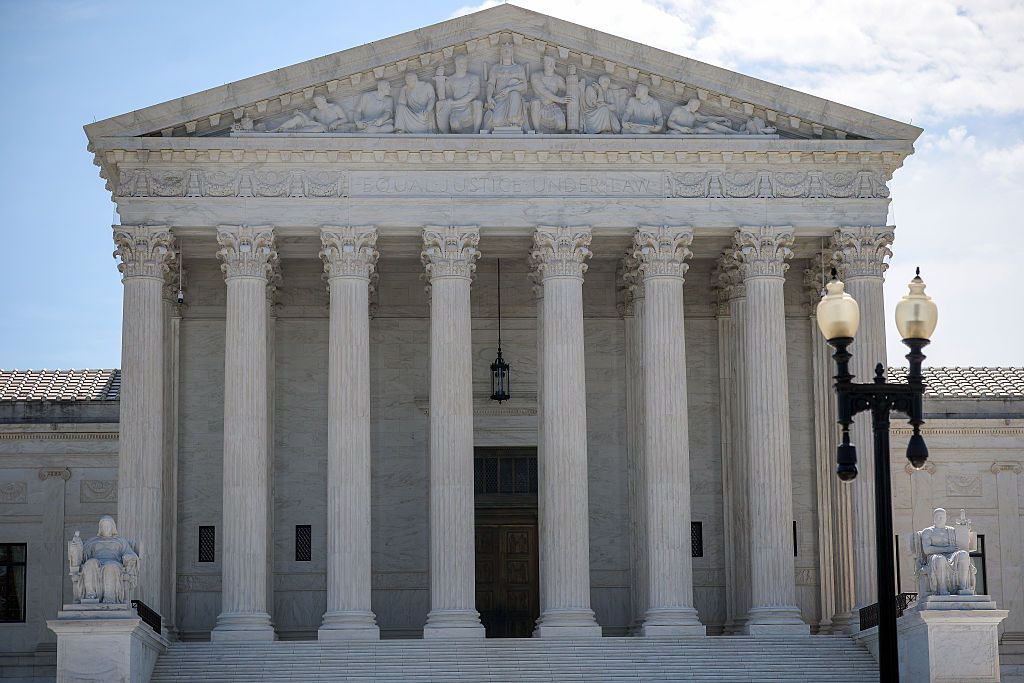
Court sends mixed signals on whether it will allow state-tort suits seeking to hold energy companies liable for climate change to go forward
The court opened its new term by hearing arguments in a lawsuit filed in state court by the city and county of Boulder, Colorado, seeking to hold two major energy companies responsible for their alleged role in climate change and its impact. After nearly two hours of debate, it wasn’t clear whether a majority of the justices agreed with the energy companies that federal law prohibits Boulder’s claims. With Justice Samuel Alito recused from the dispute, a 4-4 tie would leave in place a ruling by the Colorado Supreme Court allowing Boulder’s case to move forward.
Court News
Court declines to hear cases on “Let’s Go Brandon” sweatshirts, felons’ Second Amendment rights, COVID-19 vaccine mandates, and other notable issues
In addition to announcing denied cases, the justices in Monday’s order list asked the United States solicitor general to share the government’s views on several disputes and sent several others back to the lower courts for reconsideration in light of rulings from last term. For example, the Supreme Court ordered a federal appeals court to take another look at its decision on Venezuelans’ and Haitians’ participation in the Temporary Protected Status program.
Case Preview
Court to hear argument in dispute over Air Force’s detonation operations in Guam
The Supreme Court will hear oral argument on Wednesday in a battle over the U.S. Air Force’s efforts to continue disposing of munitions by detonating them on a beach in northern Guam. The legal questions in Department of the Air Force v. Prutehi Guåhan are highly technical and center on the interaction (or lack thereof) between two federal environmental laws.
View from the Court
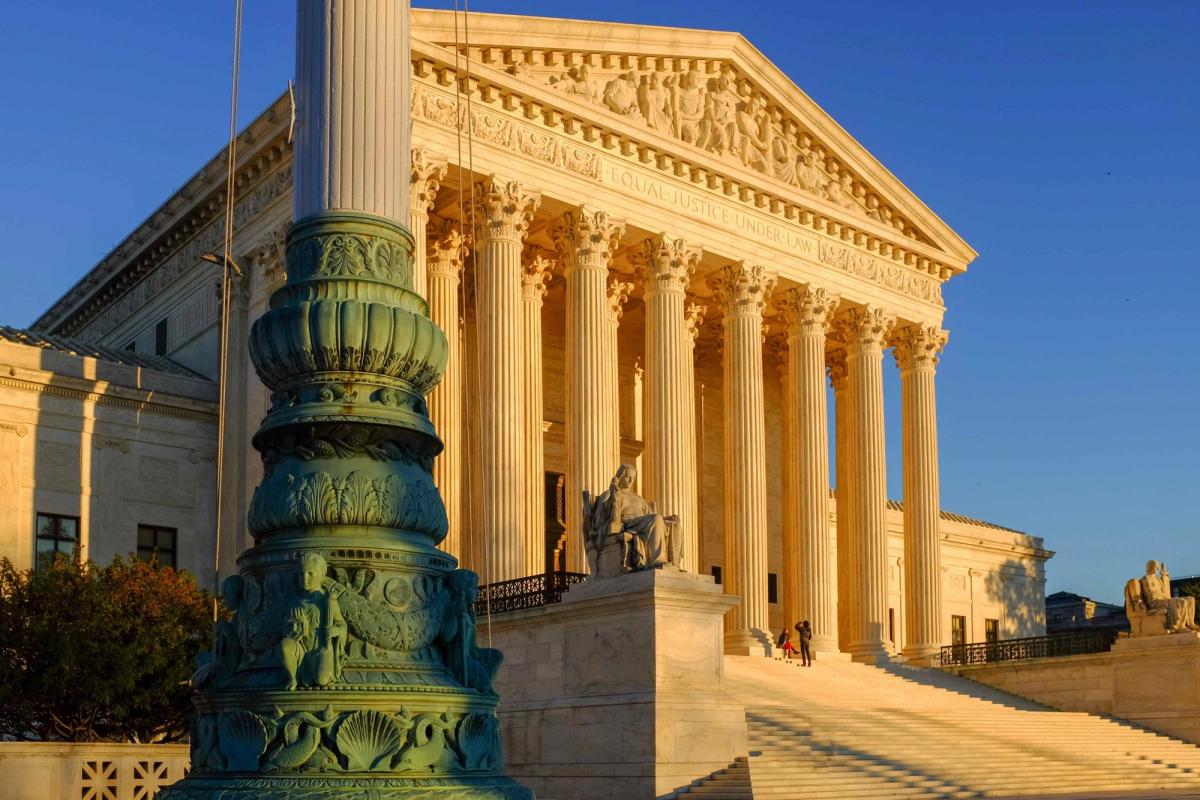
Opening the book on the October Term 2026
In his View from the Court column, Mark Walsh described what it was like in the courtroom on Monday as the justices kicked off the 2026-27 term.
SCOTUS Outside Opinions
Grand openings: what four introductions in Suncor v. Boulder show about starting a brief
In a column for SCOTUSblog, Ross Guberman drew on the four principal briefs filed in Suncor Energy Inc. v. County Commissioners of Boulder County as he explored the importance of any brief’s introduction, the section of the document “that offers the court a frame for all the law and facts to follow.”
A Closer Look
The Tinkers
For today’s Closer Look on famous Supreme Court plaintiffs, we take a look at the Tinkers – Mary Beth and John – who were plaintiffs in Tinker v. Des Moines Independent Community School District, the landmark Supreme Court case on free speech for students in K-12.
John Tinker was born in 1950. His sister, Mary Beth, was born in 1952. They grew up in Atlantic, Iowa, where their father, Leonard, was the pastor of a Methodist church and their mother, Lorena, was a psychologist and the adviser to the Methodist Youth Fellowship. Leonard and Lorena had six children.
The Tinker children were exposed to civil rights advocacy from a young age. Their father was fired from his pulpit after he advocated for the desegregation of Atlantic’s public swimming pools. The Tinkers moved to Des Moines in 1957 after Leonard got a job there as a minister, but his contract was not renewed after he invited Black people to attend church. In 1964, both Leonard and Lorena went to Ruleville, Mississippi, as part of “Freedom Summer,” an effort led by Bob Moses and the Student Nonviolent Coordinating Committee to get African Americans registered to vote.
Increased American involvement in the Vietnam War following the Gulf of Tonkin incident in 1964 led Leonard and Lorena to join “Iowans for Peace,” an organization opposed to the war. In November 1965, Leonard organized buses to drive from Iowa to Washington, D.C. to take people to one of the first large protests against the Vietnam War. John, then a high schooler, as well as his friend Chris Eckhardt (who would later be a fellow plaintiff in Tinker), attended the rally. On the way back to Iowa, the participants in the protests discussed how to continue to raise awareness. “[One] man had heard of wearing black armbands to protest the war, to mourn the deaths on both sides. That sounded like a good idea so everybody on the bus decided that’s what we would promote,” John later recounted.
More than 50 students across public schools in Des Moines planned to wear black armbands to school on Dec. 16, 1965, in support of Sen. Robert F. Kennedy’s proposed Christmas truce. However, two days before the scheduled demonstration, a meeting of local principals was called, and they instituted a policy that all students wearing black armbands would be asked to remove them. If they did not, they would be suspended.
On Dec. 16, 1965, Mary Beth wore a black armband to Warren Harding Junior High School. She was sent to the principal’s office by her math teacher and later informed that she had been suspended. The next day, John wore a black armband to North High School and was also suspended after refusing to take it off. A total of five students in Des Moines were suspended for wearing armbands. The Tinker family faced threats in the aftermath of their protest: red paint was thrown at their home and car and on Christmas Eve they were sent a bomb threat. At the advice of their lawyer from the American Civil Liberties Union, the Tinkers did not wear their black armbands after they returned from winter break, but they wore black clothing for the rest of the year.
In March 1966, the Tinkers sued, seeking nominal damages and an injunction blocking school officials from enforcing the ban. The federal district court sided with the school district, saying they were aiming to prevent a disruption at school; the U.S. Court of Appeals for the 8th Circuit affirmed the lower court and, in the process, generated a circuit split (the U.S. Court of Appeals for the 5th Circuit had recently ruled that students had a right to wear political buttons at school).
The Tinkers appealed to the Supreme Court. In November 1968, Mary Beth and her parents attended oral arguments, but John (then a student at the University of Iowa) missed his flight. In February 1969, the Supreme Court sided with the Tinkers. “A student's rights ... do not embrace merely the classroom hours. When he is in the cafeteria, or on the playing field, or on the campus during the authorized hours, he may express his opinions, even on controversial subjects like the conflict in Vietnam, if he does so without ‘materially and substantially interfer[ing] with the requirements of appropriate discipline in the operation of the school’ and without colliding with the rights of others,” wrote Justice Abe Fortas.
After the Supreme Court’s decision, John remained active in anti-Vietnam war demonstrations. John ultimately withdrew from the University of Iowa and became the chief engineer at the KCJJ AM radio station in Iowa City. He also opened and operated a shop, "Inventors Supply," that sold refurbished computers, learned to program microprocessors, and wrote industrial programs. In 1995, John purchased a former school building in Fayette, Missouri, which became the site of KPIP-LP 94.7 FM, a local radio station that he manages to this day.
In 2019, John established The John F. Tinker Foundation, which seeks to “develop opportunities for multi-generational audiences to have access to a broad array of speakers” on issues such as the First Amendment. He remains a vocal activist and writes about issues of importance on his Substack.
Mary Beth was in her junior year of high school when the decision came out. She was greeted by reporters and journalists at her house that day. After graduation, Mary Beth became a piano technician and later pursued a career in medicine, working as a pediatric and emergency room nurse and a nurse practitioner. In 2013, Mary Beth left the nursing field and embarked on the “Tinker Tour,” a project of the Student Press Law Center, where she travels the country telling her story and promoting civic education to young people.
The Tinkers filed an amicus brief together in the 2021 Supreme Court case, Mahanoy Area School District v. B.L., on a student’s suspension for profane speech made off campus. They asked the court to protect the student’s speech in the case.
SCOTUS Quote
Continue reading...
[ H/T SCOTUSblog ]