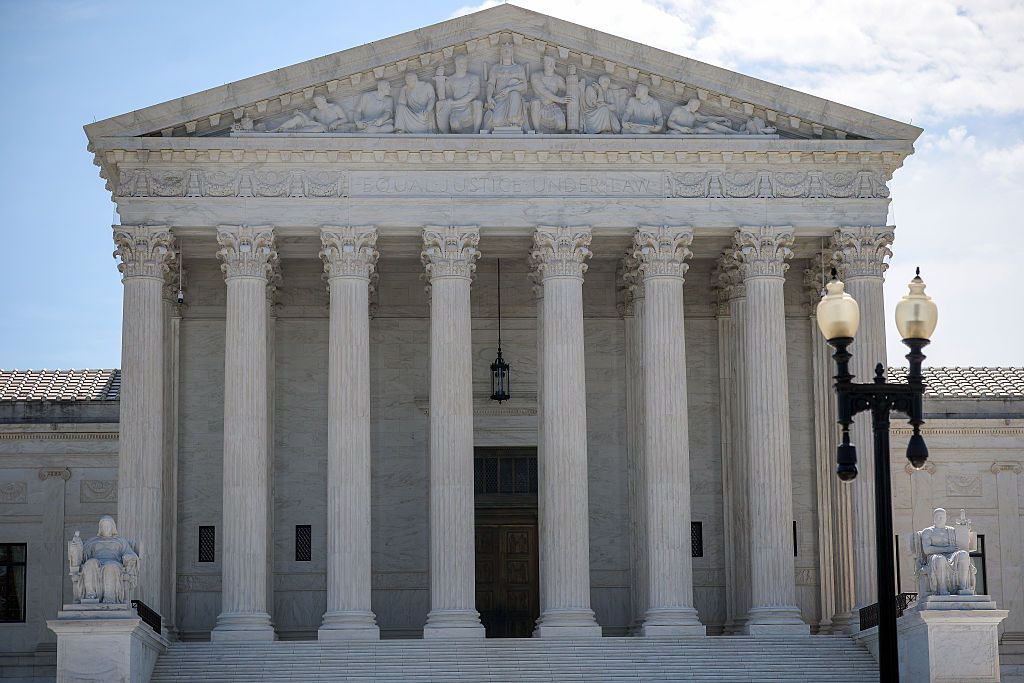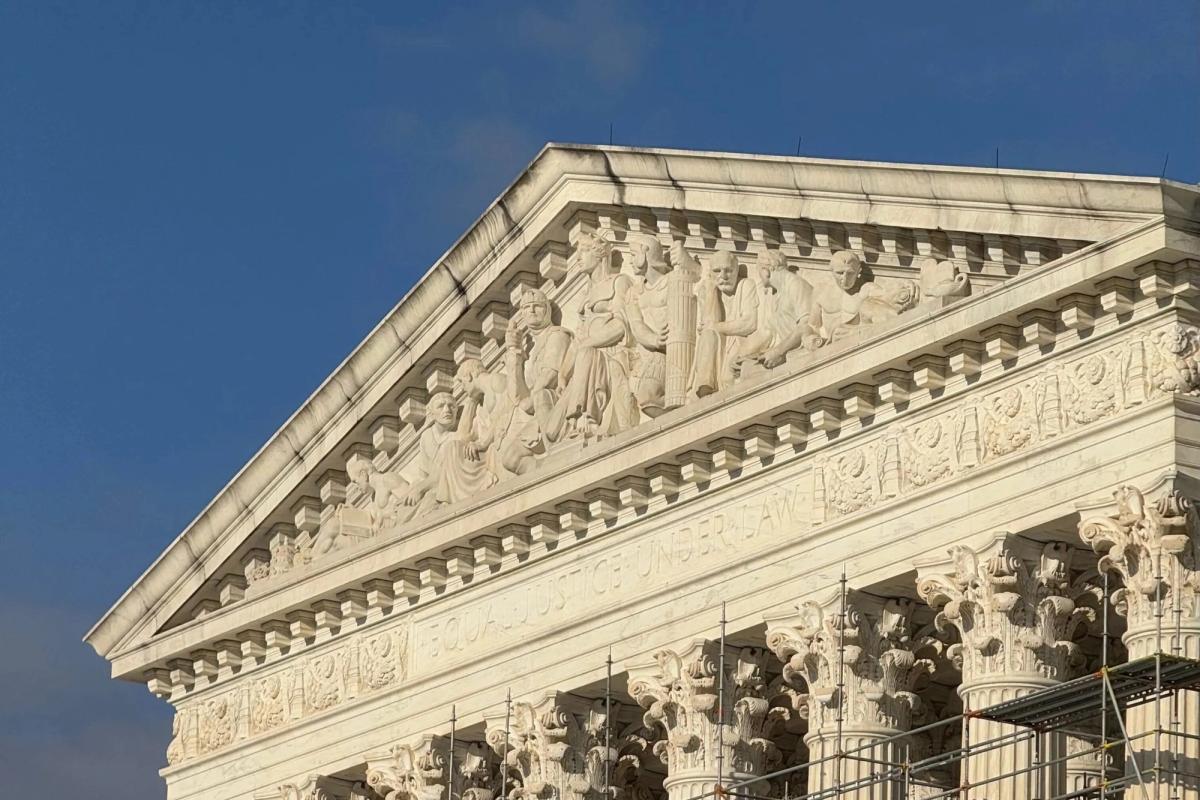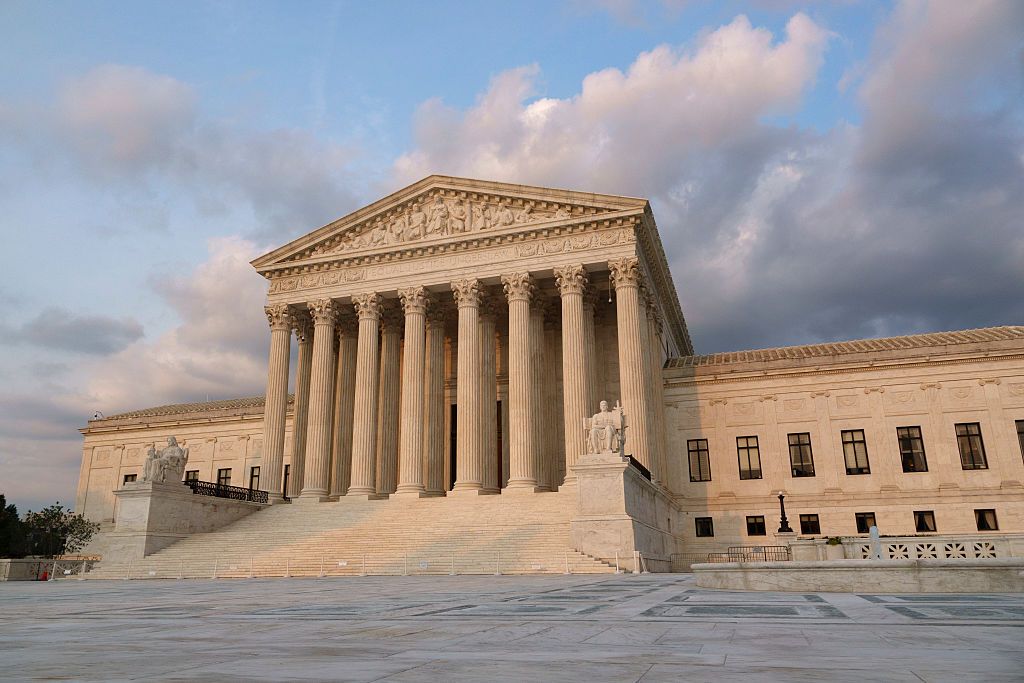




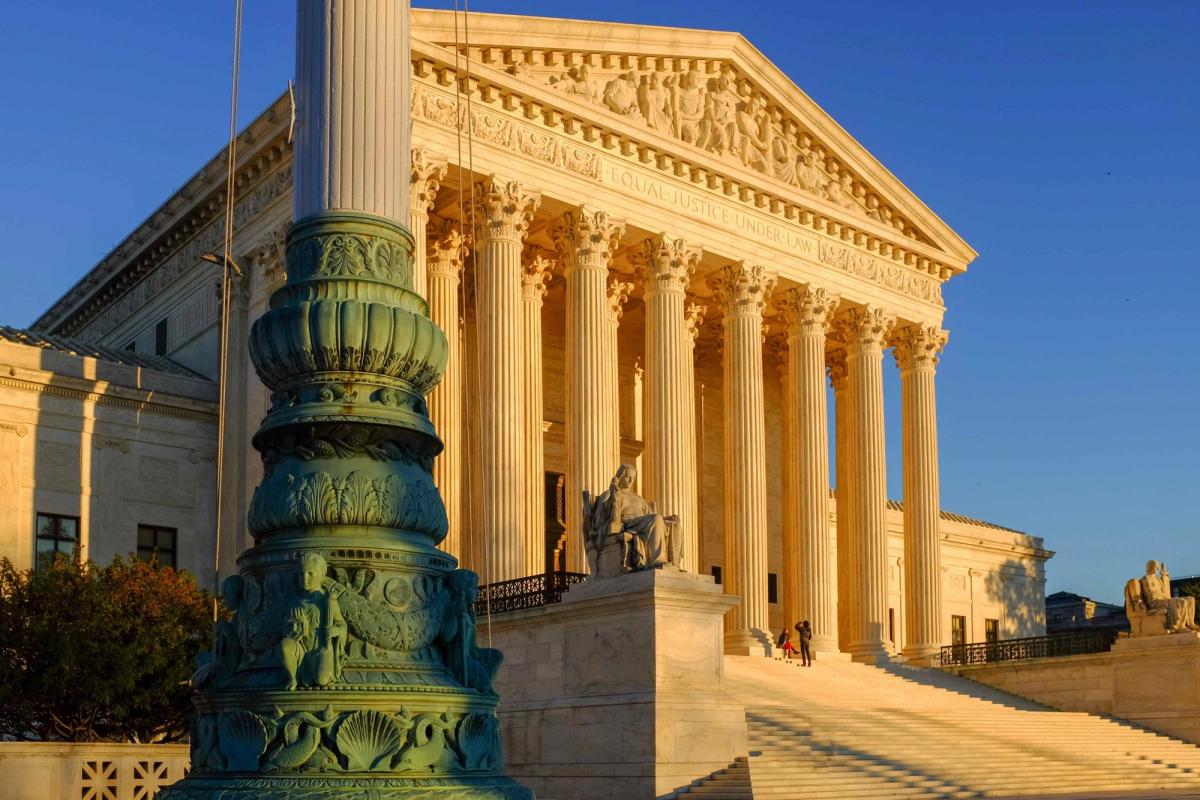
The first Monday in October brings the new Supreme Court term and, with it, the first day of oral arguments.
The opening case is Suncor Energy Inc. v. County Commissioners of Boulder County, on whether state-tort claims against energy companies brought by the city and county of Boulder, Colorado, are preempted by federal law. It’s a big case, with potentially significant implications.
Before argument begins, Justice Brett Kavanaugh’s wife, Ashley Kavanaugh, and his parents, Everett and Martha Kavanaugh, arrive to take seats in the justices’ guest box.
Also here are three Boulder County commissioners – Ashely Stolzmann, Marta Loachamin, and Claire Levy, as well as Boulder City Manager Nuria Rivera-Vandermyde. They will make brief remarks to the press on the court’s plaza after the arguments. Here as well are Suncor General Counsel Mike Korenblat and ExxonMobil General Counsel Jeffrey Taylor. They will not go to the plaza.
At 10 a.m., the justices take the bench, except for Justice Samuel Alito, of course. He announced last week that he would no longer participate in Suncor. Some advocacy groups had called for his recusal based on his ownership of individual energy stocks, though not of Suncor or ExxonMobil.
Alito told Bloomberg’s Greg Stohr last week, an interview tied to Tuesday’s release of his book “So Ordered: An Originalist’s View of the Constitution, the Court, and Our Country,” that he felt it was “prudent” to withdraw even though the court’s legal office had advised him recusal was not required.
One question debated among a certain especially law-nerdy set of observers, possibly just a couple of us here at SCOTUSblog, was whether the court would switch the order of today’s cases because of the late recusal. The court’s preferred custom is that when a justice is recused and there is more than one case being argued in a day, the case with the recusal will go second so the non-participating justice can slip out relatively quietly in the short break between cases.
But Suncor was seemingly scheduled as a high-profile term opener (and touted as such in many a term preview session). The court evidently decided not to disrupt the narrative.
The chief justice opens with some traditional business: “I have the honor to announce, on behalf of the court, that the October 2025 Term of the Supreme Court of the United States is now closed, and the October 2026 Term is now convened.”
During bar admissions, one movant departs from the short, scripted motion to tout his “fellow Marine” who will “make a great ambassador for the court.” The chief justice does not seem amused by the ad lib.
Among the groups being admitted today are several graduates of the University of the District of Columbia’s David A. Clarke School of Law, where Justice Ketanji Brown Jackson last month received a raucous welcome for her speech and conversation about the emergency docket, and a group from the U.S. House office of legislative counsel, whose members’ ears will perk up during the Suncor arguments and its many mentions of the potential role of Congress in regulating greenhouse gas emissions.
Roberts then calls the Suncor case for “argument first this term.”
Amy Howe has this site’s main account of the argument. To me, it was clear from early on that the question presented that the court added to the case, about whether it has jurisdiction over a Colorado Supreme Court decision that arguably isn’t final, was more than just a formality.
Justice Clarence Thomas asks Kannon Shanmugam, the lawyer representing Suncor and ExxonMobil, the defendants in Boulder city and county’s lawsuit, to “spend some time and explain why we have jurisdiction.”
Shanmugam was then forced to spend almost all of his allotted 20 minutes of traditional time on the jurisdiction question.
When Justice Elena Kagan suggests that he was switching back and forth between two theories of jurisdiction that were perhaps in tension with each other and so he should maybe choose one, Shanmugan says, “Like my children, I love both of our theories equally, Justice Kagan.”
She doesn’t seem amused and continues to press him.
Only when he gets to the seriatim round does Shanmugam get to expound on the merits, though this is after Roberts turns to Thomas, who has no further questions, and then reflexively turns to Alito’s chair (which also has no questions).
Before his time is up, Shanmugam is able to make a sweeping point that more than 60 municipalities across the country have filed some three dozen similar lawsuits seeking to hold oil and gas companies liable for damages related to greenhouse gas emissions.
“I would submit that, given the extraordinary magnitude of these cases, where, in each of these cases, plaintiffs are seeking billions of dollars of damages, that we need an answer to this question sooner rather than later,” he says.
Sarah Harris, the current principal deputy solicitor general arguing in support of the petitioners, argues that the Colorado Supreme Court treated the case as a self-contained original proceeding, and thus the U.S. Supreme Court has jurisdiction to review that court’s ruling allowing the lawsuit to proceed.
Kevin Russell, representing the two Boulders and their officials, makes a few merits points before saying, “all of this must await another case because petitioners have failed to establish this Court's jurisdiction to hear this interlocutory appeal.”
Roberts, who had suggested to Harris that this suit may not be different from other mass tort suits the Supreme Court has allowed to proceed in state court, takes a more skeptical tone with Russell.
“If you prevail, the next day, a municipality in every single state will file a lawsuit—they’ll probably copy your pleadings—and then there will be at least 50, you know, different cities’ … causes of action filed,” the chief justice says. “[H]ow do you think that will work out on the ground?”
Russell responds calmly, giving a little but saying, “the mere fact that … there could be a lot of litigation, I don't think there’s anything in the Constitution that says preemption arises from whenever, you know, a state law, if copied in other states, could cause a lot of litigation.”
On rebuttal, Shanmugam takes one more stab at emphasizing the scope of the climate lawsuits that he is hoping the court will nip in the bud.
“The breadth of Boulder's theory here is astonishing,” he says, “[t]here is no limit under Boulder's theory on who could be sued.”
Under the lawsuit’s theory, he adds, “Boulder could tag me with personal jurisdiction when I am in Colorado in two weeks and sue me on a nuisance claim for refilling my car and thereby contributing to global climate change.”
Shanmugam concludes by saying, “[T]his case and others like it reflect an all-too-regrettable trend of trying to resolve major political issues in court rather than leaving them to the political branches where they belong. Climate change is certainly one of the most pressing issues of the day, but we would submit that this is exactly the wrong way to go about resolving it.”
With that, Roberts says the case is submitted, and many in the courtroom stand to leave.
During this commotion, Alito slips in from the center curtain with a slight smile on his face and moves to his place on the bench. During the next argument, on veterans’ benefits, he will be back at home asking tough questions of counsel, rather than sitting around in his chambers, or perhaps worse, answering questions from news reporters, even if it is to promote his book.
Continue reading...
[ H/T SCOTUSblog ]