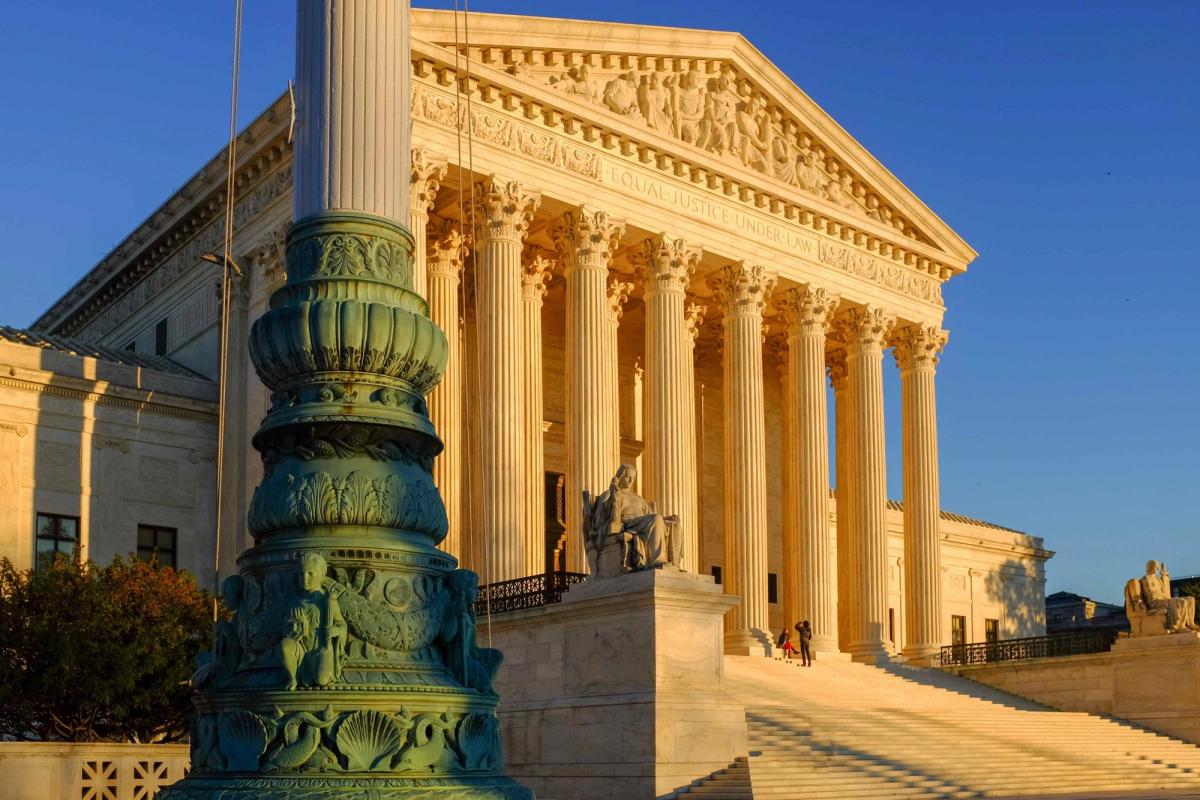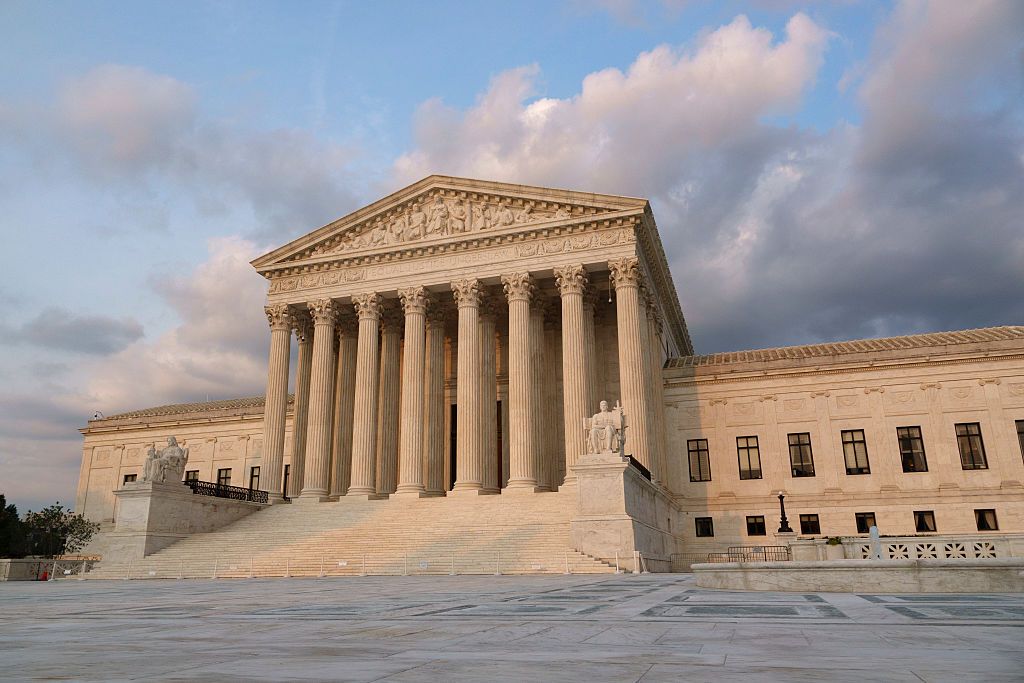


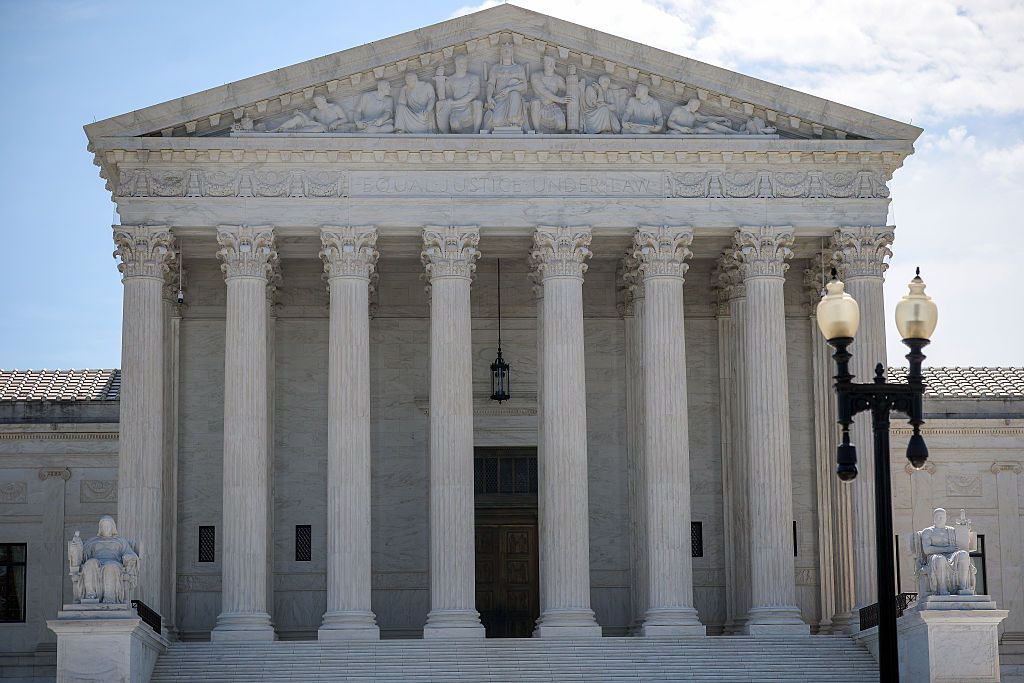
The Supreme Court on Monday opened its new term by hearing arguments in a lawsuit filed in state court by the city and county of Boulder, Colorado, seeking to hold two major energy companies responsible for their alleged role in climate change and its impact. After nearly two hours of debate in Suncor Energy Inc. v. County Commissioners of Boulder County, it wasn’t clear whether a majority of the justices agreed with the energy companies that federal law prohibits Boulder’s claims. With Justice Samuel Alito recused from the dispute, a 4-4 tie would leave the ruling by the Colorado Supreme Court, allowing Boulder’s case to move forward, in place.
Monday’s argument was the latest chapter in an eight-year-old battle that began when Boulder filed a lawsuit in a state court in Colorado against two energy companies: Suncor, a subsidiary of one of Canada’s largest energy companies, which operates the only two oil refineries in Colorado; and ExxonMobil, the largest energy company in the United States. It is seeking compensation for some of the costs that it has incurred as a result of the alleged effects of climate change – for example, protecting its own property as well as that of its residents. Boulder contends that both energy companies have long deceived the public about the effects of climate change and the role of fossil-fuel products in creating those effects; it also contended that the companies played a role in climate change by producing, refining, and marketing fossil fuels.
After their efforts to move the case to federal court failed, the energy companies asked the state trial court to dismiss the case, but it turned down that request. The Colorado Supreme Court then agreed to decide whether Boulder’s state-law claims were trumped by federal law. It concluded that they were not, and its claims could go forward. The companies came to the Supreme Court last year, asking the justices to weigh in, which they agreed in February to do.
Representing the energy companies, lawyer Kannon Shanmugam described Boulder’s claims as an “unprecedented effort to use state law to regulate global conduct.” The Constitution, he said, bars the application of state law to “certain inherently federal areas,” and the Supreme Court has long held that federal law governs interstate-pollution claims. Moreover, he added, a state cannot regulate out-of-state conduct “based solely on attenuated effects” that it might have within the state.
Chief Justice John Roberts appeared skeptical, however. He suggested to both Shanmugam and Sarah Harris, the principal deputy U.S. solicitor general who argued on behalf of the Trump administration in support of the energy companies, that it was not uncommon for lawsuits to be based on conduct that occurs outside a state but has broad “effects,” including within the state. He asked Harris “what makes this situation different from those” other cases in which the court allowed lawsuits to proceed in state court.
Harris answered that, unlike those lawsuits, Colorado would ban the production of fossil fuels anywhere in the country.
Roberts did not appear persuaded. “That’s a question of relief” for Colorado, “and what might be available,” he said. It did not, in his view, necessarily seem to go to the question of whether Colorado could bring the lawsuit at all.
Justice Elena Kagan also seemed dubious of the energy companies’ arguments. She told Shanmugam that Boulder’s “suit appears to be based on the old 1990s tobacco suits,” as well as more recent lawsuits against opioid manufacturers. Were those lawsuits also trumped by federal law, she asked?
Shanmugam pushed back, describing the tobacco and opioid lawsuits as different. He stressed that the injury at the center of Boulder’s case “is not suffered by the Colorado consumer in the traditional sense.” He then pointed back to the principle that federal law has traditionally applied to claims involving interstate air and water pollution.
Kagan remained doubtful, asking Shanmugam to point to the support for that argument in the text of the Constitution or federal law or in the Supreme Court’s cases. “Where,” she finally asked, “is the[re] anything for that?”
Representing Boulder, lawyer Kevin Russell echoed Roberts’ point, telling the justices that states have long had the power to provide court remedies for injuries that occur within their borders even when the conduct that caused those injuries occurred elsewhere. Applying state law, he said, has never been interpreted as projecting that law nationwide. And he emphasized that Congress has the authority to pass laws that preempt state laws if and when it wants to.
Russell faced tough questioning, however, from Justice Brett Kavanaugh, who was the member of the court most supportive of the energy companies’ position. He pointed to a series of Supreme Court cases that, in his words, “make crystal-clear that interstate air and water pollution are matters for federal law” unless Congress specifies otherwise. In Kavanaugh’s view, those cases mean that state law generally does not apply to claims like Boulder’s, and Congress could believe that interstate-pollution issues are federal issues – and that it therefore does not need to pass new legislation to say so explicitly.
Several justices expressed concern about the possibility that allowing Boulder’s lawsuit to go forward would open the floodgates to even more cases in other states around the country. Justice Clarence Thomas asked Russell to describe any principles that might restrict whom state and local governments could sue.
Russell cited constraints on a state’s jurisdiction over particular defendants and a constitutional doctrine (known as the dormant commerce clause) that bars states from discriminating against out-of-state defendants, among other things, as possible limiting principles.
That prompted Thomas to ask whether, under Boulder’s theory, state and local governments could also sue “large retailers” of fossil fuels.
Russell acknowledged that “[n]othing in our theory prevents that,” but he added that “when lots of people act together to cause widespread harm, it is not uncommon for multiple different defendants to be potentially liable.”
Justice Amy Coney Barrett also sought to test the limits of Boulder’s theory, asking Russell whether Colorado could pass a law that sought to cap greenhouse-gas emissions in the other 49 states as well.
Russell agreed that such a law would be prohibited and sought to distinguish that scenario from Boulder’s lawsuit. He emphasized that, with the lawsuit, Boulder wasn’t trying to directly regulate the energy companies’ actions. The lawsuit, he argued, “doesn’t prohibit them from engaging in the conduct.” Instead, he said, “t requires them to internalize a portion of the cost of their activities by paying for some of the damage that those activities inflict.”
Shanmugam picked up on these concerns in his rebuttal, telling the court that the “breadth of Boulder’s theory here is astonishing.” Indeed, he suggested, it would mean that on an upcoming visit to Colorado, Boulder could sue him “for refilling my car and thereby contributing to global climate change.” Moreover, he suggested, it would not be only state and local governments who could sue under Boulder’s theory, but “[a]ny individual who has suffered the effects of climate change.” “Climate change,” he concluded, “is certainly one of the most pressing issues of the day, but we would submit that this is exactly the wrong way to go about resolving it.”
However the court opts to resolve the case, the justices devoted relatively little time to whether the Supreme Court has the power to consider the energy companies’ appeal at all – a question that the justices had asked the litigants to address when they agreed to take up the case earlier this year. Justices Sonia Sotomayor and Ketanji Brown Jackson appeared the most interested in the question, which would provide an off-ramp that would allow the justices to avoid deciding the merits of the dispute for now, but it received little traction elsewhere.
Continue reading...
[ H/T SCOTUSblog ]