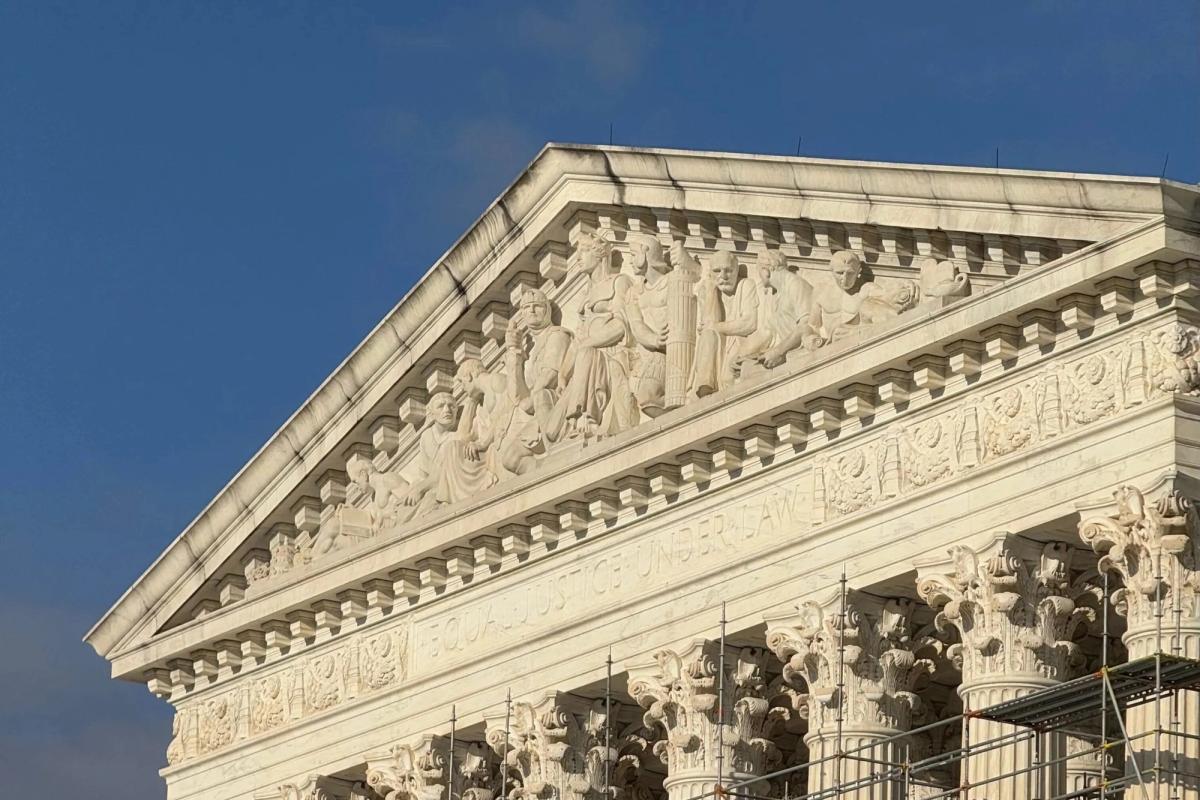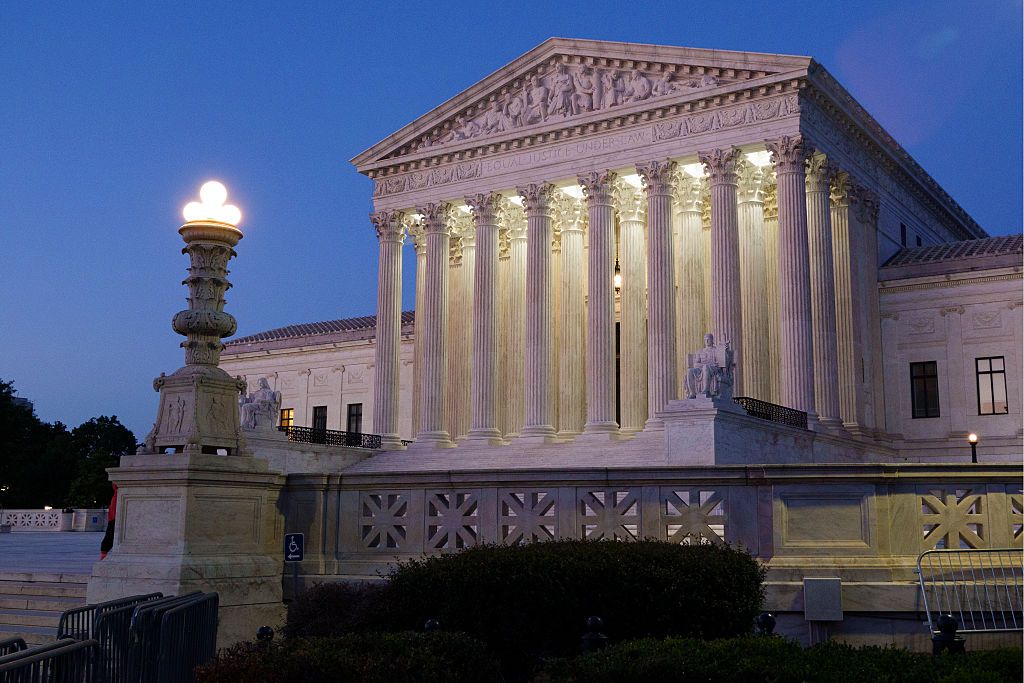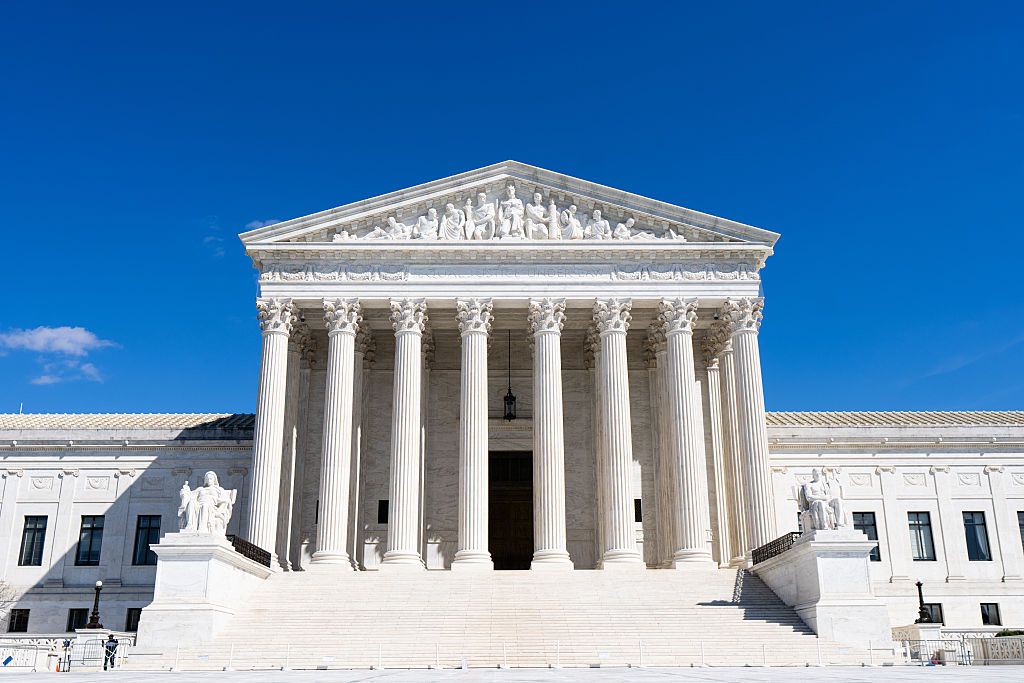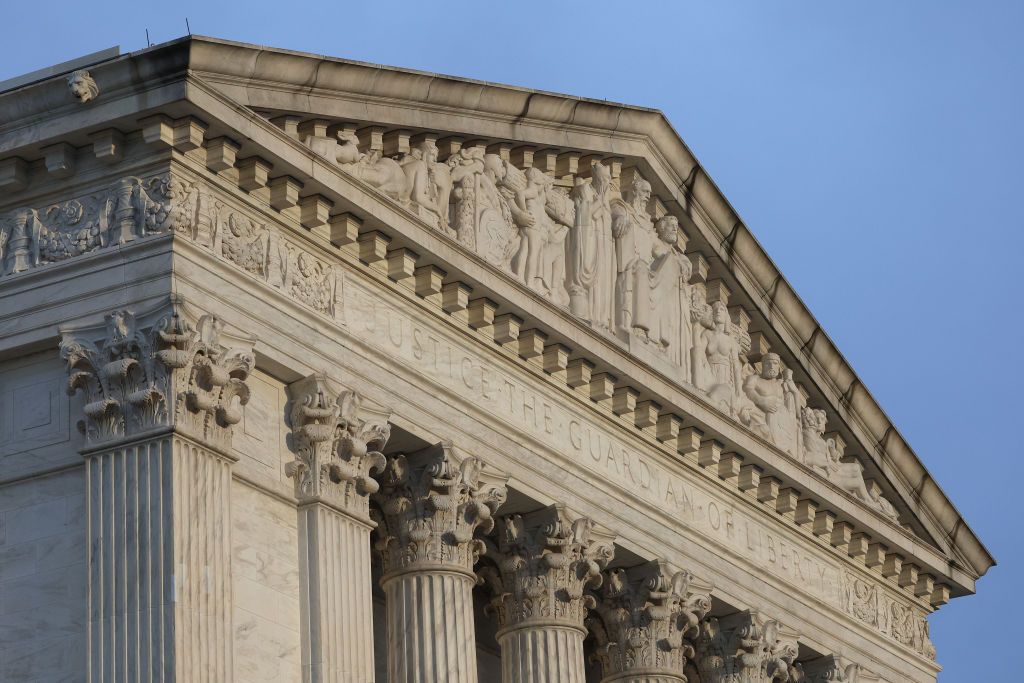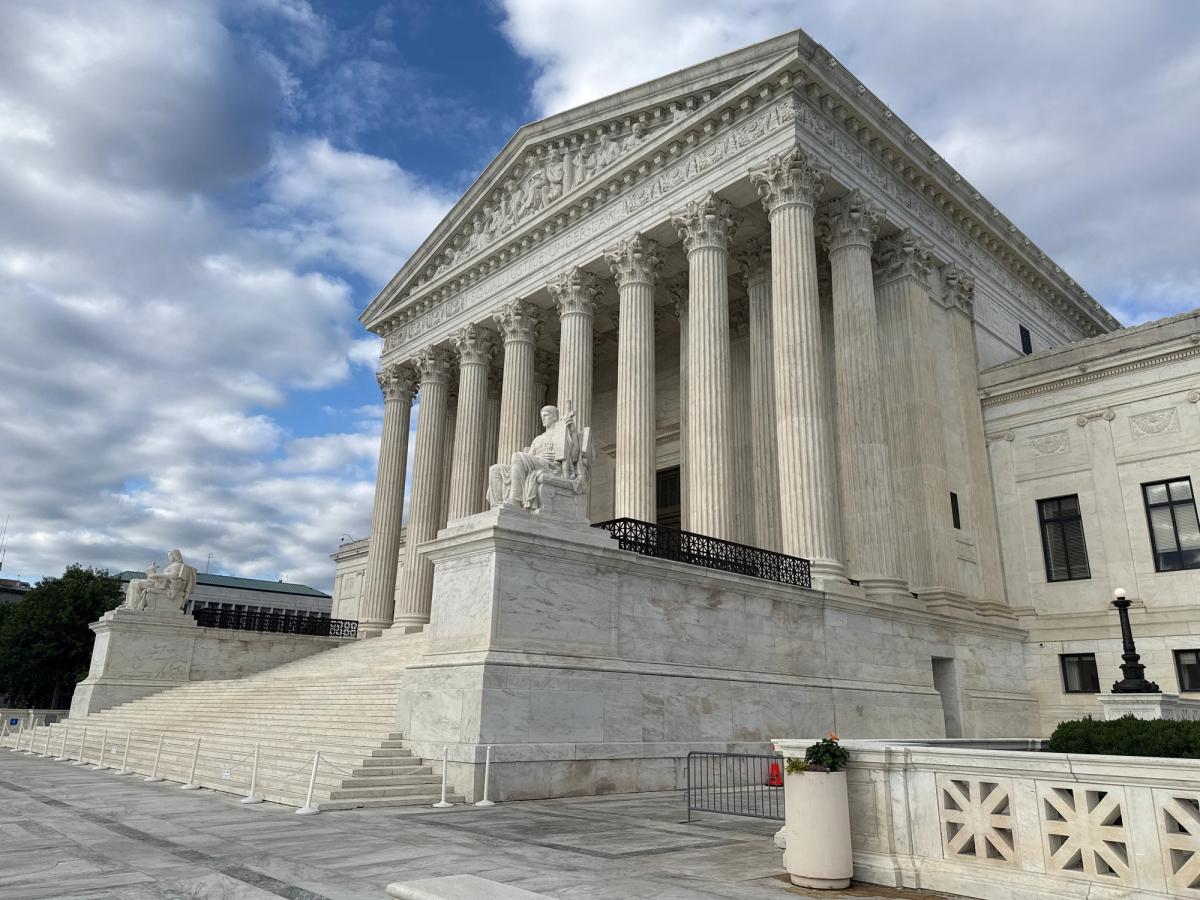



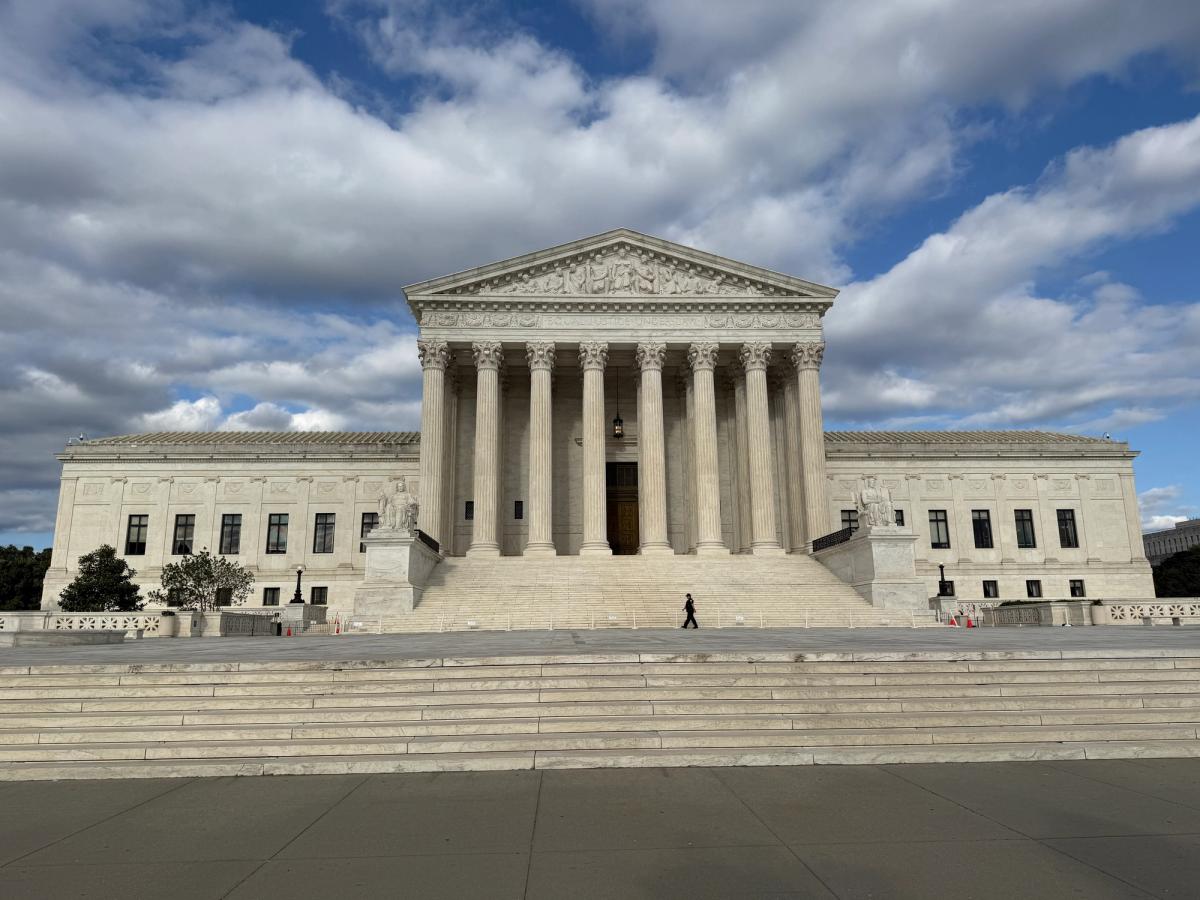
When the justices return to the courtroom on Monday after their summer recess, they will hear argument in one of the biggest cases currently on the Supreme Court’s docket – and certainly one of the most significant business cases of the 2026-27 term. In Suncor Energy Inc. v. County Commissioners of Boulder County, the court will consider whether a lawsuit filed in a Colorado state court, seeking to hold energy companies responsible for their alleged role in climate change and its impact, can go forward, or whether federal law instead bars such claims.
The stakes in the case are high, not only because Boulder is seeking millions of dollars in compensation but also because there are dozens of similar lawsuits pending around the country that could be affected by the court’s decision. The energy companies contend that Boulder and others like it are trying to “impose an enormous ‘carbon tax’ that could ‘bankrupt[]’ the energy industry.” But Boulder insists that its case should be allowed to proceed, telling the justices that the energy companies are in the wrong place “at the wrong time with the wrong arguments.”
The dispute began in 2018, when the city and county of Boulder filed a lawsuit in state court, seeking compensation for some of the costs that they have incurred as a result of protecting their property and those of their residents from the alleged effects of climate change. Boulder contended that the defendants in the case – Suncor – a subsidiary of one of Canada’s largest energy companies, which operates the only two oil refineries in Colorado, and ExxonMobil, the largest energy company in the United States – have long deceived the public about the effects of climate change and the role of fossil-fuel products in those effects; it also argued that Suncor and Exxon Mobil played a role in climate change by producing, refining, and marketing fossil fuels.
The energy companies tried to transfer the case to federal court, but their efforts ultimately failed. They then asked the state trial court to dismiss the case, but it declined to do so.
The companies next went to the Colorado Supreme Court, which agreed to decide whether Boulder’s state-law claims were superseded by federal law. The court acknowledged that the case presents “substantial issues of global import,” but it emphasized that “the question before us is narrow: whether the district court erred in concluding that” Boulder’s claims could go forward under Colorado law. The answer, it concluded, was yes.
Suncor and ExxonMobil came to the Supreme Court in August 2025, asking the justices to take up the case, and the Supreme Court granted their petition for review in February.
Before the justices can consider whether Boulder’s state-law claims can proceed, they will first need to determine whether they have the power to weigh in on the dispute at all, because the Supreme Court can normally only review final decisions by state courts.
The companies insist that the Supreme Court does have that authority, for two separate reasons. First, they say, the Colorado Supreme Court ruling was the kind of final judgment that the Supreme Court has indicated that it can review because that proceeding was not actually an “appeal,” but instead an entirely separate proceeding, in which the companies had asked the state supreme court act under its “original jurisdiction” – that is, as a court of first resort, rather than an appeals court – to supervise the trial court’s actions.
The Supreme Court also can review the case, the companies continue, under an exception to the general rule requiring a final judgment. In Cox Broadcasting Corp. v. Cohn, the companies explain, the justices ruled that they could step in when (among other things) the state court has decided the federal-law issues in the case. Here, they say, the state supreme court “finally decided the question” of whether federal law trumps Boulder’s state-law claims; if the U.S. Supreme Court reversed that ruling, it would “terminate the underlying litigation.”
Boulder counters that the Supreme Court does not have the power to take up the case because the proceeding in the Colorado Supreme Court was not a “self-contained” proceeding at all. The energy companies, Boulder emphasizes, did not ask the Colorado Supreme Court to issue an order instructing the district court to take action. Instead, Boulder writes, they merely asked the state court to review the district court’s ruling and, ultimately, reverse it. The fact “[t]hat the Colorado Supreme Court called the appeal an ‘original proceeding’ does not change the outcome, which turns on the nature of the proceeding, not on labels,” Boulder argues.
The dispute also is not covered by the Cox Broadcasting exception to finality, Boulder continues, because the energy companies still have other federal-law defenses – for example, based on the Constitution – that they could raise when the case returns to the state court.
On the merits of the dispute – whether federal law bars Boulder’s claims – the companies point first to the structure of the Constitution itself. They say that, when they agreed to become part of the United States, the states gave up any right to try to regulate “inherently transboundary issues such as global climate change” on their own. Indeed, the companies write, the Supreme Court has made clear that “federal law governs disputes over the regulation of air and water in their ambient or interstate aspects.”
And because the injuries for which Boulder is seeking compensation, the companies write, are “allegedly caused by greenhouse-gas emissions occurring outside the United States,” Boulder’s claims are also foreclosed because the Constitution gives the federal government control over foreign affairs. Lawsuits like Boulder’s, the companies assert, “interfere with the federal government’s extensive diplomatic efforts, which balance the need to address climate change on the international level with other competing foreign and domestic interests.”
The companies next contend that the Clean Air Act also bars Boulder’s claims because it sets up a “comprehensive statutory scheme” to regulate air quality throughout the United States, giving the Environmental Protection Agency primary responsibility for setting emissions standards. The companies maintain that if Congress wants state law to apply to interstate pollution, “it must clearly express its intention to do so.”
Boulder pushes back, stressing that the companies have not pointed to anything in the text of the Constitution that actually prohibits Boulder’s state-law claims. To the contrary, Boulder observes, many environmental problems can have effects that cross state lines, and courts have long applied state law to address such harms. “That,” Boulder says, “forecloses any claim that the Constitution silently forbids the practice.”
Nor does the federal government’s power over foreign affairs require the dismissal of Boulder’s claims, Boulder writes. To prevail on such an argument, Boulder contends, the energy companies would have to “show a clear conflict with an express federal foreign policy embodied in” a document such as “a statute, self-executing treaty, or executive agreement.” But they cannot do so, Boulder argues, instead “invoking only generalized diplomatic concerns and government officials’ policy preferences, which cannot displace state law.”
The Clean Air Act similarly does not supersede its claims, Boulder continues. That law “regulates point-source emissions” – pollutants released from a single, fixed location – and it is seeking only money to compensate for the harms caused by the energy companies; it is not trying to block sales or impose emissions controls. Moreover, Boulder adds, because the EPA has recently indicated that it does not have the power under the Clean Air Act “to directly regulate some (perhaps any) greenhouse-gas emissions,” the companies cannot now argue that the same law nonetheless prohibits “claims indirectly relating to greenhouse-gas emissions.” Finally, Boulder emphasizes, if Congress believed that efforts like Boulder’s to redress the harms from climate change are instead “best addressed at the federal or international level,” Congress could enact a law to do so – and Congress is in fact currently considering legislation that would give the companies “the immunity they seek.”
The Trump administration filed a “friend of the court” brief supporting the energy companies. It tells the justices that lawsuits like Boulder’s “share the same avowed goal: to address a global problem caused by global conduct with global effects by imposing open-ended liability on fossil-fuel producers for every far-downstream consequence in that State that a state court attributes to global warming.” But, the government argues, “[t]he Constitution rejects that butterfly-effect theory of state authority.” “Our federal system would disintegrate,” the government stresses, “if each State could tackle inherently national or international problems by forcing its regulatory prescriptions on the other 49.”
Other “friend of the court” briefs supporting the energy companies similarly contend that allowing Boulder’s lawsuit to go forward will have ripple effects far beyond this case. A brief from the Washington Legal Foundation argues that such a result “would have cataclysmic consequences for the Nation—indeed, the world.” “If even a fraction of” the potential plaintiffs “sue and win multi-billion-dollar judgments (as Boulder seeks here),” the group writes, “it would wipe out the corporate infrastructure (foreign and domestic) undergirding over 80 percent of world energy use and 83 percent of our domestic mix.”
Another brief, filed by two former state solicitors general from Arizona, asserts that, unless the Supreme Court puts a stop to Boulder’s lawsuit, similar lawsuits in state courts will continue “in areas ranging from climate to plastics to cars to guns.” They urge the justices “to stop the use” of such suits “as an ideological, cross-border battering ram.”
In Boulder’s corner, a brief by climate economists counters that “the economic evidence does not support the claim that” requiring energy companies to pay compensation for their role in climate change “would destabilize the American economy.”
The Natural Resources Defense Council, in its own brief supporting Boulder, pushes back against suggestions by the energy companies and their supporters “that greenhouse gas emissions cannot be traced to their sources, and that the climate change harms affecting Boulder cannot be attributed to those sources.” To the contrary, the group writes, scientific experts “can identify and quantify human contribution to observed changes in the climate system,” and if Boulder’s claims were to go to trial, it “could draw on these methodologies to demonstrate the causal links it alleges between the climatic harms it is experiencing and” the companies’ emissions.
And the Brady Center to Prevent Gun Violence, joined by the Giffords Law Center to Prevent Gun Violence, seeks to assure the justices that allowing Boulder’s lawsuit to proceed would not open the floodgates to unlimited lawsuits against large companies. The groups emphasize that various doctrines protect “out-of-state actors while leaving space for the exercise of traditional police powers to address serious threats to States’ residents” – for example, limits on the extent to which out-of-state defendants can be brought into court and the requirement to prove that the defendants caused the plaintiffs’ injuries.
The picture became even more complicated on Sept. 28, when Justice Samuel Alito – who owns stock in oil and gas companies – announced that he would not participate in the Boulder case. This creates the possibility of a 4-4 tie, which would leave the Colorado Supreme Court’s decision allowing Boulder’s claims to go forward in place.
Continue reading...
[ H/T SCOTUSblog ]