

Our SCOTUStoday subscribers are certainly court watchers. But are you also court forecasters? Yesterday, we announced a forecasting contest that we developed in collaboration with Good Judgment Inc. Enter to test your prediction skills against other readers and artificial intelligence models.
Hungry for more information about the 2026-27 term? In one week, Pacific Legal Foundation is hosting a virtual term preview event, with SCOTUSblog’s Zach Shemtob as one of the panelists. Register here to watch the event, which will begin at noon EDT on Thursday, Oct. 8.
At the Court
On Wednesday, the U.S. Court of Appeals for the 6th Circuit halted the execution of Christa Pike, who was sentenced to death for the 1995 murder of Colleen Slemmer. Tennessee quickly appealed that decision to the Supreme Court, which on Wednesday evening cleared the way for the execution to move forward over a dissent from Justice Sonia Sotomayor, joined by Justices Elena Kagan and Ketanji Brown Jackson. Tennessee attempted to carry out the execution, but Pike survived and the execution was stopped. Gov. Bill Lee has halted the remaining execution scheduled to take place in Tennessee this year. For more on the case, see the On Site section below.
On Monday, the justices met for the annual “long conference” to consider petitions for review that built up during the summer recess. We are expecting the court to release a list of the cases granted during the conference sometime this week.
Monday, Oct. 5, marks the official start of the 2026-27 term. The justices will hear two oral arguments that day.
Morning Reads
States That Ban Abortion Challenge Shield Laws for Providers Who Mail Pills
Pam Belluck and Rick Rojas, The New York Times (paywalled)
On Wednesday, Louisiana, Alabama, and Arkansas, three states with strict abortion laws, filed suit in the Supreme Court against New York, Massachusetts, and California, escalating “the battle between states that outlaw abortion and states that support making abortion available nationwide,” according to The New York Times. Louisiana, Arkansas, and Alabama contend that the other states’ “abortion shield laws – which protect health providers who prescribe and mail abortion pills to patients in states with abortion bans – violate constitutional provisions, including one intended to require one state to respect another’s laws.” The Times noted that Wednesday’s “Supreme Court filing is the first time states with abortion bans are attempting legal action directly against states with abortion shield laws.”
U.S. Supreme Court Begins Term With Historically Low Ratings
Jeffrey M. Jones, Gallup
As the Supreme Court enters its 2026-27 term, Americans’ views on the court remain low. So low, in fact, that Gallup described them as “the least positive” they’ve been “since Gallup began polling on the court in 1972.” The new survey showed that 46% “of U.S. adults say they have a great deal or fair amount of trust in the judicial branch of the federal government, one percentage point below the 47% to 49% range measured between 2022 and 2025.” And the court’s job approval rating sits at 34%. Researchers noted that Democrats’ “approval of the Supreme Court is essentially at a record low, with 12% approving (a low of 11% approved in July 2025). Approval among independents, 31%, is at a low point for that group, while 65% of Republicans approve.” Although that figure for Republicans is higher than it was in July, “the current figure is still significantly below their 79% approval measured in September 2025.”
Bayer faces trial test of remaining Roundup claims after US Supreme Court win
Dietrich Knauth, Reuters
In June, the Supreme Court held that the federal law governing pesticide sales bars state lawsuits aimed at holding a pesticide company liable for failing to include a cancer warning on a pesticide’s label if the EPA did not require such a warning. It was a big win for Bayer and its Roundup weedkiller, but it did not resolve all ongoing litigation over the alleged link between Roundup and cancer, because some state lawsuits involve “claims that Roundup was defectively designed and unsafe for sale, legal theories that the Supreme Court’s June ruling did not directly address,” according to Reuters. A trial involving these other legal theories began on Tuesday in Missouri and it “could provide an early indication of how courts and juries will treat design-defect and other claims that do not rely on allegations that Roundup’s label failed to warn consumers about cancer risks.”
Trump’s latest global tariffs face trade court challenge
Kevin Breuninger, CNBC
On Wednesday, “[a] panel of three judges at the U.S. Court of International Trade” heard arguments “from a group of small businesses and Democratic-led states who say Trump’s sweeping ‘Section 301’ tariffs,” which were imposed as part of the Trump administration’s effort to replace the tariffs struck down by the Supreme Court in February, “overstep the law,” according to CNBC. “The latest tariffs put 10% or 12.5% rates on goods from 86 countries, covering 99.4% of U.S. imports. The Trump administration said they were imposed in response to the targeted countries failing to effectively enforce bans on the trade of goods produced using forced labor practices.” An attorney for the challengers rejected this claim on Wednesday, telling the Court of International Trade “that a ‘constellation of factors’ show the government’s justification was a ‘pretext’ in pursuit of reviving Trump’s worldwide tariff regime.”
Despite Jewish charter school win, Oklahoma archdiocese says it has 'no plan' to advance St. Isidore
Beth Wallis, StateImpact Oklahoma
Last week, a Jewish school in Oklahoma moved one step closer to becoming the nation’s first religious charter school when a federal judge characterized the state’s effort to bar it from opening as religious discrimination and granted the school a preliminary injunction. The dispute may ultimately land before the Supreme Court, which last year deadlocked 4-4 in a case over a different religious charter school in Oklahoma – St. Isidore of Seville Catholic Virtual School – after Justice Amy Coney Barrett recused herself. As the Jewish school fights to open, StateImpact Oklahoma checked in with the Archdiocese of Oklahoma City about whether it will revisit its plan to open St. Isidore if the Jewish school succeeds. The archdiocese’s director of communications, John Helsley, “said many of the families committed to St. Isidore lost interest after the [Supreme Court’s] decision.” “So much momentum was lost,” he noted.
On Site
Court News
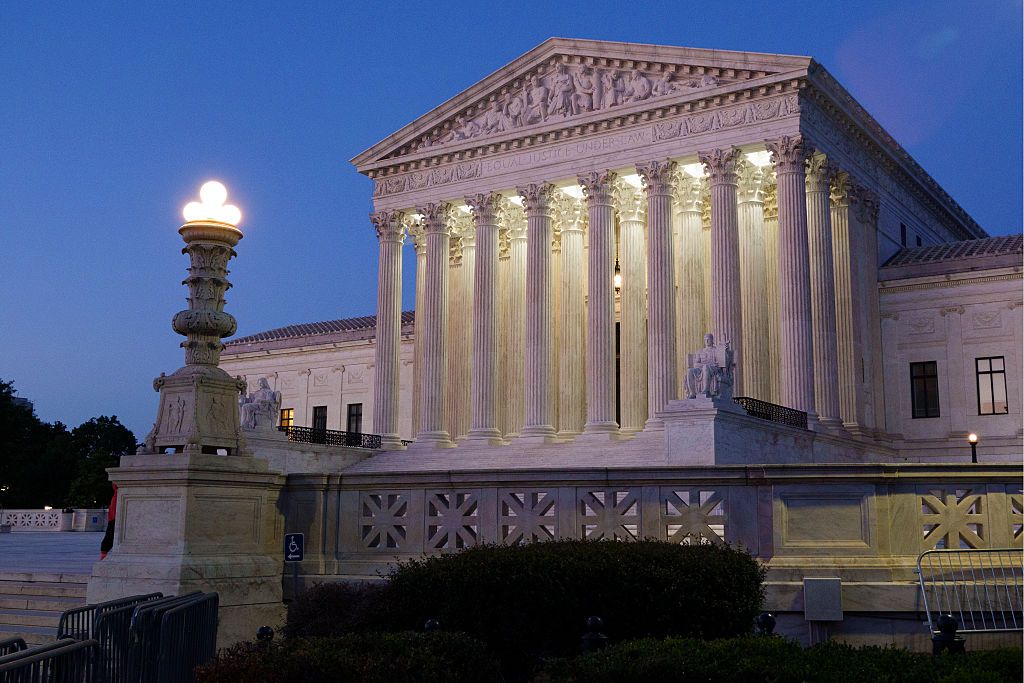
Supreme Court allows for execution of only woman on Tennessee’s death row
The Supreme Court on Wednesday night cleared the way for the execution of Christa Pike, the only woman on Tennessee’s death row. In a brief, unsigned order, the court lifted a ruling by the U.S. Court of Appeals for the 6th Circuit that had paused Pike’s execution shortly before it was scheduled to take place on Wednesday morning.
From the SCOTUSblog Team
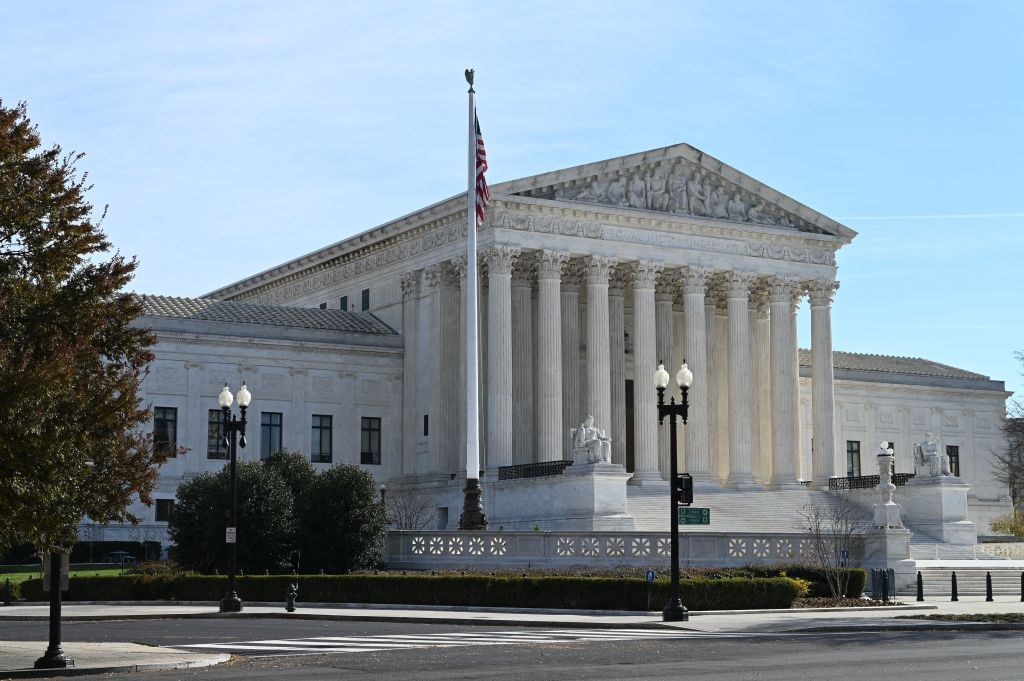
Announcing our first SCOTUS forecasting contest
As noted above, we have launched a SCOTUS forecasting contest. This is your chance to formally prognosticate how the court will decide the most important cases of the term, and to see how SCOTUSblog readers do against the machines.
Case Preview
Justices to consider when, if ever, federal district courts may review disputes over veterans’ benefits
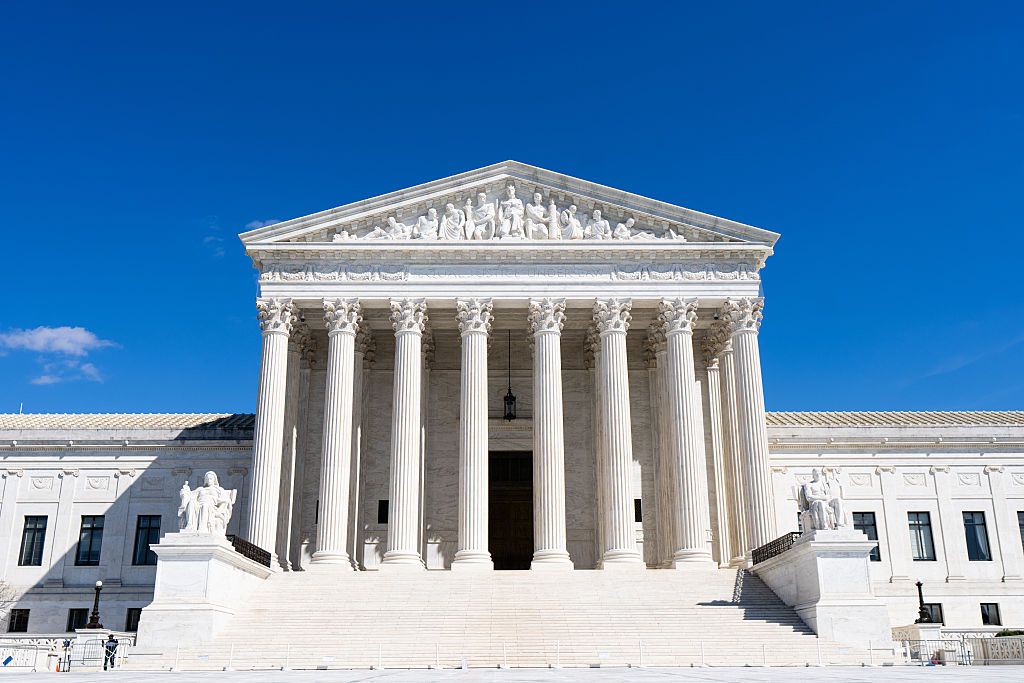
On Monday, the Supreme Court will revisit a 52-year-old ruling on judicial review of veterans’ benefits decisions as it considers whether a federal district court may hear a constitutional challenge to a law limiting disability benefits for certain incarcerated veterans.
Contributor Corner
Planes, beer, and forfeiture
In her inaugural Common Law column, Julia D. Mahoney explored Jouppi v. Alaska, a case on the Eighth Amendment’s excessive fines clause that stems “from the seizure of an airplane valued at $95,000 as punishment for the misdemeanor offense of transporting a small quantity of beer to a ‘dry village’” in Alaska. Jouppi, according to Mahoney, “affords the court a golden opportunity to make clear that rights to acquire and retain property are essential not just for the rich but also for middle- and working-class individuals.”
A Closer Look
Trump v. Cable News Network, Inc.
This Closer Look expands on the article Amy wrote when President Donald Trump filed his petition for review.
As President Donald Trump clashes with CNN and other networks over White House press access, an earlier battle between Trump and CNN is awaiting consideration by the Supreme Court. In a petition for review filed in August, the president asked the justices to take up his defamation case against the network and determine whether a publisher remains protected by the First Amendment “when it conveys provably false factual accusations through a pejorative label and accompanying inflammatory imagery.”
The defamation dispute has its roots in CNN’s coverage of the aftermath of the 2020 presidential election. Trump contends that when CNN used the phrase “the Big Lie” to describe his insistence that the election had been stolen and that he was the actual winner, it did so to link him with Adolf Hitler and Nazi propaganda – which, Trump asserts, was defamation.
A federal judge in Fort Lauderdale, Florida, dismissed Trump’s lawsuit against the network, determining that the statements forming the basis of Trump’s claim were “opinion, not factually false statements, and therefore are not actionable.”
In November 2025, in an eight-page, unsigned opinion, the U.S. Court of Appeals for the 11th Circuit upheld that ruling, explaining that whether a plaintiff has a defamation claim hinges on whether the defendant made a false statement of fact. CNN, according to the 11th Circuit, had not “explicitly claimed that Trump’s ‘actions and statements were designed to be, and actually were, variations of those [that] Hitler used to suppress and destroy populations.’” It rejected Trump’s claim that the association between Hitler and the phrase “Big Lie” was “unambiguous enough to constitute a statement of fact,” highlighting rulings from other courts of appeals in which terms like “fascist” were not found to be statements of fact. “If ‘fascist’—a term that is, by definition, political—is ambiguous, then it follows that ‘Big Lie’—a term that is facially apolitical—is at least as ambiguous,” the 11th Circuit concluded.
In August, Trump came to the Supreme Court, asking the justices to review the 11th Circuit’s ruling. In his petition, he points to the court’s 1990 decision in Milkovich v. Lorain Journal Co., holding that the First Amendment did not shield an article that was “categorized as ‘opinion’ as opposed to ‘fact’” from a defamation claim. Milkovich, according to Trump, “establishes that a charge of deliberate dishonesty does not become constitutionally immune when conveyed through supposed commentary, inference, or opinion.”
Trump asserts that the federal courts of appeals have divided over how to apply Milkovich, creating what’s known as a circuit split – an important factor that the Supreme Court considers in deciding whether to grant review. Four courts of appeals, Trump writes, use “contextual, multi-factor tests to consider whether a statement of opinion conveys objectively verifiable facts to a reasonable observer,” assessing the context surrounding the statement and its “general tenor,” among other factors. These detailed analyses, Trump continues, allow the courts “to implement Milkovich’s central inquiry into whether an ostensibly opinionated statement conveys objectively verifiable facts.” The 11th Circuit, on the other hand, effectively made “a ‘subjective assessment,’” according to Trump, and having determined that the phrase “Big Lie” was ambiguous, “ignored the false factual claims for which CNN used the ‘Big Lie’ as a shorthand, including its use of photographs comparing President Trump to Hitler.”
On Sept. 14, CNN waived its right to respond to Trump’s petition, and the court scheduled Trump v. Cable News Network, Inc. for consideration at the justices’ private conference on Oct. 9. On Tuesday, the court called for a response from CNN, postponing when the court will consider whether to grant this petition.
SCOTUS Quote
Continue reading...
[ H/T SCOTUSblog ]