


Justice Benjamin R. Curtis resigned from the Supreme Court on this day in 1857. He is perhaps best known for leaking his dissenting opinion in Dred Scott v. Sandford before the ruling was handed down, enabling at least one newspaper to predict – and then report on – the decision in advance. Curtis reportedly resigned in part because of the ensuing feud between himself and Chief Justice Roger B. Taney.
At the Court
On Tuesday, the Supreme Court granted the Trump administration’s request to pause a district-court order barring the government from removing noncitizens to countries that are not identified in their removal orders without first providing the noncitizens an opportunity to raise their concerns about facing persecution or torture there. The court also announced that it would hear argument in December on, among other things, the legality of third-country removals and whether the district court had the authority to hear the dispute and offer class-wide relief. For more on the case, see the On Site section below.
Also on Tuesday, the court denied two requests for a stay of execution from Curtis Beasley, who was sentenced to death for the 1995 murder of Carolyn Monfort. Hours later, Beasley was executed in Florida.
Later on Tuesday, the court denied a request for a stay of execution from Christa Pike, who is scheduled to be executed in Tennessee today for the murder of Colleen Slemmer.
On Monday, the justices met for the annual “long conference” to consider petitions for review that built up during the summer recess. We are expecting the court to release a list of the cases granted during the conference later this week.
Monday, Oct. 5, marks the official start of the 2026-27 term. The justices will hear two oral arguments that day.
Morning Reads
Trump Admin Sued Over Birthright Citizenship Executive Order
Billal Rahman, Newsweek
On Monday, three families filed “a new nationwide class-action lawsuit” against President Donald Trump’s second executive order on birthright citizenship, which “directs federal agencies not to recognize the citizenship of certain U.S.-born people when neither parent is an American citizen,” according to Newsweek. Specifically, it applies “when either parent is considered an ‘alien enemy,’ when either is a foreign government employee, when a parent engages in a commercial transaction to ‘purchase or access birthright citizenship,’ or when a parent engages in fraud to obtain citizenship. It also covers people born in a U.S. territory or territorial waters where Congress has not conferred citizenship by statute.” The new lawsuit, filed in the U.S. District Court for the District of Columbia, “argues that the order violates the Fourteenth Amendment and federal law by creating new exceptions to the longstanding principle that nearly everyone born on U.S. soil is an American citizen.” In June, the Supreme Court struck down Trump’s first executive order on birthright citizenship.
9 states have new US House districts for the midterm elections after Trump urged changes
David A. Lieb, Associated Press
Last year, President Donald Trump urged leaders in red states to undertake “a mid-decade redrawing of congressional maps,” setting off a chaotic redistricting push. “All told, new congressional districts are being used this year in Alabama, California, Florida, Louisiana, North Carolina, Ohio, Tennessee, Texas and Utah. All favor Republicans except in California and Utah, where the new boundaries could help Democrats,” according to the Associated Press. The AP noted that the Supreme Court made some of the new maps possible with its April ruling “weaken[ing] federal Voting Rights Act protections for districts with large minority populations,” but also blocked a tenth state – Missouri – from using a new map in November.
After a Life in Isolation, a Tennessee Woman Waits for Her Execution
Emily Cochrane, The New York Times (paywalled)
Christa Pike is scheduled to be executed today for the murder of Colleen Slemmer. “If her execution goes as planned on Wednesday, she will be the first woman executed in Tennessee in more than 200 years,” according to The New York Times. “Pike, now 50, does not deny her guilt. Still, some experts question whether she would be sentenced this way today. Her abusive childhood never came up at trial, something defenders now ask judges and juries to consider in sentencing,” and neither did mental health concerns. “Her age is another factor; [at 18] she was just above the legal threshold to be considered for the death penalty.” Pike had asked the Supreme Court to stay her execution, raising questions about “whether medical staff can administer the lethal drugs without causing excessive pain.” She asserted that “‘the mental suffering and psychological terror she will experience’ under the protocol qualifies as cruel and unusual punishment under the Eighth Amendment.”
Short Shrift? Supreme Court Clerk Hiring Mostly Skips This Appeals Court
Jimmy Hoover, Law.com (paywalled)
Supreme Court clerks typically arrive at One First Street via “the nation’s top law schools” and “one or more previous clerkships on a U.S. court of appeals.” But “the nation’s 13 federal appeals courts” are not equally represented on the resumes of Supreme Court clerks. In fact, “the U.S. Court of Appeals for the Federal Circuit is a remarkable outlier, having sent just one of its former clerks on to the chambers of a Supreme Court justice,” according to Law.com. “It’s a stark disparity that some attribute – at least in part – to an unfair perception that the Federal Circuit is somehow less prestigious than other federal courts of appeal. Congress created the specialized court in 1982 to bring uniformity to patent law and granted it jurisdiction over the areas of international trade and veterans claims as well.”
Why ‘Let’s go, Brandon’ is worth a legal fight
Conor Fitzpatrick, The Washington Post (paywalled)
In a column for The Washington Post, Conor Fitzpatrick highlighted a pending petition for review that asks whether “the First Amendment permits schools to censor nondisruptive political speech for ‘lewdness’ or ‘vulgarity’ ... if any teacher could ‘reasonably’ view it that way.” The case centers on sweatshirts printed with the phrase “Let’s go, Brandon,” a reference to a sports reporter’s confused interpretation of what the crowd at a NASCAR race was chanting. (Spectators were actually shouting “F--- Joe Biden.”) Fitzpatrick’s organization, the Foundation for Individual Rights and Expression, represents brothers who wore the sweatshirts to school, where they were asked to change and threatened with suspension. In his column, Fitzpatrick urged the Supreme Court to take up the case and rule that “
On Site
Court News
Supreme Court to hear argument on Trump administration’s deportation of immigrants to third-party countries
The court will hear oral arguments in December in a challenge by immigrants to the government’s practice of deporting them to countries that are not identified in their removal orders. In a brief, unsigned order, the justices cleared the way for the government to continue such “third-country removals” until they can consider, and rule on, the merits of the dispute. The court’s three Democratic appointees – Justices Sonia Sotomayor, Elena Kagan, and Ketanji Brown Jackson – indicated that they would have denied the Trump administration’s request (and, as a result, kept the third-country removals on hold).
SCOTUS Outside Opinions
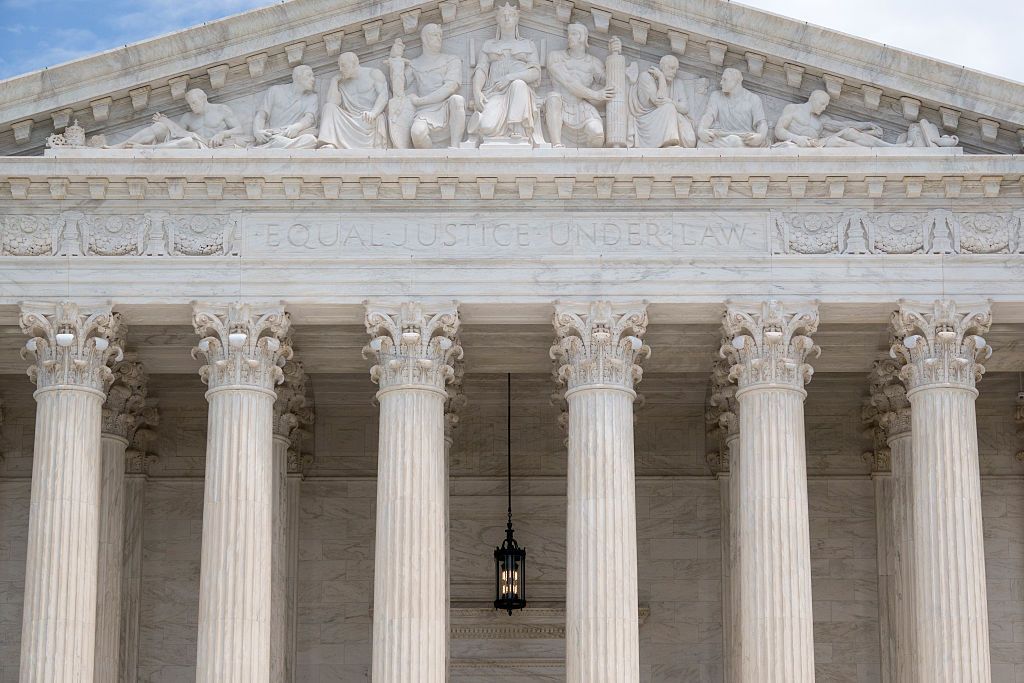
The Supreme Court is building power no one gave it
In a column for SCOTUSblog, Maria Glover revisited a number of rulings on “elections, the balance of power between the president and Congress, and who” has a legal right to sue, contending that, together, they show how “the Supreme Court is accumulating and manufacturing power for itself far beyond that which the Constitution confers.”
SCOTUS Outside Opinions
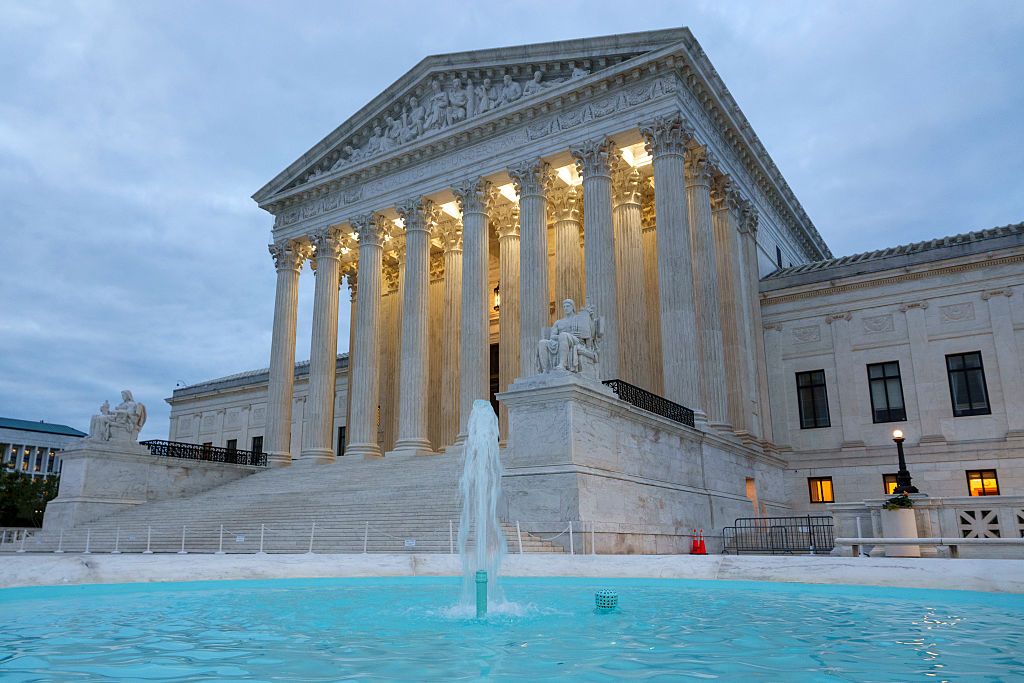
The Supreme Court’s two decades of constitutional change
In the first entry in their series of columns for SCOTUSblog on constitutional change over the past two decades, Josh Blackman and Randy Barnett explored, perhaps counterintuitively, how much hasn’t changed across the history of the court.
Podcasts
Advisory Opinions
Is Press Access a Constitutional Right?
David French talks to CNN’s chief legal analyst, Elie Honig, at a time when CNN is in the news following President Donald Trump’s ban of the cable network from the White House. Honig walks through CNN’s lawsuit seeking to regain access and the First Amendment argument media outlets are making. They also discuss the Supreme Court’s latest ruling on Missouri redistricting.
A Closer Look
The Court’s “Class Photo”
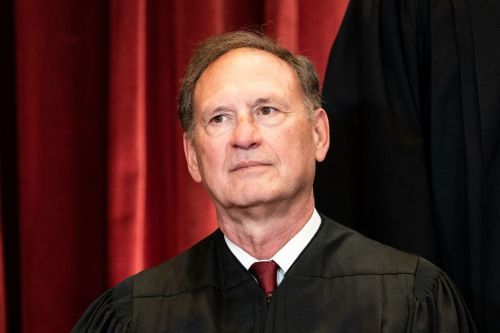
When the justices return for the new term this fall, they will do so with a group photo taken back in October 2022 (a few months after Justice Ketanji Brown Jackson joined the court).
Although SCOTUS enthusiasts might prefer to have an updated group portrait of the justices every year, we will (likely) have to wait until a new justice joins. The court typically sits for an “official group photograph” only when its membership changes. That said, some courts have had two photos taken – in 2003, a photo was done without a new justice after the curator suggested one be taken following an “unprecedented” nine years of the same court (which would set the modern record for the longest unchanged bench, of nearly 11 years, in June 2005).
To date, 55 different groups of justices have posed for a “class photo.” The first group portrait came with the Chase court in February 1867 (the court’s clerk is also in the shot, which is the first and last time a non-justice has made the official portrait since). Although the class photo’s origin is unclear, it “probably began at the urging of Washington photographers interested in print sales,” per the court’s website, and has had several evolutions – like changing from one line to two rows.
Since at least 1899, the chief justice has taken the middle chair, while everyone else sits by seniority (similar to how it is on the bench), alternating to the right and left of the chief and filling the front row before the back, meaning the newest justice always stands at the right end of the back row. This also means that the longer a justice is on the court, typically the more towards the middle they are in the photo – as one professor has dryly noted, “[y]ou may be relieved that you’ve finally got a chair, but by the time you get a chair, because of seniority, it means you’re closer to the end than you are to the beginning.”
The distinct velvet drape background has been in every photo since 1930, although the picture wasn’t always taken at the court itself until the 1940s. And in 1941, the court began admitting press to take their own photos after the official one was taken (before this, the press had to get a copy from the court’s photographer).
Today, press photographers have just two minutes to take photos, a limit set by Chief Justice William Rehnquist, who considered the previously three-minute window excessive. As one photographer of the 2017 photo said to Time magazine, “The minute we’re in, the clock is started and that’s it.” Journalists have also noted that not every justice behaves perfectly, with Justice Clarence Thomas being particularly disruptive since he draws his neighbors into side conversations and banter.
And for those interested in Supreme Court lore, there’s the missing 1924 photo. Per “urban legend,” Justice James McReynolds (known for his anti-Semitism) caused the court to skip its 1924 photo by refusing to sit next to Justice Louis Brandeis, who was Jewish. But, according to collections manager at the Curator’s Office Franz Jantzen, the court had already posed together at two studios in April 1923. McReynolds appeared at all 10 documented new photo sittings during his tenure, and the seating chart would have put him beside Brandeis only briefly in 1922 when the court had a vacancy and no sitting was considered. That said, McReynolds did refuse to sit again until the court’s membership changed, invoking the old Kentucky saying “the hog’s eye is sot” (roughly meaning “it’s all over”).
The “class photo” itself has also changed over the years, with the 2017 portrait the first built digitally from each justice’s own favorite frame. The 2022 photo was the first to include four women. But, regardless of when the next photo arrives (whether it comes with a new justice or because the justices decide otherwise), it will connect the photo chain of overlapping justices back to the 1867 court.
SCOTUS Quote
Continue reading...
[ H/T SCOTUSblog ]