




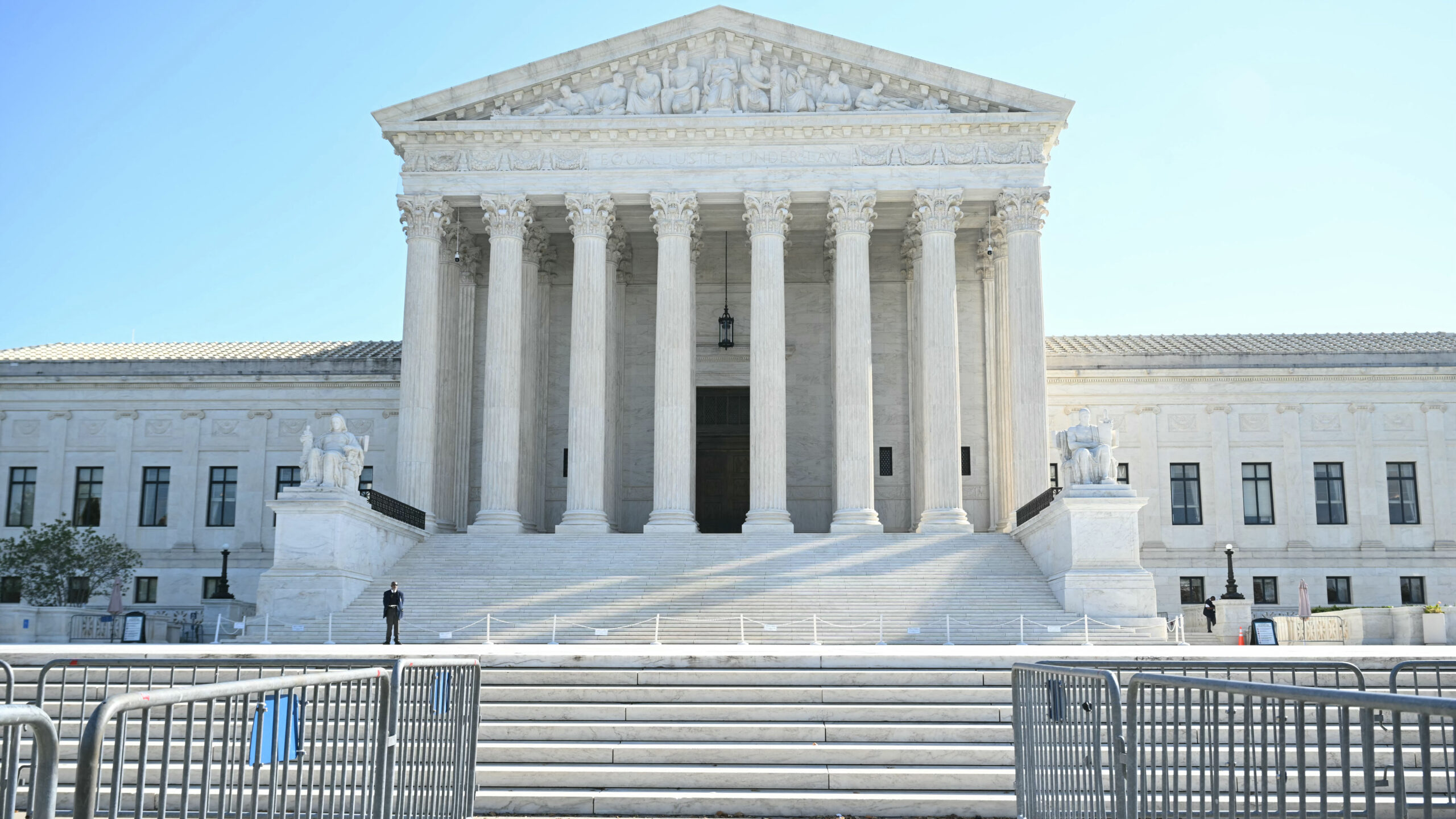
The Supreme Court sided with the Federal Communications Commission on Wednesday, allowing the agency to avoid a Democrat-led challenge to its policy of extending discounted TV and radio advertising rates to political parties.
“The Commission may exercise its discretion to set its own procedures and schedule for resolving such applications,” the majority said Wednesday in an unsigned opinion. Two of the Democrat appointees on the court dissented, Justices Sonia Sotomayor and Ketanji Brown Jackson.
Federal law already required TV and radio stations using the public airwaves to provide lower rates to “any person who is a legally qualified candidate for any public office in connection with his campaign.” In March, the FCC applied the discounted rates to ads run by political parties in coordination with candidates, as opposed to just TV and radio spots paid for by the individual candidates.
Democrat candidates, including incumbents Sen. Jon Osoff of Georgia and Rep. Kristen McDonald Rivet of Michigan and Senate candidates Sherrod Brown of Ohio and Roy Cooper of North Carolina, challenged the policy in an election year when Republican committees have a cash advantage over their Democratic counterparts. However, many Democratic candidates have outraised Republicans in key races.
The opinion came less than three weeks ahead of Election Day, as political ad spending is projected to reach $11.6 billion this cycle, according to tracking by the firm AdImpact.
The Republican National Committee filed an amicus brief in the case, first with the 4th U.S. Circuit Court of Appeals and later with the Supreme Court.
“Democrats tried to silence Republicans just weeks before Election Day, and the Supreme Court shut them down,” RNC Chairman Joe Gruters said in a public statement. “The RNC helped stop this blatant attack on political speech, and we’ll keep fighting to protect Republicans’ ability to connect with voters.”
The high court reversed the 4th Circuit’s decision to block the FCC policy. In a 2-1 majority opinion, the circuit court said the FCC was trying to “create from whole cloth a new rule entirely outside the purview of judicial review.”
Continue reading...
[ H/T The Daily Signal ]