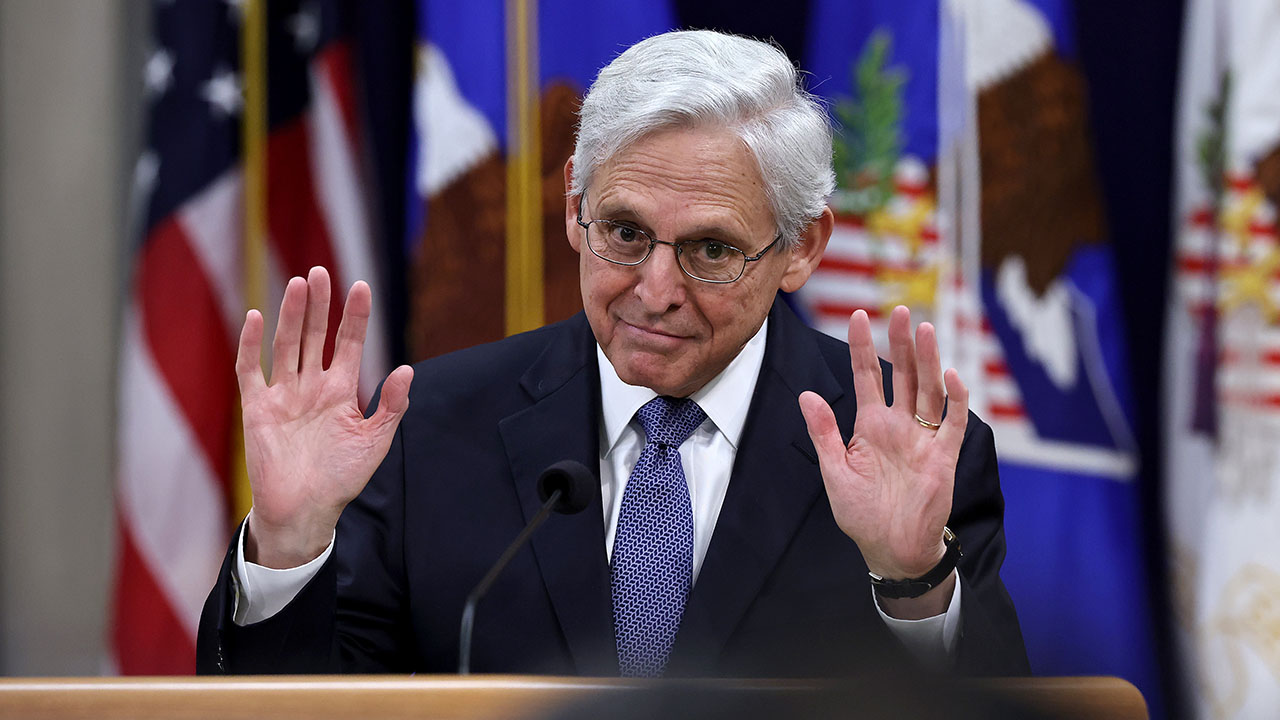
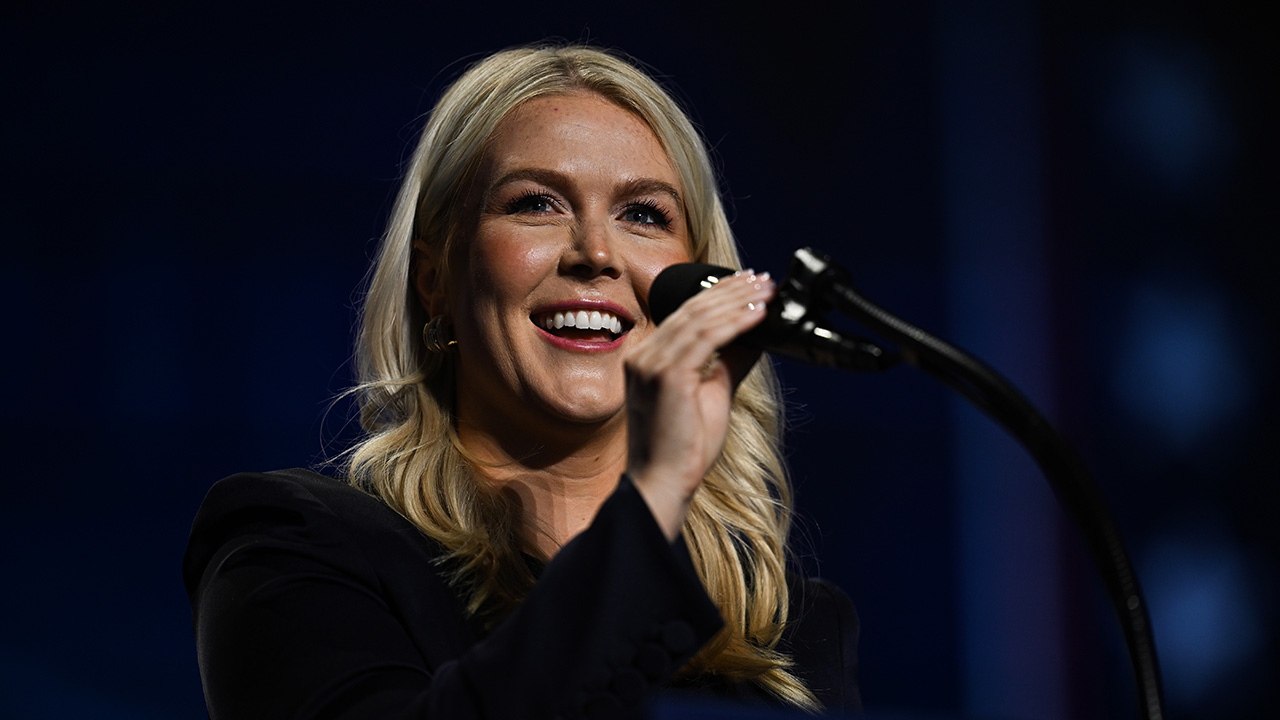

It’s the first Monday in October, which means it’s the first day of a new Supreme Court term. Amy commented on what to watch in the months ahead in an interview with PBS News.
At the Court
The Supreme Court will release an order list this morning at 9:30 a.m. EDT. It’s expected to include a lengthy list of petitions denied during last week’s long conference.
The justices will hear argument today in two cases: Suncor Energy Inc. v. County Commissioners of Boulder County, on whether a lawsuit filed in Colorado state court seeking to hold energy companies responsible for their alleged role in climate change can go forward, or whether federal law instead bars such claims; and Johnson v. United States Congress, on whether a federal district court may hear a constitutional challenge to a law limiting disability benefits for certain incarcerated veterans. The first oral argument is set to begin at 10 a.m. EDT.
Tomorrow, the justices will hear argument in Anderson v. Intel Corporation Investment Policy Committee, a dispute under the Employee Retirement Income Security Act on how to handle claims that employers have invested employees’ retirement funds imprudently.
On Sept. 28, the Trump administration brought a dispute over the Federal Bureau of Prison’s policy on healthcare and accommodations for transgender inmates to the interim docket. The court has asked the challengers to respond to this request by 4 p.m. EDT on Thursday.
Morning Reads
As Midterms Near, Justice Alito Says He Considers Each Year Whether to Retire
Abbie VanSickle, The New York Times (paywalled)
In an interview clip released on Friday by CBS News, Justice Samuel Alito explained “that he ‘thought about’ retiring during the Supreme Court term that concluded in July but decided to continue serving out of a belief that he was making ‘a valuable contribution.’” “Well, it’s something I think that somebody at my age has to think about every term,” he said, according to The New York Times. “But I thought that I could still make a valuable contribution, which is why I became a justice and a judge in the first place. So that was basically it.”
Alito on Trump’s praise of him, criticism of fellow justices: ‘I put all of that out of my mind’
Elliott Davis, The Hill
In an interview with Fox News that aired on Sunday, Justice Samuel Alito addressed President Donald Trump’s comments on the Supreme Court, saying “that he tries not to pay too much attention to President Trump’s frequent praise of him – and recent criticism of some of his fellow justices.” “I put all of that out of my mind. I trust that my colleagues put all of that out of their minds,” Alito said, according to The Hill. “But I am concerned about the escalation in public rhetoric in general and about the things that people in important positions say about the Supreme Court as a whole and about individual justices. I’m concerned about the long-term effect of that on the standing of the court.”
With a mixed scorecard, Trump poised to test his powers again at US Supreme Court
Andrew Chung, Reuters
The 2025-26 term was “dominated by legal battles centered on Trump’s exertion of presidential powers,” and, if the Trump administration has its way, that trend will continue in the term ahead, according to Reuters. “Already, the court has agreed to hear disputes over two key policies underpinning Trump’s hardline stance on immigration and pursuit of mass deportation – mandatory detention without a bond hearing, and the rapid expulsion of deportees to countries other than their own.” “The administration also has filed appeals defending Trump’s ban on transgender people in the military, cuts to academic grants, efforts to install federal prosecutors, and suspension of asylum at the US-Mexico border.”
Clarence Thomas is in the hot seat for Supreme Court’s biggest climate case in years
John Fritze, CNN
Justice Clarence Thomas may be one of the “most stalwart conservative” justices on the current Supreme Court, but “environmentalists aren’t yet writing Thomas off” in Suncor Energy Inc. v. County Commissioners of Boulder County, a dispute over a Colorado city’s effort to hold energy companies responsible for their alleged role in climate change, according to CNN. “That’s because Thomas has in recent years staked out positions that align with” the city’s claims. “The longest-serving current justice has long been skeptical of letting federal law trump state law in other areas, particularly when Congress has not clearly stated its intention to do so.” “Environmentalists argue that if Thomas embraces a consistent approach, Boulder should win.”
Justice Samuel Alito: Even Originalists Make Mistakes
Samuel A. Alito Jr., The Wall Street Journal (paywalled)
In a column for The Wall Street Journal, Justice Samuel Alito explored the judicial theory of originalism, which he defined as the belief “that constitutional provisions should be understood to mean what the public would have taken them to mean when they were adopted.” He explored seven different approaches to originalism and explained how judges can avoid the pitfalls associated with each. “Originalism disciplines the decision-making process, but it doesn’t eliminate the need for judges to exercise judgment,” Alito wrote. “Originalist judging requires a degree of humility, but it also demands boldness to go where the original public meaning leads, and self-confidence in the face of a hostile media and legal academy. So originalism isn’t easy. But if originalist judges stay on course, I am confident that the theory has a bright future.”
On Site
Case Preview
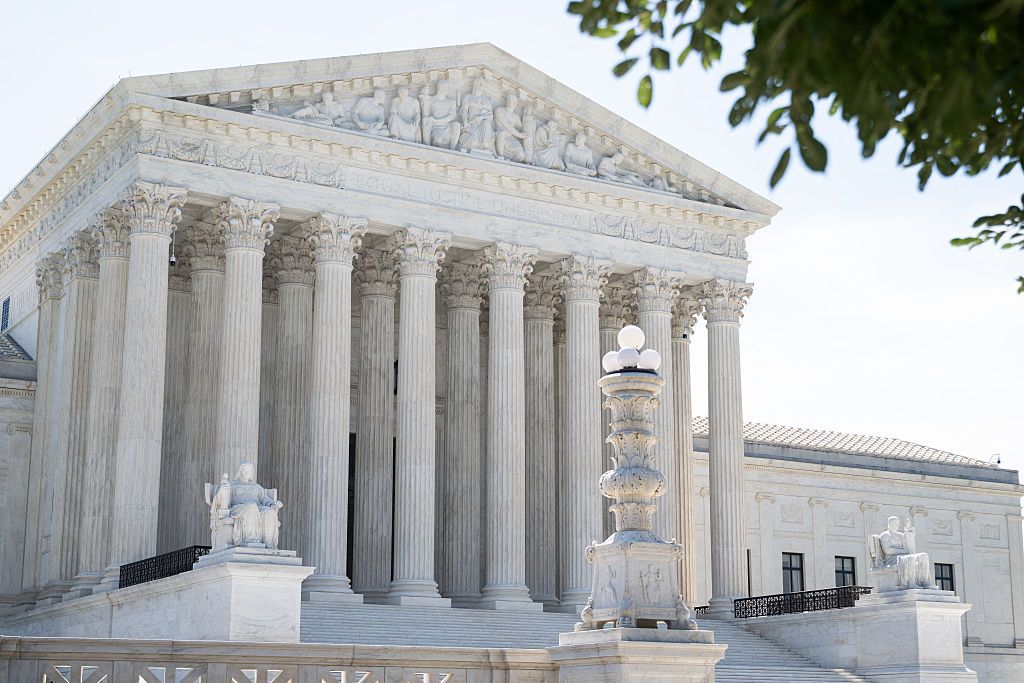
Justices to debate investment choices for retirement funds
On Tuesday, the justices will hear argument in Anderson v. Intel Corporation Investment Policy Committee and consider whether, in making a claim under the Employee Retirement Income Security Act that employers have invested employees’ retirement funds imprudently, it is enough for the employees to show that the retirement funds have performed worse than other funds.
Contributor Corner
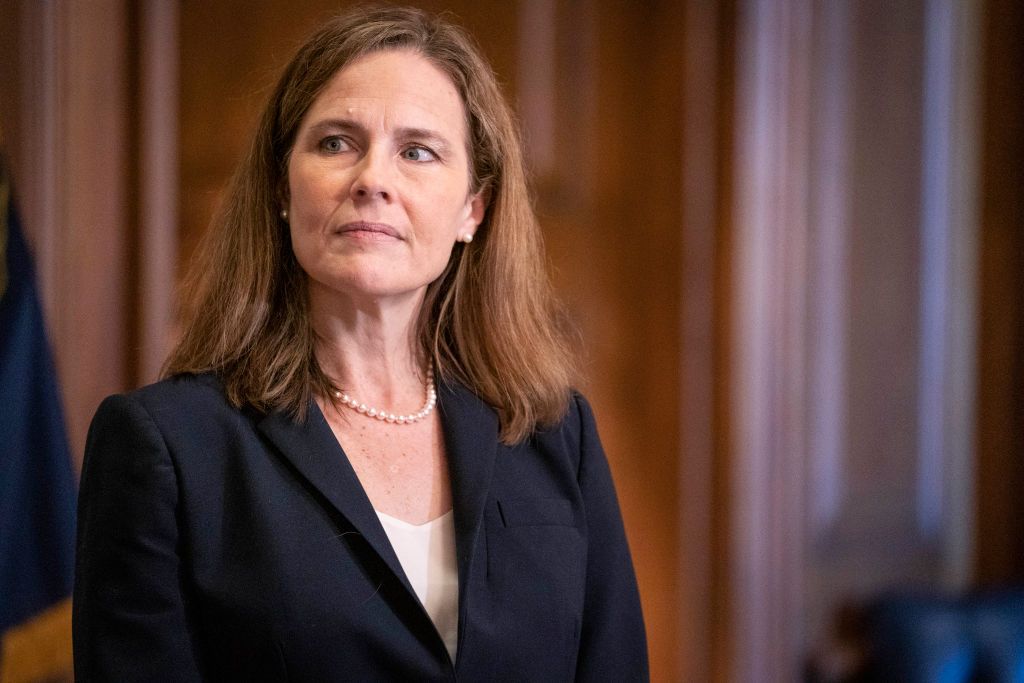
Justice Barrett – the zombie (noun) slayer
In his High Style column, Kendall Gray explored Justice Amy Coney Barrett’s writing style through the lens of her majority opinion in Watson v. Republican National Committee, praising her use of “great verbs” and avoidance of “zombie nouns” – that is, verbs that are used in their noun form, like observes vs. observations.
A Closer Look
Back to (Law) School?
As the first Monday in October is a bit like back-to-school for the Supreme Court, we thought it’d be worthwhile to look into what members of the current court have actually said about their primary, undergraduate, and law school experiences. (There’s not a ton of variety in terms of the law schools themselves – eight of the nine justices attended either Harvard or Yale Law School. Justice Amy Coney Barrett is the exception, having gone to Notre Dame Law School.)
Justice Clarence Thomas described in his memoir being one of two Black students at his seminary high school, St. John Vianney, before attending Conception Seminary College for a year and then receiving a scholarship to the College of the Holy Cross. “Holy Cross was far more than just a school to me,” Thomas wrote, describing the college as a “middle-class school full of strivers.” While there, he helped found the Black Student Union, and – as he did in high school – graduated near the top of his class. Thomas then attended Yale Law School (his classmates included future U.N. Ambassador John Bolton and, a year behind him, his future colleague Samuel Alito). Famously, Thomas has criticized his experience at Yale, saying that going there was a “mistake,” and due to “the taint of racial preference” his diploma was effectively worth 15 cents.
The chief justice has expressed a very different view, saying that Harvard Law School promoted open conversations and intellectual humility (although he acknowledged that humility is “perhaps not the first word you think about when you think about Harvard Law School”). Chief Justice John Roberts also attended Harvard College for his undergraduate degree, and shared that he was a frequent customer of the Baskin-Robbins near campus for its marshmallow sundae with chocolate chip ice cream.
Justice Samuel Alito attended Princeton for undergrad, not far from where he grew up near Trenton, New Jersey. He described the students as “some very smart people, very privileged people behaving irresponsibly,” saying that he “couldn’t help making a contrast between some of the worst of what I saw on the campus and the good sense and decency of the people back in my own community.” After Princeton, Alito attended Yale Law School; according to him, he attended the school because it was smaller than Harvard, the people he knew at Yale seemed happier, and (“the more respectable reason for going”) that he wanted to study constitutional law with professor Alexander Bickel, one of the great legal scholars, who began teaching there in 1956.
Justice Sonia Sotomayor also attended Princeton for undergrad, four years after Alito. She described doing an admissions interview at Harvard College and thinking that she didn’t belong there, and had a similarly off-putting experience at Yale College, describing it as “too progressive.” At Princeton, she has said she received a “C” on her first paper and was told that she wasn’t writing in complete sentences. In response, Sotomayor bought several basic grammar and vocabulary books and spent a summer working through them. She graduated summa cum laude in 1976 and went to Yale Law School.
Justice Elena Kagan is the third Princetonian on the bench, graduating in 1981, and she is arguably the most sentimental about it. She told a Princeton audience in 2014 that she thought the school was “the greatest place.” She chaired the editorial board of the Daily Princetonian and wrote her senior thesis on the history of socialism in New York City under the historian Sean Wilentz. Asked at Alumni Day in 2025 what the school gave her, she pointed to long nights at the paper: “I learned to write fast, and I learned to write clearly.” She has told incoming Harvard Law students that she arrived in 1983 without much of a plan, froze when a professor first called on her, and landed in “the bottom third of the class” on her early exams before turning it around – she graduated magna cum laude, was supervising editor of the Harvard Law Review, and in 2003 became the school’s first female dean.
Justice Neil Gorsuch is the only sitting justice who went to Columbia, arriving in 1985 and taking more courses than normal to finish in three years. He wrote a weekly column for the Columbia Daily Spectator and, as a freshman, co-founded a conservative alternative paper called the Federalist Paper in which he criticized campus protesters and what he called the prevailing “muddled thinking.” During his 2017 confirmation, more than 150 of his former Columbia classmates across the political spectrum signed a letter supporting his confirmation, writing that “[o]n campus, Neil was an upstanding person and a devoted friend.” He went to Harvard Law School on a Truman Scholarship and edited the Harvard Journal of Law & Public Policy.
Justice Brett Kavanaugh started at Yale College as an undergraduate in 1983, after graduating from the same high school as Gorsuch. He tried out for Yale’s varsity basketball squad and was cut by coach Tom Brennan, played two seasons of junior varsity instead, and by junior year had switched to covering sports for the Yale Daily News. He graduated in 1987 with a history degree and stayed for Yale Law, where he was a notes editor on the Yale Law Journal.
As noted, Barrett is the only justice on the current court who attended neither Harvard nor Yale Law. She attended Rhodes College in Memphis for undergrad, where she majored in English literature, minored in French, and graduated magna cum laude in 1994. Barrett went to Notre Dame Law School on a full-tuition scholarship, served as executive editor of the Notre Dame Law Review, and finished first in the class of 1997. Back on campus in 2025 to talk with students, she recalled the nerves of 1L year and grades posted by exam number on the lounge wall but said that she “really loved law.”
Justice Ketanji Brown Jackson first saw Harvard as a high school debater. She went back as an undergraduate and law student, and has spoken about questioning whether she could “cut it” while in undergrad. She graduated magna cum laude from Harvard College in 1992. She graduated cum laude from Harvard Law School in 1996 and was a supervising editor of the Harvard Law Review. Speaking at the University of Virginia School of Law in September 2025, she said she “did not have a great time in law school.”
SCOTUS Quote
Continue reading...
[ H/T SCOTUSblog ]