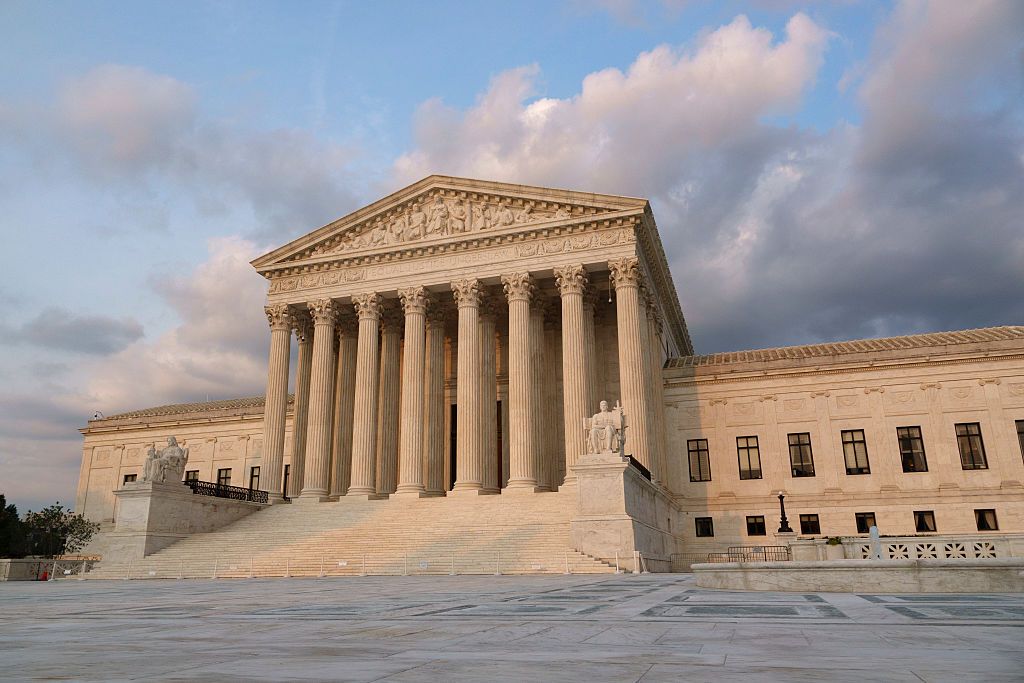
When the court opens its term on Monday with the blockbuster case Suncor Energy Inc. v. County Commissioners of Boulder County, the justices will have digested four principal briefs. They are Suncor Energy and the other energy companies’ opening brief (Kannon Shanmugam), the United States’ amicus brief supporting the energy companies (Deputy Solicitor General Sarah Harris), Boulder’s brief (Kevin Russell), and the energy companies’ reply. The merits question is whether federal law bars state-law claims for injuries attributed to interstate and international greenhouse-gas emissions. But this post is for anyone who writes briefs, in the Supreme Court or in any court, and it is about the introduction: the prime real estate that offers the court a frame for all the law and facts to follow.
Each introduction combines, in its own recipe, the four techniques I outline in my book on legal advocacy, “Point Made”: Brass Tacks, the narrative lens explaining “who, what, when, where, why, how.” The Short List, the logical lens numbering your path to victory. Why Should I Care?, the pragmatic lens giving the court a reason to want to find for you. And Flashpoint, the contrasting lens drawing a line in the sand. The way each side navigates these introductions, each under 1,000 words, also reveals what it sees as its strengths and weaknesses.
Brass Tacks: who, what, when, where, why, how
Even, or especially, when the legal issues are abstract, the best introductions spin a narrative line showing how the parties reached an impasse and how the court should guide them out of it. Call it a Tale of Four Briefs. What story does each tell?
For the energy companies: A city and a county in Colorado have sued “two of the world’s countless fossil-fuel producers” for local harms at the end of a global chain, in which production and marketing “resulted in consumers’ use of fossil fuels around the world, which released . . . emissions, which combined with all other greenhouse gases in the atmosphere to alter the global climate, which then resulted in localized physical harms in Boulder.” There’s the causal chain in one sentence.
For the government: A single city wants the law of a single state to dictate how the world addresses a global problem: by penalizing conduct “outside Colorado,” much of it “entirely overseas,” for harms in Boulder “from wildfire damage to public-health costs.” The introduction also issues a verdict on this tale: “Absolutely not.”
For Boulder: Petitioners “have run to this Court at the case’s outset” to ask for a rule that Congress, not courts, should make. The case is “far from final judgment,” and the Colorado Supreme Court has not yet decided whether respondents have stated a claim under state law. It’s a procedural tale of when and why, but with no concrete narrative of local injuries: Boulder never appears, and Colorado appears only in the name of its highest court. Recounting the injury tale would mean tracing the energy companies’ causal chain; the procedural opening keeps the focus instead on institutional authority and timing.
For the energy companies’ reply: Four sentences recast the energy companies’ account of who, what, and why as propositions that, the reply says, Boulder “do[es] not dispute.” That is Brass Tacks used to pull the court back to the energy companies’ story – and to ask the court to treat its factual premises as common ground so that the fight is over their legal effects.
For your own brief:
- Answer the questions you’d have if you were reading about your case online, spin the answers to your client’s advantage while sounding like an honest broker, and know which questions you’re leaving for another party to answer.
- Shape the story through characters, not characterizations: who gets named, who gets a label, and who gets which verbs.
- In a reply, use a narrative line to reorient the court: who is involved, what the dispute is about, what your client wants now, and why your client still deserves it.
The Short List: number your path to victory
The Short List consists of the three or four points you would make to a judge who gave you only 60 seconds to speak. The points must also work as a unit: what does each of these promise, and do they relate to one another as rungs (each a fallback for the one above), gates (reasons the court can abstain from action), or axes (independent grounds that add up)?
Here is how I would distill each introduction’s path to victory. (By “introduction” I mean each brief’s opening overview, labeled or not.)
The energy companies’ opening brief: rungs on a ladder, all resting on one premise – that the claims target interstate and international emissions
- Structure: the states “surrendered” their ability to redress transboundary issues such as climate change when they entered the union.
- Displacement: displacing federal common law “did not invite state law to apply in this area for the first time.”
- Foreign affairs: the claims reach emissions “outside the United States,” where the federal government is “the Nation’s exclusive voice.”
- Preemption: the Clean Air Act bars the claims “by its own force.”
The government: axes, independent and cumulative
- Horizontal federalism: “no one State can superimpose its own regulatory preferences on the rest,” whether the bar is called structural, due process, the dormant commerce clause, or “an exclusively federal area.”
- Vertical federalism: suits like Boulder’s leave “subsets of the United States” effectively negotiating against it.
- The statute: with the Clean Air Act, Congress delegated to the EPA “the decision whether and how to regulate carbon-dioxide emissions from powerplants.”
Boulder: gates, loosely speaking, united by restraint (who decides, when, and by what method)
- Wrong forum: Congress, not courts acting “on their own authority,” decides whether these harms belong at the federal level.
- Wrong time: the case is “far from final judgment.”
- Wrong arguments: there is no structural bar and no Clean Air Act preemption. Hence the relief line: “dismiss or affirm.”
The energy companies’ reply: the opening list, restructured and reinforced
- Structure: petitioners read the federalism reasoning of precedent to bar one state’s law from governing climate claims even against emitters and to argue that claims against producers are even weaker.
- Extraterritoriality, which the opening brief elsewhere calls “closely related” to the structural bar, now earns its own mini-argument: a state cannot regulate “global conduct with undifferentiated global effects.”
- Foreign affairs: state law would infringe “the exclusive role of the President and Congress in foreign affairs.”
- The statute: “far from authorizing” state law, the Clean Air Act “independently preempts” it.
What to take from the four sets:
- Decide whether your reasons are rungs, gates, or axes, and order them the way you’d deliver them if the judge asked you why you should win.
- Add “because” to each draft reason and finish with a detail specific to your dispute, not to just any dispute with the same procedural posture.
- In a reply, preserve the logic of your opening even if you change the order or emphasis, and respond to the other side without letting it dictate your structure. Stress why you’re still right, and claim only the concessions that the record and authorities support.
Why Should I Care? Give the court a reason to want to find for you
This technique gives the court a reason to feel good about finding for you, usually by triggering one of three judicial fears if it were to decide the other way: misconstruing a doctrine or statute; creating new duties, rules, or defenses; or reaching an unfair result or causing harm. Gauge this part of the introduction by the anxiety it triggers or relieves.
The energy companies’ opening brief: an unfair result and harm, at national scale, without naming petitioner ExxonMobil in the introduction, which keeps attention on harm to others rather than on the petitioners themselves
- Scale: a ruling for Boulder lets “all fifty States, the tens of thousands of municipalities, and even the hundreds of millions of individuals in our country” ask local courts to establish “countless, conflicting climate policies for the Nation.”
- Ruin: the energy companies quote “a member of respondents’ legal team” – identified later in the brief as David Bookbinder – to portray the litigation as an enormous “carbon tax” that could “bankrupt[]” the energy industry, so the harshest characterization is attributed to Boulder’s own side.
- Chaos: one jury means “chaos,” and juries nationwide mean “disaster.”
The government: harm to the federal system, tested through a hypothetical
- Collapse: the federal system “would disintegrate” if each state could force its prescriptions on “the other 49.” The analogy: Oregon penalizing cruise lines for pandemics that strain its hospitals, a test of the principle on facts removed from the climate dispute.
- Divided loyalty: Boulder and dozens of other states and localities would be “effectively negotiating against” the United States.
- Insolvency: liability “so unending and extreme that fossil-fuel producers may be forced out of business.”
Boulder: misconstruing a doctrine and creating a new rule, a matter of method rather than scale
- Prematurity: the court would intervene before final judgment, based on an injury to petitioners that Boulder calls “entirely speculative,” before the Colorado Supreme Court has addressed the claims’ sufficiency under state law.
- A new rule: Boulder warns that the energy companies’ implied structural bar threatens products-liability, antitrust, fraud, and defamation law.
- A misread statute: Boulder argues that the energy companies adopt an interpretation of the Clean Air Act that would “condemn a host of unobjectionable laws” such as gasoline taxes and energy-efficiency rules.
The reply: the opening brief’s scale argument, compressed into two images
- The problem of forum shopping: suits against “arbitrary groups of defendants in handpicked forums.”
- Policy by jury: a Boulder jury able to make “national and international energy policy.”
Notice, too, that Boulder does not foreground residents’ injuries in the introduction. Rather, Boulder includes those harms at the start of the opening statement instead. The effect is to keep the opening focused on institutional authority and procedural restraint rather than on the causal chain that the energy companies emphasize.
For your own brief:
- Trigger at least one judicial fear: misconstruing the law, creating new law, or reaching an unfair result. If your client is an unsympathetic conglomerate, suggest that defeat would be bad for others, too.
- Avoid the phrase “slippery slope.” Show the slope instead by naming the ordinary cases a ruling would sweep in.
- Give the judge a pragmatic reason to want to rule for you and borrow the proof elsewhere when you can: the other side’s words first, the court’s next, your own characterizations last.
Flashpoint: draw a line in the sand
A Flashpoint draws a line in the sand between two competing views of the dispute so that you can preempt your opponent’s attempts to make the case into something it’s not.
The energy companies’ opening brief: scale, global against local, which makes the suit itself sound unprecedented
- Global against local: an “inherently interstate and international challenge” against “the mechanism of state tort law,” restated at the close as “State tort law is not the solution to global climate change.”
- Institutions: Boulder’s position pits the political branches against “even a single jury.”
- Causation: “all of humanity’s emissions” against “only a tiny fraction” from these energy companies’ products, making the causal attribution to two producers look disproportionate.
The government: question and answer, then anaphora
- One city against the world: “Can one city wield one State’s law to dictate how the rest of the world must address a global problem with global effects?” “Absolutely not.”
- Congress against Boulder: “Whereas Congress targeted only domestic emissions, Boulder would regulate the world.” The paired “Whereas Congress ... Boulder would” clauses cast Congress as the rule-setter and Boulder as the disruptor.
- The statute: state law as a supplement to the Clean Air Act against state law as its “nemesis.”
Boulder: normalcy against novelty
- Institutions: deciding whether these harms are better addressed at the federal level, which “the Constitution almost always assigns to Congress,” against barring suits “on [courts’] own authority” – a line Boulder borrows from the court itself – a great example of putting the court’s words before your own.
- Method: “traditional authority” (the states’ power to address in-state harms) and “normal statutory construction” (ordinary preemption analysis of the Clean Air Act) against “something implicit in the Constitution” (the energy companies’ structural bar, which Boulder believes they infer from the Constitution’s design rather than from any actual clause).
- The suit: state plaintiffs against local-government plaintiffs (“non-states”), an order to stop polluting against damages, emissions against “deceptive marketing and sales,” all in one sentence that separates this suit from the old interstate-pollution cases. In those cases, a state sued to make out-of-state polluters stop polluting; here, local governments seek money from companies for how they deceptively marketed and sold their products. Each contrast casts Boulder’s suit as an ordinary state-law tort claim, so the novelty lies in the energy companies’ attempt to stretch those precedents to a type of suit that they never covered.
The energy companies’ reply: concede and split
- Novel against settled: “while the litigation may be novel, the principles barring the claims are not.” Granting that the litigation is “novel” shifts attention to the asserted familiarity of the governing principles and recasts the energy companies as the traditionalists.
- Causation: emitters against producers “further removed in the causal chain.” Boulder distinguishes the old pollution cases because they targeted the plants releasing the gases, whereas Boulder is suing producers that sold fuel others burned and, Boulder says, misled the public about it. The reply accepts the distinction but turns it against Boulder: if state law cannot reach the emitters, it cannot reach producers who are even further from the harm.
For your own brief:
- Draw a line in the sand between two competing views of the dispute, with your side on ground the court already trusts.
- If their framing is partly correct, concede what is true and contest what matters: the reply allows that the litigation is new but denies that the law is.
- Check whether your word choices adopt the other side’s frame. If their signature words often appear in your own draft, recast the subject unless you can use their terms against them in your argument.
- When the key distinctions from a precedent form a pattern, link them together in a single sentence.
Before you file
The energy companies make the state-tort litigation sound novel and the principles barring it settled. Boulder makes the state-law remedies sound ordinary and the proposed bar novel. Both sides want the same advantage: to make the other side explain why the court should depart from familiar ground. Before you file, ask whether your introduction does the same.
Continue reading...
[ H/T SCOTUSblog ]