




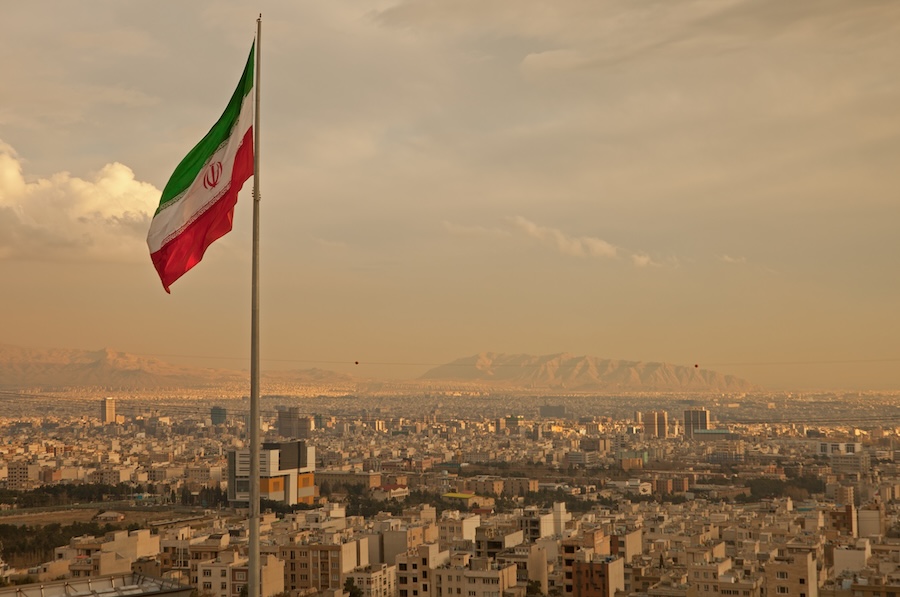


President Trump has sent Tehran an official answer to its latest offer to end the war—and Iran’s leaders are refusing to tell the world what he said.
That silence may be the most revealing part of the story.
Iranian officials announced Wednesday that Foreign Minister Abbas Araghchi had received Washington’s formal response and presented it to President Masoud Pezeshkian during a Cabinet meeting. They disclosed neither the contents nor whether the United States accepted, rejected or countered Iran’s terms.
President Trump had already made his position unmistakable in public: Iran’s proposal, as presented, was not acceptable.
The Associated Press reported that Araghchi briefed Iran’s Cabinet after returning from the United Nations General Assembly in New York. Tehran said its proposal had been delivered through mediators and that an official U.S. response was now in Iranian hands, but it provided no details about the answer.
The report also laid out the pressure surrounding the talks. Iran had offered to reopen the Strait of Hormuz within a week if Washington lifted its blockade of Iranian ports, released frozen assets and waived oil sanctions, among other conditions. President Trump rejected those terms publicly, saying Iran wanted a deal because it was “losing so badly” and that the offer “would not be acceptable.”
That leaves Tehran in an awkward position.
Its leaders wanted sanctions relief, access to frozen money and an easing of the blockade before surrendering their leverage over one of the world’s most important shipping lanes. The Trump administration appears unwilling to pay Iran up front for promises that could evaporate later.
Reuters reported that Qatar delivered Washington’s response to Araghchi in Doha and that the dispute now centers heavily on sequencing. The proposed seven-day plan was designed as a trust-building bridge back toward an enhanced version of the June memorandum, with concrete nuclear steps and the reopening of the Strait of Hormuz arranged in a tightly ordered series.
According to the report, the components are less disputed than the order in which each side must act. Tehran wants relief and proof of U.S. compliance before making major concessions.
Washington is resisting a structure that would hand Iran economic benefits before it delivers verifiable nuclear and security steps. Qatar is continuing to shuttle messages between the two sides.
That is the heart of the negotiation. Iran wants President Trump to give up leverage first.
He is signaling that he will not.
The Strait of Hormuz is not a minor bargaining chip. Before the war, roughly one-fifth of the world’s traded oil and gas moved through that narrow waterway.
Iran has tried to turn that geographic choke point into a rescue package for its regime. President Trump’s answer has been to move more oil, maintain military pressure and make clear that Tehran will not be allowed to use global energy supplies as a hostage.
What are your thoughts?

TAP HERE TO ADD YOUR VOTE
Axios reported that Qatar’s mediators had made little progress because neither Washington nor Tehran was willing to abandon its core demands. A two-page Qatari compromise sought to connect relief from the U.S. blockade with Iranian nuclear concessions, but the two governments remained divided over who would move first and how compliance would be enforced.
The outlet reported that a Qatari mediator met with Araghchi in New York before holding discussions in Washington with Trump envoy Jared Kushner and other U.S. officials, with Vice President JD Vance joining part of the talks. Iran pressed for a return to the June memorandum before making new nuclear concessions; President Trump, meanwhile, insisted Iran will never possess a nuclear weapon.
The messages are still moving through Doha. So are the sanctions, oil shipments and military pressure that give Washington leverage at the table.
The Treasury Department reinforced that message Tuesday with a fresh round of sanctions under Operation Economic Outcast.
The targets included individuals and entities in Iran, Hong Kong and Pakistan accused of helping procure weapons or components for Iran’s military establishment. At the same time, Iran’s rial fell to a new low of about 2.5 million to the dollar.
Those are not signs of a regime negotiating from strength.
President Trump has every reason to listen to a serious offer. Ending a war on terms that protect America, keep the Strait open and permanently shut the door on an Iranian nuclear weapon would be a historic achievement.
But a ceasefire that rewards Tehran before it complies would only teach the regime that attacking ships and squeezing energy markets is an effective way to win concessions.
Iran now has America’s official answer. Its refusal to reveal that answer suggests the response was not the face-saving victory Tehran hoped to announce.
The next move belongs to Iran: accept verifiable terms, abandon the nuclear threat and reopen the Strait—or keep discovering how little leverage remains when President Trump refuses to blink.
This is a Guest Post from our friends over at WLTReport. View the original article here.
The post Iran Says It Has President Trump’s Official Answer — But Won’t Reveal It appeared first on 100PercentFedUp.com.
Continue reading...
[H/T 100PercentFedUp]


