



Guest Post by John Leake
The most disconcerting thing about living in the West is that we have no reliable means of knowing who is in charge. The circumstantial evidence is overwhelming that it is NOT President Donald Trump, British Prime Minister Andy Burnham, French President Emmanuel Macron, or German Chancellor Friedrich Merz. As we saw during the pandemic, all these countries seem to be governed by the same shadowy globalist oligarchy.
Like the US, the nations of Europe have no coherent strategy for winning a war against Russia. Mess making and blowing up energy infrastructure, thereby condemning their citizenries to high energy prices and general inflation, is apparently what passes for strategy in western military circles. The comparison with the fraudulent, criminal, and catastrophic pandemic response is apt.
The UK, which has a standing army of about 78,000, seems to think it is once again engaged in the Great Game against Russia, which has a standing army of 2,441,000—the military equivalent of former British Health Secretary Matt Hancock managing the pandemic response.
Germany has an active duty military of 63,000 soldiers. After limiting or banning German rearmament after the First and Second World Wars, NATO is now aggressively encouraging Germany to rearm, apparently to have another go at Russia. And why not? It worked out so well the first two times.
The Germans should remember what then Senator Harry Truman told a New York Times reporter in June 1941:
The Germans should also remember the old saying attributed to Lord Hastings Ismay, the first Secretary General of NATO.
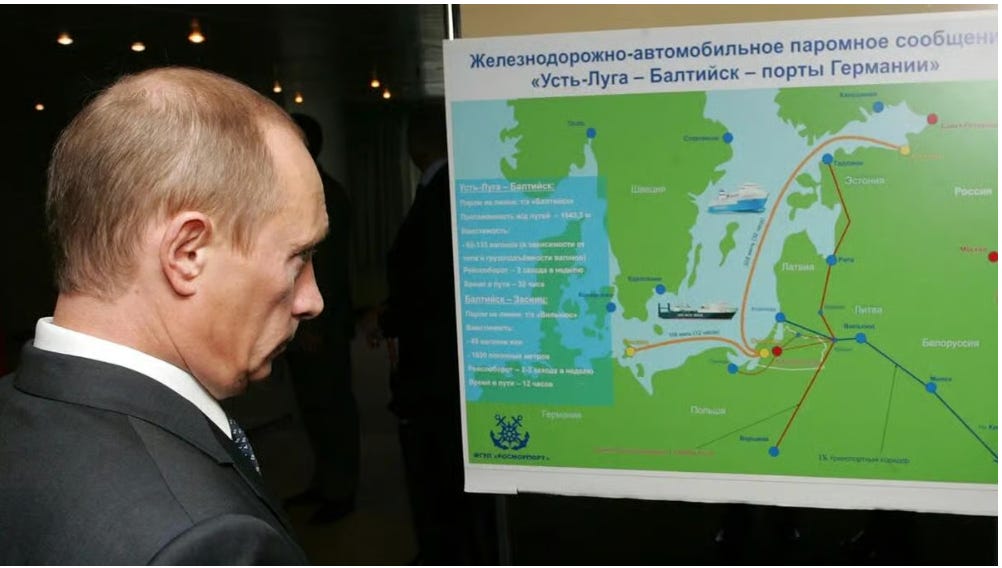
Yesterday, October 1, 2026, Russian President Vladimir Putin spoke about the Russian enclave of Kaliningrad, singling it out as the likely target of a NATO attack, which would prompt Russia to consider using every weapon at its disposal.
He added that Moscow was not threatening anyone and had no plan to attack Europe in 2029, 2030, or 2050, but that Europeans should understand Russia would answer aggression. The remarks followed a Russian diplomatic note to NATO warning that an attempt to cut off Kaliningrad could draw a response with Russia’s full arsenal, including nuclear weapons. As reported in the Associated Press.
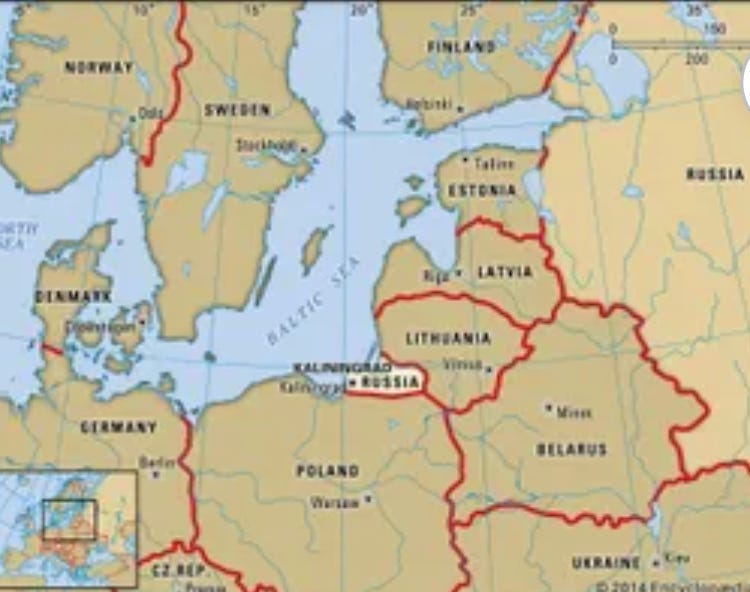
NATO claims it is reinforcing the eastern flank and practicing to defend allied territory, not planning to seize or isolate Kaliningrad. Moscow claims that drills, ship interdictions, and talk of blockade already amount to escalation against sovereign Russian land.
The so-called “leaders” of Europe would do well to remember how the former Hanseatic city of Danzig became a flashpoint in September 1939. After Germany’s defeat in World War I, the Treaty of Versailles (1919) created the Free City of Danzig (today Gdańsk) under League of Nations sovereignty, with Poland holding special rights over the port, customs, and foreign relations. It also awarded Poland the Polish Corridor—a strip of former German territory along the lower Vistula—so the restored Polish state would have “free and secure access to the sea,” as Woodrow Wilson’s Fourteen Points had promised.
The corridor cut East Prussia off from the rest of Germany. Hitler claimed that the city—almost entirely inhabited by Germans—had been unjustly isolated from its mother country and people. In a September 1, 1939 Reichstag speech, he called Danzig “a German city” and the corridor “German,” and accused Poland of strangling the free city. That morning the battleship Schleswig-Holstein opened fire on the Polish military depot on the Westerplatte peninsula in Danzig harbor. German forces then seized the city and drove through the corridor. Britain and France declared war on September 3, and World War II began.
IF NATO naval forces try to blockade Kaliningrad, they will provoke Putin to respond aggressively, and I’m sure they are prepared to make the comparison with Hitler’s actions in September 1939.
They would be far wiser to seek a negotiated settlement with Russia to end the war in Ukraine. No one in his right mind would risk blowing up Europe over this unnecessary war, which could have been averted by simply agreeing to Russia’s proposed neutrality deal in the autumn of 2021. In the United States, no one had even heard of the disputed (ethnic Russian) Donbas or could have located it on a map prior to 2022.
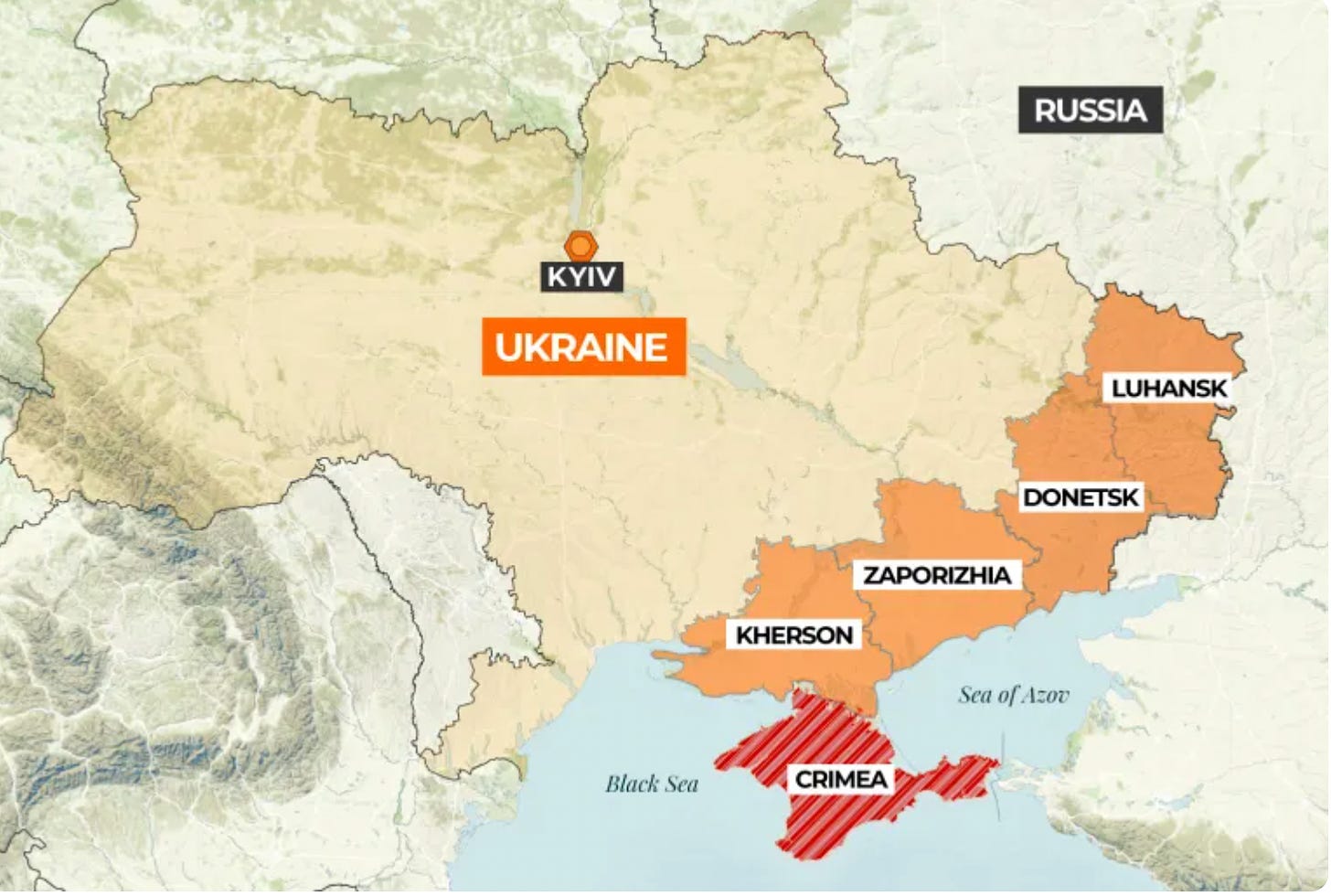
Everyone in the West should carefully consider the events of 2021 that led to Russia sending its expeditionary force into Ukraine in February 2022. As I recount in my new book, Mind Viruses: America’s Irrational Obsessions:
https://www.thefocalpoints.com/p/will-europe-be-annihilated-over-kaliningrad#_ednref1 Branko Macetic, When officials say the quiet part about Russia and NATO out loud, Responsible Statecraft, Sept. 19, 2023.
Immanuel Kant remains the most famous native son of Königsberg (now Kaliningrad) and it is worth reviewing what he had to say about war in his 1795 work, Toward Perpetual Peace.
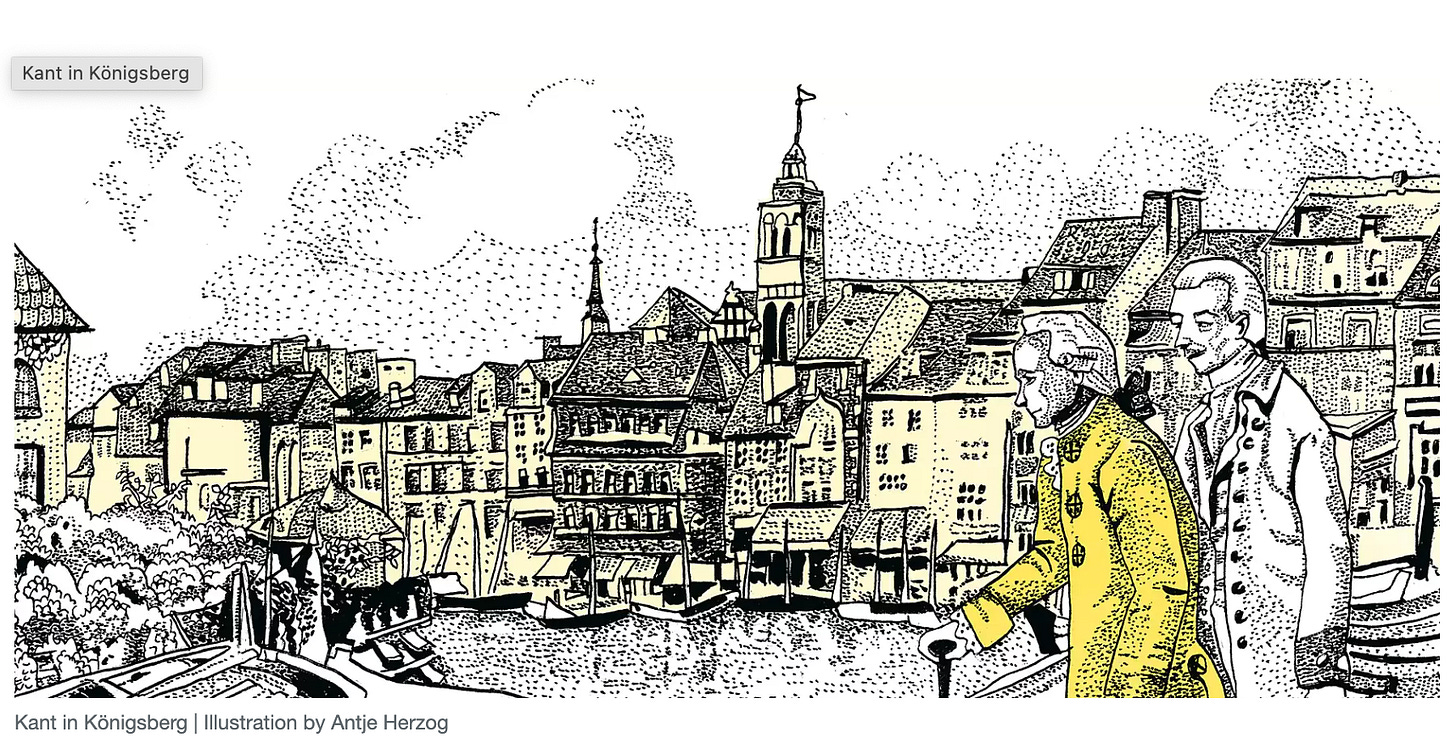
Kant regarded war as something reason must work to abolish. In his view, “reason absolutely condemns war as a legal recourse” and makes a state of peace an immediate duty. Between states there is no court, so each side that believes itself injured may use force to press its claim, and neither can be judged wrong in a strict legal sense. That provisional resort does not make the condition just. The condition itself is “in the highest degree unjust,” and states are bound to leave it.
Kant elegantly stated that a war of mutual annihilation would produce “perpetual peace in the vast burial ground of the human race.”
He also vehemently condemned methods that eliminate the possibility of reaching peace—that is, assassinations and other forms of treachery. As he saw it, the warring parties are obliged to maintain a disposition of mutual respect and willingness to negotiate, or peace would never be possible.
He presented the following specific conditions for achieving and maintaining peace:
He also offered three “definitive articles” for securing and maintaining peace.
Continue reading...
[ H/T The Burning Platform ]
Just as the old Hanseatic city of Danzig was a major flashpoint for World War II, the old Hanseatic city of Kaliningrad (formerly Königsberg) may be prove to be the flashpoint for World War III.
The most disconcerting thing about living in the West is that we have no reliable means of knowing who is in charge. The circumstantial evidence is overwhelming that it is NOT President Donald Trump, British Prime Minister Andy Burnham, French President Emmanuel Macron, or German Chancellor Friedrich Merz. As we saw during the pandemic, all these countries seem to be governed by the same shadowy globalist oligarchy.
Like the US, the nations of Europe have no coherent strategy for winning a war against Russia. Mess making and blowing up energy infrastructure, thereby condemning their citizenries to high energy prices and general inflation, is apparently what passes for strategy in western military circles. The comparison with the fraudulent, criminal, and catastrophic pandemic response is apt.
The UK, which has a standing army of about 78,000, seems to think it is once again engaged in the Great Game against Russia, which has a standing army of 2,441,000—the military equivalent of former British Health Secretary Matt Hancock managing the pandemic response.
Germany has an active duty military of 63,000 soldiers. After limiting or banning German rearmament after the First and Second World Wars, NATO is now aggressively encouraging Germany to rearm, apparently to have another go at Russia. And why not? It worked out so well the first two times.
The Germans should remember what then Senator Harry Truman told a New York Times reporter in June 1941:
The Germans should also remember the old saying attributed to Lord Hastings Ismay, the first Secretary General of NATO.
Yesterday, October 1, 2026, Russian President Vladimir Putin spoke about the Russian enclave of Kaliningrad, singling it out as the likely target of a NATO attack, which would prompt Russia to consider using every weapon at its disposal.
He added that Moscow was not threatening anyone and had no plan to attack Europe in 2029, 2030, or 2050, but that Europeans should understand Russia would answer aggression. The remarks followed a Russian diplomatic note to NATO warning that an attempt to cut off Kaliningrad could draw a response with Russia’s full arsenal, including nuclear weapons. As reported in the Associated Press.
NATO claims it is reinforcing the eastern flank and practicing to defend allied territory, not planning to seize or isolate Kaliningrad. Moscow claims that drills, ship interdictions, and talk of blockade already amount to escalation against sovereign Russian land.
The so-called “leaders” of Europe would do well to remember how the former Hanseatic city of Danzig became a flashpoint in September 1939. After Germany’s defeat in World War I, the Treaty of Versailles (1919) created the Free City of Danzig (today Gdańsk) under League of Nations sovereignty, with Poland holding special rights over the port, customs, and foreign relations. It also awarded Poland the Polish Corridor—a strip of former German territory along the lower Vistula—so the restored Polish state would have “free and secure access to the sea,” as Woodrow Wilson’s Fourteen Points had promised.
The corridor cut East Prussia off from the rest of Germany. Hitler claimed that the city—almost entirely inhabited by Germans—had been unjustly isolated from its mother country and people. In a September 1, 1939 Reichstag speech, he called Danzig “a German city” and the corridor “German,” and accused Poland of strangling the free city. That morning the battleship Schleswig-Holstein opened fire on the Polish military depot on the Westerplatte peninsula in Danzig harbor. German forces then seized the city and drove through the corridor. Britain and France declared war on September 3, and World War II began.
IF NATO naval forces try to blockade Kaliningrad, they will provoke Putin to respond aggressively, and I’m sure they are prepared to make the comparison with Hitler’s actions in September 1939.
They would be far wiser to seek a negotiated settlement with Russia to end the war in Ukraine. No one in his right mind would risk blowing up Europe over this unnecessary war, which could have been averted by simply agreeing to Russia’s proposed neutrality deal in the autumn of 2021. In the United States, no one had even heard of the disputed (ethnic Russian) Donbas or could have located it on a map prior to 2022.
Everyone in the West should carefully consider the events of 2021 that led to Russia sending its expeditionary force into Ukraine in February 2022. As I recount in my new book, Mind Viruses: America’s Irrational Obsessions:
https://www.thefocalpoints.com/p/will-europe-be-annihilated-over-kaliningrad#_ednref1 Branko Macetic, When officials say the quiet part about Russia and NATO out loud, Responsible Statecraft, Sept. 19, 2023.
Immanuel Kant remains the most famous native son of Königsberg (now Kaliningrad) and it is worth reviewing what he had to say about war in his 1795 work, Toward Perpetual Peace.
Kant regarded war as something reason must work to abolish. In his view, “reason absolutely condemns war as a legal recourse” and makes a state of peace an immediate duty. Between states there is no court, so each side that believes itself injured may use force to press its claim, and neither can be judged wrong in a strict legal sense. That provisional resort does not make the condition just. The condition itself is “in the highest degree unjust,” and states are bound to leave it.
Kant elegantly stated that a war of mutual annihilation would produce “perpetual peace in the vast burial ground of the human race.”
He also vehemently condemned methods that eliminate the possibility of reaching peace—that is, assassinations and other forms of treachery. As he saw it, the warring parties are obliged to maintain a disposition of mutual respect and willingness to negotiate, or peace would never be possible.
He presented the following specific conditions for achieving and maintaining peace:
- No peace treaty that secretly reserves a pretext for a future war.
- No treating a state as property that can be inherited, bought, exchanged, or given away.
- Standing armies to be abolished over time, because they threaten other states and fuel an arms race.
- No public debt contracted for foreign affairs and war.
- No forcible interference in another state’s constitution and government.
- No hostilities that would make mutual confidence after the war impossible.
He also offered three “definitive articles” for securing and maintaining peace.
- Every state should have a republican constitution (representative government under law, with the executive separate from the legislature). Citizens who bear the costs of war will not lightly authorize it; he contrasts this with rulers who can wage war as a kind of pleasure party at little personal cost.
- The right of nations should rest on a federation of free states (foedus pacificum), a pacific league aimed at ending all wars, not a single world state that swallows the others. He feared a universal monarchy would become despotism.
- Cosmopolitan right is limited to conditions of universal hospitality: a right to visit, not a right to settle or conquer.
Continue reading...
[ H/T The Burning Platform ]