





In this second part, I examine what can be done in China to avoid a trend when banking and financial systems work towards the final result in the Western system witnessed today – financialisation
Protect & SurviveThe Financial Jigsaw Part 2 (Episode 96): This second part compares and contrasts China’s existing banking/financial system to the current banking world order. This overview highlights China’s risks in its evolving design of a sustainable banking system to avoid falling into the financialisation trap which the US is experiencing now. Lau Vegy says Lee Kuan Yew, the man who built modern Singapore and spent 50 years watching China from next door, observed: “The size of China’s displacement of the world balance is such that the world must find a new balance. It is not possible to pretend that this is just another big player. This is the biggest player in the history of the world.”

This is part of a series examining the emergence of China’s banking system and corporate governance. It also needs to be read in the context of the emerging multipolar global order particularly challenging Europe in its conflict with Ukraine. At the end of this series you will be given hope for the future and the means to achieve it.
There are two types of bubbles: creative and parasitic. The argument that “finance must serve the real economy” should not fall into a simplistic black-and-white argument. Financial structures must correspond to different stages of industrial development: handicraft economies require partnership-based capital pooling; industrialisation requires bank credit; and the era of technological innovation requires capital markets.
Austrian’s Newsletter is a reader-supported publication. To receive new posts and support my work, consider becoming a free or paid subscriber.
This is because high-tech industries are asset-light and high-risk, making traditional bank lending models inherently unsuitable. Through mechanisms of “shared risks and shared returns,” capital markets embrace uncertainty rather than avoid it being an avenue that banking systems could never fully provide.
Although technology stock bubbles often involve massive destruction of wealth, they can generate revolutionary technological breakthroughs through a process of experimentation and failure. The dot-com bubble gave rise to companies such as Google and Amazon; the new energy boom helped create Tesla and CATL.
Real estate bubbles, by contrast, are essentially static valuations of scarce resources such as land and physical space. They do not create disruptive new technologies. Instead, they produce a widening spurious ‘wealth’ divide in which “the rich become richer while the poor become poorer”: families owning multiple properties see their wealth effortlessly appreciate, while ordinary households are forced to exhaust the savings of several generations just to afford housing.
When such bubbles burst, they leave behind nothing but bad debts and unfinished projects, not new technological capabilities. The distinction between “necessary bubbles” and “harmful speculation” lies in several questions:
- Does capital genuinely flow into research and production, rather than simply allowing major shareholders to cash out?
- Is there a real technological and industrial foundation, rather than merely fabricated concepts?
- Does the asset underlying the bubble possess the capacity to continuously generate new productive forces?
The problem has never been finance itself. The problem lies in the absence of strong national policy guidance and regulation, allowing finance to detach itself from the real economy and expand purely for its own sake. As Cambridge economist Ha-Joon Chang has pointed out, when financialisation reaches a high level, the financial market’s pursuit of short-term returns causes it to react negatively toward anything that might reduce immediate profits.
The solution, Chang argues, requires two approaches: on the one hand, limiting certain powers of the financial sector; on the other, convincing society that although restrictions on finance may reduce financial profits in the short and medium term, they can reverse corporate investment behaviour and encourage companies to increase long-term investment in research and development.
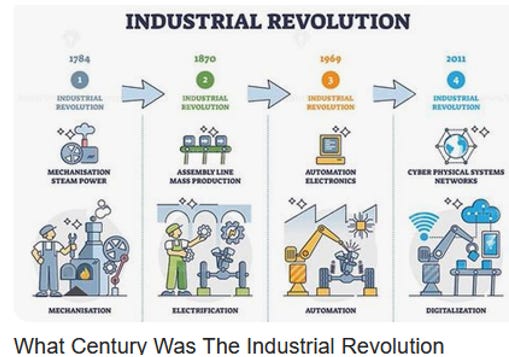
Looking across five centuries of industrialisation, the emergence of financial capitalism and its rise to dominance have required four conditions to exist simultaneously:
- Financial capital penetrates and dominates state power
- Transnational capital is allowed to move freely across borders
- The state tolerates or even encourages enormous wealth inequality
- There are foreign competitors willing to serve as the “next destination” for displaced manufacturing.
When these conditions are all present, finance capital gains the confidence to detach itself from the domestic real economy and, driven by the temptation of global arbitrage, “abandon productive industry for speculative illusion.”
Marx accurately summarised this historical chain in Capital: “The decaying Venice lent large sums of money to Holland. Venice… became the hidden foundation of Dutch wealth. The relationship between Holland and England was the same… Today, many of the mysterious capitals appearing in America are nothing more than the capitalized blood of English children from yesterday.”
This chain of capital flows—Venice → Netherlands → Britain—extended in the 20th century into a new chain: Britain → United States → China. Each generation of hegemonic power believed it could remain forever at the top of the economic food chain, extracting wealth indefinitely, while forgetting that the manufacturing foundation beneath its feet was being hollowed out by its own hands.
For China, the warning contained in this historical cycle is self-evident. At present, China does not fully satisfy the four conditions described above. The socialist system, by design, significantly constrains the space for the development of conditions (1) and (3). Meanwhile, China’s enormous manufacturing base and the restructuring of global supply chains have not yet resulted in a large-scale concentration of overseas manufacturing relocation toward a single late-developing country.
However, if India were to become the next “destination” for displaced manufacturing, it would present a serious challenge: its population is comparable in size to China’s and significantly younger. Safeguarding the principle that “finance serves the real economy,” limiting purely speculative financial expansion detached from production, and maximiing the benefits of finance while restraining its excesses should remain the unwavering direction of China’s financial sector.
But this does not mean rejecting the unique value of capital markets in technological innovation. On the contrary, a well-functioning capital market is one of the highest forms of finance serving the real economy. The real task is to establish a fair, transparent, and law-based market environment that ensures the alignment of rights and responsibilities and requires investors to bear their own risks, not by hiding behind Limited Liability engines.
At the same time, China must remain highly vigilant against asset bubbles, such as those in real estate, that lock national wealth into unproductive sectors, ensuring that capital continues to flow toward the most innovative and productive industries.
Can Trump’s manufacturing revival succeed? As long as Wall Street’s incentive structures, corporate governance principles, and the rules of the capital market remain unchanged, tariffs and subsidies alone cannot truly bring manufacturing home. Preserving China’s manufacturing foundation must remain a matter of strategic importance
A clear understanding of the key differences and similarities between the Chinese and the Western financial & banking system is essential when it comes to designing and implementing financial regulatory reforms in China. It not only helps policymakers discern whether the problems presented during the Global Financial Crisis were just “Western syndromes” or unavoidable diseases, that China will catch sooner or later, but also enables regulators to align the country’s regulatory regime with that of the global financial ecosystem through identifying common factors at work that shape a global financial reform.
China’s financial and banking system has, in many respects, features that are unlike those of its Western counterparts. The economic and ideological model of the socialist market economy in China basically renders the market a tool of the State, as opposed to a goal per se, to which the State must achieve.
In this context, market infrastructures and mechanisms are used mainly as a means of gathering information, and for regulating the economy in accordance with the overall state directives.[1] Financial and “market liberalisation is extended, as long as it does not infringe on the [Communist] Party’s monopoly of power.”[2] China’s financial system and its primary agents (banks) are predominately state-owned, and are tasked with numerous fiscal and developmental missions.
The way China’s financial policies and regulations are made and implemented is significantly different from that of the Western developed economies (the US, for example). The country’s economic and financial policies, either fiscal or monetary ones, are controlled, if not decided, by the Politburo, especially its Standing Committee and Central Committee of the Communist Party, or more precisely, by special interest groups within the Party leadership.[3]
Specifically, the Party’s authority over the financial system is exercised mainly through the Central Organisation Department, which has the power to appoint the leadership of all major institutions, and through the Central Finance and Economy Leading Small Group[4]. These two organisations, then, directly or indirectly exert influence on the State Council, in which the financial regulatory agencies are instituted.
Unlike in the case of most Western central bank governors and certain financial regulators, in which these officials’ discretion and authority is exercised almost independently, the power of financial policymakers in China is nonetheless subject to the Party leadership’s political will. It is not surprising then that certain seasoned technocrats, like Zhou Xiaochuan, who has been in charge of the country’s central bank for more than a decade, are actually very powerful and enjoy a significant degree of freedom to exercise their discretion.
Unlike in developed Western economies, the US in particular, China’s financial system remains bank-dominated, where capital markets (e.g. bond markets) are still underdeveloped. This status quo has been transforming gradually since China began to liberalise its interest rates, as evident by the rapid expansion of the country’s shadow banking sector.
On the other hand, despite the foregoing distinctive features, China’s financial system is not very different from those of Western developed economies, particularly if compared within the context of historical evolution. At least two noteworthy points emerge. First, the relationship between the banks and the government is very intertwined in both cases. And the sheer power of the largest banks in China shows a picture that is a surprising parallel to that of powerful Western banks.
For example, like China in its extensive use of policy banks to facilitate fiscal and developmental financing, US national banks in the 1800’s (such as the Second Bank of the United States) also served as the fiscal agent and depository of the federal government. Even today, there is the surprising coincidence that the five largest banks in China and the US, both control about 45% of the total bank assets in their respective countries.[5]
The way market actors respond to financial repression, like interest rates control, government guarantees, credit regulation are similar in both cases, and both subject the wider economy to instability risk. For example, it was the initially overly-repressed and then gradually-liberalised interest rates on the deposit accounts that gave rise to the rapid growth of China’s shadow banking sector such as wealth management products and trust products.
Similarly, it was the ceiling imposed on deposit interest rates by Regulation Q that encouraged the emergence of alternatives to bank deposits, such as Money Market Fund[6] (the US-version of shadow banking). It was also the relaxation of the restrictions on deposit rates, as a result of financial deregulation in the 1980’s, which contributed to the US savings and loan crisis.[7]
It is not known yet whether China’s interest rate and financial liberalisation will have negative consequences similar to those of the US liberalisation, but it’s possible that a similar kind of financial-market dynamics is at work in China and the US. It might be only a matter of time before China arrives at the same stage of financial development as that found in the developed Western economies.
Thus the challenge for China is to use its unique combination of socialist/capitalist balance (with Chinese characteristics) to find a way to avoid the inevitable devolution into the process of declining from a higher to a lower level of effective power, vitality or essential quality. This is where I will introduce, in coming episodes, a new approach using a network of local public and community banking, credit unions, and what was formerly used in Britain, known as ‘Building Societies, which Thatcher destroyed in the 1980s.

For those who may not remember, the poster child of privatised building societies failing occurred at Northern Rock. On the morning of 14 September 2007, something happened on British high streets that no living person had ever seen. Outside branches of Northern Rock being a respectable, FTSE 100 mortgage lender based in Newcastle where ordinary savers forming queues stretching around the block. Some had arrived before dawn. They carried newspapers, thermoses, folding chairs. Television cameras captured the scenes and broadcast them around the world. It was, financially speaking, a moment from another century.
Britain had not witnessed a bank run since Overend, Gurney & Co collapsed in 1866 when the panic had prompted Walter Bagehot to write ‘Lombard Street’ as his foundational text on central banking. 140 years later, the same spectacle was playing out in digital-age Britain, live on the BBC, with an audience of millions watching on the internet as well as on television.
The run itself lasted days. By the end of it, roughly £2 billion had been withdrawn. But the run was the least important part of the story. What Northern Rock revealed, about wholesale banking, about deposit insurance, and about the relationship between liquidity and solvency reverberated through every subsequent crisis decision of the next twelve months.
NOTES & REFERENCES
[1] Dominique de Rambures, The China Development Model: Between the State and the Market (Palgrave Macmillan, 2015) 22.
[2] Ibid.
[3] See Patrick Hess, ‘China’s Financial System: Past Reforms, Future Ambitions and Current State’, in Frank Rövekamp & Hanna Günther Hilpert (eds), Currency Cooperation in East Asia (Springer, 2014) 30-34.
[4] The Group is directed by the Chinese President (The Premier serves as the associate director).
[5] See Jeff Cox, 5 Biggest Banks Now Own Almost Half the Industry (15 April 2015) CNBC <http://www.cnbc.com/2015/04/15/5-biggest-banks-now-own-almost-half-the-industry.html
[6] See Jonathan Macey, ‘Reducing Systemic Risk: The Role of Money Market Mutual Funds as Substitutes for Federally Insured Bank Deposits’ (Yale Law School Faculty Scholarship Series Paper 2000, 2011) http://digitalcommons.law.yale.edu/cgi/viewcontent.cgi?article=3100&context=fss_papers (observing that “MMFs experienced their initial period of rapid growth in 1974 and early 1975, as a result of Regulation Q’s strict ceiling on the interest rates that insured depository institutions were permitted to pay to depositors”)
[7] Such as the passage of the Depository Institutions Deregulation and Monetary Control Act of 1980. Sources
- The Chinese financial system vs. the western financial system: Differences and similarities https://www.cibel.unsw.edu.au/news/...financial-system-differences-and-similarities
- The Monopoly Stage of Human Misery – Why the current neoliberal dystopia in America was entirely predictable and deliberately created https://off-guardian.org/2026/02/07/the-monopoly-stage-of-human-misery/
- The Machine That Printed Mortgages https://www.markethistories.com/en/...run-britains-first-bank-run-in-150-years-2007
WARTIME SUMMARY UPDATE

LATEST DAILY UPDATED SUMMARY – [Hat Tip to No1 saving me valuable editorial space]

Daily digest: 2026-10-03 https://no1sdailydigest.substack.com/p/daily-digest-2026-10-03?
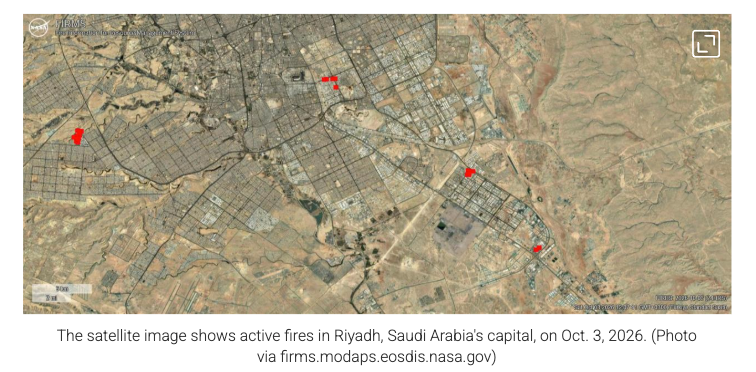
(Saturday 10/3) The Saudi front got much worse. The Aramco refinery in Riyadh was burning on Saturday morning after a reported Houthi strike, Reuters leaked a Saudi plan to retake Bab el-Mandeb, and Trump’s war cabinet met in secret at Camp David while a carrier group sailed. Europe gave in on diesel with a G7 release of 100M barrels, after which Trump said the export ban was never going to happen, and Friday’s 29K payrolls miss was wiped out in the bond market within hours.

Tweet
Continue reading...
[ H/T The Burning Platform ]