





President Donald Trump is weighing new military options against Iran that could include the largest non-nuclear bomb in the U.S. arsenal, as his administration faces mounting pressure to end the war as the November midterm elections approach.
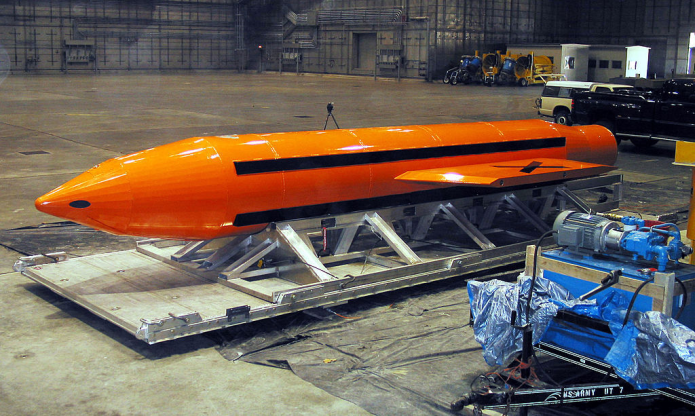
The U.S. military has developed plans for potential strikes against Iranian energy infrastructure and nuclear facilities using the GBU-43/B Massive Ordnance Air Blast bomb, dubbed “mother of all bombs,” CNN reported. The plans would only be carried out if Trump orders a resumption of major combat operations.
One proposed target is Pickaxe Mountain, where U.S. and Israeli officials believe Tehran has moved components of its nuclear program deep underground. Trump has also directed the development of additional strike options targeting Iranian energy infrastructure, according to CNN.
The White House did not confirm the plan, saying “we do not comment on sensitive military plans that may or may not exist.”
“President Trump keeps all options on the table to ensure that Iran can never have a nuclear weapon,” a White House spokesman told the Washington Examiner.
A War Department official told the Washington Examiner that the agency “plans for a wide range of operational scenarios to execute Presidential and Secretary level direction and to ensure mission success in any operational environment.”
What is the MOAB?
The MOAB bomb is a GPS-guided conventional explosive weapon weighing approximately 21,000 pounds, including a warhead containing about 18,700 pounds of explosives. It was developed by the Air Force Research Laboratory in 2003 and is designed to destroy large surface targets, clear obstacles, and attack enemy positions in caves and tunnels.
The nickname “mother of all bombs” reflects its enormous size and destructive power. Unlike conventional bombs that penetrate a target before detonating, the MOAB is designed to explode above the ground, producing an intense pressure wave capable of damaging structures across a broad area.
The MOAB was developed in a relatively short period to give the military an additional option for the 2003 invasion of Iraq, but it was not used during that conflict. The MOAB was intended in part for “psychological operations” to target enemy morale due to the sheer size of the blast and its destructive force. The bomb also produces a large mushroom cloud resembling a nuclear blast, leaving an approximately 1-mile blast radius in its wake.
The United States has used the MOAB in combat only once, in April 2017, during Trump’s first term. U.S. forces dropped the bomb on an Islamic State-Khorasan tunnel complex in Afghanistan’s Nangarhar province, killing 36 ISIS fighters, according to Afghanistan officials. The blast destroyed three underground tunnels while harming no civilians.
Could the MOAB end the Iran war?
The MOAB’s enormous size does not necessarily make it the best weapon for striking Iran’s most heavily protected nuclear facilities.
Spencer Faragasso, a senior research fellow at the Institute for Science and International Security, told the Washington Examiner the bomb was designed to destroy large surface targets rather than penetrate deep underground. He said the military would be better served by the GBU-57 Massive Ordnance Penetrator, a weapon specifically designed to reach deeply buried targets, when striking facilities such as Pickaxe Mountain or the underground tunnel complex at Esfahan.
“The MOAB would not be a suitable weapon to target deeply buried facilities,” Faragasso said.
Instead, the bomb could be used against large aboveground targets, including electrical plants, command facilities, and manufacturing sites involved in ballistic missile or drone production. It could also destroy buildings supporting Iran’s nuclear facilities, such as utility structures near underground entrances.
But using the MOAB for those targets may not be necessary.
Faragasso said conventional precision-guided weapons, including Joint Direct Attack Munitions, could accomplish similar objectives without requiring the military to expend a relatively scarce and valuable bomb.
That distinction could be important if Trump decides to resume strikes. While the MOAB’s size makes it a powerful weapon against exposed infrastructure, its ability to damage deeply buried nuclear facilities is limited by its design.
What would using the MOAB mean for Iran?
The bomb’s destructive power also raises questions about civilian casualties and whether its use would change Tehran’s willingness to continue the war.
The potential for civilian casualties would depend largely on where the weapon was used, Faragasso said. A strike in a densely populated area could be expected to cause civilian deaths and injuries, given the bomb’s enormous blast.
Nor does he expect deploying the weapon to force Iran’s military leadership to negotiate an end to the conflict.
Faragasso pointed to Iran’s powerful military and security organization, noting it has already suffered substantial losses, including the deaths of senior leaders and personnel, damage to military facilities, and disruptions to supply routes. Against that backdrop, he doubts a single MOAB strike would be enough to break Tehran’s resolve.
“The use of this weapon is unlikely to be the straw that breaks the camel’s back and forces them to seek a negotiated settlement,” he said.
Instead, using the bomb could prompt further Iranian retaliation, continuing the cycle of attacks and counterattacks that has characterized the conflict.
“The MOAB may invite further retaliation by Iran, as seen with previous tit-for-tat exchanges,” Faragasso said.
Why is Trump considering the weapon?
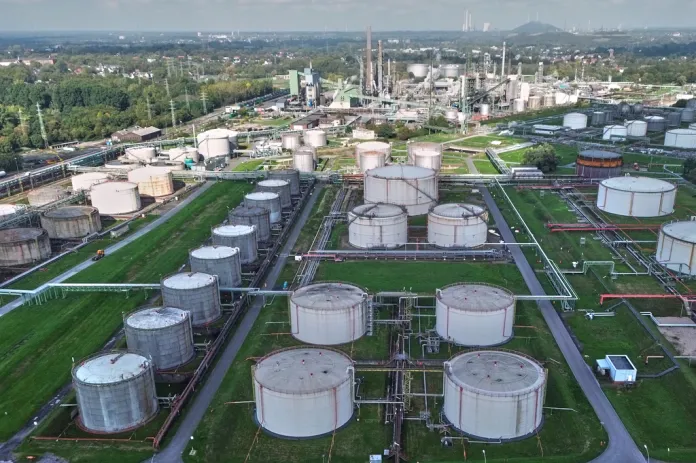
The reported strike plans come as Trump faces pressure to resolve a war that has disrupted energy markets and become a political liability ahead of the midterm elections.
Pentagon revises US military death toll in Iran war up to 21
Trump said Oct. 8 that the U.S. would not attack Iran before November’s elections, citing “productive discussions with the Islamic Republic of Iran.”
The conflict has also disrupted shipping through the Strait of Hormuz for months, a critical passage for global oil supplies, sending gas prices soaring. The economic effects have added to political pressure on the administration as Republicans seek to retain control of Congress.
Mike Brest contributed to this report.
Continue reading...
[ H/T Washington Examiner ]