




Military power can destroy a regime’s missiles, command centers, and military infrastructure. But a successful operation should not be mistaken for the achievement of its political objective. A government that can still repress its people and isolate its opponents may survive heavy blows and rebuild its military capabilities.
The question about Iran is not simply how much more pressure can be brought to bear on the regime. The more important question is how to end the threat it poses for good. Any answer that leaves out the Iranian people and their organized resistance is incomplete. Foreign powers should not choose Iran’s next rulers; they should help Iranians determine their own future.
This is not an argument against military deterrence. It is a distinction between having tools and having a strategy. Destroying a missile depot does not answer the question of how to prevent the next one from being built. That requires looking at the regime’s decision-making structure and the force capable of changing it from within.
OPINION: THE AYATOLLAHS SURVIVED TWO WARS. HERE’S WHAT FINALLY TOPPLES THEM
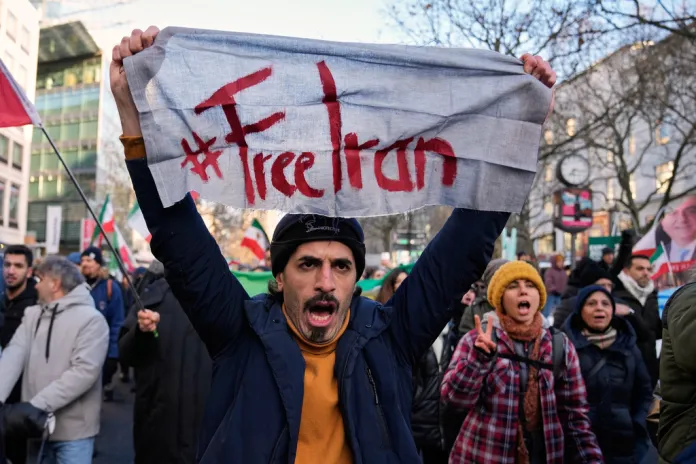
The regime’s conduct reveals the importance of this internal front. Amnesty International reported that since March 19, nine dissidents have been executed after unfair trials in a case involving alleged links to the principal opposition, the People’s Mojahedin Organization of Iran. Amnesty stressed that even as the country was being bombed, the authorities were using executions to eliminate dissent and intimidate the public.
Executing a prisoner does not close a gap in air defenses. The strategic purpose of this repression is to prevent the regime’s weakness from becoming an opportunity for the people. As long as the regime remains confident in its ability to suppress dissent, it may believe it can retain power by absorbing losses and buying time. Internal resistance challenges that confidence.
Yet discontent alone cannot overcome an organized apparatus of repression. To endure and survive waves of arrests, protests need organization and a political vision. Organized resistance is not a substitute for the people; it is a means of translating their aspirations into political power. The MEK and its network of Resistance Units should be assessed on that basis: their ability to organize, sustain activity under pressure, and offer a political program, not through the image the regime constructs of its opponents. They have carried out more than 80 operations against the Islamic Revolutionary Guard Corps and the paramilitary Basij in the past couple of months.
Credible support for such a force can change the regime’s calculations. If external pressure goes hand in hand with a greater capacity for independent action within Iranian society, time will no longer necessarily work in the regime’s favor. Those carrying out repression must also consider whether loyalty to the government protects their position or ties their future to a system that may not survive. No strategy can guarantee when a regime will fall or surrender. But there is a fundamental difference between raising the costs it faces and threatening its survival.
That support must have practical meaning: recognizing the people’s right to end dictatorship, engaging openly with the organized resistance, including the National Council of Resistance of Iran, and helping ensure unrestricted access to communications. Economic and diplomatic pressure should target the resources and officials of the apparatus of repression, rather than make ordinary people’s lives harder. Efforts to halt executions and defend political prisoners must not be sacrificed in security negotiations.
Iranians must not become proxies for foreign powers or temporary leverage for extracting concessions from Tehran. The goal is democratic change brought about by Iranians themselves. Foreign support must strengthen the people’s independence and ability to act, not dictate political outcomes from abroad.
OPINION: THE WEST DISARMED TEHRAN’S OPPOSITION — AND HANDED THE REGIME A LIFELINE
Nor is a return to the past, i.e., monarchical dictatorship, the answer to concerns about what follows change. The answer is a clear path for transition to a democratic republic. Maryam Rajavi’s Ten-Point Plan offers a concrete framework, emphasizing popular sovereignty, political pluralism, the separation of religion and state, equality between women and men, abolition of the death penalty, and an Iran free of nuclear weapons. These commitments should provide a basis for accountability. The legitimacy of any future government can come only from the free choice of the Iranian people.
Military power can weaken the regime; Iran’s people and their resistance can end its rule. A strategy that ignores this force for change may strike the regime again and again without ever ending the threat it poses.
Retired Gen. Charles F. Wald (@GenChuckWald) was deputy commander at the U.S. European Command headquarters in Stuttgart, Germany, from December 2002 to July 2006.
Continue reading...
[ H/T Washington Examiner ]