
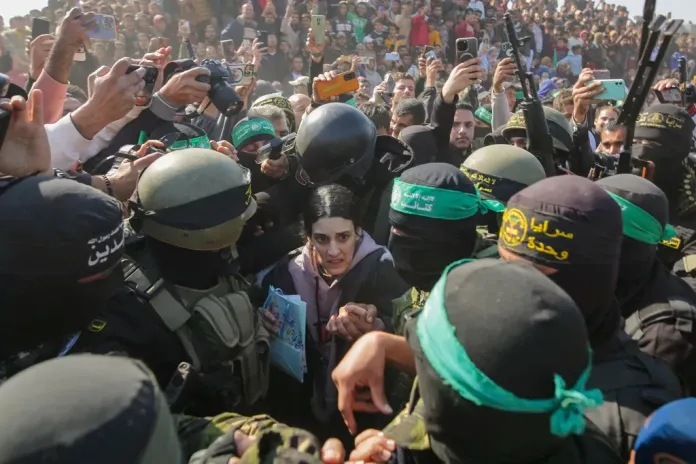
On the morning of Oct. 7, 2023, I woke up late and checked the news. My feed runs in three languages, English, Arabic, and French, so I usually see the same event through very different lenses. That morning, every lens showed horror. The images were unbearable, and the videos sent a chill through me. I pictured my own children at that music festival. I pictured my family living in one of the kibbutzim along the Gaza border. I called friends in Israel, Arabs and Jews alike. Everyone I reached was frightened, confused, and quietly hoping for some kind of miracle.
By the afternoon, a different kind of content had taken over. Account after account was celebrating. Hamas fighters were heroes, and Israel was a joke. Footage of soldiers being dragged away and hostages being carried off was passed around as proof of courage. Gaza, people wrote, was finally going to be free. Free of Jews, they meant. Voices I had long considered moderate, even enlightened, went along with the herd. They were happy to see Jews killed and Israel invaded.
I should not have been surprised. I grew up in Morocco, and I absorbed the propaganda against Israel from childhood. I watched the first and second intifadas on television. I followed Yasser Arafat’s speeches. I saw how the bodies of Palestinian children were put on screen, again and again, to keep the anger and vitriol burning.
In 2003, with the second intifada still leading the news every night, that anger came home. On May 16, suicide bombers struck Casablanca. Their targets included a Jewish social club, a Jewish cemetery, and a Jewish-owned Italian restaurant, along with a Spanish restaurant and a luxury hotel. Forty-five people died, the bombers among them. None of the dead were Jews, but nobody in Morocco doubted who the intended victims were. That September, Albert Rebibo, a 55-year-old shopkeeper, was shot in the head in Casablanca. Days later, Elie Afriat, 75, was stabbed to death in Meknes on his way to synagogue.
Violence against Jews was familiar to me. It was almost expected. Jews were the villains of the television dramas, of the religious series that fill Ramadan evenings, of Friday sermons, of school lessons, and youth activities. The Palestinian conflict did not create this hatred. It gave it an excuse. The Hebron massacre took place in 1929, almost two decades before Israel existed. The Farhud, the pogrom against the Jews of Baghdad, came in 1941, seven years before. The roots go deeper than any dispute over land. They reach into religious doctrine, and they are watered every day by the media, the schools, and the society around them.
One clip from Oct. 7 sums it all up. A Hamas fighter calls his parents from inside Israel to brag. He does not say he killed soldiers, or occupiers, or even Israelis. He says, “Jews. Mom, I killed 10 Jews with my own hands.” His mother is in tears, and the family is proud. Their son is a hero now, and his heroism will raise their standing.
That call tells you what Hamas really is. It is not simply an organization. It is what hatred of Jews becomes when it is allowed to grow until it picks up a rifle. Hamas is the tumor you can see. The cancer has spread throughout the whole body. People in Gaza watched the tunnels being dug. Their children helped dig them. Their money went into them. Many families had someone in the movement. Polls taken after the massacre showed broad support for it, and Hamas won the 2006 elections because generations had been raised on this ideology. A culture of death took hold, and people watched it grow and kept watering it.
STOP SHIELDING THE REAL KILLERS BEHIND 9/11 AND CHARLIE KIRK
Israel was deceived because it still does not fully understand this mentality. Its leaders assumed Hamas thinks the way they do, and that no one would gamble all of Gaza on an invasion of this scale. America made the same mistake before 9/11. Our elite terrorism experts explain violence through power struggles, resources, territory, and authority. What they keep missing is ideology, and its power to lead a whole movement into something suicidal: irrational from the outside, perfectly rational from within. Hezbollah has made the same kind of bet.
The lesson is uncomfortable but simple. Oct. 7 was a catastrophe waiting to happen, and it could have come on any day. Radicalization, money, and training are a recipe for terrorism. You cannot watch a group grow stronger, radicalize its own people, and absorb a steady flow of funds, and then expect it to behave like everyone else. Al Qaeda gave us 9/11. Hamas gave us Oct. 7. I fear we are watching the next one take shape in Syria, and even here in America, the soft reactions of the Left who refuse to acknowledge the terrors of Islamism will lead to a celebration in our streets, even when innocents are killed.
Rachid “Brother Rachid” Hammami is an American-Moroccan broadcaster and the former host of Daring Questions on al-Hayat TV. He is a senior fellow at the Ideological Defense Institute.
Continue reading...
[ H/T Washington Examiner ]