


When Chinese and American fighter jets squared off over the Yellow Sea earlier this year, Seoul’s defense minister protested not to Beijing but to the commander of U.S. Forces Korea. It was a small sign of a larger shift: a treaty ally increasingly sensitive to Beijing’s concerns.
That matters when American and South Korean defense chiefs meet at the Security Consultative Meeting this fall. Seoul wants a deadline for assuming wartime operational control of allied forces, with President Lee Jae Myung insisting the transfer occur before his term ends in 2030.
Washington should say no — and here’s why.
South Korea has a capable military and can ultimately assume greater responsibility for defending the peninsula. But the transfer was always supposed to be conditions-based, not driven by a political calendar. The concern lies with where Seoul’s leadership is taking the country.
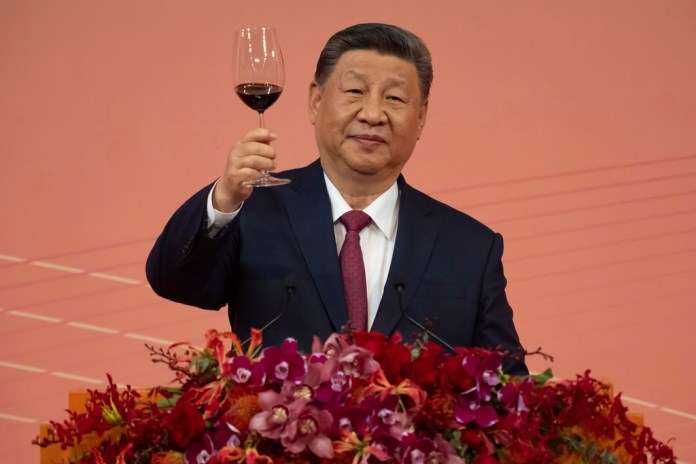
Seoul has drawn closer to Beijing than at any point in a decade. Chinese President Xi Jinping visited South Korea last November, his first trip to South Korea in 11 years. Lee reciprocated in January, declaring 2026 the start of “full restoration” of bilateral ties. In March, the two countries held their first industry-minister talks in four years, focused on supply chains and export controls.
Seoul has every reason to keep a working relationship with its largest trading partner. But Beijing’s motives are another matter.
Xi invoked shared Chinese and Korean suffering under Japanese militarism, a wedge aimed at the U.S.-Japan-Korea partnership just as China pressures Tokyo over Taiwan. Export-control dialogue gives Beijing a window into allied technology policy, while it wields rare-earth controls against the U.S. South Korean semiconductor giants Samsung and SK Hynix, which also operate major facilities in China under annual U.S. licensing requirements, creating additional leverage for Beijing.
Back in January, I warned that Lee’s pledge to Xi should set off alarms in Washington, and that Seoul was treating American tech companies far more harshly than Chinese ones. After a data breach at Coupang, Lee and allied lawmakers called for sweeping action against the company and its American acting CEO. Amazon, Google, Meta, and Netflix have also faced political pressure, with legislation aimed at restricting U.S. tech companies.
Meanwhile, the House Select Committee on the Chinese Communist Party has raised concerns via a letter to U.S. Secretary of State Marco Rubio about Alibaba-owned AliExpress, including allegations that it concealed a hack involving seller funds and faced no comparable penalty. Secretary of State Rubio told Congress in June that some positions taken by Seoul’s elected leaders run contrary to American interests.
These developments raise a basic question: will Seoul reliably align with Washington when U.S. and Chinese interests collide?
Wartime command is ultimately about trust.
The 2026 National Defense Strategy gives Seoul primary responsibility for deterring North Korea and points U.S. Forces Korea toward the wider region, which in practice means China. Lee has also questioned why South Korea should care about what happens in the Taiwan Strait.
It matters.
A combined command must operate with a shared understanding of regional threats. If a conflict involving China were to expand beyond the Korean Peninsula, American and South Korean forces could face competing strategic priorities. That contingency must be addressed before command changes.
Trust is also essential to intelligence sharing. In April, South Korea’s unification minister publicly disclosed classified U.S. intelligence, prompting Washington to restrict some sharing with Seoul. The episode underscores the vital importance of protecting sensitive information.
South Korea’s desire for sovereign command is legitimate. Its military is capable, and greater allied burden-sharing is sound American policy. But the two countries agreed that wartime operational control would be transferred on conditions, not a political calendar.
When the two sides meet this fall, the Trump administration should reject a politically driven target year and instead seek commitments from Seoul, such as coordination on regional contingencies; intelligence-security reforms; allied export controls; and equal treatment for American and Chinese companies.
Seoul may not welcome that approach. But allies must have difficult discussions at times. The diplomatic cost is smaller than the risk of meeting a political deadline only to discover during a crisis that the alliance’s command structure was transferred before the underlying conditions were ready.
CHINA’S NEXT TARGET ISN’T AMERICA. IT’S OUR ALLIES
The U.S.-South Korean alliance is indispensable. Its most important command decision shouldn’t run on a political timetable while Beijing expands its influence in Seoul.
Wartime command should be transferred when the conditions are right — not when the calendar says it’s time.
Chad F. Wolf is the former acting secretary of the U.S. Department of Homeland Security during President Donald Trump’s first term.
Continue reading...
[ H/T Washington Examiner ]