





[Newsletter ad — view on SCOTUSblog]
Justice John Marshall Harlan II resigned from the Supreme Court on this day in 1971 while dealing with “failing health.” He died of cancer three months later.
Please consider joining us on LinkedIn Live tomorrow for a discussion between Amy and Briefly’s Adam Stofsky about the upcoming term. Register here for the event, which will begin at 1 p.m. EDT.
At the Court
Late on Tuesday, the dispute over congressional redistricting in Missouri returned to the Supreme Court’s interim docket, when opponents of the state’s new map, which favors Republicans, again asked the justices to prevent it from being used in November’s elections. A response to the request is due today by 2 p.m. EDT.
On Sept. 11, the Supreme Court dismissed an immigration case on whether noncitizens have a due process right to bond hearings amid an extended detention that was scheduled for argument in October. On Monday, the Trump administration brought the issue back to the court in a new petition for review. For more on the filing, see the On Site section below.
Also on Monday, the Trump administration filed a petition for review on a district court’s authority over claims by a noncitizen, Georgetown University scholar Badar Khan Suri, challenging the validity of his detention while he awaits removal proceedings, when the claims also go to the validity of the grounds for his removal – an issue that district courts do not have the authority to review. Learn more about this dispute in the Morning Reads section.
On Tuesday, Justice Elena Kagan denied a request to intervene in a multistate custody dispute between a California couple and their surrogate. For more on the case, see the Morning Reads section.
The Trump administration has asked the Supreme Court to clear the way for it to use the Department of Homeland Security’s Systematic Alien Verification for Entitlements database to identify noncitizens on state voter rolls. The dispute is now fully briefed, and the court’s decision could come at any time.
On Monday, the justices will gather at the “long conference” to consider the petitions for review that built up during their summer recess.
Morning Reads
Trump asks Supreme Court to allow DHS detention of pro-Palestinian scholar
Stephen Dinan, The Washington Times
The Trump administration on Monday “asked the Supreme Court to hear a case involving a Georgetown University scholar who was targeted for deportation last year after a government artificial intelligence tool flagged his social media posts as too pro-Palestinian,” according to The Washington Times. Badar Khan Suri “came to the U.S. on a temporary visa to work as a postdoctoral fellow.” While at Georgetown, he became “one of the first targets of the Trump administration’s campaign last year to identify and try to deport pro-Palestinian foreigners in the academic community.” Suri challenged his arrest on First Amendment grounds before a “federal district court and won both release and an order barring his deportation.” The U.S. Court of Appeals for the 4th Circuit later upheld that decision. In the new petition for review, U.S. Solicitor General D. John Sauer contends that the district court did not have the authority to consider Suri’s case, which, in Sauer’s view, should have first been weighed by an immigration court before being appealed to a federal appeals court.
Supreme Court stays out of custody dispute between California couple and surrogate
Melissa Quinn, CBS News
Justice Elena Kagan on Tuesday denied a request “to intervene in a custody dispute between a California couple and surrogate who gave birth to a child last month with a rare and serious heart defect,” according to CBS News. McKenna West “had asked the justices to halt a California court order declaring the couple, Omar Ahmed and Nausheen Gilkar, to be the child’s parents,” and her request went to Kagan, who “handles emergency appeals arising from California.” The dispute began when “a 20-week anatomy scan showed the baby had ... a severe, life-threatening heart defect.” “Gilkar and Ahmed requested West obtain an abortion,” but “West refused and traveled to Texas,” where she had the baby.
US opposes part of Apple contempt finding in Epic Games case at US Supreme Court
Mike Scarcella, Reuters (paywalled)
In the upcoming term, the Supreme Court will consider how clear a court order must be before a litigant can be held in contempt for violating it in a case addressing a judge’s decision to hold Apple in civil contempt amid the company’s long-running dispute with Epic Games. “In a friend-of-the-court brief on Monday, the Justice Department urged the justices to narrow the grounds for holding parties in civil contempt. Such an order would benefit Apple, but the DOJ said it filed its brief in support of neither Apple nor Epic Games,” according to Reuters. “Civil contempt is ... appropriate only if the defendant’s conduct is clearly covered by [an] injunction’s express terms,” the brief says.
Why a Supreme Court justice visited Utah this week
Bridger Beal-Cvetko and Daniel Woodruff, KSL
Justice Samuel Alito was in Utah on Monday to show support for one of his former clerks. “Alito was a guest for the investiture of Jay Jorgensen, who was confirmed to the recently-expanded Utah Supreme Court in June” and who “clerked for Alito when he was a judge on the U.S. Court of Appeals for the Third Circuit more than 30 years ago,” according to KSL. The justice “administered the oath of office to Jorgensen” and also attended a private meeting with Utah “Gov. Spencer Cox, Lt. Gov. Deidre Henderson, and other members of the Utah Supreme Court.”
Antonin Scalia Prepares for His Confirmation Hearing
Ed Whelan, Confirmation Tales
In a post for his Substack, Ed Whelan shared excerpts from his conversation with U.S. District Judge Patrick J. Schiltz about the process of preparing Antonin Scalia for his confirmation hearings. (Schiltz was a clerk for Scalia on the U.S. Court of Appeals for the District of Columbia Circuit when Scalia was nominated to the Supreme Court and then assisted him throughout the confirmation process.) Schiltz recalled that Justice William Brennan was among those who called to congratulate Scalia and that Scalia said he shared a “warm and gracious greeting.” Schiltz also noted that “Justice [William] Rehnquist had called [Scalia] at Justice [Harry] Blackmun’s behest because Justice Blackmun had heard that Judge Scalia smoked and he wanted to make sure Judge Scalia knew that smoking was forbidden during Conference.”
On Site
Court News
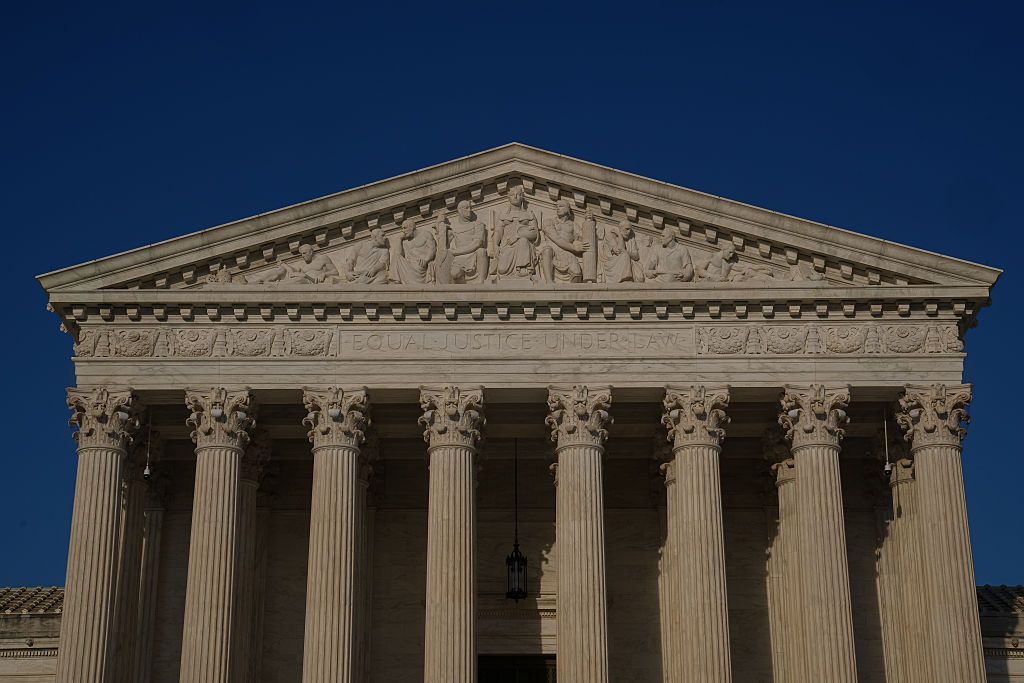
Trump administration brings important immigration question back to the Supreme Court
Like Genalo v. Black before it, Genalo v. D.C. addresses due process rights and Section 1226(c) of the Immigration and Nationality Act, which requires the detention of noncitizens who have committed certain crimes and who are awaiting removal proceedings. Specifically, the case asks at what point, if any, noncitizens detained for an extended period under Section 1226(c) have a due process right to a bond hearing under the Fifth Amendment and what the government must show to justify continued detention if such a hearing is indeed required.
Contributor Corner
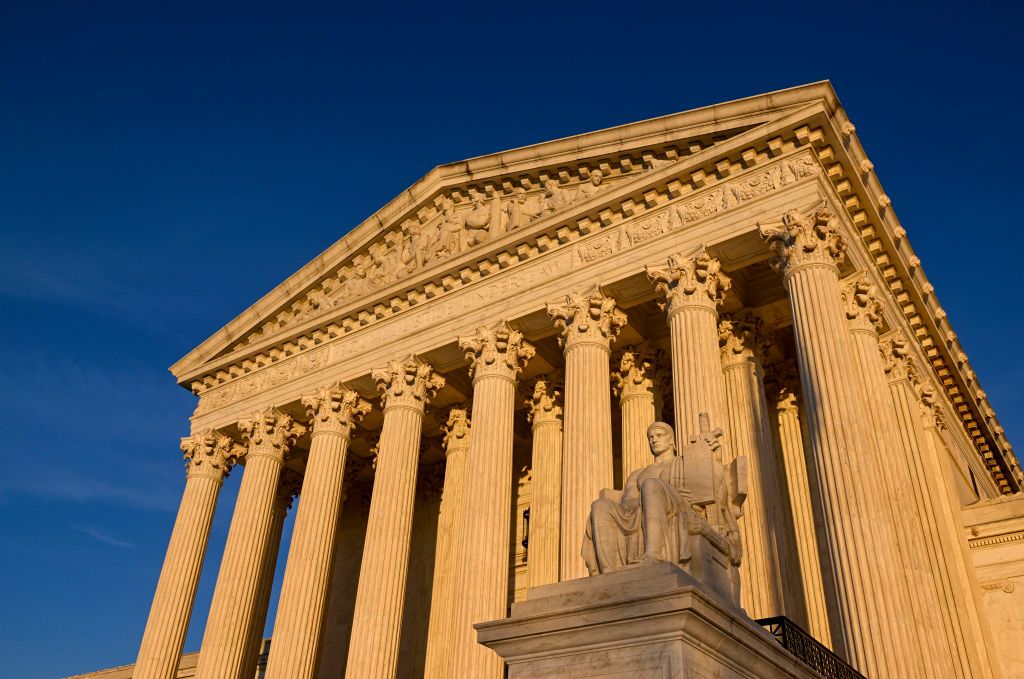
The court’s coming climate-change case and the very confused doctrine of preemption
In his Courtly Observations column, Erwin Chemerinsky explored the significance of Suncor Energy, Inc. v. County Commissioners of Boulder County, which will be argued on Oct. 5 and “poses the issue of whether suits under state law against energy companies for their role in causing climate change are preempted, or superseded, by federal law.” Chemerinsky noted that, while the Supreme Court regularly addresses preemption issues, “it is difficult to find a pattern in the court’s handling of them.”
Contributor Corner
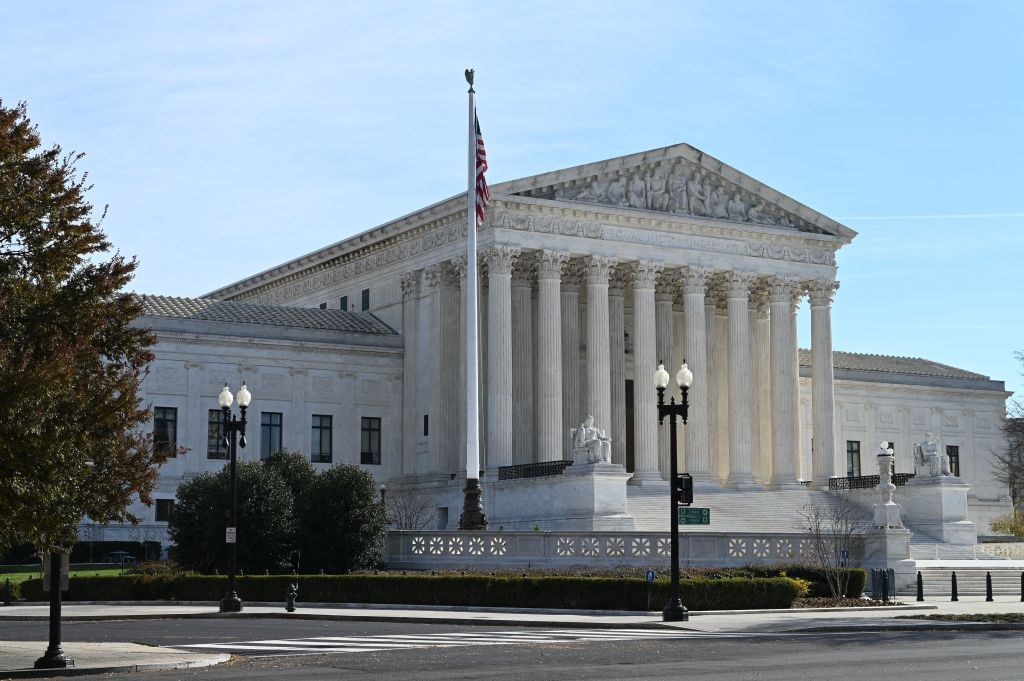
The Supreme Court refuses to become partisan in two fights over the midterms
In his Justice, Democracy, and Law column, Edward Foley explored the court’s handling of interim docket disputes on Missouri redistricting and mail-in voting, contending that its decisions refute the claim that the current Supreme Court is a purely partisan institution. “In both cases, the court foiled what Republicans – and specifically the Trump administration – wanted,” Foley wrote.
Podcasts
Advisory Opinions
Are Marijuana Contracts Legal in Federal Court?
Sarah Isgur and David French discuss the upcoming “long conference” that marks the unofficial start of the new Supreme Court term and a prosecutor being referred to the Department of Justice for obstruction of justice. They also review several circuit-court cases, including breaches of contract between marijuana-related businesses.
Ask Amy
Q: The official start of the Supreme Court’s new term is just 12 days away. But the unofficial start is even sooner: Monday, Sept. 28, when the justices will meet for their “long conference” – their first regularly scheduled conference since late June, at which they will consider all of the petitions for review that have accumulated over the summer and likely grant a good deal of new cases to hear. How do you prepare for this conference?
A: For reporters who cover the court, the long conference is a daunting one for which to prepare. At almost every other time of year, the justices will only grant petitions for review that they have considered at two or more conferences. They began this practice more than a decade ago, presumably to use the additional time to vet cases to ensure that there are no flaws that might keep the court from reaching the merits of the dispute. But the court normally grants at least an initial batch of cases from the long conference after considering them at that conference for the first time, taking a few days between the conference and announcing the grants to do its due diligence.
To get ready for the long conference, I draft “prewrites” – stories anticipating that the court will grant review. There are a variety of cases that might get my attention – for example, petitions for review by the federal government (because the U.S. solicitor general tends to have a good batting average in getting the court to grant review), petitions involving questions that the court has already agreed to decide but ultimately did not, cases in which the underlying issue is sufficiently important or interesting that I want to be ready even if it seems like it could be a longshot, and cases in which the federal government has filed a “friend of the court” brief recommending that review be granted.
The start of the new term also means a new batch of stories previewing the cases that the court has already agreed to take up, and in which it will hear arguments. Law schools and lawyers’ groups (among others) often host events to look ahead at the new term, featuring experts on the court; these events can be very useful in providing details about the individual cases and trends surrounding the court.
Finally, although the start of the new term once signified a shift from the summer doldrums to a burst of activity, it no longer serves as the same kind of milestone that it once did. With the rise of the emergency docket, the summer recess is a stretch on the calendar – but not necessarily a break.
SCOTUS Quote
Continue reading...
[ H/T SCOTUSblog ]