






[Newsletter ad — view on SCOTUSblog]
One year ago, the Supreme Court in an interim docket decision cleared the way for President Donald Trump to remove FTC Commissioner Rebecca Slaughter from office while her challenge to her firing continued and announced that it would hear argument on the president’s ability to fire the heads of certain independent agencies without cause. In June, the court, by a vote of 6-3, ruled that the president had the power to do so.
Please consider joining us on LinkedIn Live on Thursday for a discussion between Amy and Briefly’s Adam Stofsky about the upcoming term. They will explore notable cases scheduled for argument, wrestling with what they could mean for businesses, governments, institutions, and individuals. Register here for the event, which will begin at 1 p.m. EDT.
At the Court
The Trump administration has asked the Supreme Court to clear the way for it to use the Department of Homeland Security’s Systematic Alien Verification for Entitlements database to identify noncitizens on state voter rolls. The dispute is now fully briefed, and the court’s decision could come at any time.
Next Monday, the justices will gather at the “long conference” to consider the petitions for review that built up during their summer recess.
Morning Reads
Eighth Circuit revives GOP-gerrymandered Missouri map for third visit to Supreme Court
Joe Harris, Courthouse News Service
On Monday, a panel of the U.S. Court of Appeals for the 8th Circuit reinstated a congressional map in Missouri that’s designed to favor Republicans, “but delayed its implementation until next week, paving the way for a possible third trip to the U.S. Supreme Court to ultimately decide the case,” according to Courthouse News Service. On the first trip, Justice Brett Kavanaugh denied Missouri’s request for him to pause a Missouri Supreme Court ruling blocking the state from using the new map. Then, after a federal district court ordered Missouri to use the new map, the dispute returned to the Supreme Court, where the justices put that district court ruling on hold. In Monday’s per curiam decision, the 8th Circuit panel said “that using the previous map, created in 2022, in the November election after using the new map in the primaries this past August would be unconstitutional.” Courthouse News Service noted that, when it comes to resolving the dispute, “[t]ime is of the essence, with absentee voting scheduled to begin Tuesday. Military and overseas absentee ballots, using the previous map, were already sent out Saturday.”
Both parties embrace Supreme Court spending limit ruling in midterm home stretch
Caroline Vakil, The Hill
On the final opinion announcement day of the 2025-26 term, the Supreme Court issued a major ruling on campaign finance, holding that restrictions on the amount of money political parties can spend in coordination with candidates violated the First Amendment. Republicans and Democrats alike are embracing that decision, “as marquee midterm races head into the home stretch,” according to The Hill. “The Senate Republicans’ campaign arm is spending more than $45 million in coordinated expenditures with candidates, according to a campaign report filed Sunday.” “Meanwhile, the House Democrats’ campaign arm announced Monday that it would spend close to $8 million in coordinated expenditures in 26 battleground districts.”
The clues in ICE’s mass detention court losses that point to a win at SCOTUS
Kyle Cheney, Politico
Over the past year, “[m]ore than 460 federal district judges have ruled about 20,000 times against ICE’s effort to” to subject noncitizens apprehended within the country to mandatory detention “without the opportunity for release on bond,” according to Politico. ICE’s detention policy “met a similarly lopsided fate at federal appeals courts, losing in nine of 11 regional circuits,” but there was more division among appeals court judges than among district court judges. At the appellate level, “[a]ll but four Republican-appointed judges sided with the administration and Democratic appointees unanimously opposed it. And court-watchers say that trend bodes well for ICE at the Supreme Court,” which may take up the issue during the 2026-27 term. “I think if you look at the judges who are the closest proxy of a Justice Barrett or a Justice Kavanaugh, they have overwhelmingly sided with the administration on this issue,” said Eric Wessan, the top litigator for the state of Iowa, which has urged the Supreme Court to uphold ICE’s policy.
Appeals court to hear Arkansas Ten Commandments case
Jeff Brumley, Baptist News Global
On Tuesday, the U.S. Court of Appeals for the 8th Circuit will hear oral arguments “in a lawsuit filed to block Arkansas from implementing its law mandating Ten Commandments displays in public school classrooms,” according to Baptist News Global. In March, U.S. District Judge Timothy Brooks issued a permanent injunction barring Arkansas from implementing the law, concluding that the state was engaged in an unconstitutional effort “to proselytize to children.” The 8th Circuit will now weigh whether to leave the injunction in place. Baptist News Global noted that the U.S. Court of Appeals for the 5th Circuit previously allowed similar Ten Commandments laws to be implemented in Texas and Louisiana. Those earlier rulings have been appealed to the Supreme Court.
Newsgathering, the First Amendment, and the White House
Steve Vladeck, One First
In a post for his Substack, Steve Vladeck highlighted President Donald Trump’s decision to ban CNN, MS Now, and Politico from the White House and explained why he believes the outlets will prevail in their challenge to the decision. “The Supreme Court has not always drawn the clearest lines when it comes to the First Amendment and press freedom. But this is just not a close case,” Vladeck wrote. “Whatever other leeway the executive branch may have to restrict press access on national security grounds, hand-picking three outlets to exclude from what the Court’s jurisprudence calls a ‘nonpublic forum’ because of the President’s disagreement with the putative viewpoint of their reporting is about as close to a textbook violation of the existing precedents as it comes.”
Don’t Judge the Supreme Court by Its Polls
Ilya Shapiro, City Journal
In a column for City Journal, Ilya Shapiro reflected on the gap between how Americans feel about the Supreme Court as an institution and how they feel about the court’s work. While approval of the court is declining, a recent Marquette Law School survey showed that a majority of Americans favored 11 of the 13 highest-profile rulings from the 2025-26 term, “and eight drew at least 60 percent support.” These numbers, according to Shapiro, serve as a reminder that we shouldn’t overemphasize the court’s approval rating in debates about potential court reform. “[C]ourt-packing, term limits, and other proposals should stand or fall on their own merits,” he wrote. And “[a] dip in approval—especially one produced by historically polarized voters during an era of collapsing trust generally—provides little reason to redesign the Constitution.”
On Site
Contributor Corner
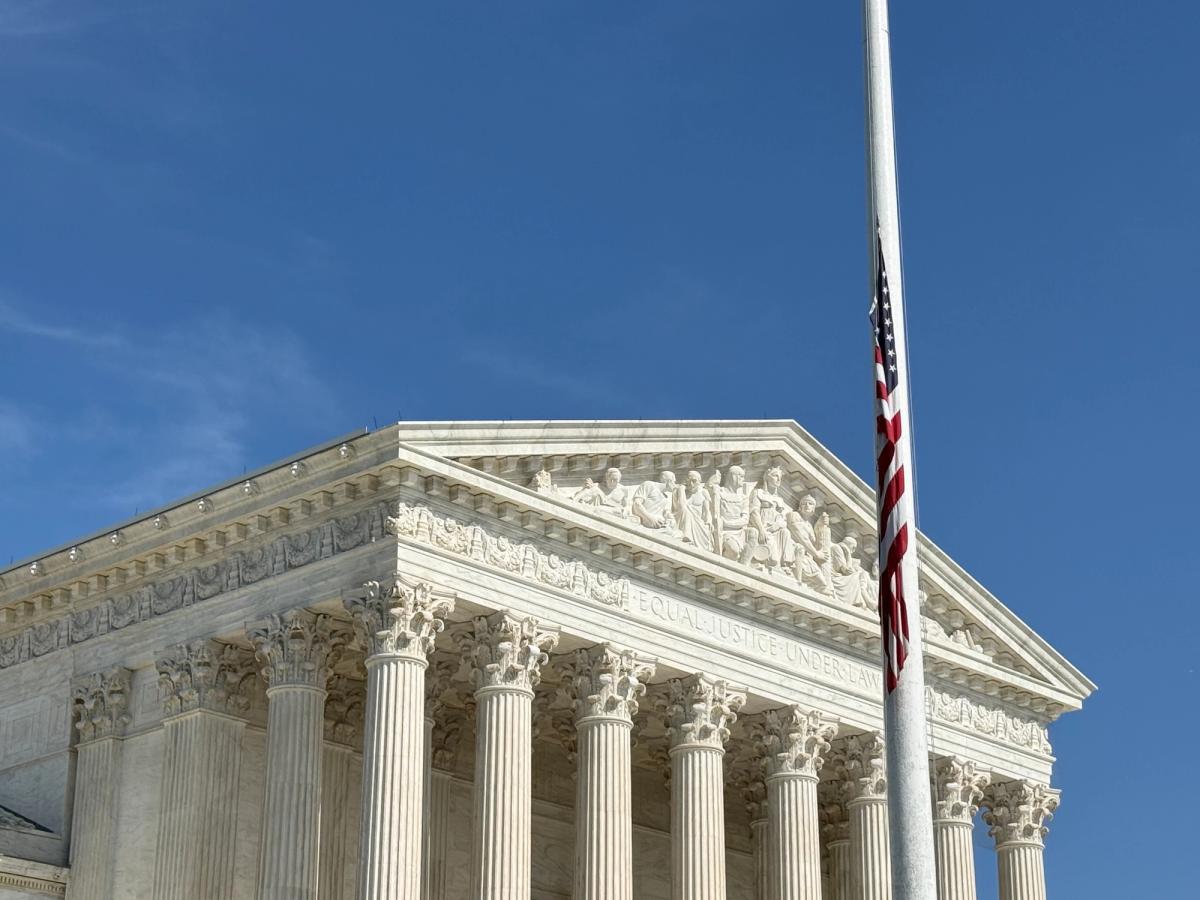
The “born free and equal” clauses, incorporation, and 12-person juries
In his Born Free and Equal column, Steven Calabresi explored why he believes the first eight amendments of the Bill of Rights should be fully incorporated – that is, applied to the states – and why the Supreme Court should hold in Kian v. Florida that state criminal defendants are entitled to a 12-person criminal jury trial.
SCOTUS Outside Opinions
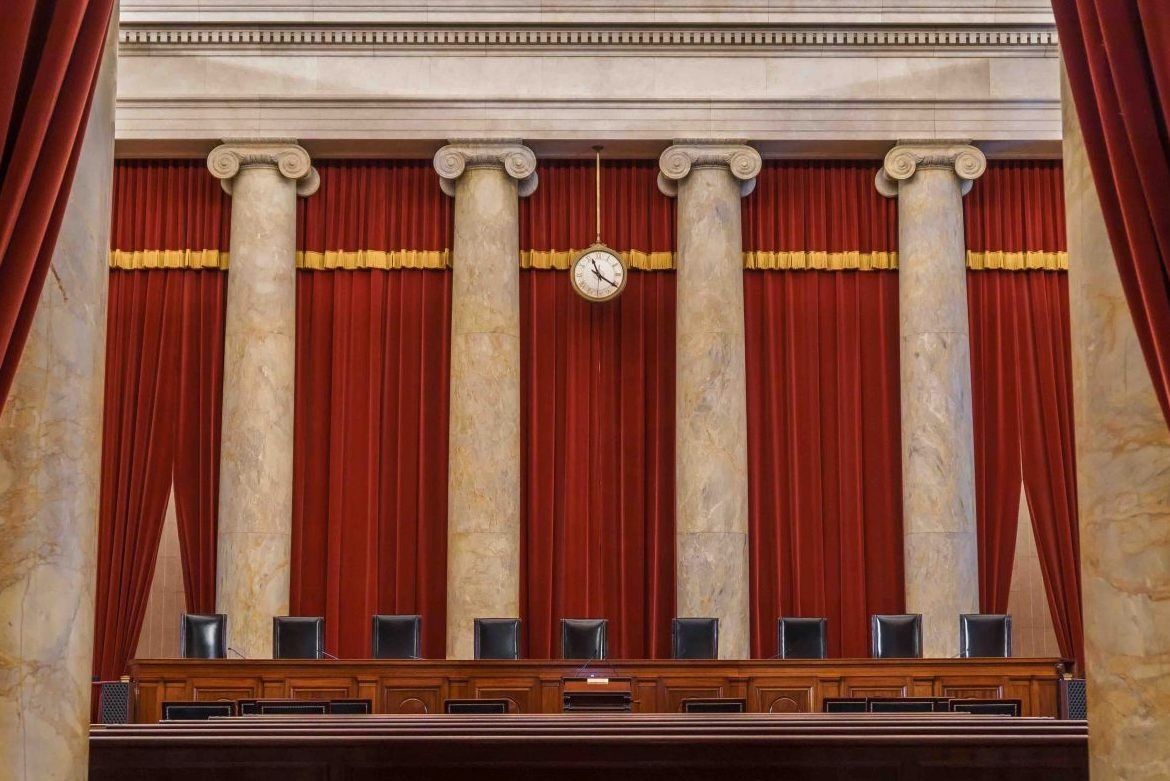
Is it time to rethink the office of the chief justice of the United States?
In a column for SCOTUSblog, Russell Wheeler reflected on the duties assigned to the chief justice and the obstacles that stand in the way of reforming the office. “It’s no disrespect to any recent chief justice to worry that their powerful, life-tenured executive position sits uneasily within the principles of democratic government,” he wrote. “But, as is often the case, it’s not clear if or how well alternative approaches would work.”
SCOTUS Outside Opinions
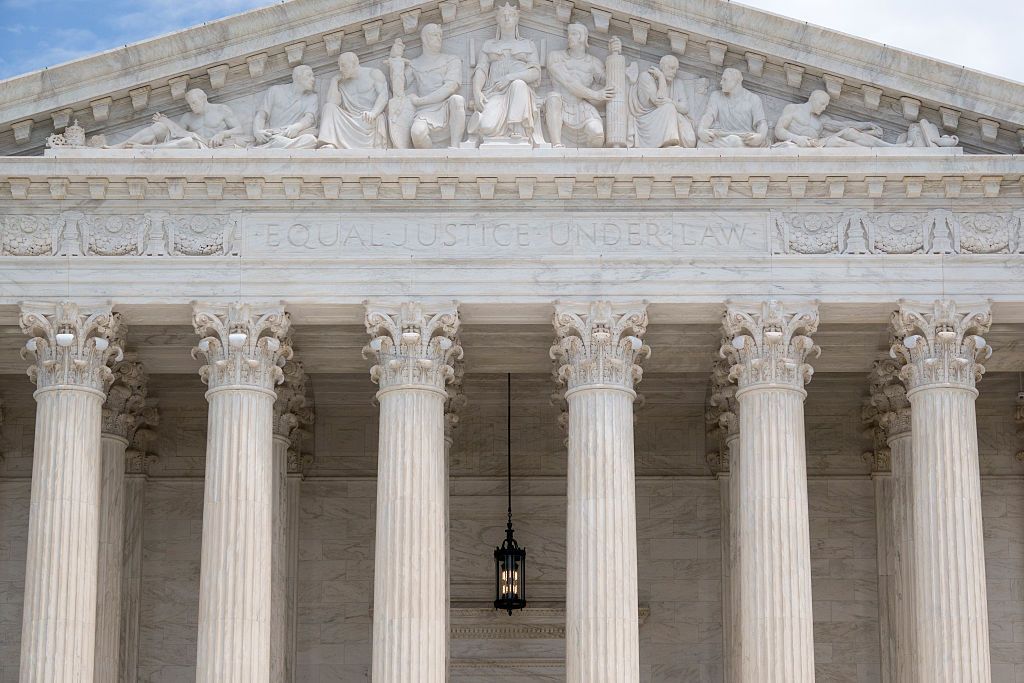
Some lessons of open-minded discourse on the Supreme Court
In a column for SCOTUSblog, Alexander Heffner shared what he’s learned from his work on “The Open Mind,” the longest-running series in PBS history and one which has focused a great deal on the court, about how the institution has evolved over the past seven decades.
A Closer Look
Ernesto Miranda
For this edition of our Closer Look series on famous Supreme Court plaintiffs, we delve into the life of Ernesto Miranda, the plaintiff in 1966’s Miranda v. Arizona - the case where the Supreme Court held that the authorities must inform individuals in custody of certain rights (a “Miranda warning”) before being interrogated.
Ernesto Miranda is generally believed to have been born in Mesa, Arizona, in 1941 (although some sources claim he was born in 1940). He was known as “Ernie” or “Ernest” until his appellate lawyers began referring to him as “Ernesto.” Miranda’s father, Manuel, was an immigrant from Mexico and worked as a house painter. Miranda’s mother passed away when he was only six years old. His father remarried within a year. Unfortunately, Miranda did not get along well with either his father or stepmother and they grew distant.
Miranda attended Queen of Peace Grammar School in Mesa. He infrequently attended class, however, and dropped out of school in the eighth grade. Miranda was charged and convicted of burglary in 1954 and 1955; the second offense landed him in a reform school, the Arizona State Industrial School for Boys. He was again sent there after being convicted of attempted rape and assault. Miranda moved to Los Angeles at age 17, but after more run-ins with law enforcement, he was sentenced to 45 days in county detention and then sent back to Arizona.
Miranda attempted to turn his life around when he was 19 years old by joining the U.S. Army, but he was absent without leave for a significant portion of time. He was dishonorably discharged for spying on individuals engaged in sexual activity and for his continued absence. For the next few years, Miranda drifted around the United States. During this time, he was sentenced to a year in federal custody after stealing a car and driving it across state lines.
In the early 1960s, it appeared that Miranda was finally beginning to turn his life around. He moved back to the Phoenix area, and met Twila Hoffman, who had recently separated from her husband. Miranda moved in with Hoffman and the two had a daughter, Cleopatra. Miranda got a job as a dock worker and his boss referred to him as “one of the best workers [he had] ever had.”
In March 1963, Patricia “Trish” Weir, who was 18 years old, was kidnapped and raped while walking home from her job at a movie theater. Weir described a “Mexican” man when asked about her attacker. A week later, a car matching the one driven by her attacker was spotted near the area of the kidnapping by Weir and her brother-in-law. The car turned out to be registered in Hoffman’s name, and Miranda became a suspect in the case.
Miranda agreed to go to the police station, where he was placed in a lineup with four men. Weir was not able to pick Miranda out, but the police implied to Miranda that he had been identified. Taken to the interrogation room, he was questioned and confessed to committing the act. Not once during the interrogation was Miranda informed that he had a right to an attorney or the right to remain silent.
Miranda was convicted of rape and kidnapping at his trial and sentenced to up to 30 years in prison. The Arizona Supreme Court subsequently upheld Miranda’s conviction.
With help from the American Civil Liberties Union, Miranda appealed his case to the U.S. Supreme Court in 1965, arguing that his Fifth Amendment right against self-incrimination and his Sixth Amendment right to counsel had been violated. The court agreed to hear his case, and in a 5-4 decision, written by Chief Justice Earl Warren, sided with Miranda.
“At the outset, if a person in custody is to be subjected to interrogation, he must first be informed in clear and unequivocal terms that [he] has the right to remain silent … that anything said can and will be used against the individual in court … that he has the right to consult with a lawyer and to have the lawyer with him during interrogation … [and] that if he is indigent, a lawyer will be appointed to represent him,” Warren wrote in his majority opinion.
Miranda apparently became a celebrity among other incarcerated individuals after he won at the court (signing autographs and telling his story to interested prisoners). The state of Arizona decided to retry Miranda in 1967 after his conviction was overturned. Although the prosecution expected without Miranda’s confession that it would be difficult to convict him, Hoffman agreed to testify against Miranda and stated that he had confessed to her. A jury went on to convict him and Miranda was sentenced to 20 to 30 years in prison.
Miranda was paroled after 11 years by the Arizona Board of Pardons and Paroles in 1972. Upon his release, he began selling autographed “Miranda cards” as a souvenir for $2 each.
In 1976, Miranda got into a dispute over a card game with two Mexican field workers in a Phoenix bar. During the incident, Miranda was stabbed to death. Two “Miranda cards” were found on his person when he was murdered. Eseziquiel Moreno Pérez was charged with killing Miranda, but he fled to Mexico and was never apprehended. Fernando Zamora Rodriguez was detained for providing Pérez with the knife – he was read his Miranda rights but never charged.
SCOTUS Quote
Continue reading...
[ H/T SCOTUSblog ]