








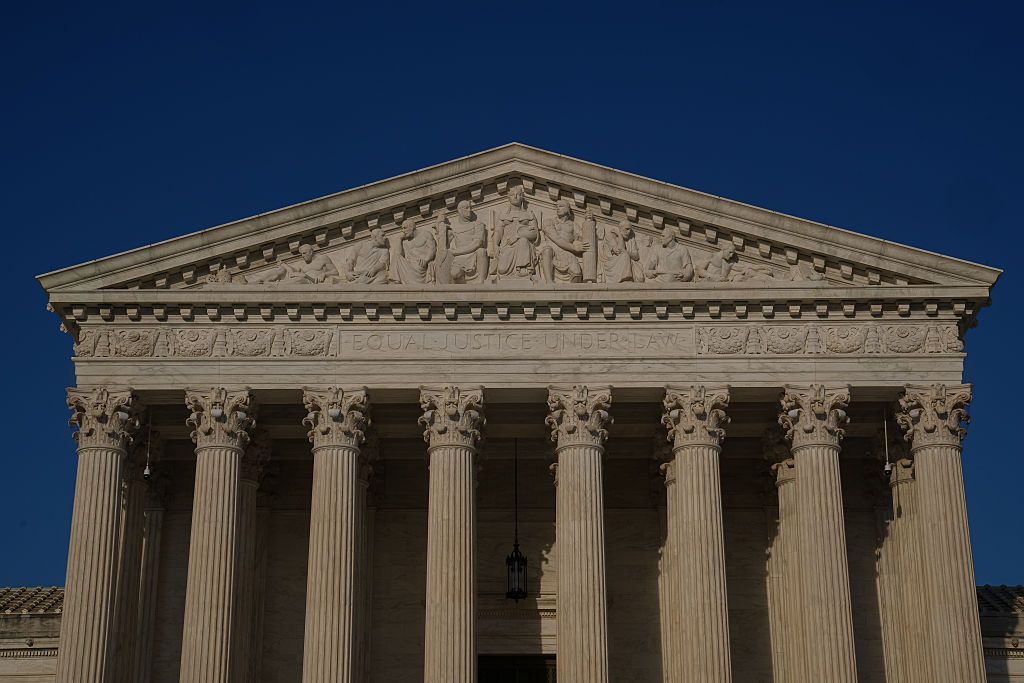
On Sept. 11, the Trump administration notified the Supreme Court that Genalo v. Black, an immigration case set to be argued in October, was now moot – that is, no longer a live controversy – and should be dismissed from the oral argument docket. However, U.S. Solicitor General D. John Sauer noted that the administration hoped the justices would still “resolve the questions presented” during the 2026-27 term, explaining that his team would work to “identify[] alternative vehicles” with which to return the issue to the court.
Ten days later, on Monday, Sept. 21, the administration filed a new petition for review that covers the same essential ground as the dismissed case. In doing so, however, it skipped over the federal appeals court that would typically weigh in before the Supreme Court. “The Court has previously granted certiorari before judgment to allow a case to replace one that was dismissed,” Sauer wrote, urging the justices to “do the same here.”
Like Genalo v. Black before it, Genalo v. D.C. addresses due process rights and Section 1226(c) of the Immigration and Nationality Act, which requires the detention of noncitizens, including green card holders, who have committed certain crimes and who are awaiting removal proceedings. Specifically, the case asks at what point, if any, noncitizens detained for an extended period under Section 1226(c) have a due process right to a bond hearing under the Fifth Amendment and what the government must show to justify continued detention if such a hearing is indeed required.
The Supreme Court previously addressed Section 1226(c) in 2018’s Jennings v. Rodriguez, holding that the statute itself did not require periodic bond hearings. While weighing that case, the justices considered – but did not resolve – the question of whether, amid a lengthy detention, due process would eventually require such hearings.
In June, the court granted review in Genalo v. Black to answer that question. The noncitizens in that case, Carol Williams Black and Keisy G.M., had been detained for approximately seven and 21 months, respectively, under Section 1226(c). However, Black had voluntarily left the United States even before the justices agreed to take up the case, while New York Gov. Kathy Hochul pardoned G.M. in August, which meant he was no longer deportable under the statute. In September, the Trump administration and attorneys for the challengers agreed that the case should be dismissed.
The new case, Genalo v. D.C., involves a man identified only as D.C. in court filings, who was born in the Dominican Republic in 1963 and “unlawfully entered the United States” “[a]t an unknown time and place,” according to the petition. While in the U.S., D.C. has apparently “been convicted of multiple crimes,” and the Department of Homeland Security detained him under Section 1226(c) in September 2025 after his most recent prison stay ended. In March, D.C. challenged his prolonged detention as a violation of his due process rights, and a federal district court agreed that he had a constitutional right to a bond hearing. That bond hearing has since taken place, and D.C. was released from DHS custody on March 31.
The Trump administration on Monday asked the Supreme Court to review that district court ruling and return the issue of immigration detention without bond to the 2026-27 oral argument docket. D.C.’s response is due by Oct. 21.
In a second petition for review filed on Monday, the Trump administration asked the justices to address district courts’ authority over claims by a noncitizen challenging the validity of his detention while he awaits removal proceedings, when the claims also go to the validity of the grounds for his removal – an issue that district courts do not have the authority to review. The case centers on the Trump administration’s decision to detain Georgetown University scholar Badar Khan Suri and begin removal proceedings. Suri, an advocate of Palestinian rights, contends that the detention violated his free speech and due process rights.
Continue reading...
[ H/T SCOTUSblog ]