

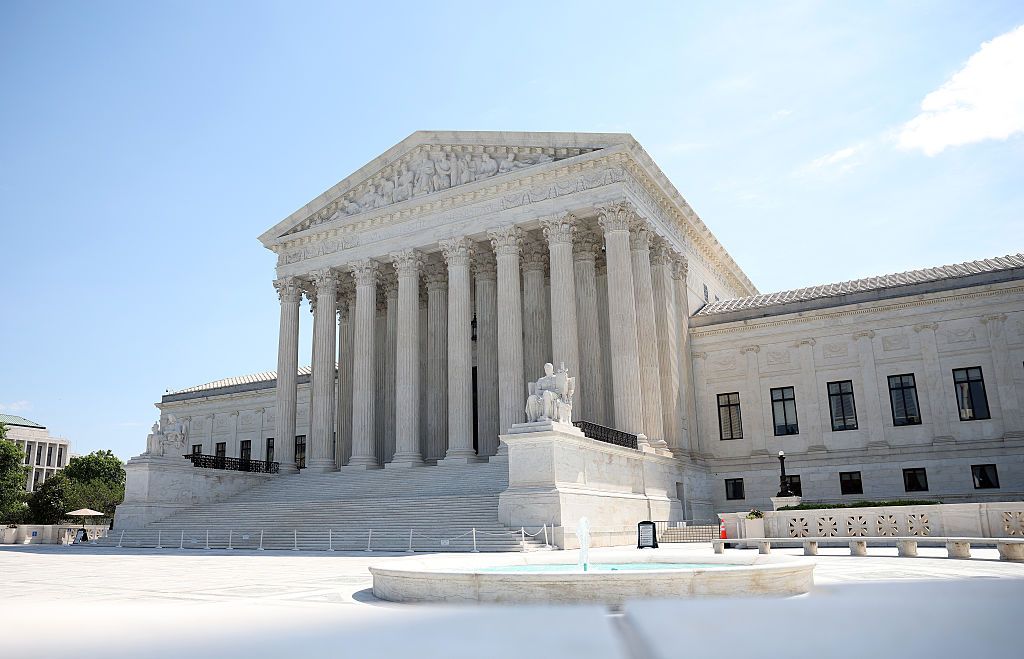
The Supreme Court will hear arguments this fall in cases involving the First Amendment, the Second Amendment, parental rights, and election integrity.
Here are five key cases to watch.
1. Another Test for the Second Amendment
On Dec. 2, justices will consider whether state and local governments can ban semiautomatic rifles such as the AR-15 in cases out of Cook County, Illinois, and Connecticut.
In Viramontes v. Cook County, the plaintiff, Cutberto Viramontes, sued in 2021 over the county’s ban on AR-15 rifles and similar semiautomatic rifles.
The 7th U.S. Circuit Court of Appeals upheld the law, ruling that Supreme Court precedent would allow regulation of certain weapons and citing the Heller and Bruen rulings.
The other case is Grant v. Higgins. Connecticut enacted gun control laws after the Sandy Hook school massacre, in which a gunman murdered 20 first graders and six adults. The 2nd U.S. Circuit Court of Appeals upheld the Connecticut law, ruling that it “imposes targeted restrictions on unusually dangerous weapons.”
Gun control advocates have argued that the Second Amendment does not protect an individual’s right to bear arms, but rather the collective right to a regulated militia, noted Matthew Cavedon, director of the Project on Criminal Justice at the Cato Institute.
“People often say the founders never envisioned bazookas and nuclear weapons, and that’s likely true,” Cavedon told the Daily Signal. “At the same time, if you are called for milita duty, you were expected to bring your own small arms, standard use, which is what an AR-15 is. This is at the heart of what the Second Amendment was meant to protect.”
2. Stopping Noncitizen Voting
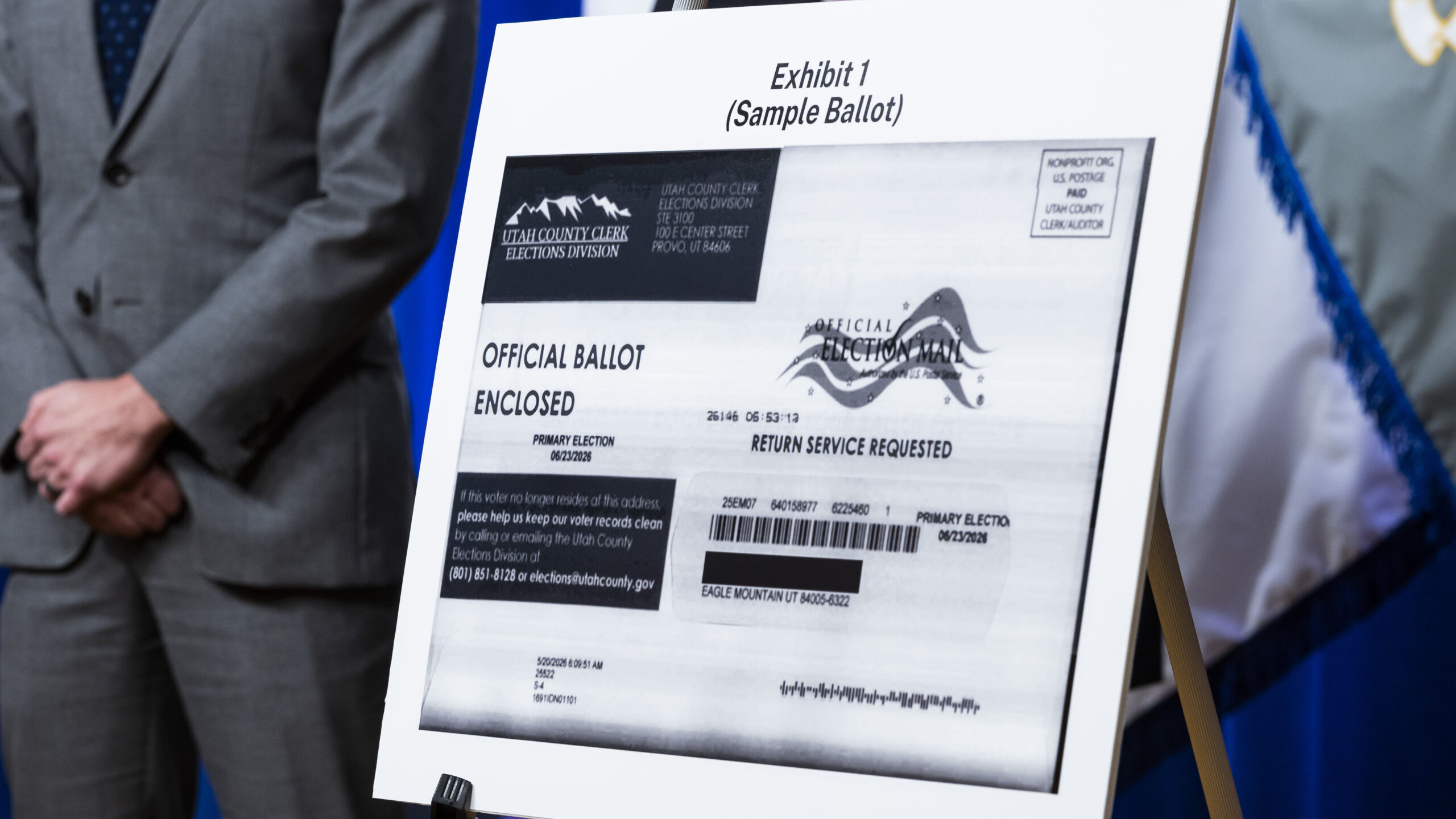
On Dec. 8, justices will hear arguments about proof-of-citizenship laws in Republican National Committee v. Mi Familia Vota.
The question is whether Arizona can require proof of citizenship for voter registration. The high court accepted an appeal from the Republican National Committee after lower courts determined that portions of Arizona’s 2022 voting law violated the National Voter Registration Act of 1993, better known as the “motor voter” law.
The court also will decide whether the state can remove the names of ineligible voters from the rolls within three months of an election.
Previously, the 9th U.S. Circuit Court of Appeals sided with the plaintiffs in the case.
“What the 9th Circuit did was say no proof of citizenship at all. It’s a radical takeover of state elections,” Chad Ennis, vice president of the Honest Elections Project, told the Daily Signal. “States are in charge of their elections.”
3. ‘Colorado Behaving Badly’
Oral arguments in St. Mary Catholic Parish v. Roy are scheduled for Nov. 3.
St. Mary Catholic Parish’s preschool in Littleton, Colorado, has argued that its exclusion from the state’s universal preschool program violates the First Amendment’s protection against religious discrimination.
The state program provides all children up to 15 hours of tuition-free preschool, but it requires participating schools to admit children who identify as lesbian, gay, bisexual, or transgender and the children of parents who identify as LGBT.
The state has argued in its response that the parish seeks “an exemption from this law to allow them to receive public funding while turning away preschoolers because of their, or their parents’, gender identity or sexual orientation.”
“This is another case of Colorado behaving badly,” Zack Smith, a senior legal fellow at The Heritage Foundation, told the Daily Signal. “A lot of these religious liberty cases have come out of Colorado because of its repressive laws.”
In March, the Supreme Court held that Colorado’s ban on talk therapy for minors regarding gender identity or sexual orientation violated the First Amendment because it imposed a viewpoint-based restriction on speech. In 2023 and 2018, the high court held that Colorado could not compel a Christian website designer and a Christian baker, respectively, to provide specific creative services for same-sex weddings.
In the current case, the 10th U.S. Circuit Court of Appeals sided with Colorado, citing the Supreme Court’s 1990 decision in Employment Division v. Smith and ruling that the state’s rules were neutral and applied to every preschool without distinction.
In the 1990 precedent, the Supreme Court allowed Oregon to exclude a Native American man from receiving unemployment benefits because he had consumed the hallucinogen peyote, which he claimed was part of his religious practice. Congress then passed the Religious Freedom Restoration Act of 1993, which requires strict scrutiny of federal laws that substantially burden religious exercise.
4. Parental Standing and Washington’s Gender Law
International Partners for Ethical Care Inc. v. Ferguson, a case out of Washington state, will be argued Dec. 7. The case concerns whether parents have standing to sue when a state shelter seeks to help minors obtain “gender-affirming” treatments or surgeries.
Normally, if a minor runs away from home, a shelter would attempt to reunify the minor with his or her parents. However, a Washington state law specifically delays notification and reunification of a runaway child with his or her parents if that child claims to be receiving or seeking “gender-affirming” treatment.
“Standing has been a hot topic in the court, whether it’s in election litigation or regarding the White House ballroom,” said Smith, of The Heritage Foundation. “Parents are arguing that enforcing this law would do enough harm to allow a challenge. But the issue of standing is where we’ve seen disagreement even among conservative justices.”
The 9th U.S. Circuit Court of Appeals found that a group of parents lacked standing to challenge the law because they could not prove that Washington state would definitely hide information about their children from them.
5. Suncor Energy v. Commissioners of Boulder County
Another notable case on the court’s first day back in session is Suncor Energy (U.S.A.) Inc. v. Commissioners of Boulder County, which will be argued Oct. 5.
The city and county of Boulder, Colorado, sued Suncor Energy and Exxon Mobil, alleging that fossil fuel emissions contributed to climate change and caused injuries to residents.
In the Oct. 5 arguments, justices will consider whether federal law prohibits state-law claims seeking relief for injuries allegedly caused by the effects of interstate and international greenhouse gas emissions. Justices will also determine whether federal courts have the authority to hear such cases.
“Climate justice groups have been trying to use state tort law as a way to bankrupt oil and gas companies,” Smith said. “The court in this case could cut off a lot of this climate justice litigation.”
Continue reading...
[ H/T The Daily Signal ]