


Welcome to Monday’s Washington Secrets. Today we catch up with Roger Marshall, who is fighting for his political life in Kansas. He believes he can win and, like many Republicans, he says his private polling looks very different than the public numbers. So we also dive into some of the surveys, and some of the caveats that come with them:
EXCLUSIVE — Roger Marshall, the embattled senator from Kansas, says his internal polling shows he will win the state, so long as 175,000 Trump supporters don’t stay home.
A slew of polls has shown him neck-and-neck or trailing his Democratic rival in what would be an extraordinary upset in a state that backed Trump by 16 points just two years ago.
But Marshall believes the public polling is failing to pick up shy Republican voters, and that Kansas voters will not be bought off by massive injections of Democratic campaign cash.
“Freedom’s not for sale,” he told Secrets by phone as he drove to his second campaign event of Monday morning. “Chuck Schumer cannot buy this seat.”
Secrets has followed this race closely, touring the state, spending a day with Marshall at his favorite fishing spots, and cracking open a couple of Coors Lights.
And he took time out from his frantic final day dash to talk us through his closing message. It comes down to reminding voters of what happens if they hand the Senate to Schumer: Elizabeth Warren in control of the banking committee, Bernie Sanders as head of the healthcare committee, and — in the nightmare scenario for Kansans — Green New Deal architect Cory Booker in charge of the agriculture committee.
Marshall said his focus is on making sure that people who stay home when Trump is not on the ballot actually turn out.
“These union workers that like to keep their private life private just want to drive a pickup truck and a bass boat … Those are the ones that we need to make sure get out and vote,” he said.
“People that voted for President Trump in the past, hardworking Kansans, those are the ones we need to get out and vote,” the senator added. “If they do vote, they would never vote for this woke guy from one of the wealthiest counties in the country.”
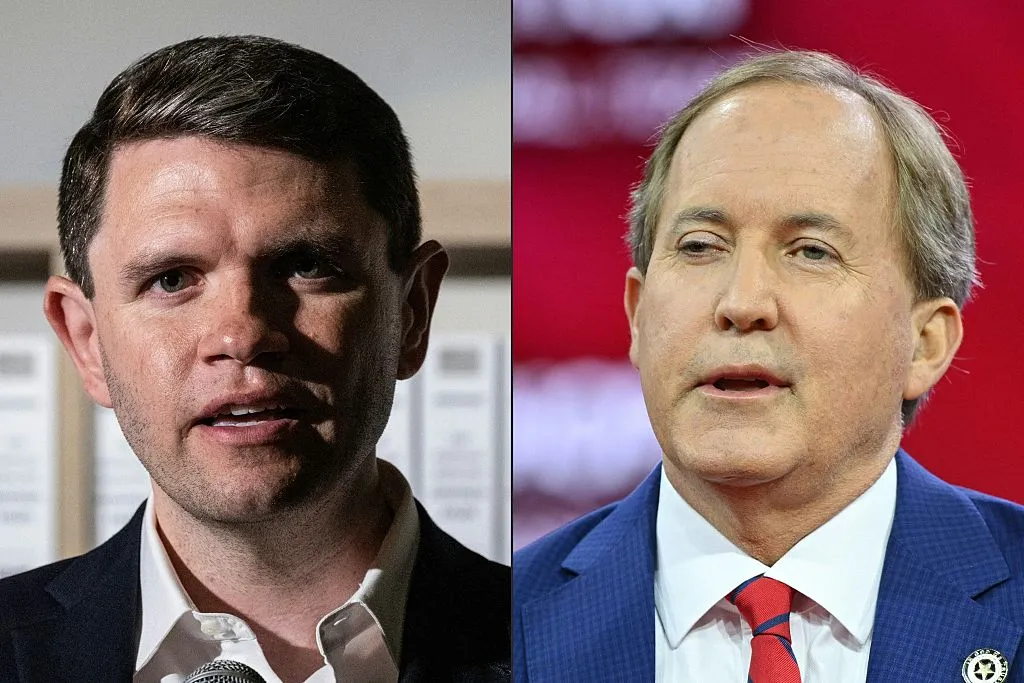
Marshall challenger Adam Hamilton, a megachurch founder, is one of a new breed of red-state Democratic candidates who puts Christianity at the heart of his message. He comes from the suburbs of Kansas City, and Marshall said he would have no chance of winning over voters in the farming heartlands of the state.
Yet Democrats smell victory and have been pouring in money. The result is that more than $84 million has been spent on TV advertising, an extraordinary sum for what should have been a Republican shoo-in.
GOP insiders wonder whether Marshall has done enough to win. They privately say he has been complacent, assuming that he could cruise to reelection.
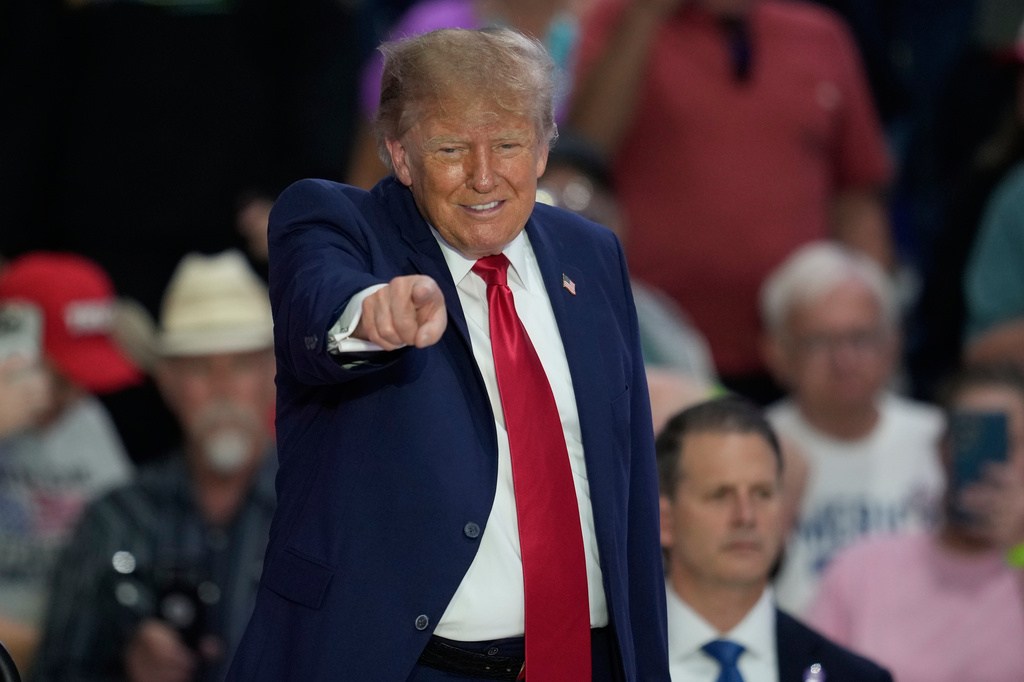
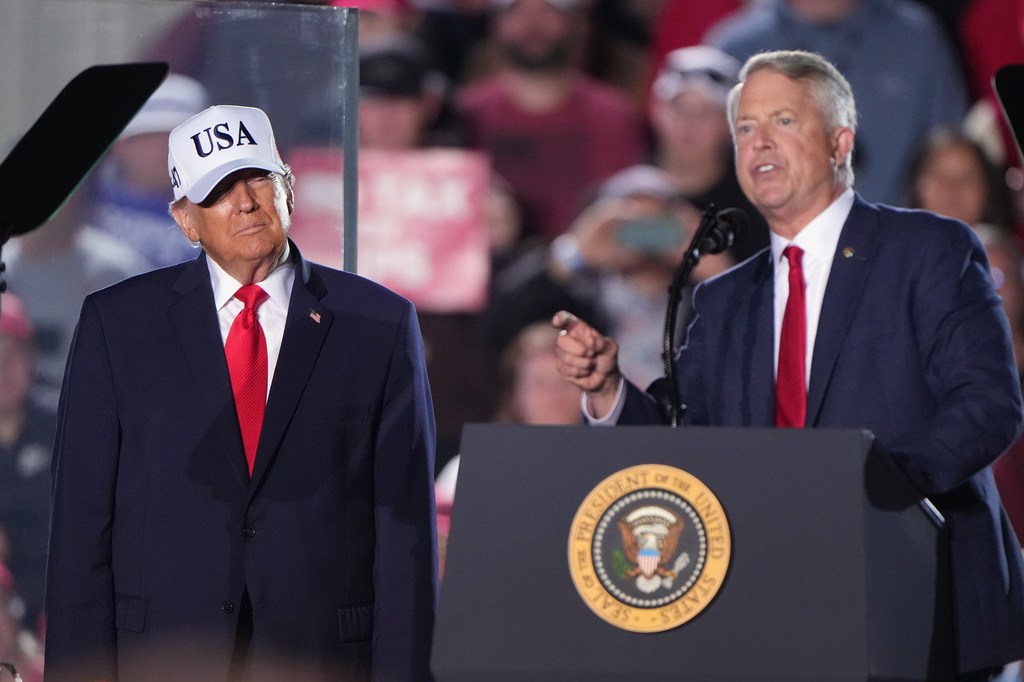
Marshall got a helping hand from Trump on Sunday evening. The president announced at a rally in Salina that government-backed mortgage enterprises Fannie Mae and Freddie Mac will invest $4.3 billion in Kansas home mortgages next year.
The trip was originally planned for Saturday before Trump canceled it in favor of tele-rallies. It was hurriedly rearranged when headlines suggested Marshall might be in deeper trouble than first thought.
On Sunday, Marshall released a video defending a controversial episode from his career as an OB-GYN. Hamilton’s campaign repeatedly attacked Marshall over reports that the incumbent and his practice sued hundreds of patients for unpaid bills. One was reportedly arrested after falling behind on payments.
Marshall released a 60-second video inviting voters to “know the truth” about the attack ads. In it, he said that sending delinquent accounts to collection agencies was the only way to “keep the lights on” and protect care for 40,000 patients.
Marshall said he had repeatedly been advised to ignore the attacks for fear that defending himself would just give the accusations more oxygen.
However, he pooh-pooed the idea that he had cut out his top advisers altogether to make the video alone. He said he had written the first draft of the script before working with the same producer who had made other ads.
The issue was simply too important to ignore, Marshall said.
“Everywhere I go they just say, ‘Look, we know it’s a lie, but just tell us what the lie is.’ And I explain it to them,” he said. “I can just see the light bulbs going on in the audience.”
READ MORE: SEVEN REASONS WHY THE KANSAS SENATE RACE WILL GO DOWN TO THE WIRE
In contrast, Marshall said his opponent had run three responses to allegations that he had failed to act on a child sex abuse scandal that engulfed his church 20 years ago.
Marshall spoke to Secrets as he was driving from Inman to Hutchinson, small towns outside Wichita, for the second of the day’s seven events. This is where the race will be won and lost, he said.
If Marshall can keep numbers close in Johnson County, around Kansas City, and dominate in rural Kansas, then it all comes down to Wichita and its surroundings.
“We’ll have to win Sedgwick County to win this race,” he said.
You are reading Washington Secrets, a guide to power and politics in D.C. and beyond. It is written by Rob Crilly. You can reach him at secrets@washingtonexaminer.com with your comments, story tips, and suggestions.
Hedge of the day
What if all the polls are wrong? That is roughly what the Washington Post and the New York Times are saying even as they launch their final round of blockbuster surveys.
In Kansas, a race that Secrets has followed closely, the Washington Post-Schar School poll of 810 likely voters showed Hamilton leading Marshall by 52% to 43%. That would be an extraordinary result in a state Trump won by 16 points just two years ago.
So the newspaper hedged, pointing out that Democrats seemed far more enthusiastic about taking the poll than Republicans. When respondents were asked who they voted for in 2024, even when the results were weighted for demographic factors, it showed Trump should have won by just seven points. The conclusion?
“Given these patterns, there’s good reason to suspect that the poll overestimates Democratic candidates’ support. But The Post is publishing results in the interest of transparency and to highlight the challenges the poll faced.”
And the New York Times, with a slew of results showing Democrats up by as much as 11 points in the Michigan Senate race, also released a second set of results to illustrate how it thinks its new type of weighting is better than its previous type of weighting (which would have put Abdul el Sayed up by 16 points in that Michigan race.
None of this is to say that the polls are all wrong. It’s to say that pollsters do a difficult job, trying to navigate uncertainty. They do-it was as much art as science, adjusting their numbers through weighting to try to bring their raw data into alignment with reality, whatever that is.
The problem is that their guide is generally what happened last time around: How many women voted, how many Republicans turned out, what proportion of Hispanic voters appeared, where did they live? Just like generals, they are fighting the last war.
The problem is that you don’t need to be David Hume to know the limits of induction and that the next war is rarely like the last war.
Lunchtime reading
Identity politics have entered a new phase: An alternative headline might be, “It’s the economy, stupid,” and the conclusion might be that Americans have decided that representation alone cannot feed the family or raise wages.
Same as it ever was: David Byrne on why great ideas sometimes fall asleep: Why do some ideas languish for decades before being taken up? A timely contribution when AI has triggered a fresh round of worry about what comes next.
Continue reading...
[ H/T Washington Examiner ]