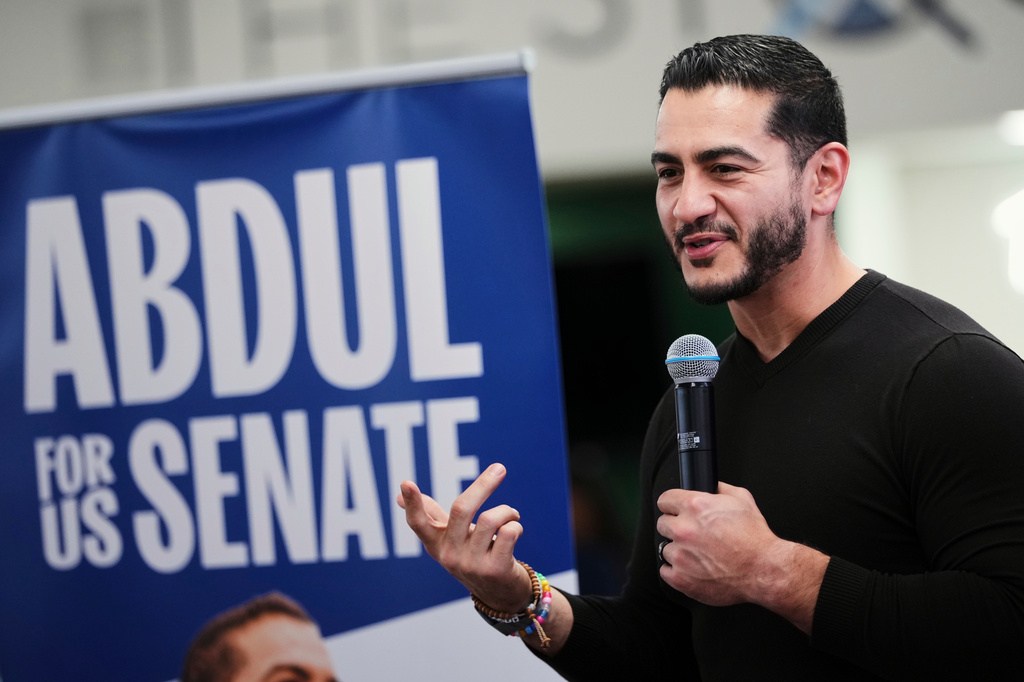


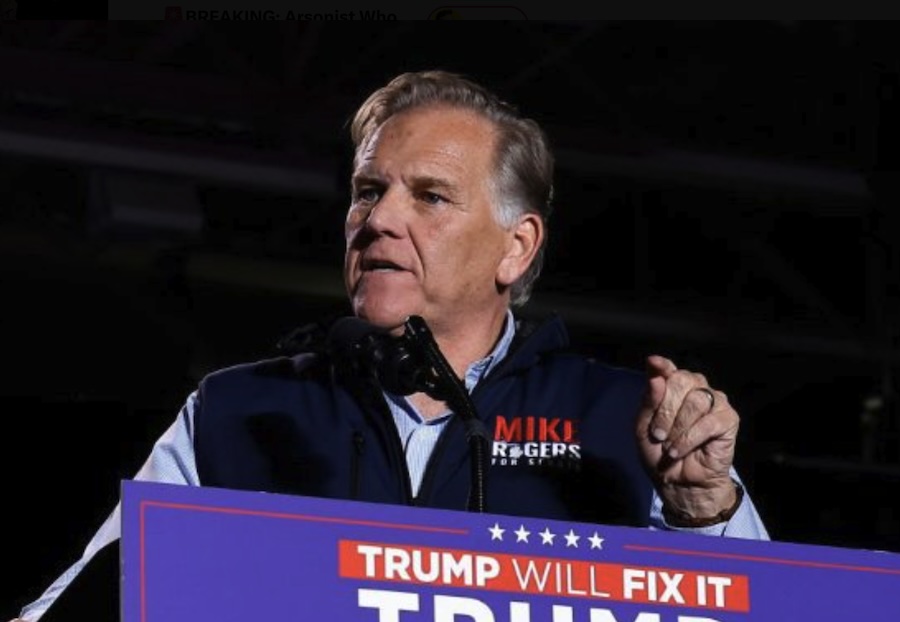


A new survey from the Economist/You Gov showing that 50% of Americans would vote for a socialist has received ample media coverage, typically under headlines like this at the Hill: “Half of American voters say they would cast their ballot for a democratic socialist.”
But that is misleading, at best.
The poll, conducted just a few days before the midterm elections, asked 92 questions in total about a wide range of topics.
Question 20 asked, “Would you ever vote for a candidate who is a Democratic Socialist?” The response was 50% “Yes,” 41% “No,” and 9% “Not sure.”
Question 19, however, yielded an outcome that undermines the hype produced by Question 20.
Question 19 asked, “Who would you vote for if these were the candidates?” “A Democratic Socialist who is in favor of raising taxes on billionaires, Medicare-for-all, and abolishing ICE” or “A moderate Republican who is in favor of cutting spending and reducing the budget deficit.”
More than half chose the latter. Specifically, 52% wanted spending cuts whereas only 48% wanted more spending.
Question 5 also shows that most Americans have not completely fallen for the democratic socialist “free” stuff slogan.
When asked succinctly, “Which is the better economic system?” 51% said “Capitalism” compared to only 20% who said “Socialism.” Amazingly, 29% of Americans are on the fence, but capitalism still leads by a mile.
However, question 43’s responses align more with the frightening headlines.
When asked, “Do you think the federal government should increase or decrease what it spends on Social Security, SNAP, Medicare, and Medicaid?” the far-away winner was “Increase a lot.”
On Social Security, 45% want to increase a lot, 24% increase slightly, 18% keep the same, 2% decrease slightly, 3% decrease a lot, and 7% unsure.
The distributional results for SNAP, Medicare, and Medicaid are very similar.
So, on one hand, according to this timely survey, half of Americans want democratic socialism, and vast majorities want more spending on federal redistribution programs. But on the other hand, at the same time, most of these same people think capitalism is far superior to socialism, and most would vote for a candidate who would cut spending and reduce the budget deficit.
This cognitive dissonance can be interpreted and analyzed in many ways.
I think the bottom line is that when voters are asked in general about democratic socialism in a vacuum, their responses are more positive than when context is included.
In a vacuum, a static, stable environment, democratic socialism seems plausible.
But when put into the context that comes with the real world, like the nation’s $40 trillion debt, $2-trillion annual budget deficit, and $1 trillion annual payment of debt service, democratic socialism’s “free” stuff agenda sounds insane.
Such is why the candidate’s question is so telling.
Voters rarely see candidates talk candidly and frankly about the federal government’s spending problem. Republicans and Democrats avoid entitlement reform like the plague.
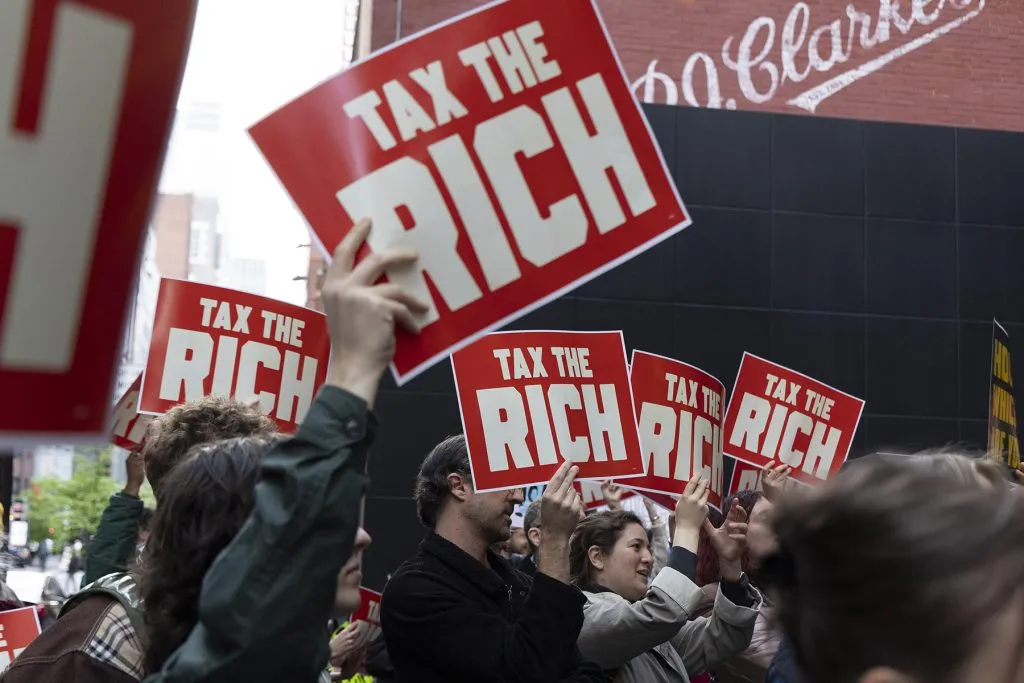
The democratic socialists are trying to flip the script. They say we can spend much more. And they say we aren’t spending enough because we aren’t taxing rich people enough.
Therefore, they can make promises of “free” health care, housing, childcare, and so much more by soaking the rich with “aggressive wealth taxes,” as outlined in the Democratic Socialists of America’s 2026 midterm platform, the Workers Deserve More Program.
DEMOCRATS PLAN TO DESTROY THE SUPREME COURT
Unlike the other abstract questions, Question 19 presented American voters with a binary choice under realistic circumstances, and the American people, by a close call, still desire the common-sense solution to the nation’s economic ills: cutting spending and reducing the budget deficit.
Granted, that is the optimistic angle. On the flip side, the gap is narrowing. For me, the key word in Question 20 is “ever,” which can be implied as a matter of time or a threshold.
Chris Talgo (ctalgo@heartland.org) is editorial director at The Heartland Institute.
Continue reading...
[ H/T Washington Examiner ]