
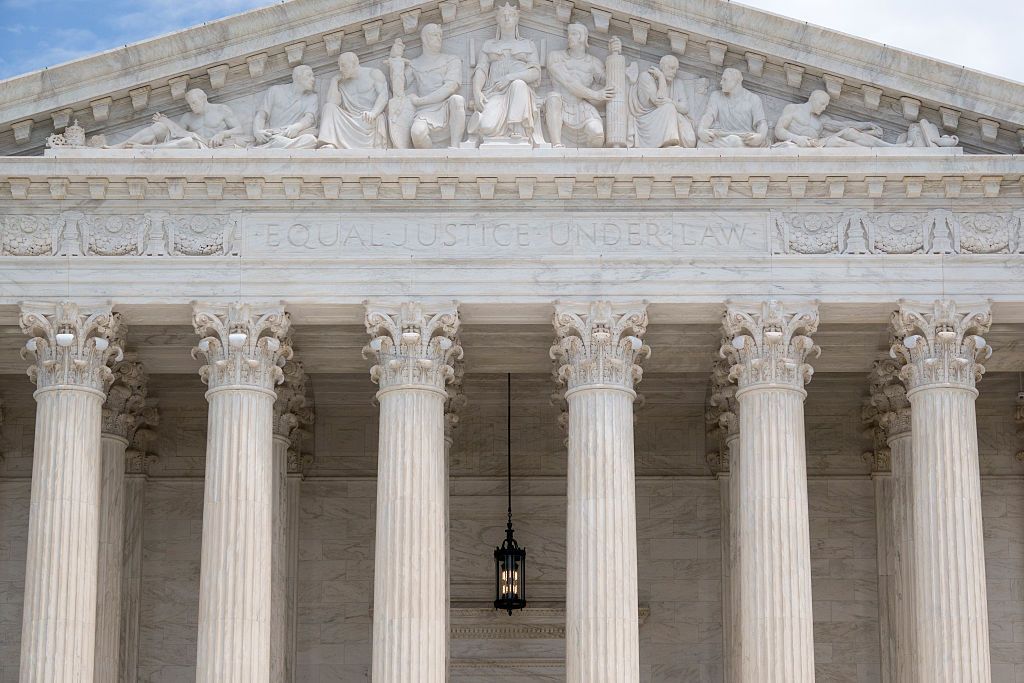




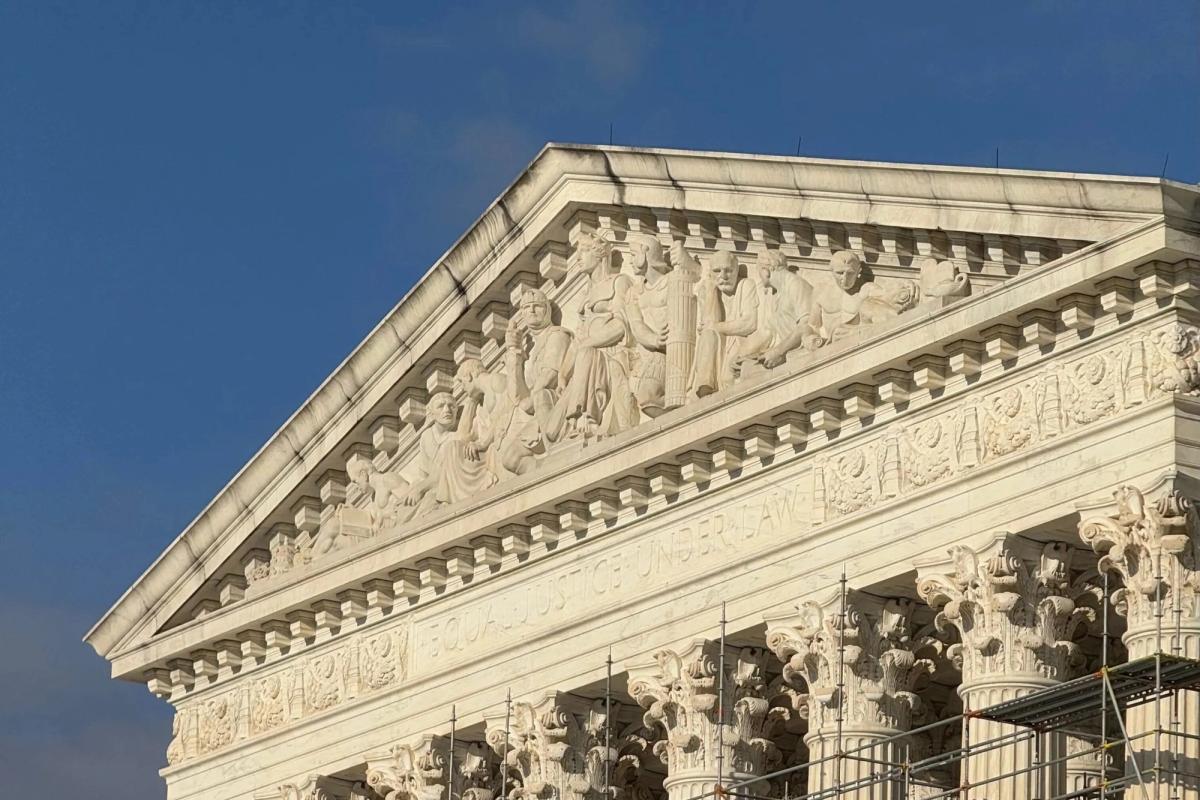
Today marks 21 years since Chief Justice John Roberts was sworn in.
At the Court
On Monday, the Supreme Court announced that Justice Samuel Alito will not continue to participate in Suncor Energy Inc. v. County Commissioners of Boulder County, a significant climate change case that will be argued next Monday. Learn more about the recusal in the On Site section below.
Also on Monday, the Trump administration brought a dispute over the Federal Bureau of Prisons’ policy on healthcare and accommodations for transgender inmates to the Supreme Court’s interim docket. For more on the case, see the On Site section.
Earlier on Monday, the justices met for the annual “long conference” to consider petitions for review that built up during the summer recess. We are expecting the court to release a list of the cases granted during the conference later this week.
On Thursday, the Trump administration asked the Supreme Court to intervene in a battle over third-country removals – that is, the removal of noncitizens to countries not identified in their removal orders. On Monday, the challengers responded to that request. Find Amy’s coverage of the new filing in the On Site section.
We’re now less than one week away from the official start of the 2026-27 term on Monday, Oct. 5. The justices will hear two oral arguments that day.
Morning Reads
UN experts call for halt to Trump policy of migrant deportations to third countries
Reuters
As the Supreme Court considers an emergency application from the Trump administration on third-country removals - that is, the removal of noncitizens to countries not identified in their removal orders – “[m]ore than a dozen UN human rights experts have written to the US government urging a halt to” such removals, saying they are “putting migrants at heightened risk of abuse, including torture and persecution,” according to Reuters. “The harms caused by this US Government scheme are no longer hypothetical,” the statement said, without discussing individual cases. “At gravest risk are children, women, persons with disabilities, victims of trafficking, LGBT persons, human rights defenders, stateless persons and other people in extremely vulnerable situations.”
Man gets 6 years in prison for taking explosives to church hosting annual Red Mass for justices
Michael Kunzelman, Associated Press
On Monday, Louis Geri of New Jersey was sentenced “to nearly six years in prison for taking homemade explosive devices to a Washington, D.C., church that was preparing for an annual Mass celebrating the start of the Supreme Court’s term,” according to the Associated Press. “Geri was arrested on Oct. 5, 2025, outside the Cathedral of St. Matthew the Apostle, where police officers were clearing the area before the annual Red Mass. Police said they found in Geri’s possession paperwork that expressed ‘significant animosity’ toward the Roman Catholic Church, Jewish people and the Supreme Court,” and “more than 100 homemade explosives.” The AP noted that “
Supreme Court Turns Away Mother Claiming New York School Bias
John Crawley, Bloomberg Law
On Monday, the “Supreme Court declined to intervene in a civil rights suit alleging that an elite New York City school admissions policy discriminates against Asian Americans,” according to Bloomberg Law. “Justice Sonia Sotomayor, acting for the court Monday, refused an injunction request by a Brooklyn woman who says her son is being excluded from Stuyvesant High School by an initiative that unfairly seeks to balance student demographics.” The woman had asked the Supreme Court to direct Stuyvesant to admit her son while her lawsuit continued.
Florence Allen Was More Than a First
Anastasia Boden, The Dispatch
In a piece for The Dispatch, Anastasia Boden highlighted a new book – “The First Woman Judge” by Tracy Thomas – on Florence Allen, who entered law school in 1909, a time when “women could not vote, many schools would not admit them, and only about 1 percent of American lawyers were women” and went on to become the first woman judge, the first woman state Supreme Court justice, and the first woman federal appellate judge. “She wrote 528 majority opinions over 25 years on the 6th Circuit and was reversed by the Supreme Court only five times on grounds the author describes as relatively minor.” Boden noted that Allen was also “the first woman shortlisted for the Supreme Court, though that nomination would elude her.”
Another Try for Religious Charter Schools
The Wall Street Journal Editorial Board (paywalled)
Last year, the Supreme Court deadlocked 4-4 in a case on St. Isidore virtual Catholic school, which had “hoped to become the country’s first religious charter school.” With Justice Amy Coney Barrett recused, the remaining justices were unable to resolve whether states may require charter schools to be non-sectarian. But last week, U.S. District Judge David Russell cleared the way for a different religious charter school, overseen by the National Ben Gamla Jewish Charter School Foundation, to open in Oklahoma, ruling that the state cannot “single out religious schools for exclusion solely because of their religious character.” The Wall Street Journal Editorial Board contended that “[t]his constitutional thicket is the same as in St. Isidore’s case, and it could use Supreme Court guidance.” “Justice Barrett,” the board noted, “didn’t explain why she recused herself on St. Isidore, but she is close friends with Nicole Stelle Garnett, a Notre Dame professor who advised the proposed school. Ms. Garnett is not involved with Ben Gamla.”
On Site
Court News
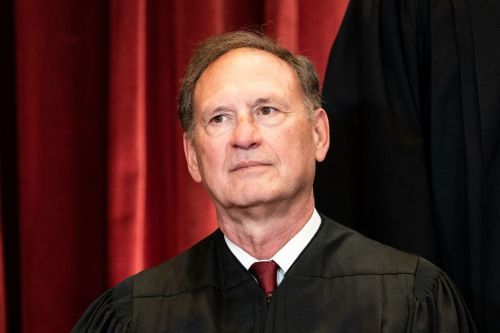
Justice Alito will no longer participate in climate change dispute
The Supreme Court on Monday announced that Justice Samuel Alito will not continue to participate in Suncor Energy Inc. v. County Commissioners of Boulder County, a significant dispute that will be argued on the first day of the 2026-27 term.
Court News
Trump administration asks justices to block lower court order on transgender inmate policy
The Trump administration on Monday asked the court to block an order by a federal judge in Washington, D.C., that bars the Federal Bureau of Prisons from enforcing a new policy on healthcare for transgender inmates. Specifically, in a reversal of the prior policy, the new policy would prohibit transgender inmates from obtaining gender-transition surgeries, hormone therapy, and “social accommodations” (such as makeup, wigs, and padding).
Court News
Immigrants ask Supreme Court to leave ruling in place preventing Trump administration from deporting them to third-party countries
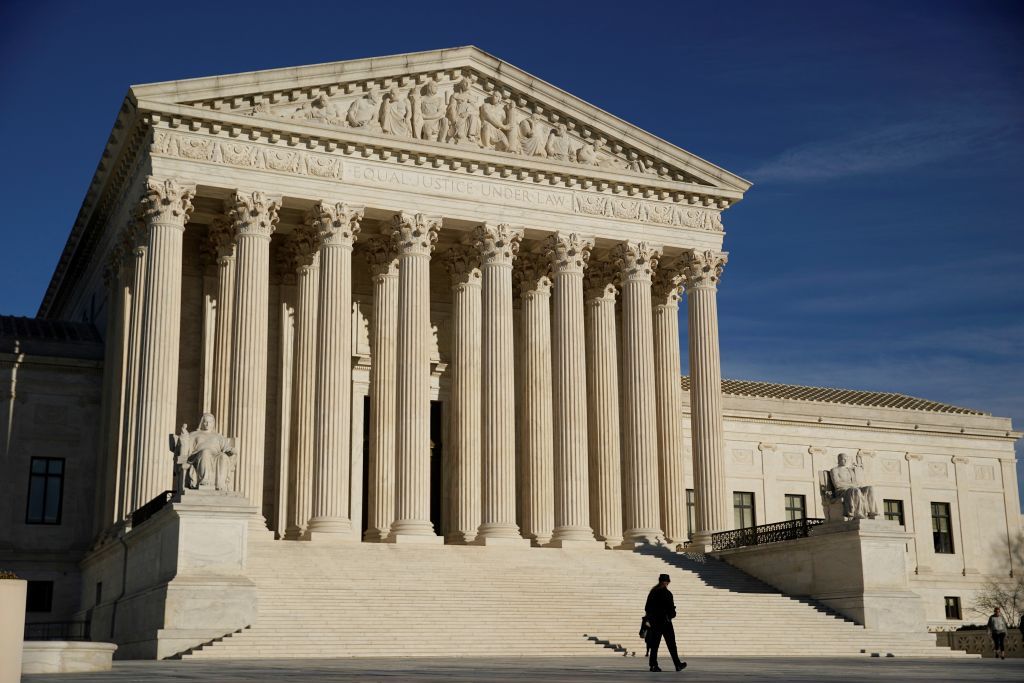
Lawyers for immigrants whom the Trump administration is seeking to deport urged the Supreme Court on Monday to leave in place a ruling by a federal judge in Massachusetts that bars the government from sending them to countries that are not identified in their removal orders – a procedure known as “third-country removals.” Trina Realmuto of the National Immigration Litigation Alliance told the justices that the decision “does not prevent third-country removals; rather, it simply requires” the Trump administration “to do so lawfully.”
From the SCOTUSblog Team
The court’s summer recess that wasn’t
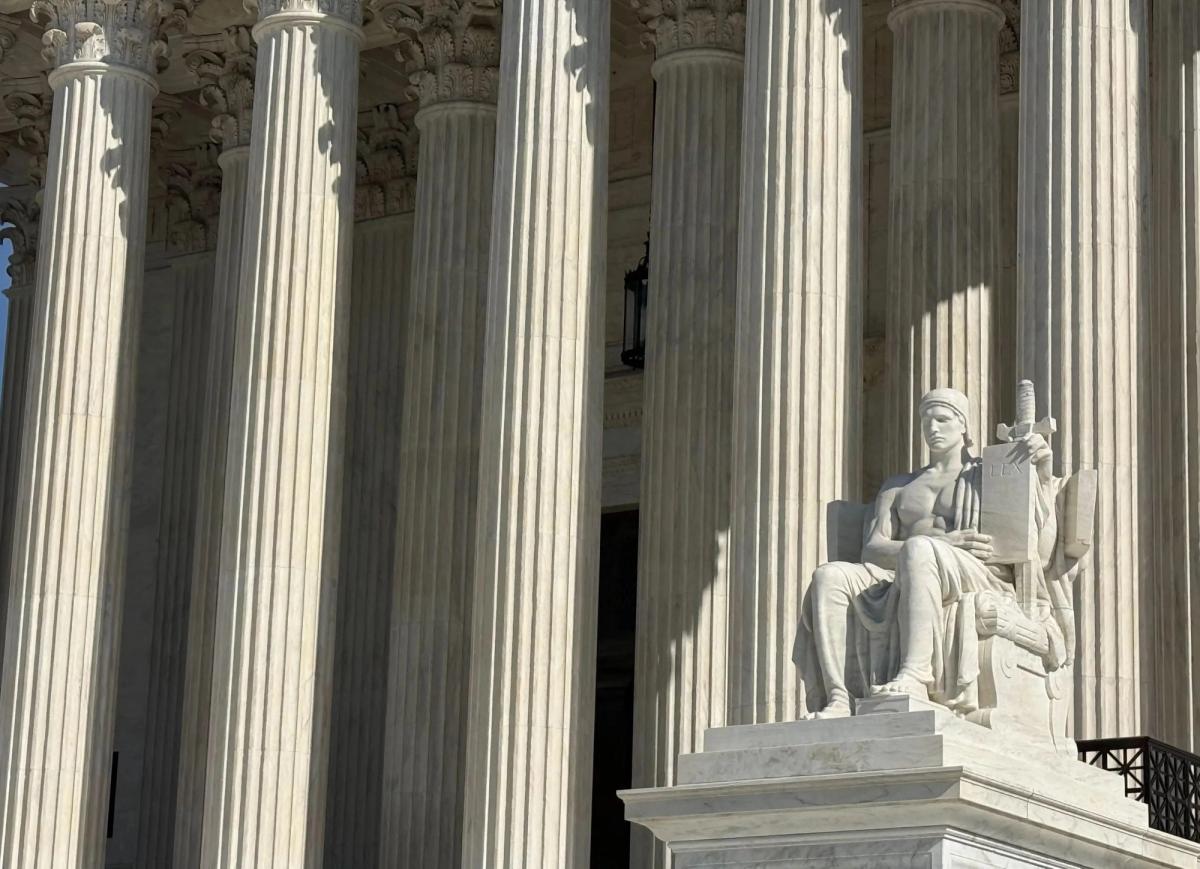
Since early July, the justices have received more than 30 significant interim docket applications, including several high-profile requests from the Trump administration. In response, they requested additional briefs, reviewed all these filings, and issued orders and opinions – the kind of work that was once rare from July through September.
Contributor Corner
The “born free and equal” clauses and the right to pursue a profession of one’s choice
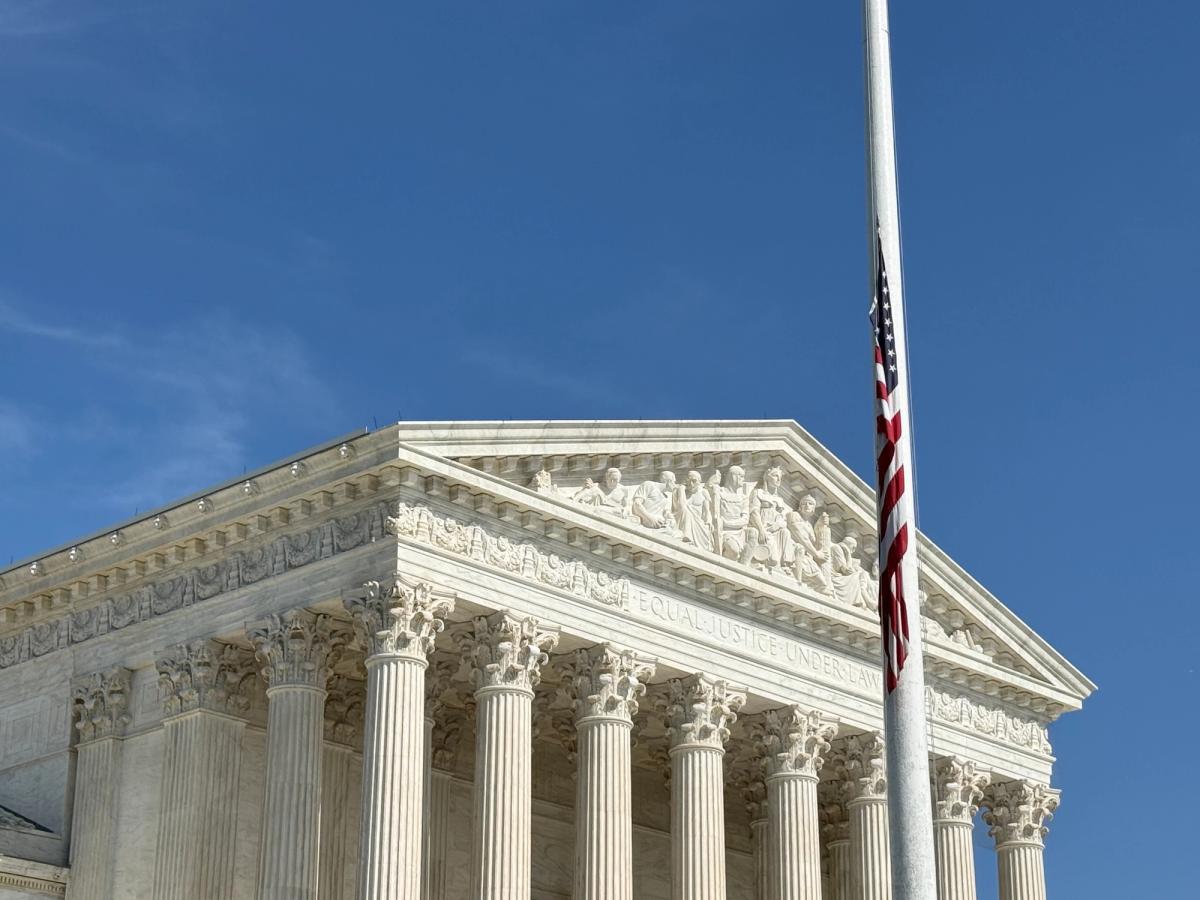
In his Born Free and Equal column, Steven Calabresi applied the “born free and equal” clauses within the context of the economic right to pursue the line of work of one’s choosing.
A Closer Look
The Lovings
For today’s Closer Look on famous Supreme Court plaintiffs, we look at Richard and Mildred Loving, the interracial couple who successfully challenged Virginia’s anti-miscegenation law in the landmark 1967 case of Loving v. Virginia.
Mildred Delores Jeter was born on July 22, 1939, in Central Point, Virginia, a rural town in Caroline County. Her parents, Theoliver and Musial, were tenant farmers. Sources often describe her as Native American and Black (although in a 2004 interview, Loving said: “I am not Black. I have no Black ancestry. I am Indian-Rappahannock”). She grew up attending the St. Stephens Baptist Church and attended an all-Black high school until 11th grade.
Richard Loving was born in Central Point, Virginia, on Oct. 29, 1933. Loving was of English and Irish descent. His paternal grandfather, T.P. Farmer, fought for the Confederacy in the Civil War. Another paternal relative, Lewis Loving, owned seven enslaved people. Loving’s father worked on a farm owned by “a prosperous man of color,” and his mother was a midwife.
Caroline County was a racially diverse county and less than 50% white. It had been settled by a myriad of mixed-race individuals, many of whom descended from white slave owners and enslaved Black women. “There was a lot of mingling down here between the Blacks, the whites, and the Indians. Honestly, people are so mixed up down here, you can’t say what you are and are not,” said one resident.
Growing up, Loving defied Jim Crow laws and was friends with an ethnically diverse group of people. He attended an all-white high school for a year and eventually went on to become a construction worker, specializing in bricklaying.
Loving bonded with Mildred’s brothers over their mutual love of cars and music, and he met Mildred when he was 17 and she was 11. The two became friends and eventually began dating; Mildred became pregnant when she was 18. They planned on getting married, but faced a problem: under the Racial Integrity Act of 1924, interracial marriage was outlawed in Virginia.
Nevertheless, the two could legally marry in Washington, D.C., which was about 80 miles north of Central Point. In June 1958, the couple drove to the nation’s capital and exchanged vows in a pastor’s home. They then returned to Virginia, where interracial marriage remained illegal.
A month or so into their marriage, law enforcement arrested the couple for violating the Racial Integrity Act via an anonymous tip. “They asked Richard who was that woman he was sleeping with,” Mildred Loving said in an interview. “I said, ‘I’m his wife,’ and the sheriff said, ‘Not here you’re not.'” The two were briefly held in a jail in Bowling Green, Virginia.
In January 1959, the Lovings, who had pleaded not guilty, went to trial. However, after both sides had presented their evidence, the Lovings changed their pleas to guilty. They were given a one-year sentence, which was suspended on the grounds that they would leave Virginia for 25 years. For the next few years, the Lovings lived in Washington, D.C., in Mildred’s cousin’s house.
Out of a dislike for urban life and a longing to return to rural Virginia, Mildred wrote a letter to Attorney General Robert F. Kennedy in 1963. “I told Mr. Kennedy of our situation” and asked “if there was any way he could help us,” Mildred said in an interview conducted after the case. Kennedy told Mildred that he was unable to help her directly, but connected her with the American Civil Liberties Union, which assigned Bernard S. Cohen, a volunteer attorney, to the case.
Cohen filed a motion to vacate the conviction, but the trial judge declined to do so. The Virginia Supreme Court, in 1966, then upheld the legality of the anti-miscegenation law.
The Lovings appealed their case to the Supreme Court. Oral arguments, which the Lovings declined to attend, were held in April 1967. In June 1967, the Supreme Court unanimously ruled that anti-miscegenation laws were unconstitutional. “To deny [a] fundamental freedom on so unsupportable a basis as the racial classifications embodied in these statutes, classifications so directly subversive of the principle of equality at the heart of the Fourteenth Amendment, is surely to deprive all the State’s citizens of liberty without due process of law,” wrote Chief Justice Earl Warren in his majority opinion. On the day the opinion was released, Mildred said, “I feel free now.”
The Lovings moved back to Central Point and Richard built a brick house for the family. They ultimately had three children together. Tragically, in 1975, the Lovings were hit by a drunk driver while in the car together. Richard died on the scene and Mildred lost an eye in the accident.
Mildred never remarried and remained out of the public eye for much of the remainder of her life. However, in 2007, she released a statement announcing her support for the legalization of same-sex marriage. She died in 2008 from pneumonia.
SCOTUS Quote
Continue reading...
[ H/T SCOTUSblog ]
