


On Sept. 18, over 2,000 people gathered around the Kennedy Center in Washington, D.C. – and held hands. Former employees, performing legends, long-time D.C. residents, and regular people from all across the country, physically standing around the building – to protect it from demolition.
They couldn’t get all the way around. The Kennedy Center board put in place by President Donald Trump has fenced it off, after voting to close it when a court ruled that Trump couldn’t chisel his name into the marble next to President John F. Kennedy’s – the slain president for whom the building was erected.
Trump has now indicated his intention to demolish the Kennedy Center, which has many people asking: Is that legal? Or, demolishing the White House East Wing for a ballroom – is that legal? And finally: Why isn’t anyone doing anything to stop it?
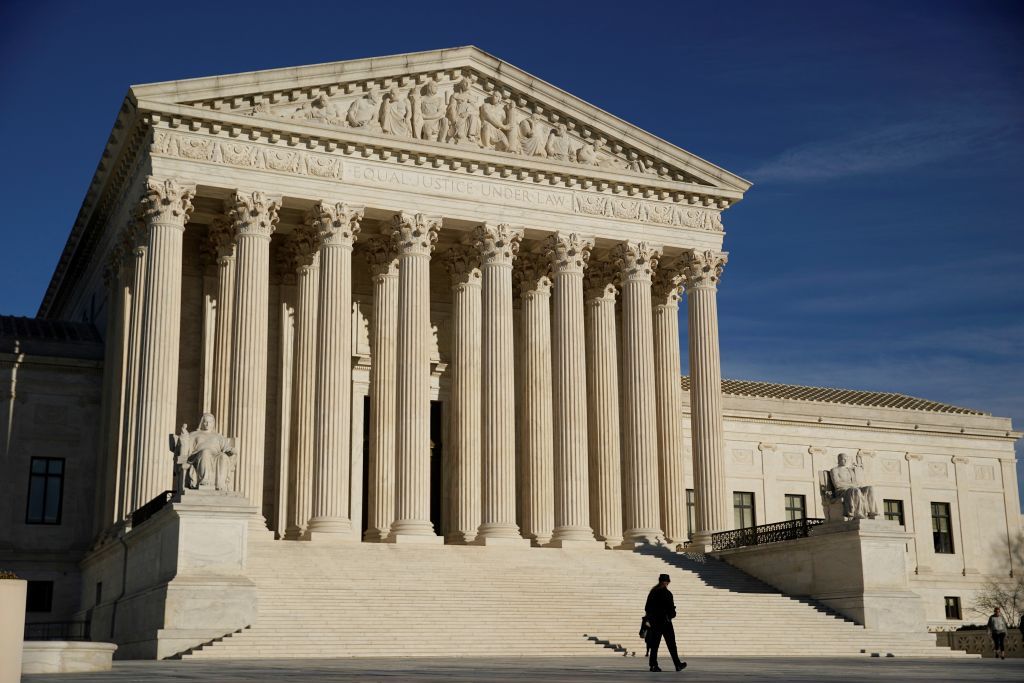
When something is unlawful, lightning does not come from the sky to proclaim it so. Congress makes laws, and for those laws to mean anything, that usually requires someone harmed to come to court. The Constitution then entrusts the courts – and in particular, the Supreme Court – to safeguard the rule of law. Yet this Supreme Court is demolishing it – and building a structure of power for itself in the rubble.
The dominant accounts of this court are that it is political. My account is not. Trump wins sometimes – but not always. Congress, the states, and the federal agencies lose often – but not always. Rather, my view is that the Supreme Court is accumulating and manufacturing power for itself far beyond that which the Constitution confers, in high-profile cases you’ve heard about – which the media reports as wins or losses for the president – and in many you haven’t.
But to see the pattern, you have to trace some of the less visible – but no less troubling – ways the court is building undivided power for itself in a Constitutional order that prohibits that very thing. No single case or area of law makes the pattern visible; rather, you have to see it, over and over. So bear with me – through cases about things that really matter: our elections, the balance of power between the president and Congress, and who can come to court to protect anything at all.
Leave elections to the Supreme Court
Elections are run by the states, and we the people decide who governs. The Constitution says so. Courts also aren’t allowed to interfere with elections already underway – that’s the rule, and the Supreme Court wrote it, in 2006’s Purcell v. Gonzalez.
Yet this Supreme Court intervenes into ongoing elections all the time – like it’s ordinary. In North Carolina elections; in Texas, twice. In New York: By unsigned order, on its emergency docket – a docket that exists, in theory, for actual emergencies the court is supposed to explain – the court intervened to keep a district in place that a state judge had declared unconstitutional before New York’s own high court could say a word.
The court handed Trump a loss on mail-in ballots in September, right after it handed him a win on the same issue in August. The question behind the whiplash is the legality (or not) of Trump’s March 2026 executive order on mail-in ballots – a question, by the way, the court still hasn’t answered.
A federal judge in Boston blocked the order. In doing so, it followed the Purcell rule – that courts should not interfere with elections already under way, which in this case included state primaries in Massachusetts, New Hampshire, Rhode Island, and Delaware, and early voting for the general midterms in Virginia, Minnesota, South Dakota, and Idaho. So did the U.S. Court of Appeals for the 1st Circuit, which refused to disturb the lower court’s decision. Twice.
In August, the Supreme Court nevertheless intervened by unsigned order, and stayed the decision of the district court, over Justice Ketanji Brown Jackson’s warning that the administration sought the court’s blessing to foment chaos before the midterms. The court didn’t say Trump’s order was lawful; it said the challenge to the order – brought in April, seven months before a nationwide election – had come too early. The effect of the August stay, then, wasn’t to pause likely unlawful conduct – what a stay is supposed to do – it was to unleash it.
On Sept. 14, while the Post Office scrambled, states redesigned ballots and prepared to upload voter files to a federal portal that didn’t exist, the court intervened again, and handed Trump a headline loss: Six weeks before a federal election, the court declined to allow key aspects of Trump’s executive order to go into place. (And by the court, I don’t actually mean the court, which issued no opinion, rule, or explanation. It’s just three sentences, accompanied by a statement from Justice Brett Kavanaugh that the executive order is likely lawful, and the problem was that the defenders of the executive order were too late – just after saying in August that the challengers were too early.)
This isn’t a court deciding if power over elections goes to a president or to the states. This is a court meddling into elections against its own rule that courts shouldn’t, and creating disorder – no rules, no standards, no law – and thus taking power for itself and itself alone. States don’t have full control over elections, but neither does Trump. It would appear that the one with the power over our elections, increasingly, is the court.
The court is also giving itself the power to ignore facts and evidence in cases about elections. The rule, older than the country itself, is that fact findings happen at the trial court – which hears the evidence and sees the witnesses. That rule doesn’t bind this court – says this court.
When this court does want broad-sweeping precedent, it writes it – and guarantees precedential effect: in April, it held in Louisiana v. Callais that Louisiana’s compliance with the Voting Rights Act was itself unconstitutional – signed and reasoned, clearing the way for Southern states to eliminate Black-held districts before November.
But the court has given itself a second way to decide, and the court’s power payoff is optionality – precedent when it wants it, skipped when it is an impediment to something else it wants more, especially in cases that matter most. A quick result, a truncated process, and the lower courts cut out. (And skipping it often costs nothing — agencies follow these orders anyway, and so do district courts, with nothing else to go on.)
Like in Alabama, when the court threw out the facts and evidence from an 11-day trial with dozens of witnesses before a three-judge court that found Alabama’s election map intentionally discriminated against Black voters. With an unsigned order, the court restored Alabama’s map one week before the primary: Election officials had seven days to reassign 600,000 voters by hand.
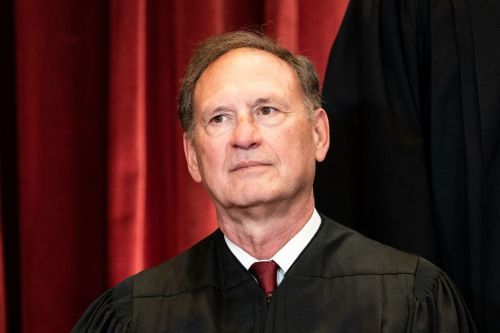
Yet another example: After Trump’s Justice Department told Texas to redraw its election map, a three-judge panel found in a 160-page opinion that the redrawn map was unlawfully racially gerrymandered. The Supreme Court threw out the trial court’s facts and stopped the ruling without explanation on the emergency docket. It ultimately reversed in an unsigned order, without even hearing argument. What little explanation there was came from Justice Samuel Alito, who didn’t say the trial court had gotten the facts wrong. He twisted the rule requiring deference to a trial court’s findings into one that didn’t apply at all – recharacterizing fact findings the court doesn’t like as legal errors, so it can ignore them or substitute its own.
Two wrongs don’t make a right, but they can certainly make another kind of precedent – not the kind anyone can cite, but a practice for consolidating power: The power to ignore the facts of those courts best suited to evaluate them, and to have the ultimate say – never mind that of Congress or the states – over how elections are to be conducted.
Neither Congress’ power nor the president’s
But let’s move on to another pivotal area of law. Here, consider two fights that started out having nothing to do with the court’s power. One was about whether the president or Congress has power over federal agencies. A single agency rule can affect more people’s daily lives than any headline-grabbing White House demolition – their rules control interest rates; disease research; nuclear power plant safety; vaccination recommendations; unionization rules; food safety inspection; and so much more. Trump came to the court saying he could fire the people who run the agencies Congress made independent; Congress said those agencies were theirs to control.
This June, overturning 90 years of precedent, the court sided with Trump. In Trump v. Slaughter, a majority held that the power to fire agency heads belongs to the president, and the “history” of the agency (the prior precedent reasoning which preserved for-cause removal protections for the FTC) – again, the rule for 90 years – doesn’t matter.
Yet that very same day, the court handed Trump a loss. In Trump v. Cook, the court said that Congress controls agency heads – in Cook, the Federal Reserve’s – when (wait for it) the “history” of the agency justifies it.
Justice Amy Coney Barrett rightly called out the incoherence here: either the president has this power, or the president doesn’t. But notice the court’s power. A contradictory constitutional rule is one that nobody can apply, or predict, or act upon – except the court itself. Once again, the real power, then, is not the president’s or Congress’, but the court’s: When it prefers that a particular president control a particular agency, it has Slaughter. When it does not prefer a particular president control a particular agency, it has Cook.
This bottom line isn’t politics; it’s the court manufacturing the power to do whatever it prefers, politically or otherwise. And sometimes it prefers otherwise: note where Trump’s losses have come – the Fed, where a wrong answer moves markets, and his tariffs, which leading economists understood would raise prices and rattle stock portfolios.
Another issue has concerned the president’s power to control Congressional spending. In National Institute of Health v. American Public Health Association, the court said that Trump could cancel $783 million in congressionally appropriated funds for cancer, HIV, and Alzheimer’s research based on patients’ race. After a bench trial, Judge William Young, a Reagan appointee with forty years on the bench, had found Trump’s terminations of the grants illegal; he had “never seen . . . racial discrimination so palpable.” The unlawful terminations notwithstanding, in an unsigned order with five separate opinions – none joined by more than four justices, and two justices explaining nothing at all – the court held that no district court had the power (the “jurisdiction”) to order the funds to be paid out. Four months earlier, in Department of Education v. California – another unsigned order on the emergency docket – the court had addressed the same jurisdictional question and reached the opposite result.
The executive and congressional powers, increasingly reduced to the power to ask this court for permission.
That leaves everybody else: us. And for us, the court is building something more powerful than a loss: a power to decide which people it gives access to the courthouse door, or not – not according to any consistent rule about the judicial power, but according to who it prefers to let in at the time. Which brings us back to the Kennedy Center.
No one can save our national landmarks
Congress created the Kennedy Center in 1964 and wrote into the statute that it would be the sole national memorial to President Kennedy in Washington, D.C. In December, the Trump-controlled Kennedy Center Board nevertheless voted to name it for Trump. A federal judge ruled that only Congress had the power to change the Kennedy Center’s name. On Sept. 15, the same judge blocked the board from adding Trump’s name – again. That night, the board voted to close the Kennedy Center.
On Sept. 16, the president laid down the threat: The $257 million Congress has appropriated for repairs of the Kennedy Center – which ran a roughly $40 million surplus the year before Trump took it over, and which its own Trump-appointed leadership now says has been run to the brink of bankruptcy – would come only if the Trump recognition did. Put my name on the building, Trump said, or the building “will end up being ripped down.”
The person trying to stop all of this in court is Rep. Joyce Beatty. She isn’t in court in her capacity as a legislator – the court has long held that Congress doesn’t have standing to sue for the dilution of its own powers – but because 60 years ago Congress seated its own members on the Kennedy Center Board of Trustees, and the common law of trusts does the rest of the work.
Yet this court has already laid all the groundwork to say that Beatty does not have standing to sue at all, no matter what Congress said.
In August, in another unsigned order containing a four-vote dissent written by Roberts, the Supreme Court let Trump continue his ballroom construction in the rubble of the demolished East Wing. In National Park Service v. National Trust for Historic Preservation, the court did not conclude that the demolition of the East Wing, or the building of the ballroom, was lawful. The National Trust sued on behalf of Alison Hoagland, a member of its board, who said she would be harmed not by the demolition of the East Wing, but by the ballroom that would eclipse the White House. The court said that Hoagland was not allowed to come to court to protect the White House, however. What she had suffered, the court stated, was not “injury,” but “mere offense, disagreement, or distaste.”
A distinction between concrete, economic injury that gets you in the courthouse door and mere “offense” that does not could be defended as a proper exercise of the Supreme Court’s authority to define what cases federal courts may hear. The trouble is, that isn’t the line the court draws. The court has long let people sue to protect an animal they travel to see – even when all they want to do is look at it. According to Justice Antonin Scalia, if the animal you went to see is gone, you’re “injured” enough to get into court. But to a majority of today’s justices, if Trump’s enormous ballroom eclipses the White House you came to see on your visit to Washington, you’re just “offended.”
Just look at who the Supreme Court lets in the courthouse door, who it doesn’t – and why.
Ted Cruz opposed a campaign finance rule that limits candidates who lend money to their own campaigns to a maximum payback of $250,000 after an election. The day before the 2018 election, Cruz lent his campaign $260,000, in order to generate an economic “injury” he could sue over – a strategy he openly announced. The court let him sue, on the grounds that the statute – not his purposeful over-lending – was what took the $10,000 from him. “Economic injury,” then, can be made up.
Or it can be a single dollar. A college student in Georgia was twice stopped from sharing religious pamphlets on campus. By the time his case reached the court, the college had dropped the policy he challenged, and he had graduated – no injury left to fix. But he had also requested $1 in damages, which eight justices agreed was enough to keep the case alive.
And “offense,” it turns out, can get you in the door after all. Lorie Smith runs a web-design business in Colorado. She sued Colorado state officials over a law that says a business open to the public cannot refuse service to a customer based on who they are – including whether they are gay. Smith didn’t want to have to make wedding websites for gay couples, and she wanted to post that on her website. No same-sex couple asked her to make them a website, and she never lost money from turning away a customer. Colorado never charged her with a thing. She went to court anyway, not over a request she received, but over her offense at the prospect of receiving one. The court ruled that Colorado could not, in the future, apply its law to Lorie Smith – a law it had never, in fact, applied to Lorie Smith – and took her “injury” as a foregone conclusion.
Others weren’t so lucky. Two weeks after the August ballroom order, Justices Samuel Alito and Clarence Thomas said that voting-rights organizations trying to keep mail ballots from being discarded had suffered no “injury;” they had simply experienced “a setback to the organization’s abstract social interests.” On Jan. 14, the court nevertheless held that Congressman Mike Bost could challenge Illinois’ rule that permitted counting mail-in ballots that arrive after election day. Mike Bost had already won his race. Late ballots wouldn’t change it, and he couldn’t show that Illinois’ rule had cost him a dollar. Apparently, a candidate who lost nothing may sue about how votes are counted but organizations trying to keep ballots from being thrown out may not.
Standing is, by the court’s own account, a limit on its own power. So are jurisdiction, procedure, and remedies – each exists, to one degree or another, to limit what courts may do. But this court has transformed these tools of limitation into weapons to determine, at whim, who can get into court.
Potential paths forward
We must recognize how the court’s supposed limitations on power have become methods for accumulating it. By defining its own limitations, then manufacturing power by applying or ignoring its limitations selectively, without any discernible standard, it has made the rules apply at, but only at, the court’s whim.
How best to respond? Structural reform means constraining the court that has demonstrated it cannot be trusted to constrain itself. (The following examples are only sketches; I will explore them more fully in a subsequent article.)
A first example is constitutional due process requirements on the court’s emergency docket: Relief granted without full process is only allowed when it is time-limited and followed by a hearing – that’s the constitutional rule binding every court in the country. Congress should impose on the court what the court should already require of itself: An order granting emergency relief expires after a specified, highly abbreviated time unless the case is set for argument; upon expiration, the judgment below is restored.
Second, Congress should codify the rule the court announced but will not follow – a hard-stop on election-eve Supreme Court intervention. Set a date: No federal court, this one included, alters the rules of an election already underway inside a fixed statutory window.
Third, rules of ethics for the court, enforceable on both sides. Every ethics proposal regulates the justices – who have suggested they cannot, in fact, be regulated. Regulate those bearing the gifts – those sending private jets, yachts, and college tuition payments. Make it unlawful for anyone with business before the court to give above a low statutory threshold, with harsh penalties for violation – fines, disgorgement, discipline from the bar – all of which issue from someone other than the court. That structural design is the critical part: Right now, the only ones guarding the henhouse are the foxes. But Congress can legislate against private parties, with nothing administered by the justices.
A final example: Fact-finding by the lower court stays in force unless the reviewing court says what is wrong with it. That’s the rule already binding every appellate court. Congress legislated the Rules Enabling Act – which delegates power to the Supreme Court to make procedural rules – so Congress can impose that fact-finding rule on the court. Alabama’s 11-day trial and Texas’s 160-page factual record would be preserved, unless the court does its job and explains what’s wrong with them.
There are other examples, including the one everyone mentions: term limits. But the window for structural reform is closing. Much of the power this court has taken is already poured into the foundation, beyond the reach of anything but constitutional amendment. Structural reforms on the Supreme Court must then be the top priority after the November elections.
The point is not to weaken judicial power, nor judicial independence – quite the opposite – but to restore the division of power our Constitution put in place.
A demolished White House or a Kennedy Center bulldozed to rubble – all may be difficult to repair. But we would see them go. A demolished constitution – and in its place an unchecked ruling body of nine unelected lawyers enshrined in the very Constitution they destroyed and then rebuilt for themselves – will be gone. Even if it’s still called our Constitution.
Continue reading...
[ H/T SCOTUSblog ]