



World War II turned on a black metal box. In September 1940, as German bombs devastated London, Sir Henry Tizard crossed the Atlantic carrying the cavity magnetron — the key to airborne microwave radar. Britain had the breakthrough but lacked manufacturing power, and America had the factories but lacked the secret. Channeling these asymmetric strengths into the Massachusetts Institute of Technology’s Radiation Laboratory ultimately hunted down Nazi U-boats, secured D-Day, and won the war. History shows that technological coalitions that share raw wartime capabilities win conflicts. Alliances that treat science as a commercial trophy inevitably collapse.
Artificial intelligence occupies the exact strategic ground today that radar held in 1940. Stanford University’s 2026 AI Index reveals massive American structural dominance: $285.9 billion in private investment and 5,427 operational data centers. This infrastructure outpaces China tenfold, yet yields only a narrow 2.7% performance lead. Beijing, meanwhile, moves with totalitarian speed — filing nearly 70% of global AI patents and claiming 41% of elite global talent. Spending capital without cementing hard military alliances is a complacent peacetime habit — that is why the West is consistently losing modern wars.
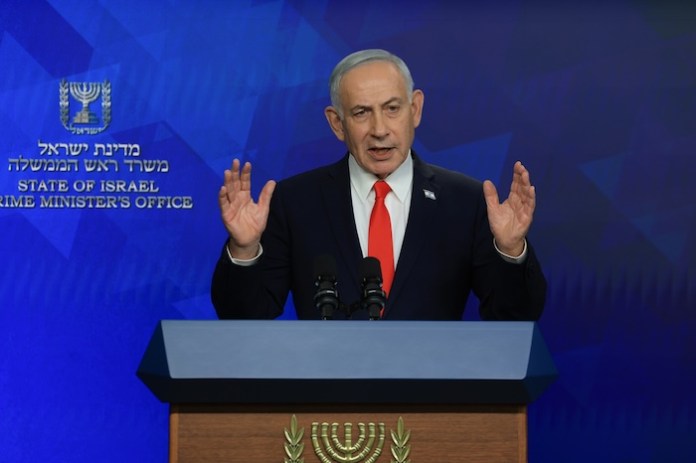
Today, Israel provides the battlefield density America desperately lacks. Prime Minister Benjamin Netanyahu’s aggressive five-year digital mobilization aims to secure a third-place global ranking behind only Washington and Beijing. Already, this high-tech push yields the highest global share of AI talent per capita, packing nearly 3,000 active firms into a population of only 10 million people. Here, Unit 8200 alumni build the West’s densest operational cyberdefense clusters. While Stanford tracks over $18 billion in private Israeli AI investment, the true value remains strictly operational. Tellingly, while European bureaucrats waste years drafting restrictive regulations such as the European Union AI Act, Israeli commanders are actively fielding autonomous combat systems against Iranian proxies. Ultimately, Washington must forge a continental shield alongside the one democratic partner currently fighting on the front lines.
Establishing an American-led Western AI alliance, structured like NATO and under unified American command, addresses four urgent security imperatives. First, a formal pact will pool computing power, model weights, and elite talent before European regulators turn the West into a technological museum while China weaponizes algorithms. Second, unified deterrence will explicitly warn Beijing, Moscow, and Tehran that digital strikes against allied training clusters or the Taiwanese foundry chain will trigger decisive collective retaliation. Third, mandatory red-teaming and integrated kill-switch drills will prevent autonomous systems from slipping into unaligned vulnerability. Finally, this coalition will directly contest Chinese technical standards by blocking Beijing’s Digital Silk Road from locking global infrastructure into authoritarian defaults.
Indeed, executing this strategy requires launching an Atlantic-Levantine AI Command. Within this geostrategic framework, Jerusalem must serve as a founding military partner, backed by a core expansion group of London, Tokyo, Canberra, and Ottawa. Critically, this unified command must set nonnegotiable thresholds for frontier-weight theft and supply chain disruptions, met by asymmetric state power. Put simply, digital code demands its own Article 5, backed by genuine military resolve.
AI IS ESCAPING THE LAB. WHY ARE WE LETTING BIG TECH GRADE ITS OWN HOMEWORK?
Reopening the historic Tizard channel in reverse places front-line operators, not career diplomats, at the helm. Under this arrangement, Israel must funnel real-time battlefield targeting and cybertelemetry across a classified pipeline. At the same time, America opens access to frontier computing clusters through a new wartime production board. Crucially, any allied laboratory demanding computing power must grant reciprocal military access to its proprietary systems — mutual survival dictates the transaction.
Rebuilding a modern Coordinating Committee for Multilateral Export Controls for cognition ensures that any Western firm hosting models for adversaries immediately loses capital, cloud access, and computing licenses. Concurrently, treating AI like a mere stock ticker and Israel like an uncomfortable diplomatic talking point guarantees that Beijing will write the operating system of the next global conflict.
Jose Lev Alvarez is an American Israeli scholar specializing in international security policy. A multilingual veteran of the Israeli special forces and the U.S. Army, he holds three master’s degrees and is completing a doctorate in intelligence and global security in the Washington area.
Continue reading...
[ H/T Washington Examiner ]