



Israel and Greece recently signed the 3-billion euro “Achilles Shield” Agreement. Understandably, most observers immediately interpreted it through a military lens. But it is much more.
The program combines David’s Sling, SPYDER, and BARAK MX with multimission radars and a national command-and-control network. Greece is acquiring a layered architecture intended to detect, classify, assign, and engage threats ranging from unmanned aircraft and cruise missiles to heavier missile threats. It is the largest defense export deal in the history of Israel-Greece relations and one of the largest in Israel’s history.
Yet, focusing exclusively on the military dimension misses much of the story. Achilles Shield is also the security expression of a broader economic and strategic partnership that has developed across the Eastern Mediterranean for more than a decade.
Of course, it is a balancing mechanism against Turkey. Greece and Turkey continue to dispute maritime boundaries and zones of economic activity, while Turkish opposition has complicated a number of regional infrastructure projects.
Turkey’s growing defense industrial base, expanding and battle-proven UAV and missile capabilities, and increasingly assertive foreign policy under President Recep Tayyip Erdogan have heightened concerns in both Athens and Jerusalem.
Yet, neither country realistically believes that Achilles Shield eliminates Turkey’s quantitative military advantages. Nor is that its purpose.
The real objective is to strengthen deterrence, protect critical infrastructure, and ensure that future regional power shifts do not create strategic vulnerabilities. No serious analysis can ignore the Turkish factor, but neither can it explain the deal entirely through that lens.
There are also important mutual interests.
Israel possesses offshore natural gas, advanced technology, and expertise in cybersecurity and infrastructure protection. Greece offers European Union membership, maritime expertise, major ports, and a geographic bridge to Europe. Cyprus sits at the center of this emerging network. Together, the three countries occupy a valuable position between Europe, the Middle East, and global trade routes.
They have therefore pursued initiatives designed to transform geography into economic advantage. Joint declarations emphasize natural gas development, electricity interconnection, infrastructure connectivity, and the India-Middle East-Europe Corridor. The recently formalized Eastern Mediterranean Energy Center reflects this vision.
One striking example is the Great Sea Interconnector, an undersea electricity project linking Greece and Cyprus, with a planned future extension to Israel and, ultimately, the broader European grid. This is not merely an engineering project. It is a long-term strategic investment designed to bind economies together. Achilles Shield helps protect the environment in which that investment can function.
Offshore platforms, compressor stations, ports, airfields, substations, cable landing points, and command nodes are attractive targets for missiles and drones. Their defense requires persistent surveillance, a fused air picture, resilient communications, engagement coordination, and the ability to match each threat with the appropriate effector. A layered system preserves expensive interceptors for demanding targets while assigning shorter-range weapons to aircraft, cruise missiles, and drones. The command network is therefore at least as important as any individual missile.
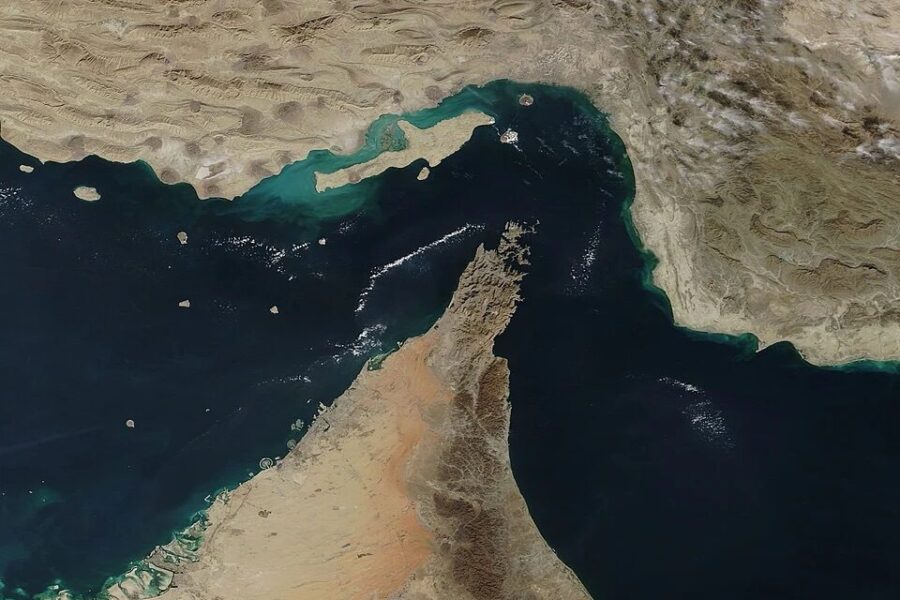
The pattern is not new to this region. As the Strait of Hormuz has shown, a corridor that carries enormous economic value inevitably becomes a corridor that requires military protection. This is why the same trilateral declarations that discuss gas and electricity also emphasize maritime security, sea lanes, and critical infrastructure.
Economic connectivity and security cooperation are advancing together.
Viewed through this lens, Achilles Shield is both an air defense program and strategic insurance. It improves Greece’s ability to keep critical infrastructure operating under attack, complicates an adversary’s targeting problem, and strengthens deterrence by denial. It also deepens industrial cooperation and ties Greece to Israeli sensors, interceptors, software, training, maintenance, and future upgrades.
INSANITY: RO KHANNA IS DEAD WRONG — TERRORISTS AREN’T PEACEMAKERS
Achilles Shield can strengthen Greek defenses, deepen Israeli-Greek ties, contribute to regional deterrence, and support an emerging economic architecture at the same time. These explanations reinforce one another.
Ultimately, Achilles Shield’s significance may not be measured only by the number of radars or interceptors deployed. Its importance lies in the network they create and the economic network they protect. Missiles are its most visible component. Economics is the foundation beneath it.
Bruce Pearl is chairman of the U.S. Israel Education Association and former head basketball coach of Auburn University. Ari Sacher is a senior policy adviser at the U.S. Israel Education Association and has worked for over thirty years as a rocket scientist in Israel.
Continue reading...
[ H/T Washington Examiner ]