



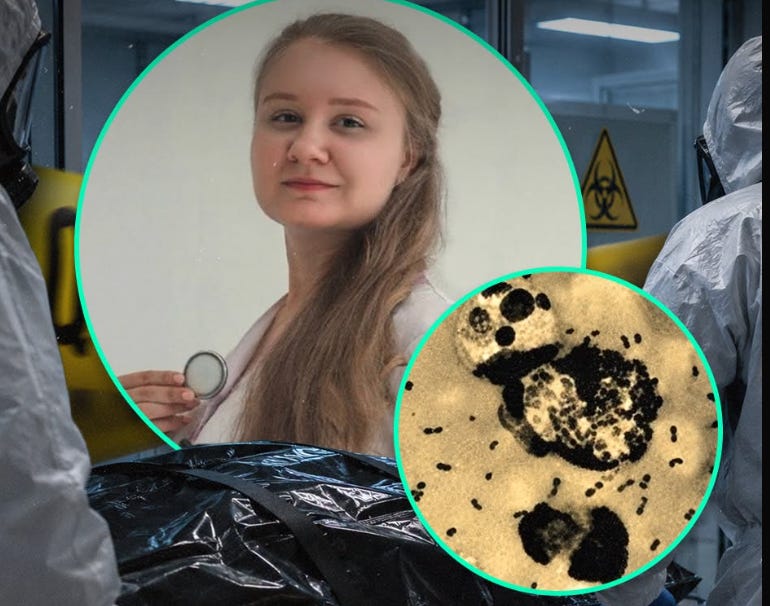





A student raises her hand and asks a question into the microphone. The woman on the screen in front of them pauses, blinks, and answers. The classroom falls quiet as Holocaust survivor Sonia Warshawski describes what she lived through in her own words. For a moment, it feels as if she is sitting with the students.
I have watched these exchanges through The Blue Card’s interactive hologram program. What students experience is built around Warshawski’s recorded testimony, with technology that retrieves her answers instead of creating new ones. If Warshawski answered a question during the recording process, the system plays her response. The artificial intelligence uses keywords from the question asked to find the closest answer. The AI does not create new answers by splicing or picking parts out of other recordings. It can only play a single prerecorded video response that most closely connects to the keywords in the question. If she did not, it pauses, protecting the difference between documented testimony and a machine-generated guess.
AI will help shape how the Holocaust is remembered long after the last survivors are gone. We should embrace its ability to extend the reach of authenticated testimony, while drawing a firm boundary around the truth: No system should invent a survivor’s words or present generated history as fact. Technology companies and the institutions responsible for teaching and preserving Holocaust history need to build that boundary into these tools now, before chatbots become one of the main ways a generation encounters the past.
That possibility is approaching quickly. More than half of American teenagers have used chatbots to search for information or get help with schoolwork. Meanwhile, the Claims Conference estimates that only 31,000 Jewish Holocaust survivors remain in America, with a median age of 87. Young people are turning toward AI at the same time that the generation able to answer their questions from lived experience is disappearing.
Generative AI can make archives searchable, translate testimony, and bring history to students who may never enter a museum. It can also produce language that sounds authoritative even when it is wrong, stripped of context, or entirely invented. Holocaust denial has always depended on repeating falsehoods until they begin to sound credible. AI can give that old strategy enormous reach and a polished appearance.
The danger is already visible. In January, the Anti-Defamation League tested six leading AI models through more than 25,000 conversations and found gaps in every model’s ability to detect and counter antisemitic or extremist narratives. A second ADL study released in July found that four major chatbots were consistently less effective at recognizing and rejecting antisemitism in Persian than in English. These failures affect what people learn, which sources they trust, and whether conspiracy theories receive a new appearance of authority.
AI has a place in Holocaust education when it expands access without altering the historical record. Answers should be grounded in authenticated testimony and primary sources, with clear links showing users where the information came from. When the record does not support an answer, the system should say so. Models should also be tested in multiple languages against Holocaust denial and false quotations, including antisemitic conspiracy claims, before they reach classrooms.
I work with Holocaust survivors every day through The Blue Card. I know how carefully they choose their words and what it can cost them to return to these memories. They are bearing witness to what they lived, not offering material for someone else to complete or reinterpret. The Innovative Holocaust Education Program respects that choice by allowing her testimony to reach new audiences without her having to relive these moments over again, while keeping her own words at the center.
OPINION: WHOOPI GOLDBERG, THE VIEW, AND THE DANGEROUS ERASING OF WHAT KILLED ANNE FRANK
Technology companies should work with historians and organizations that educate about and serve Holocaust survivors before these systems reach the public. Jewish institutions should invest in verified archives and the expertise needed to evaluate new tools responsibly. Boards and funders should treat AI as a question of memory and education, not simply an information technology purchase. Accuracy has to be part of the design from the beginning.
A teenager can now ask a chatbot about Auschwitz before opening a textbook, speaking with a teacher, or visiting a museum. The answer may shape what that student believes is true. The evidence exists, but the system will influence how much of it the student sees and whether fact is clearly separated from invention. Survivors trusted us with their words, and AI should carry those words forward without claiming the right to finish their sentences.
Masha Pearl is executive director of The Blue Card, the nation’s leading nonprofit organization providing direct aid to Holocaust survivors.
Continue reading...
[ H/T Washington Examiner ]