



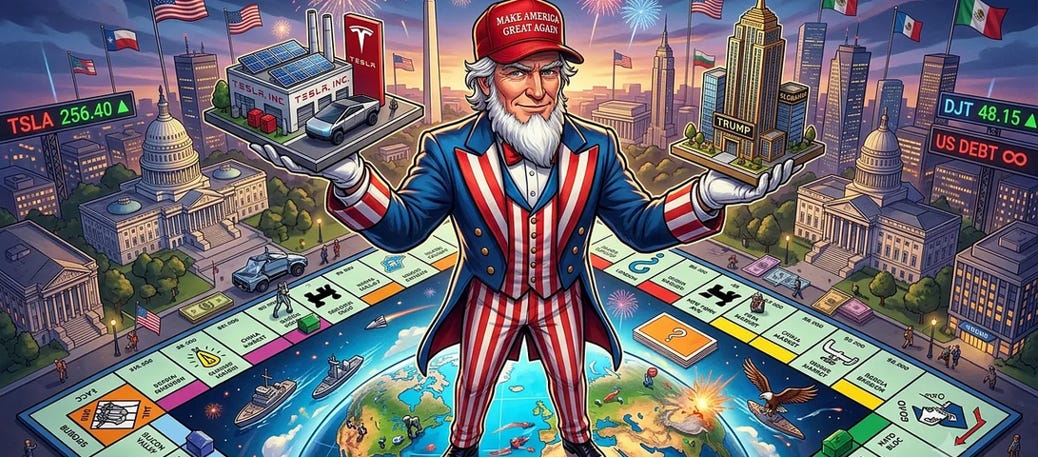



The public is exhausted, and rightfully so. We are witnessing a systemic failure of our federal government, driven by a legislature that has entirely abandoned its primary duty. Instead of focusing on the tangible, urgent needs of the citizens they serve, lawmakers have allowed Capitol Hill to mutate. We are no longer governed by a representative body. We are being held hostage by a “Frankenstein Congress” — a legislative monster of our own creation that has broken free from its constitutional constraints to terrorize the public square with an endless, hyperpartisan media circus.
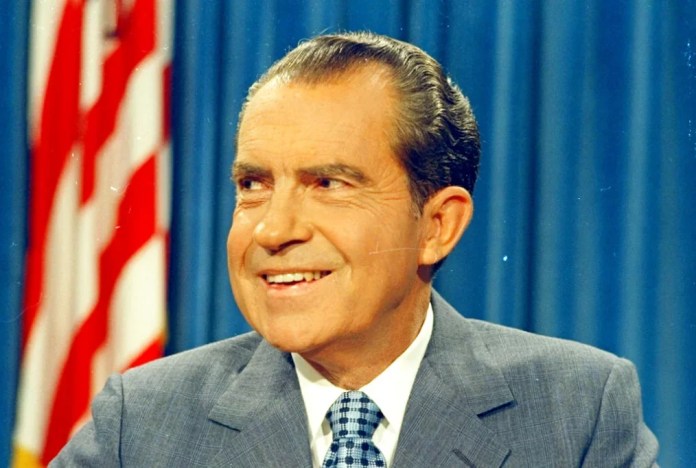
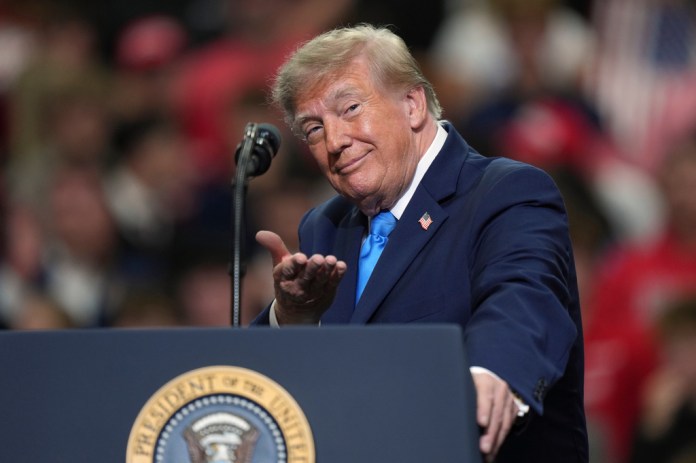
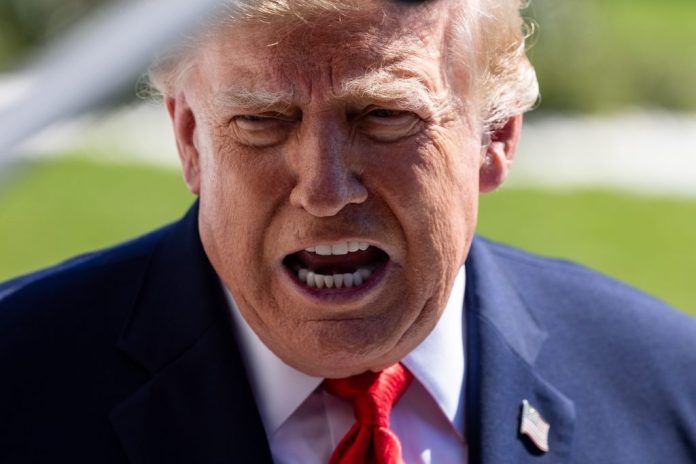
The absurdity of the modern Washington calendar is staggering. Look at any congressional schedule or cable news broadcast, and you will see an endless parade of high-profile investigations targeting individual public figures and their families. From the Clintons and the Trumps to the Bidens, Dr. Anthony Fauci, Jeffrey Epstein, and special counsel Jack Smith, Congress spends an inordinate and exhausting amount of time acting as a blunt-force political weapon. Politicians thump their chests, stake out the moral and ethical high ground, and grandstand for the cameras. This is not what we hired them to do. We elected them to be lawmakers, yet they spend their days playing amateur detectives, prosecutors, and reality television stars.
The media circus perpetuates and elevates this behavior through its own tireless loop. It replays the same soundbites, overanalyzes every partisan swipe, and rewards the loudest voices with primetime coverage. Yes, human nature dictates that we are all naturally intrigued by the gossip, the behind-closed-doors innuendos, and the dramatic happenings of the Washington elite. It is addictive political theater. But at the end of the day, political gossip does not lower prescription drug costs or balance a family budget. Most people want their actual lives to change in ways that only Congress has the unique constitutional power to control. That is where the priority must lie, and that is where lawmakers must force their gaze.
Let me be entirely clear: I am not suggesting that individuals suspected of serious wrongdoing or unethical behavior should escape scrutiny. When there are legitimate activities of concern, they absolutely must be thoroughly examined. No one is above the law. However, Congress is simply not the venue to conduct these exhaustive, multiyear, deeply politicized deep dives. Lawmakers do not possess the institutional capacity or the legal tools to efficiently act as both a federal grand jury and a legislative body. They cannot do it all, and when they try, it is the public who suffers the consequences of an unpassed legislative agenda. It is completely farcical to watch our elected representatives completely duplicate the work of actual law enforcement agencies while leaving the legislative cupboards bare.
Meanwhile, the real issues that affect our daily existence and dictate our quality of life — skyrocketing healthcare costs, a complex and burdensome tax system, economic stability, and crumbling infrastructure — are practically completely ignored. Something has to change. It is time to dismantle this monster and force a permanent shift in priority back to what truly matters in our lives.
The evolution of a legislative monster
This is not how the system was designed to function. The power of congressional oversight was established as a vital tool to ensure accountability and inform lawmaking. But over the decades, a toxic revolution occurred. The incentive structure flipped. The introduction of televised hearings in the 1950s turned investigations into massive public spectacles. Over time, lawmakers realized that passing comprehensive legislation on complex topics such as healthcare or tax reform required difficult, grueling compromise — while holding a televised hearing to attack a political rival required none.
Political scientists tracking this shift have laid bare the math behind our broken legislature. Historical data published in the Wiley Online Library show that in the 1970s, congressional committees regularly held more than 1,000 hearings a year specifically tied to developing and processing legislation. Today, that number has collapsed by more than half, to fewer than 500 legislative referral hearings per session. Conversely, general oversight and investigative hearings have exploded, skyrocketing from around 500 annually to more than 2,000.
The “Frankenstein Congress” has completely turned its back on the lawmaking process to feed its obsession with “gotcha” politics. The results of this legislative starvation are staggering. In the 1970s, Congress routinely enacted over 700 public bills into law per session. By 2026, legislative productivity hit historic, alarming lows. According to legislative metrics published by No Labels, through the end of August, Congress managed to pass just 34 public bills into law. Lawmakers have traded their voting buttons to become actors for the cameras, substituting substantive policy for individual character assassinations.
The fix: The congressional focus and efficiency act
We do not need a constitutional amendment to tame this monster — we need a fundamental overhaul of internal chamber rules. Under the Constitution’s rulemaking clause in Article I, Section 5, the House and the Senate have the absolute authority to govern their own proceedings. If a reform-minded coalition of lawmakers is willing to step up, it can implement a realistic, three-part structural blueprint to streamline the system and return Congress to a policy-first institution.
Instead of spending months running exhaustive, duplicate investigations, Congress must explicitly create a rigid, nonpartisan hand-off mechanism to professional agencies. Under this rule, any initial concern or allegation raised by a lawmaker against an individual person or family would be immediately and privately referred to an independent, nonpolitical congressional ombudsperson. This office, staffed entirely by career legal experts insulated from political parties, would have a strict 30-day mandate to evaluate the evidence behind closed doors. If the allegation is deemed substantive, it is automatically and rapidly routed to the appropriate specific investigative agency, such as the Justice Department, the FBI, or an agency inspector general. This ensures the matter is fully and properly investigated by professionals who possess the actual tools to uncover the truth, without wasting valuable legislative time.
To kill the moral grandstanding, we must strip politicians of the stage they crave. The new rules must mandate that all early-stage evidence gathering, depositions, and hearings involving individual conduct be held strictly in closed, executive sessions. Furthermore, chamber rules should eliminate the format where politicians are granted five minutes each to deliver partisan speeches disguised as questions. The first several rounds of any oversight questioning should be legally designated to professional committee staff counsels. This format mirrors early historical precedents analyzed by the Supreme Court in landmark cases such as McGrain v. Daugherty, ensuring investigations maintain a clear legislative focus. When you eliminate the cameras and the soundbites, the media circus loses its fuel, the political theater collapses, saving weeks of legislative calendar time, and individual privacy is protected before guilt is proven.
To ensure that lawmakers prioritize our actual existence, we must implement a strict 70%-30% resource allocation rule. By rule, standing committees must dedicate a minimum of 70% of their annual budgets, staff hours, and scheduled committee days strictly to legislative business — specifically policy debates, expert testimony, and drafting bills related to healthcare, taxes, and the economy. Oversight investigations would be strictly capped at 30%. If a committee fails to meet its biweekly quotas for holding legislative policy hearings, its ability to schedule any other business would be automatically frozen. We must legally bind their schedule to the public’s priorities.
Weighing the trade-offs
Critics of this streamlined approach will argue that it weakens the system of checks and balances. They will claim that if Congress rapidly hands off investigations to executive agencies, it risks allowing a corrupt administration to investigate and clear itself. This is a legitimate constitutional hurdle. However, the trade-off of our current system is far more dangerous: a completely broken, toxic legislative branch that does absolutely nothing to improve the quality of life. The risk of agency stonewalling can be mitigated by requiring these agencies to provide expedited, mandatory progress reports back to Congress. The alternative, maintaining a permanent media circus that breeds deep public cynicism, is no longer sustainable.
TRUMP IS XI’S SHIELD. THE MIDTERM ELECTIONS ARE ABOUT TO SHATTER IT
Forcing the shift
Politicians will not voluntarily surrender their television airtime, and the media will never stop feeding on political gossip. Breaking this cycle depends entirely on us. We must change the political calculation at the ballot box.
Let’s make it clear: This is not a partisan issue — it is a bipartisan problem. We, as the electorate, deserve more thoughtful focus on our collective lives. Congress needs to refocus and prioritize what truly matters in our lives. We want to thrive — stop standing in our way.
Dr. Eric Wargotz is a policy analyst and writer whose work has appeared in media outlets including the Washington Examiner, the Baltimore Sun, the Jerusalem Post, and syndicated via aggregators including MSN, Foundation for Defense of Democracies, and RealClearWorld. He is a judge, a former Senate nominee, and clinical professor emeritus at the George Washington University. He is also the former elected president of the Queen Anne’s County, Maryland, Commission. Views are his own.
Continue reading...
[ H/T Washington Examiner ]