









Guest Post by John Walter
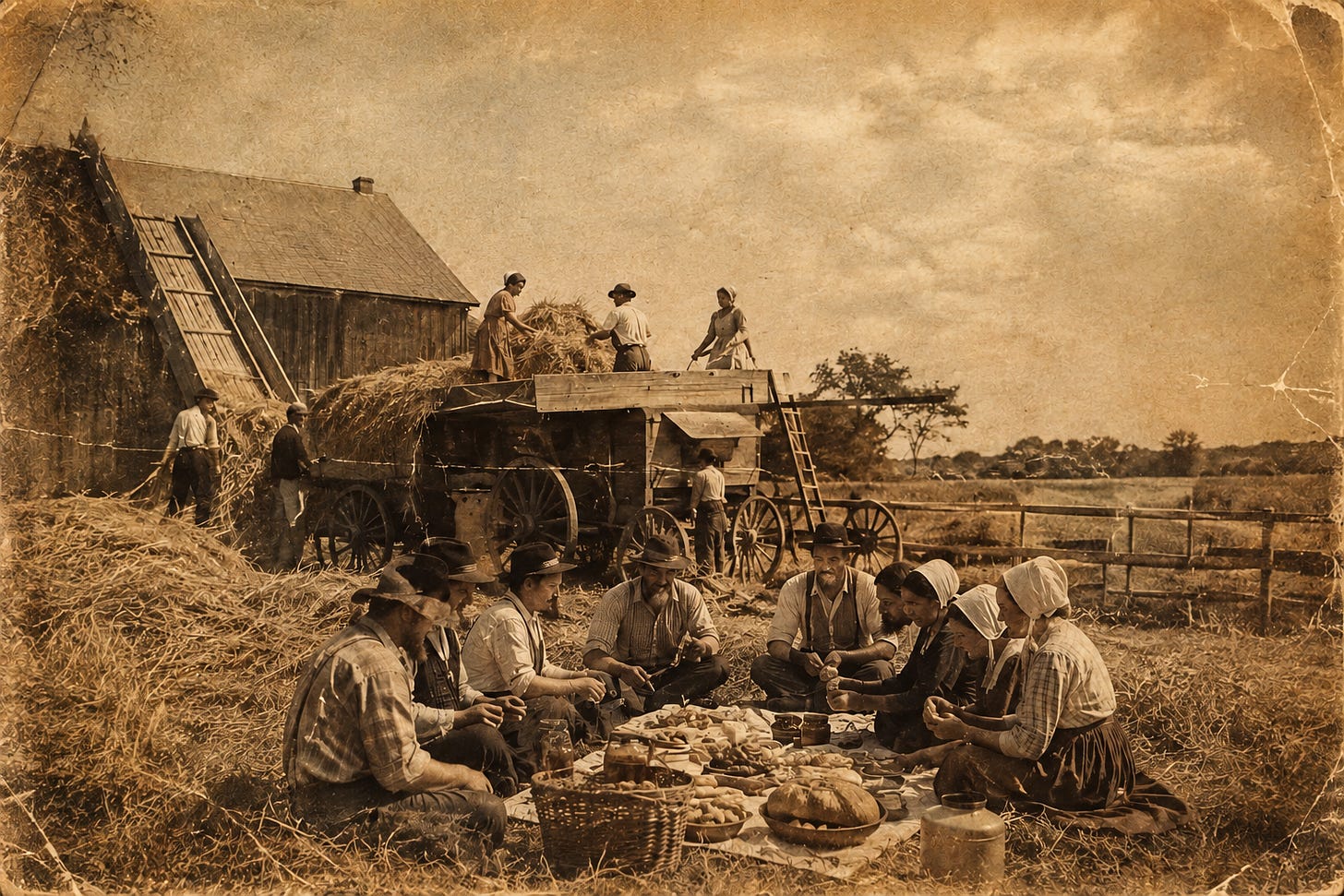
Cut into a slope behind my great-grandfather’s house, closed with a door you had to stoop to enter, sat a cellar that stayed cold into July. Nine people ate out of that hole in the ground for most of a year, and nobody in the family thought it strange. Sacks of wheat leaned against the wall in the dark. A crock of lard waited under a cloth. Jars of honey had gone the color of old amber, and a few of them, I suspect, were older than my mother. Not one container down there carried a printed date, and not one jar appeared to care.
Amish neighbors shaped much of what my family understood about keeping food. My great-grandmother traded eggs and hand-churned butter for cloth, and the woman across the fence became closer to a sister than a customer. Barn raisings pulled both families into the same field, and so did funerals, which is its own kind of intimacy. One summer an Amish neighbor taught my grandmother to shred cabbage into a crock and weight it with a clean stone, and that lesson outlived everyone who first traded it. It bubbles on my own counter now, every autumn, three generations removed from the woman who taught it.
Outsiders tend to read an Amish larder as nostalgia, a hobby shelf full of quaint jars. Wrong frame. Every jar answered a question: what if the truck breaks, the harvest fails, the money thins, the winter drags past April? Prepping, as the internet now calls it, was simply how these families farmed. None of them would have used the word. All of them would have outlasted the people who build bunkers and stock freeze-dried meals, because the system ran on salt, sugar, heat, cold, smoke, and time — none of which need electricity or a supply chain. Worth saying, though, that Amish communities are not carbon copies. Practices shift by settlement, by district, by how strict the bishop happens to be. What follows is a broad picture, not a rulebook, and my family’s memory of it is exactly that: memory.
Weather drew the line between the two worlds better than any conversation could. A storm once took the power for four days. Our side of the road scrambled for ice and candles. Their side barely noticed, because the light came from kerosene, the heat from wood, the food from jars. That steadiness left a mark on me. A stocked shelf is not only calories. It is a way of telling the future that tonight’s supper is already handled, whatever the future intends to do about it.
So this is a survival piece, but a gentle one. Nothing here needs a generator or a chemistry set. Fifty ordinary things sit below — honey, salt, wheat, beans, lard — chosen because each keeps a long time when handled with care and because each earned its place on farm shelves long before anyone started calling this a movement. A word on the title, since it promises more than any pantry can honestly deliver: “never expire” is a loose phrase. Salt and honey truly do not spoil. Wheat, rice, and sugar come close, given airtight storage. Everything else on this list keeps a long while under the right conditions and then quietly declines in quality long before it becomes dangerous. Calling a potato immortal does nobody any favors, and neither does pretending a jar of home-canned beans is safe just because it has sat in a cellar for five years.
One more thing before the list. The rhythm mattered more than the shopping. Spring meant planting and tapping. Summer meant canning and drying. Autumn meant butchering and cellaring. Winter meant eating what had been put by, then starting the wheel again. A pantry built on that rhythm rarely runs ahead of itself and rarely falls behind. If a single lesson survives this article, let it be that one: buy a little more than you need, learn to put it up properly, rotate the oldest to the front, and let the seasons set the schedule. Everything else is detail.
Fifty Foods That Outlast Almost Everything Else: What Amish Kitchens Taught My Family, and Why These Provisions Still Matter: (See video!)
1. Raw Honey
Crystallization scares people, and it should not. Honey that has gone grainy and solid is not spoiled; it has simply given up its water to the sugar inside it, and a warm bath brings it back to liquid without any harm. What makes honey last is chemistry rather than luck. Low moisture, high acidity, and an enzyme the bees add that produces a little hydrogen peroxide together create a hostile place for bacteria. Sealed jars have been recovered from Egyptian tombs and eaten without complaint, though that comparison gets trotted out often enough that it has started to wear thin. Raw honey keeps more of its natural defenses than the pasteurized kind, and it stores best in glass, capped tight, in a dark cupboard. Never refrigerate it and never let a wet spoon dip into the jar. The one real caution concerns infants under a year, who can react to the spores honey carries; adults and older children face no such problem. Beyond eating, honey does quiet work: a spoonful coats a raw throat, and a smear helps a small burn. Buy it from a local keeper if you can, because the flavor alone justifies the price, and a single jar stretched across a winter goes further than most people expect.
2. Wheat Berries
Flour is fragile. The germ inside it holds oils that turn rancid within a year or so, which is why a bag of whole-wheat flour from the store has a short life no matter how carefully you store it. Wheat berries dodge that problem entirely, because the oils stay sealed inside the hard kernel until the moment you grind. This is the reason farm families bought wheat by the hundredweight and left it in bins for a decade. A hand mill lived beside many a stove, since berries are useless until you can crack them, and the daily grind was simply part of baking. Stock the mill if you stock the grain, or the sack becomes decoration. Sealed in mylar with an oxygen absorber, or tucked into food-grade buckets with tight lids, hard red or hard white wheat will hold for many years, and some reports push that far longer. Freshly ground flour tastes sweeter and nuttier than anything in a paper bag, and it carries nutrition the commercial stuff has stripped away. During a long stretch without stores, a bin of wheat becomes bread, porridge, and crackers — a lot of living from one sack. Keep it cool, dry, and out of reach of mice, which appreciate it as much as you do.
3. White Rice
Nutritionists scold white rice for being stripped of its bran and germ, and for eating they have a point. For storage, though, that stripping is the whole advantage. The oils that turn brown rice rancid within a couple of years live in the parts white rice has already shed, leaving a grain that can sit for a very long time under decent conditions. Moisture and pests are the enemies here, not time. Pack white rice into airtight containers, drop in a bay leaf if you trust the old trick, and keep it off a damp floor. Long grain holds up better than short, and instant rice is a poor substitute because it has already been cooked and dried once. A five-gallon bucket of rice is among the cheapest calories a person can put on a shelf, and it partners with nearly everything — beans, lard, dried vegetables, a spoon of honey. Plain when times are lean, dressed up when they are not. A rice pudding made with powdered milk and dried apples, for instance, tastes like a celebration while coming entirely from shelf-stable stores, which is the quiet trick of any good pantry: abundance hiding inside plain things.
4. Rolled Oats
Honesty matters here, because oats do not last forever the way salt or honey does. The germ still carries oil, and that oil slowly turns; an old box of oats smells faintly of crayons when it has gone past its best. Stored against air and kept cool, the clock slows to a crawl, and five to ten years is a reasonable expectation rather than a promise. A layer of paraffin pressed over the top of a filled jar, an old trick that keeps out both moisture and pantry moths, buys extra time. Oats earn their space through forgiveness. They cook into porridge, thicken a meatloaf, stretch a crumble, and become granola with a little honey and fat. Steel-cut oats outlast rolled, though they take longer at the stove. Buy in bulk, repackage into smaller airtight containers so you are not opening one giant bag over and over, and rotate the oldest forward. A cool cellar shelf beats the cabinet above the stove every time, since heat and light are what hurry the oils along. If you want the very longest life, mylar and an oxygen absorber will get you there, but even a decent jar in a dark corner will serve for years.
5. Dried Beans
No item on a farm shelf does more heavy lifting than a sack of dried beans, and none gets less credit. Protein, fiber, and calories sit inside a form that keeps for years and costs pennies next to meat. Cloth bags hung from rafters let the beans breathe and kept the mice guessing, and a family cycled through them each season without fail. Low moisture and low heat are the rules; sealed in mylar or airtight buckets, dried beans will hold a decade or more, though very old ones turn stubborn and demand longer soaking and cooking. Never store them where humidity swings, and never mix old with new. Soak overnight, simmer slow with a ham bone or a spoon of lard, and a meal appears that has fed farm families for centuries. Beans differ in character: black beans hold their shape, pintos go creamy, kidney beans need a hard boil to be fully safe. Keep a few kinds, because boredom wears a stored diet down faster than hunger does. Beans, rotated and cooked with patience, form the spine of a survival kitchen, and Amish cooks leaned on them long before anyone wrote a book about it.
6. Lentils
Beans for people in a hurry, that is what lentils are, and the speed is exactly why they belong on a list like this. No soaking, twenty minutes on the stove, and a storage life roughly matching any dried legume. A jar of them turns a small amount of sausage into a pot that feeds a crowd, and that stretching is the entire point of a working pantry. In a long emergency, the foods that matter most are the ones that convert a little meat and a little fat into a lot of full bellies, and lentils do that better than almost anything. Brown and green lentils keep their shape for salads and sides; red lentils collapse into a thick soup that needs only an onion and salt. Store them like beans — dry, dark, sealed — and they will serve for years, though age softens their tenderness. The gas everyone worries about fades with a week or two of regular eating; rinse well and cook thoroughly. A spoon of vinegar at the end of the pot wakes the whole thing up, a trick worth stealing. Cheap, fast, and compact, lentils deserve more space on the shelf than most people give them.
7. Coarse Salt
Salt cannot spoil. Full stop. It is a mineral, not a living thing, and no amount of time will turn it. Every other preservation method in this article leans on it somewhere, because salt cures meat, ferments cabbage, pulls water from vegetables, and makes bland stored food edible. Farm households treated it as infrastructure and bought it by the fifty-pound sack. Clumping is the only real problem, and dry storage solves that; a few grains of rice in the container handle the rest. Choose by job: canning and pickling salt is pure and additive-free, which keeps brines clear; kosher and coarse sea salt cure and cook well; iodized table salt eats fine but can discolor pickles. Rock salt in chunks helps with ice cream and with salting down a cellar floor. Buy more than you think you need, because salt is cheap insurance and running out mid-preservation is a bad day. In a true crisis it becomes currency as much as food. One account from my own family has a great-grandfather trading a small sack of it for a whole pig, and neither party feeling cheated. That says enough about how a farm values the white stuff.
8. White Sugar
Same logic as salt, different flavor. White granulated sugar is dry enough and concentrated enough that microbes cannot gain a foothold, and sealed against moisture it will keep for decades. Brown sugar is the troublemaker, since it holds more moisture and slowly dries into a brick, though a slice of apple in the container softens it back within a day or two. Beyond sweetness, sugar is a tool. It makes jams, feeds yeast, cures fruit, and turns a tart batch of berries into something worth keeping. A late-summer kettle of fruit and sugar bubbling on the stove was a ritual in many kitchens, and the jars that came off it fed families through the cold months. Powdered sugar is the weak link, clumping and picking up flavors, so use it first. Store everything in airtight containers off the floor. A small cleverness worth trying: tuck a split vanilla bean into a jar of sugar and let it perfume the whole batch, giving you vanilla sugar for baking while the bean stays usable. Sugar is an unglamorous anchor, and a shelf without it is a shelf that cannot preserve much of anything.
9. Maple Syrup
Real maple syrup is concentrated sugar and flavor, and the darker grades outlast the delicate light ones by a wide margin. A sugarhouse in early spring is one of the better smells on earth — wood smoke and boiling sap — and the families who run them work around the clock for a few short weeks. Once opened, syrup can grow a harmless surface mold, which you skim off before the syrup underneath reveals itself as perfectly fine. To avoid even that, keep the open jug cool or move it into smaller jars. Syrup earns its place by doubling as sweetener and morale; a drizzle over oats, a glaze on pork, a spoon stirred into coffee all carry more weight when the world feels tight. Glass is the right container, since it leaches nothing into the food. Buying from a producer beats the corn-syrup blends by a mile in flavor and supports a family that knows how to make something last. A sealed jug in a cool room will hold for years, and a little goes far because the taste is strong. Spring labor, winter reward.
10. Molasses
Molasses is what is left after sugar refining, dark and thick and acidic, and that acidity is why it resists spoilage. It was cheap, calorie-dense, and nearly eternal in the cellar, which is why it turned up in so many farm kitchens. Gingerbread, baked beans, and a simple syrup over cornbread all leaned on it. Store it in glass or food-grade plastic with a tight lid, in the dark. Age may thicken or crystallize it, and a warm water bath restores the flow. Unlike white sugar, molasses carries minerals — iron and calcium among them — which mattered in diets light on fresh food. Blackstrap, the most concentrated grade, is bitter and strong and best used sparingly; regular or fancy molasses is milder and better for baking. It also darkens breads and sauces and feeds some traditional ferments. In a pantry, a jug of molasses turns a sack of cornmeal into something to look forward to, which is no small gift when meals turn repetitive. A molasses cookie that stays soft for a week is the kind of small triumph a well-kept shelf produces without fanfare.
11. Sorghum Syrup
Here is a sweetener most outsiders have never heard of, and it deserves better than its obscurity. Sorghum syrup comes from pressing cane juice and boiling it down, producing a deep, almost smoky sweetness closer to molasses than to maple. It keeps for years in a sealed jug, because it is essentially concentrated sugar water with the water driven off. It grows where maple does not, which is why it became a staple across the Midwest and the South, far from any sugar bush, and why it shows up in farm kitchens in places you would not expect. Use it on biscuits, in baked beans, stirred into coffee, or poured over hot cereal. The minerals and the flavor beat white sugar, and a plain diet feels more generous with a jar of it on hand. Store it as you would molasses: glass, tight lid, dark shelf, warm bath if it thickens. A jar of sorghum is a small piece of regional memory, and in a hard stretch it becomes both food and a taste of home for anyone lucky enough to have it.
12. Raw Apple Cider Vinegar
Vinegar does not spoil, and the raw cider kind, cloudy with its “mother” culture, keeps for years while working double shifts in kitchen and medicine cabinet. The acid preserves pickles, relishes, and chutneys, and it is the backbone of a great deal of farm canning. A crock of it kept going and topped up as it was used was common enough. Store vinegar in glass, never metal, since the acid will slowly eat through a reactive container, and keep it out of direct sun. Raw vinegar may grow a gelatinous blob, which is the mother doing its work and a sign of quality rather than trouble. The folk habit of a spoonful in water for a sour stomach is more tradition than proven medicine, but the acid genuinely helps some people digest, and it tenderizes meat and brightens soups and beans. In a pantry, vinegar is insurance against blandness: a splash turns a pot of beans into something worth eating, and a lot of it turns a crate of cucumbers into pickles that outlast the winter. It also cleans, deodorizes, and disinfects, which puts it in both the kitchen and the supply closet. Buy it by the gallon.
13. Distilled White Vinegar
Where cider vinegar brings flavor and culture, distilled white vinegar brings pure, neutral acid, and that neutrality is the strength. It preserves without staining, so pickled onions and relish stay clean and bright. It cleans glass, cuts grease, and handles a hundred household chores. Nothing in it feeds microbes, so it lasts essentially forever. Store it sealed in glass or its original jug, away from heat. The reason it matters for canning is consistency: a predictable five percent acidity means tested recipes actually work, and home canning depends on hitting a target acidity to keep botulism away. Swap in a weaker vinegar and a recipe can quietly go wrong. Keep both kinds on hand — white for workhorse jobs and pickling, cider and wine vinegars for flavor. A pantry with vinegar never feels poor, because vinegar makes pickles, dressing, sauces, cleaning, and a hundred small rescues possible. Cheap, eternal, and earning its shelf.
14. Baking Soda
A simple chemical with an outsized role, and sealed against moisture it keeps for years. In the kitchen it leavens quick breads, biscuits, and pancakes when paired with an acid like buttermilk or vinegar, which matters enormously when yeast is scarce. The same tin scrubs pans, brushes teeth when supplies run short, deodorizes a fridge, soothes a bug bite, and helps a scorched pot release its mess. Store it airtight, because it absorbs odors and moisture and loses strength once damp. A quick test: drop a pinch into a spoon of vinegar, and a hard fizz means it is still good. In a pantry, leavening deserves real space, since flat, dense bread wears out its welcome fast. Baking powder is the fussier cousin, losing strength within a year or two and needing regular replacement; baking soda holds up far better and works whenever you have acid to match it. Between the two, soda is the keeper. Buy several boxes, keep them dry, and keep the reserve stash separate from the daily one so you are not constantly opening what you meant to save.
15. Dried Field Corn
Field corn is not the sweet corn you eat off the cob, and that distinction trips up a lot of people. Dent corn grew for grinding, dried hard on the stalk, and kept in cribs and bins for months. Ground into meal, it became cornbread, mush, and grits, foods that carried whole regions through hard times. Whole dried kernels stored cool and dry last years, and grinding fresh keeps the flavor sweet. The oils in cornmeal turn faster than in whole kernels, so the longest life comes from storing corn whole and grinding as needed, or keeping the meal cold. Corn ran through a hundred forms in a farm kitchen, and the discipline behind it was simple: dry it hard, keep it dry, keep the pests out. A sack of field corn is calories and versatility, and it pairs with beans and lard to make real meals. Cornbread with a little honey and a smear of butter is a small feast from plain stores, and mush with milk and molasses was breakfast for a lot of families. Treat corn as a staple, rotate it, and store it whole when you can.
16. Popcorn Kernels
Popcorn is the sleeper on this list, and the reason is that it is a whole grain with a hard shell that seals out the world. Kept dry and sealed, it lasts years, sometimes a decade or more, and it delivers both food and entertainment. Popped over a woodstove in a wire basket, it turned long winter evenings into something worth having, and the kernels need only heat to transform, which makes them food that cooks itself. Store them in glass jars or airtight bins, away from moisture, and they wait patiently. Very old kernels dry out further and pop smaller, but they rarely go truly bad. A little fat and salt turn them into a snack; ground fine, they become cornmeal in a pinch. The entertainment value is not trivial in a survival situation, because boredom wears people down, and a shared bowl around a table does a lot for a household’s mood. The plainest kernels beat the microwave bags for storage. A pot of popping corn, hissing and rattling on the stove, is one of the more reassuring sounds a kitchen can make.
17. Powdered Milk
Fresh milk spoils fast; powdered milk does not, and the difference makes it essential. Nonfat dry milk, sealed and kept cool, holds for years, though it slowly picks up a stale flavor with extreme age. The fat is the problem, which is why the nonfat version outlasts whole-milk powder by a wide margin. Reconstitute with cool water and give it a few hours in the fridge to hydrate fully, since cold milk tastes better than warm because the flavors settle. Calcium and protein without refrigeration is the value here, and powdered milk turns oats, coffee, and baked goods into real food. In skilled hands it also makes yogurt and cheese, and it stretches a small amount of fresh milk when you have some. Store it in mylar or glass, keep it dark, and never let humidity in. If the straight flavor bothers you, use it mostly in cooking where nobody notices. A bucket of it is a hedge against the day the dairy truck stops running, and a baker who has it never worries about a recipe calling for milk.
18. Canned Butter and Ghee
Butter does not last on a shelf, but canned butter and ghee do, and both earned a place in pantries where fresh cream was seasonal. Ghee is butter with the water and milk solids cooked out, leaving pure fat that keeps for years without refrigeration when sealed. Canned butter, sold in tins, lasts years unopened. A family might not have had the tins, but they made ghee and stored it in crocks, and it carried them through the months when the cow gave less. Ghee handles high heat beautifully, frying and sautéing without burning, and a spoon of it makes plain vegetables worth eating. Store it in glass with a tight lid, in a cool dark spot, and always use a clean dry spoon to keep water out. Once opened, it keeps for months even at room temperature. This is luxury fat in a survival kitchen, and luxury matters when meals turn dull. A jar of ghee beside a jar of honey turns a sack of flour into shortbread and a bowl of oats into something decadent. Good fat is calories, flavor, and shelf-stable energy in one, not a frill.
19. Lard
Lard carries a reputation it does not deserve. Rendered pork fat, made properly and sealed, keeps a year or more at room temperature and far longer in a cool cellar, and it was the backbone of farm cooking. Autumn butchering produced a kettle of it, and the family used it for frying, baking, and preserving. A pie crust made with lard is flaky in a way butter rarely matches, and a spoon of it makes beans and greens rich. Store lard in glass jars or crocks, sealed, dark, and cool. Oxygen and light turn the fat rancid, and a tight lid on a cold shelf solves both. Some families layered a little salt on top as extra protection. If you render your own, cook the fat slowly, strain it clean, and pour into small jars so you open only what you need. Calorie-dense and needing no refrigeration, lard is precious in a survival pantry, and it seasons cast iron and fries food in a way lighter oils cannot. A crock by the stove, dipped into daily, was standard. When you live off stored food, a fat that keeps and cooks well is worth its weight in nearly anything.
20. Tallow
Tallow is rendered beef or mutton fat, the hardest and most stable of the animal fats, which makes it the longest-lasting. Sealed and kept cool, it holds for years, and it served candle-making as much as cooking. After butchering, a household rendered tallow and used it for frying, for soap, and for the dipped candles that lit the evenings. Store it in glass or crocks, tight-lidded, cool and dark, and it will outlast nearly any other fat on your shelf. High heat does not smoke it, which makes it excellent for frying and hard searing. In baking it makes a sturdy, flaky pastry, and it adds richness to savory dishes. Its resistance to rancidity comes from being highly saturated, the same quality that makes it so stable. If you keep animals or buy beef fat from a butcher, rendering is cheap and simple, turning a waste product into a pantry anchor. A jar of tallow, a jar of lard, and a jar of ghee give you three fats with different strengths and long lives, covering frying, baking, and preserving, none needing a refrigerator.
21. Dried Beef and Jerky
Meat is the hardest thing to store without a freezer, and drying is the oldest answer. Jerky and dried beef keep for months, and with careful salting and drying, far longer. A smokehouse ran every autumn, and dried meat hung in the rafters where air and smoke did the preserving. Salt pulls out moisture, smoke adds antimicrobial compounds, and thorough drying leaves nothing for bacteria to feed on. Store dried meat in cloth or paper so it can breathe, or vacuum-seal it for longer life, and keep it cool and dark. Watch for a greasy sheen or an off smell, the signs that fat has turned. Concentrated protein makes dried meat the most valuable thing in a pantry when fresh meat is gone, and it needs no cooking to eat. It travels well, which mattered when families walked to town. A little dried beef chopped fine stretches a pot of beans into a feast, and a strip in a coat pocket is a meal on the move. One caution: drying alone is not sterilization, so meat that was not salted and dried thoroughly can still spoil, and greasy or soft spots are the first places to go.
22. Dried Apples
An apple in October is a fine thing; an apple in February is a miracle, and drying is how you get one. Sliced and dried, apples keep for a year or more in a sealed jar, and they rehydrate into pies, sauces, and a side for pork. Strung on thread and hung near the stove or in the sun, apple slices filled a house with their smell for days. Drying concentrates the sugar and the flavor, so a handful of dried apple does the work of several fresh ones. Store them in glass jars, sealed, in a cool dark place, and check now and then for moisture. A silica packet helps in humid weather. Sweetness, acid, and a reminder that summer existed all arrive in the dead of winter, which fresh foods rarely manage. Applesauce and apple butter extend the same fruit even further, and both can. Dried fruit fills the gap that grains and beans leave, providing vitamins and a change of texture. Soak dried apples overnight and bake them into a pie, and nobody will guess it came from a jar.
23. Dried Stone Fruit
Peaches, apricots, plums, and cherries all dry beautifully and keep for a year or more, and whatever the orchard gave got dried. Sulfured apricots hold their bright color; unsulfured ones turn dark and taste more intensely of themselves. Either way, the method is the same — halve the fruit, remove the pit, dry it thoroughly, and store it sealed in a cool dark place. Sugar, fiber, and vitamins arrive in a compact form, edible without cooking, sweetening porridge, filling pies, and turning a plain rice pudding into something worth sharing. A little stickiness is fine, but a soft, damp feel means the fruit needed more drying time. Store in glass with a tight lid, and keep an eye on the jar in humid weather. Dried fruit is the closest thing to a treat that costs almost nothing, and treats matter when meals turn monotonous. A crock of dried peaches for company and a smaller jar for the children, rationed carefully, was a common arrangement. A handful in a coat pocket is energy on the move, and it beats a candy bar for lasting power.
24. Dried Culinary Herbs
Herbs dry into concentrated flavor bombs, and a sealed jar keeps for a year or two, sometimes longer if kept cool and dark. Thyme, sage, rosemary, dill, parsley, and mint grew in every kitchen garden, and bundles hung to dry near the stove each summer. Rubbed into a jar and sealed, those herbs turned bland stored food into meals with character, which is exactly what a long winter needs. Whole herbs hold their oils longer than crushed ones, so crumble as you use them and leave the rest intact. Keep the jars out of light and away from the stove’s heat. Some herbs also served as medicine in the folk tradition — mint for a sour stomach, sage for a sore throat, thyme in a steam for congestion — and while those uses vary in strength, they are not baseless. Light, cheap, and packed with flavor, herbs give high value for their small size. A pinch of thyme in beans, a rub of sage on dried pork, a sprig of mint in tea — small touches that keep spirits up. Drying your own costs nothing but garden space.
25. Whole Black Peppercorns
Peppercorns keep their punch far longer than ground pepper, because the aromatic oils stay sealed inside the hard outer shell until you crack it. Stored whole in a cool dark place, they hold for years. A hand grinder and the little ritual of grinding fresh made plain food taste considered rather than poor. More than a seasoning, pepper makes stored food feel cooked by someone who cared, and that lift is real. Store the peppercorns in glass, sealed, away from heat and light, and grind as needed. Whole coriander, cumin, and other whole spices behave the same way and can join the shelf for the same reason, while ground spices lose potency within six months to a year. If you want long storage, buy whole and grind. A jar of peppercorns is small, cheap, and long-lived, which makes it one of the best flavor-per-dollar items in the pantry. A grinder is a small tool worth having, because the difference between fresh-cracked and pre-ground is enormous, and flavor stops being a luxury the moment a diet turns repetitive.
26. Pure Vanilla Extract
Real vanilla extract, the kind with alcohol in it, keeps for years because the alcohol preserves it. Imitation vanilla is weaker and shorter-lived, so the pure stuff earns its higher price if you are storing for the long haul. Used sparingly, a small bottle goes a long way. Store it in glass, sealed, away from heat and light, and it holds its flavor for a very long time, though five or six years is a sensible ceiling for best results. Vanilla turns flour, eggs, and sugar into cake and custard, and it makes baked goods from stored ingredients taste like a celebration. It also masks the slightly stale edge that old powdered milk and old flour can carry, a benefit worth knowing about. A bottle of vanilla is a morale item as much as a flavoring, which is why it was often kept in reserve and broken out only for special occasions. A capful in a batch of pancakes turns a lean breakfast into a treat, and the smell alone does something for a tired kitchen. Buy the pure extract, keep it dark and cool, and treat it as the small luxury it is.
27. Unsweetened Cocoa
Low in fat and moisture, unsweetened cocoa powder sealed against air keeps for several years, though its flavor fades with extreme age. Cakes, puddings, and a hot drink that warmed a winter evening all came from it. Store it airtight in a cool dark place. Bitter on its own, it needs sugar or honey and a little fat to come alive. Comfort food that needs no refrigeration and takes up almost no space makes cocoa an efficient morale booster, and a spoon of cocoa, a spoon of sugar, and a splash of hot milk powder produces a drink that feels far richer than its parts. It also adds depth to chili, to baked beans, and to a mole-style sauce, so it is not only for sweets. Moisture is the one caution, since cocoa clumps hard when damp, so keep the lid tight and store it off the floor. A cocoa pudding with cornstarch and dried milk is the kind of small triumph a good pantry makes possible, and every bit of it comes from shelf-stable stores.
28. Green Coffee Beans
Roasted coffee goes stale within weeks; green coffee beans, unroasted, keep for a year or more, sometimes two, if stored cool and dry. Long-storage coffee means green beans plus a way to roast them, whether a hand roaster or a heavy pan over the stove. Store green beans in cloth or paper in a cool dark place so they can breathe, and roast in small batches as needed. Coffee is not nutrition in the strict sense, but it is ritual, and a morning cup does a lot for a tired household. Caffeine sharpens attention and eases the low-grade ache of a hard day. A sack of green beans plus a roaster is self-sufficiency in a form most people never consider. Roasting takes practice and the results stay uneven at first, but the smell alone is worth it. A tin of roasted beans, ground fresh, was the sort of small luxury a person might ration carefully. Something warm and bitter in a cold kitchen is its own kind of survival.
29. Loose Leaf Tea
Kept dry and sealed, loose tea holds its flavor for a year or two and stores compactly, which makes it a good pantry item. Tea served as medicine as much as pleasure — mint for the stomach, chamomile for sleep, black tea for a pick-me-up. Store it in an airtight tin, away from light, heat, and strong smells, because tea absorbs odors readily. Loose leaf beats bags for long storage because it holds more intact leaf and more oils. Light, cheap, and calming, tea gives a slow day some structure, and herbal varieties can be grown and dried at home, making them doubly useful; mint spreads aggressively and gives a renewable supply. A jar of dried garden mint costs nothing and lasts a year. Boiling the water for tea also makes it safer to drink, a bonus worth remembering. A tin of black tea for guests and a jar of mint for personal use, and a standing habit of a cup with a neighbor, built the kind of relationships that make hard times easier.
30. Hardtack
Flour, water, and salt baked into a rock-hard cracker is the original survival food. Baked dry and stored in an airtight tin, it keeps for years, and in a real pinch much longer. Made for travel and for the lean weeks when nothing else was ready, a batch could sit in the pantry without complaint. Dry it thoroughly so no moisture remains for mold. You eat it softened in soup, coffee, or milk, or you gnaw it as is. Not exciting, but calories that do not spoil, which in a pantry is the whole point. Flavor it with honey or herbs for variety, but keep the basic version plain so it stores best. Store it in a tin with a tight lid, cool and dry, and check it now and then. Hardtack is the floor under everything else, the food you fall back on when the interesting things are gone. Made before long trips and kept in a tin by the door, a piece in a coat pocket was standard for children walking to school. Hard to love, impossible to lose.
31. Dried Sourdough Starter
A sourdough starter is a living colony of wild yeast and bacteria, and dried it sleeps for years and wakes when you add water and flour. A crock of starter kept going for decades, fed daily, made the bread that anchored a household, and drying a bit of it on parchment and sealing the flakes in a jar gives you a backup that survives neglect, moves, and power outages. Store the dried flakes in a cool dark place, sealed, and they keep for years. To revive, soak in warm water and feed with flour over several days until it bubbles and doubles. A starter means risen bread without a single packet of commercial yeast, which is a big deal when stores run dry. It also makes pancakes, biscuits, and crumpets, and the acid in the dough slows spoilage of the bread itself. Starters tend to acquire names and personalities, and one guarded fiercely became a small inheritance. A jar of dried flakes from a good starter costs almost nothing to keep.
32. Canned Tomatoes
Acidic enough to process safely in a water bath, tomatoes are among the easiest and most valuable things to put up, and a sealed jar keeps for years with flavor that beats anything from a labeled can. August meant bushels, and those jars became sauce, soup, chili, and the base for a hundred winter meals. Store the jars cool and dark, check the seals, and use the oldest first. Acid, flavor, and a little vitamin C brighten the heavy stored foods that otherwise dominate a winter diet, and tomatoes stretch a small amount of meat into a big pot of something worth eating. The one caution: tomatoes need a touch of acid or a pressure canner if you add low-acid ingredients like peppers and onions, so follow a tested recipe. A shelf of red jars is one of the most cheerful sights in any pantry, and the sauce put into the cellar in September came out all winter, the difference plain to everyone at the table.
33. Canned Green Beans
Pressure-canned green beans keep for years and turn a starch-heavy winter diet into something with color and texture. Beans need a pressure canner because they are low in acid, unlike tomatoes, so this is one item where a little equipment pays off. Dozens of jars every summer filled the cellar shelves in green and orderly rows. Store them cool and dark, check the seals before eating, and rotate the oldest forward. A jar of green beans, a jar of tomatoes, and a spoon of lard make a stew that tastes like a real meal. Beans also bring fiber and some vitamins and break up the monotony of grain and beans. Without a pressure canner, you can pickle beans in vinegar for a different kind of storage, or dry them, though dried beans need long soaking. A pressure canner is one of the better long-term investments a survival kitchen can make, because it opens up meat, beans, and vegetables to shelf storage. Start with what you grow and build up from there.
34. Fermented Pickles
Fermented pickles, made in brine rather than a vinegar bath, are alive and acidic and keep for months, sometimes years, in a cool cellar. Cucumbers packed into a crock with salt water and a weight let the natural bacteria do the work, producing something tart, crunchy, and full of probiotics, with a brine worth drinking. Salt keeps the bad microbes out while the good ones take over, which is why the brine must be strong enough and the cucumbers must stay submerged; a clean stone or a plate and a jar of water make a good weight. In a pantry, fermentation is one of the few preservation methods needing no electricity and no canning jars, just salt, water, and time. It also makes the cucumbers more digestible than they started. A crock going all summer announced itself to the whole house when it was ready. A jar of fermented pickles beside a jar of sauerkraut gives acid, flavor, and a taste that fresh food cannot provide in winter. Finished pickles soften with extreme age, so eat the oldest first.
35. Sauerkraut
Cabbage and salt and patience make sauerkraut, and it stores for months in a cool cellar, longer than almost any fresh vegetable. The process is old and simple: shred the cabbage, salt it, pound it to release the water, weight it down, and let it ferment. Finished kraut in jars in the cold keeps a very long time. The acid from fermentation preserves it and gives it the tang that makes it worth eating. Vitamin C, scarce in a winter diet of grains and dried food, arrives with it, and the folk remedy status is not accidental. Kraut pairs with pork, sausage, and potatoes, turning a few humble things into a hearty meal. Cheap, filling, and self-preserving, it needs nothing but a crock and a cool spot. The smell during fermentation is strong and the taste is stronger, but a jar in February tastes like health itself. With cabbage and salt, you have a preservation method that has fed people for centuries.
36. Fruit Preserves
Jams, jellies, and preserves made with sugar and acid keep for a year or more on the shelf and turn bread and porridge into something to look forward to. Whatever the season gave got cooked down and sealed, and the cellar filled with every color. Sugar and acid together keep the fruit from spoiling, and a proper seal keeps the air out. Store the jars cool and dark, check the seals, and use the oldest first. Calories and morale arrive in the same spoonful, and nothing needs refrigeration once sealed. Preserves stretch a small amount of fruit across many meals, efficient in a way fresh fruit never is. Use a tested recipe with enough sugar or acid, because low-sugar jams spoil faster once opened. Apple butter, plum jam, and a grape jelly that a mother remembered as the best thing on the table all came from a few hot weeks in summer that paid off all winter. A shelf of jewel-colored jars is a small treasury, and the trade is worth making.
37. Dried Egg Noodles
Homemade egg noodles, dried hard and stored airtight, keep for months and sometimes a year, and they turn a pot of broth into a real meal. Rolled and cut by hand and dried on racks, they went into winter soups. Flour, eggs, and a little salt are all it takes, and drying removes the moisture that would otherwise spoil them. Store the dried noodles in glass or tins, cool and dry, and check for any softness that signals incomplete drying. Quick to cook, filling, and comforting, noodles are a morale food as much as a calorie source, and they stretch a small amount of meat and broth into a pot that feeds a crowd. They need only flour and eggs, both of which store well in their own right. Made every autumn and hung on a wooden rack, the smell of them drying was the smell of the season turning. If you keep chickens and flour, you can make them anytime.
38. Dried Pasta
Commercial dried pasta keeps for years in a sealed container, and it is cheap, filling, and endlessly useful. Store it in airtight bins, off the floor, away from moisture and pests. Starch is the base of most meals, so a bin of pasta is foundational. It pairs with tomato sauce, with lard and garlic, with dried herbs and a little cheese, and it turns a bare pantry into a kitchen. It also cooks fast, which saves fuel, and fuel is precious in an emergency. Pasta absorbs moisture and can get soft or moldy if stored damp, so keep it dry and sealed, rotate it, and buy shapes that hold sauce. A bin of macaroni for casseroles, and a baked macaroni with dried milk and a little cheese, was a comfort meal from nothing. A pantry with pasta never feels empty, because pasta makes a meal out of almost anything you add to it.
39. In-Shell Nuts
Nuts in their shells keep far longer than shelled nuts, because the shell protects the fragile oils inside from air and light. Stored cool and dry, in-shell walnuts, hickories, and hazelnuts last a year or more, sometimes much longer. Gathered and dried in the fall and cracked through the winter, the shells made good kindling. Store them in cloth sacks or baskets in a cool, airy place, and keep the mice away. Shelled nuts go rancid faster, so eat them sooner or freeze them. Protein and fat make nuts valuable, and a handful is a real snack that needs no cooking. They also chop into breads, porridges, and stuffings, adding richness to plain food. Cracked by the stove on winter evenings, the sound of the shells was as much a part of the season as the snow. A sack of in-shell nuts is a slow, satisfying store that rewards patience and a good cracker. A tree in the yard means free food that keeps, which is about as good as it gets.
40. Dried Onions
Onions are the base of almost every savory dish, and dried onions store for a year or more, which makes them a pantry essential. Fresh onions keep for months in a cool cellar, but dried ones keep far longer and need no special conditions. Sliced and dried and stored in jars, a handful rehydrated into a pot of soup or beans. The drying concentrates the flavor and removes the water that would spoil them, and a sealed jar keeps them safe. Store them cool and dark, and check for any clumping that signals moisture. Light, cheap, and packing a lot of flavor into a small space, dried onions are efficient survival food, and they save the work of chopping when you are tired, which matters in a hard season. Rehydrate them in warm water before cooking, and use the soaking water too. A pantry without onions is a sad pantry, and dried onions solve that for the long haul.
41. Dried Garlic
Garlic stores fresh for months in a cool cellar, but dried granules or slices keep for a year or more, and a little goes a long way. Braids hung in the pantry and some got dried for the lean months. The dried form concentrates the flavor and removes the moisture, and a sealed jar keeps it safe. Store it cool and dark, away from strong smells. Both food and medicine in the folk tradition, garlic was used for everything from a cold to a sore throat, and while the strength of those claims varies, the flavor is undeniable. A pinch in beans, in a sauce, in a broth wakes the whole pot up. Cheap, light, and high-impact, dried garlic is a good use of shelf space. A jar on the shelf means you are never more than a pinch away from real flavor. If you grow garlic, braid some and dry some, and you have a supply that lasts the year.
42. Cellared Potatoes
Potatoes are not a forever food, but stored properly in a cold, dark, humid cellar, they last from fall to spring and sometimes longer. A root cellar was built for exactly this, and bins of potatoes fed a family through the winter. The conditions matter: cold but above freezing, dark, and humid, with good airflow. Light turns potatoes green and bitter, so keep them covered. Store them in bins or sacks, not sealed plastic, and check now and then for any that have gone soft or sprouted; sprouted potatoes are still edible, just cut out the sprouts. Calories, and lots of them, make potatoes the backbone of a winter diet, and they cook in a hundred ways, thickening soups and filling out a roast. A cellar of potatoes is one of the best calorie stores you can have, costing little and keeping for months. Cooked differently each time, they never grew tiresome. A root cellar is infrastructure worth building.
43. Winter Squash
Winter squash keeps for months in a cool, dry room, and some varieties last into spring. Pumpkins and butternuts and hubbards cured in the sun before storing, which hardened the skin and sealed the flesh. Curing is the key; an uncured squash spoils fast, while a cured one keeps for months. Store them on shelves or in a single layer, not piled, and check for soft spots. Sweet, dense, and full of vitamins, squash roasts, bakes into bread, and turns into soup. A fresh vegetable that keeps for months without canning or drying, and needs no special equipment, is a rare thing in a pantry, and it stores calories efficiently, with a single large squash feeding a family for days. Baked with a little honey and butter, it tasted like dessert. A shelf of cured squash in the cellar is a bright spot in a winter pantry, and it costs nothing but garden space and patience. Grow more than you think you need and cure every one.
44. Cellared Apples
Apples keep for months in a cold cellar, especially late-ripening varieties with thick skins, and some will hold into the new year. Wrapped in paper and stored in bins, checked regularly and pulled out as they went soft, the paper kept them from touching and slowed the spread of rot while the cold slowed ripening. Store them dark and humid but not wet, and keep them away from other produce, because apples give off a gas that ripens everything nearby. Fresh fruit in winter is rare and valuable, eaten out of hand, baked into pies, and cooked into sauce. A cellar of apples is morale and vitamins in one, needing no processing. A single bad apple can spoil a bin, so check often and remove the offenders. If you have a tree, this is one of the easiest ways to store real food for months, and the cellar smelled like fall all winter.
45. Cabbage
Cabbage is the vegetable that keeps, and a cool cellar holds it for months, which is why it anchored so many winter diets. Heads went into the cellar and the rest became sauerkraut, using every part. Whole heads keep best with the outer leaves on and the roots trimmed, laid on shelves or hung by the root. Cold and humid conditions slow spoilage, and a healthy head can last into spring. Cheap, filling, and versatile, it goes into soup, slaw, and stir-fry, and becomes kraut when you have too much. One of the few fresh greens that stores for months, cabbage brings texture and vitamins to a heavy winter diet, and it stretches other food, filling out a pot of soup or a pan of fried potatoes. A single cabbage is a lot of food for very little money, and a cellar full of them is a quiet assurance that winter will not be hungry.
46. Dried Mushrooms
Mushrooms dry into concentrated, shelf-stable flavor, and a sealed jar keeps for a year or more. Gathered in season and dried, the surplus went into soups and gravies all winter. Drying removes the water and concentrates the savory flavor, and a few dried mushrooms add depth to a pot of anything. Store them in glass, sealed, cool and dark, and rehydrate in warm water before use; the soaking water is a free broth. Proper identification matters if you gather wild, because a mistake can be unpleasant, though rarely worse for common varieties; store-bought dried mushrooms are safe and store just as well. Light, cheap, and powerful, dried mushrooms are a great use of space. Morels dried in spring and used in a cream sauce tasted like the woods. A jar of dried mushrooms turns a plain rice dish into something rich. If you buy them, buy a pound and split it into small jars.
47. Canned and Smoked Fish
Fish canned or smoked properly keeps for years, and it brings protein and healthy fat to a pantry that might otherwise be all grains and beans. Near water, fish got smoked in the autumn and stored, with the smoke and salt doing the preserving. Canned fish, bought or home-canned, lasts for years sealed, and smoked fish lasts weeks refrigerated or longer if kept cool and dry. Store cans cool and dark, and smoked fish wrapped and cool. Concentrated protein and omega fats, edible without cooking, make fish perfect for hard times, and it adds a savory, salty note that breaks up bland stores. A case of canned fish is one of the best protein investments you can make, cheap, compact, and long-lasting. Smoked trout kept for winter made plain bread feel like a feast. A can of fish, a jar of pickles, and some hardtack is a meal, and none of it needs a stove.
48. Pearled Barley
Barley stores like wheat and rice, keeps for years when dry and sealed, and cooks into soups and stews as a hearty thickener. Used in soup and as a substitute for rice when rice was scarce, it grows well in cooler climates. Store it airtight, cool, and dry. Pearled barley has the hull removed, which makes it store longer, though it also removes some fiber; hulled barley keeps less well but is more nutritious. It thickens a pot of soup beautifully and adds a chewy texture that makes a meal feel substantial. It also makes a good hot cereal with milk and honey, and it stretches a small amount of meat across a big pot. Cheap, filling, and versatile, it rounds out the grains you already have. In a beef soup it was often the best part. A sack on the shelf means soup season is covered. Rotate it and keep it dry.
49. Rye
Rye is the grain of cold climates, and it stores like wheat and keeps for years whole and sealed. Grown alongside wheat in northern settlements, because it tolerates poor soil and cold, it made a dense, dark bread that kept well. Whole rye berries store best; rye flour goes rancid faster than wheat flour, so grind as needed. Store the berries cool and dry and sealed. Rye bread is dense and sour and stays fresh longer than wheat bread, which made it practical for families who baked once a week, and it also makes a sturdy cracker and a filling porridge. A hedge against a bad wheat year, rye grows where wheat struggles, which makes it valuable in a northern garden. A little rye for bread and for the straw meant nothing went to waste. A sack of rye berries, a mill, and a sourdough starter equal dark bread all winter. Not the softest loaf, but it lasts and it fills you.
50. Buckwheat
Buckwheat closes this list because it stores like a grain, keeps for years when dry and sealed, and grows fast on poor ground. Despite the name it is not a wheat, which makes it useful for anyone avoiding gluten. Grown as a cover crop and a food, the dark flour went into pancakes, noodles, and kasha. Store the groats whole, cool and dry and sealed. Buckwheat cooks quickly into a nutty porridge, and the flour makes a dense pancake that holds up to honey and butter. It also feeds bees, a bonus on any farm. A fast, reliable crop and a long-keeping store, it fills the gap that a wheat-only pantry leaves. Buckwheat pancakes on cold mornings were dark and hearty and good. A bag of groats on the shelf means breakfast is covered even when the wheat runs low. A humble grain, but humble grains carry a household through a hard year, and buckwheat carries its weight.
A full pantry is not built in a weekend. Nobody stocks a cellar in one heroic shopping trip; the shelves fill a little at a time, from the garden and the weekly errand and the autumn butchering, over years. Start with what you already eat, learn one preservation method at a time, and let the seasons do the scheduling. Honey and salt will wait. Wheat and beans will wait. The only thing in a hurry is the day you wish you had started sooner.
Tweet
Continue reading...
[ H/T The Burning Platform ]
Cut into a slope behind my great-grandfather’s house, closed with a door you had to stoop to enter, sat a cellar that stayed cold into July. Nine people ate out of that hole in the ground for most of a year, and nobody in the family thought it strange. Sacks of wheat leaned against the wall in the dark. A crock of lard waited under a cloth. Jars of honey had gone the color of old amber, and a few of them, I suspect, were older than my mother. Not one container down there carried a printed date, and not one jar appeared to care.
Amish neighbors shaped much of what my family understood about keeping food. My great-grandmother traded eggs and hand-churned butter for cloth, and the woman across the fence became closer to a sister than a customer. Barn raisings pulled both families into the same field, and so did funerals, which is its own kind of intimacy. One summer an Amish neighbor taught my grandmother to shred cabbage into a crock and weight it with a clean stone, and that lesson outlived everyone who first traded it. It bubbles on my own counter now, every autumn, three generations removed from the woman who taught it.
Outsiders tend to read an Amish larder as nostalgia, a hobby shelf full of quaint jars. Wrong frame. Every jar answered a question: what if the truck breaks, the harvest fails, the money thins, the winter drags past April? Prepping, as the internet now calls it, was simply how these families farmed. None of them would have used the word. All of them would have outlasted the people who build bunkers and stock freeze-dried meals, because the system ran on salt, sugar, heat, cold, smoke, and time — none of which need electricity or a supply chain. Worth saying, though, that Amish communities are not carbon copies. Practices shift by settlement, by district, by how strict the bishop happens to be. What follows is a broad picture, not a rulebook, and my family’s memory of it is exactly that: memory.
Weather drew the line between the two worlds better than any conversation could. A storm once took the power for four days. Our side of the road scrambled for ice and candles. Their side barely noticed, because the light came from kerosene, the heat from wood, the food from jars. That steadiness left a mark on me. A stocked shelf is not only calories. It is a way of telling the future that tonight’s supper is already handled, whatever the future intends to do about it.
So this is a survival piece, but a gentle one. Nothing here needs a generator or a chemistry set. Fifty ordinary things sit below — honey, salt, wheat, beans, lard — chosen because each keeps a long time when handled with care and because each earned its place on farm shelves long before anyone started calling this a movement. A word on the title, since it promises more than any pantry can honestly deliver: “never expire” is a loose phrase. Salt and honey truly do not spoil. Wheat, rice, and sugar come close, given airtight storage. Everything else on this list keeps a long while under the right conditions and then quietly declines in quality long before it becomes dangerous. Calling a potato immortal does nobody any favors, and neither does pretending a jar of home-canned beans is safe just because it has sat in a cellar for five years.
One more thing before the list. The rhythm mattered more than the shopping. Spring meant planting and tapping. Summer meant canning and drying. Autumn meant butchering and cellaring. Winter meant eating what had been put by, then starting the wheel again. A pantry built on that rhythm rarely runs ahead of itself and rarely falls behind. If a single lesson survives this article, let it be that one: buy a little more than you need, learn to put it up properly, rotate the oldest to the front, and let the seasons set the schedule. Everything else is detail.
Fifty Foods That Outlast Almost Everything Else: What Amish Kitchens Taught My Family, and Why These Provisions Still Matter: (See video!)
1. Raw Honey
Crystallization scares people, and it should not. Honey that has gone grainy and solid is not spoiled; it has simply given up its water to the sugar inside it, and a warm bath brings it back to liquid without any harm. What makes honey last is chemistry rather than luck. Low moisture, high acidity, and an enzyme the bees add that produces a little hydrogen peroxide together create a hostile place for bacteria. Sealed jars have been recovered from Egyptian tombs and eaten without complaint, though that comparison gets trotted out often enough that it has started to wear thin. Raw honey keeps more of its natural defenses than the pasteurized kind, and it stores best in glass, capped tight, in a dark cupboard. Never refrigerate it and never let a wet spoon dip into the jar. The one real caution concerns infants under a year, who can react to the spores honey carries; adults and older children face no such problem. Beyond eating, honey does quiet work: a spoonful coats a raw throat, and a smear helps a small burn. Buy it from a local keeper if you can, because the flavor alone justifies the price, and a single jar stretched across a winter goes further than most people expect.
2. Wheat Berries
Flour is fragile. The germ inside it holds oils that turn rancid within a year or so, which is why a bag of whole-wheat flour from the store has a short life no matter how carefully you store it. Wheat berries dodge that problem entirely, because the oils stay sealed inside the hard kernel until the moment you grind. This is the reason farm families bought wheat by the hundredweight and left it in bins for a decade. A hand mill lived beside many a stove, since berries are useless until you can crack them, and the daily grind was simply part of baking. Stock the mill if you stock the grain, or the sack becomes decoration. Sealed in mylar with an oxygen absorber, or tucked into food-grade buckets with tight lids, hard red or hard white wheat will hold for many years, and some reports push that far longer. Freshly ground flour tastes sweeter and nuttier than anything in a paper bag, and it carries nutrition the commercial stuff has stripped away. During a long stretch without stores, a bin of wheat becomes bread, porridge, and crackers — a lot of living from one sack. Keep it cool, dry, and out of reach of mice, which appreciate it as much as you do.
3. White Rice
Nutritionists scold white rice for being stripped of its bran and germ, and for eating they have a point. For storage, though, that stripping is the whole advantage. The oils that turn brown rice rancid within a couple of years live in the parts white rice has already shed, leaving a grain that can sit for a very long time under decent conditions. Moisture and pests are the enemies here, not time. Pack white rice into airtight containers, drop in a bay leaf if you trust the old trick, and keep it off a damp floor. Long grain holds up better than short, and instant rice is a poor substitute because it has already been cooked and dried once. A five-gallon bucket of rice is among the cheapest calories a person can put on a shelf, and it partners with nearly everything — beans, lard, dried vegetables, a spoon of honey. Plain when times are lean, dressed up when they are not. A rice pudding made with powdered milk and dried apples, for instance, tastes like a celebration while coming entirely from shelf-stable stores, which is the quiet trick of any good pantry: abundance hiding inside plain things.
4. Rolled Oats
Honesty matters here, because oats do not last forever the way salt or honey does. The germ still carries oil, and that oil slowly turns; an old box of oats smells faintly of crayons when it has gone past its best. Stored against air and kept cool, the clock slows to a crawl, and five to ten years is a reasonable expectation rather than a promise. A layer of paraffin pressed over the top of a filled jar, an old trick that keeps out both moisture and pantry moths, buys extra time. Oats earn their space through forgiveness. They cook into porridge, thicken a meatloaf, stretch a crumble, and become granola with a little honey and fat. Steel-cut oats outlast rolled, though they take longer at the stove. Buy in bulk, repackage into smaller airtight containers so you are not opening one giant bag over and over, and rotate the oldest forward. A cool cellar shelf beats the cabinet above the stove every time, since heat and light are what hurry the oils along. If you want the very longest life, mylar and an oxygen absorber will get you there, but even a decent jar in a dark corner will serve for years.
5. Dried Beans
No item on a farm shelf does more heavy lifting than a sack of dried beans, and none gets less credit. Protein, fiber, and calories sit inside a form that keeps for years and costs pennies next to meat. Cloth bags hung from rafters let the beans breathe and kept the mice guessing, and a family cycled through them each season without fail. Low moisture and low heat are the rules; sealed in mylar or airtight buckets, dried beans will hold a decade or more, though very old ones turn stubborn and demand longer soaking and cooking. Never store them where humidity swings, and never mix old with new. Soak overnight, simmer slow with a ham bone or a spoon of lard, and a meal appears that has fed farm families for centuries. Beans differ in character: black beans hold their shape, pintos go creamy, kidney beans need a hard boil to be fully safe. Keep a few kinds, because boredom wears a stored diet down faster than hunger does. Beans, rotated and cooked with patience, form the spine of a survival kitchen, and Amish cooks leaned on them long before anyone wrote a book about it.
6. Lentils
Beans for people in a hurry, that is what lentils are, and the speed is exactly why they belong on a list like this. No soaking, twenty minutes on the stove, and a storage life roughly matching any dried legume. A jar of them turns a small amount of sausage into a pot that feeds a crowd, and that stretching is the entire point of a working pantry. In a long emergency, the foods that matter most are the ones that convert a little meat and a little fat into a lot of full bellies, and lentils do that better than almost anything. Brown and green lentils keep their shape for salads and sides; red lentils collapse into a thick soup that needs only an onion and salt. Store them like beans — dry, dark, sealed — and they will serve for years, though age softens their tenderness. The gas everyone worries about fades with a week or two of regular eating; rinse well and cook thoroughly. A spoon of vinegar at the end of the pot wakes the whole thing up, a trick worth stealing. Cheap, fast, and compact, lentils deserve more space on the shelf than most people give them.
7. Coarse Salt
Salt cannot spoil. Full stop. It is a mineral, not a living thing, and no amount of time will turn it. Every other preservation method in this article leans on it somewhere, because salt cures meat, ferments cabbage, pulls water from vegetables, and makes bland stored food edible. Farm households treated it as infrastructure and bought it by the fifty-pound sack. Clumping is the only real problem, and dry storage solves that; a few grains of rice in the container handle the rest. Choose by job: canning and pickling salt is pure and additive-free, which keeps brines clear; kosher and coarse sea salt cure and cook well; iodized table salt eats fine but can discolor pickles. Rock salt in chunks helps with ice cream and with salting down a cellar floor. Buy more than you think you need, because salt is cheap insurance and running out mid-preservation is a bad day. In a true crisis it becomes currency as much as food. One account from my own family has a great-grandfather trading a small sack of it for a whole pig, and neither party feeling cheated. That says enough about how a farm values the white stuff.
8. White Sugar
Same logic as salt, different flavor. White granulated sugar is dry enough and concentrated enough that microbes cannot gain a foothold, and sealed against moisture it will keep for decades. Brown sugar is the troublemaker, since it holds more moisture and slowly dries into a brick, though a slice of apple in the container softens it back within a day or two. Beyond sweetness, sugar is a tool. It makes jams, feeds yeast, cures fruit, and turns a tart batch of berries into something worth keeping. A late-summer kettle of fruit and sugar bubbling on the stove was a ritual in many kitchens, and the jars that came off it fed families through the cold months. Powdered sugar is the weak link, clumping and picking up flavors, so use it first. Store everything in airtight containers off the floor. A small cleverness worth trying: tuck a split vanilla bean into a jar of sugar and let it perfume the whole batch, giving you vanilla sugar for baking while the bean stays usable. Sugar is an unglamorous anchor, and a shelf without it is a shelf that cannot preserve much of anything.
9. Maple Syrup
Real maple syrup is concentrated sugar and flavor, and the darker grades outlast the delicate light ones by a wide margin. A sugarhouse in early spring is one of the better smells on earth — wood smoke and boiling sap — and the families who run them work around the clock for a few short weeks. Once opened, syrup can grow a harmless surface mold, which you skim off before the syrup underneath reveals itself as perfectly fine. To avoid even that, keep the open jug cool or move it into smaller jars. Syrup earns its place by doubling as sweetener and morale; a drizzle over oats, a glaze on pork, a spoon stirred into coffee all carry more weight when the world feels tight. Glass is the right container, since it leaches nothing into the food. Buying from a producer beats the corn-syrup blends by a mile in flavor and supports a family that knows how to make something last. A sealed jug in a cool room will hold for years, and a little goes far because the taste is strong. Spring labor, winter reward.
10. Molasses
Molasses is what is left after sugar refining, dark and thick and acidic, and that acidity is why it resists spoilage. It was cheap, calorie-dense, and nearly eternal in the cellar, which is why it turned up in so many farm kitchens. Gingerbread, baked beans, and a simple syrup over cornbread all leaned on it. Store it in glass or food-grade plastic with a tight lid, in the dark. Age may thicken or crystallize it, and a warm water bath restores the flow. Unlike white sugar, molasses carries minerals — iron and calcium among them — which mattered in diets light on fresh food. Blackstrap, the most concentrated grade, is bitter and strong and best used sparingly; regular or fancy molasses is milder and better for baking. It also darkens breads and sauces and feeds some traditional ferments. In a pantry, a jug of molasses turns a sack of cornmeal into something to look forward to, which is no small gift when meals turn repetitive. A molasses cookie that stays soft for a week is the kind of small triumph a well-kept shelf produces without fanfare.
11. Sorghum Syrup
Here is a sweetener most outsiders have never heard of, and it deserves better than its obscurity. Sorghum syrup comes from pressing cane juice and boiling it down, producing a deep, almost smoky sweetness closer to molasses than to maple. It keeps for years in a sealed jug, because it is essentially concentrated sugar water with the water driven off. It grows where maple does not, which is why it became a staple across the Midwest and the South, far from any sugar bush, and why it shows up in farm kitchens in places you would not expect. Use it on biscuits, in baked beans, stirred into coffee, or poured over hot cereal. The minerals and the flavor beat white sugar, and a plain diet feels more generous with a jar of it on hand. Store it as you would molasses: glass, tight lid, dark shelf, warm bath if it thickens. A jar of sorghum is a small piece of regional memory, and in a hard stretch it becomes both food and a taste of home for anyone lucky enough to have it.
12. Raw Apple Cider Vinegar
Vinegar does not spoil, and the raw cider kind, cloudy with its “mother” culture, keeps for years while working double shifts in kitchen and medicine cabinet. The acid preserves pickles, relishes, and chutneys, and it is the backbone of a great deal of farm canning. A crock of it kept going and topped up as it was used was common enough. Store vinegar in glass, never metal, since the acid will slowly eat through a reactive container, and keep it out of direct sun. Raw vinegar may grow a gelatinous blob, which is the mother doing its work and a sign of quality rather than trouble. The folk habit of a spoonful in water for a sour stomach is more tradition than proven medicine, but the acid genuinely helps some people digest, and it tenderizes meat and brightens soups and beans. In a pantry, vinegar is insurance against blandness: a splash turns a pot of beans into something worth eating, and a lot of it turns a crate of cucumbers into pickles that outlast the winter. It also cleans, deodorizes, and disinfects, which puts it in both the kitchen and the supply closet. Buy it by the gallon.
13. Distilled White Vinegar
Where cider vinegar brings flavor and culture, distilled white vinegar brings pure, neutral acid, and that neutrality is the strength. It preserves without staining, so pickled onions and relish stay clean and bright. It cleans glass, cuts grease, and handles a hundred household chores. Nothing in it feeds microbes, so it lasts essentially forever. Store it sealed in glass or its original jug, away from heat. The reason it matters for canning is consistency: a predictable five percent acidity means tested recipes actually work, and home canning depends on hitting a target acidity to keep botulism away. Swap in a weaker vinegar and a recipe can quietly go wrong. Keep both kinds on hand — white for workhorse jobs and pickling, cider and wine vinegars for flavor. A pantry with vinegar never feels poor, because vinegar makes pickles, dressing, sauces, cleaning, and a hundred small rescues possible. Cheap, eternal, and earning its shelf.
14. Baking Soda
A simple chemical with an outsized role, and sealed against moisture it keeps for years. In the kitchen it leavens quick breads, biscuits, and pancakes when paired with an acid like buttermilk or vinegar, which matters enormously when yeast is scarce. The same tin scrubs pans, brushes teeth when supplies run short, deodorizes a fridge, soothes a bug bite, and helps a scorched pot release its mess. Store it airtight, because it absorbs odors and moisture and loses strength once damp. A quick test: drop a pinch into a spoon of vinegar, and a hard fizz means it is still good. In a pantry, leavening deserves real space, since flat, dense bread wears out its welcome fast. Baking powder is the fussier cousin, losing strength within a year or two and needing regular replacement; baking soda holds up far better and works whenever you have acid to match it. Between the two, soda is the keeper. Buy several boxes, keep them dry, and keep the reserve stash separate from the daily one so you are not constantly opening what you meant to save.
15. Dried Field Corn
Field corn is not the sweet corn you eat off the cob, and that distinction trips up a lot of people. Dent corn grew for grinding, dried hard on the stalk, and kept in cribs and bins for months. Ground into meal, it became cornbread, mush, and grits, foods that carried whole regions through hard times. Whole dried kernels stored cool and dry last years, and grinding fresh keeps the flavor sweet. The oils in cornmeal turn faster than in whole kernels, so the longest life comes from storing corn whole and grinding as needed, or keeping the meal cold. Corn ran through a hundred forms in a farm kitchen, and the discipline behind it was simple: dry it hard, keep it dry, keep the pests out. A sack of field corn is calories and versatility, and it pairs with beans and lard to make real meals. Cornbread with a little honey and a smear of butter is a small feast from plain stores, and mush with milk and molasses was breakfast for a lot of families. Treat corn as a staple, rotate it, and store it whole when you can.
16. Popcorn Kernels
Popcorn is the sleeper on this list, and the reason is that it is a whole grain with a hard shell that seals out the world. Kept dry and sealed, it lasts years, sometimes a decade or more, and it delivers both food and entertainment. Popped over a woodstove in a wire basket, it turned long winter evenings into something worth having, and the kernels need only heat to transform, which makes them food that cooks itself. Store them in glass jars or airtight bins, away from moisture, and they wait patiently. Very old kernels dry out further and pop smaller, but they rarely go truly bad. A little fat and salt turn them into a snack; ground fine, they become cornmeal in a pinch. The entertainment value is not trivial in a survival situation, because boredom wears people down, and a shared bowl around a table does a lot for a household’s mood. The plainest kernels beat the microwave bags for storage. A pot of popping corn, hissing and rattling on the stove, is one of the more reassuring sounds a kitchen can make.
17. Powdered Milk
Fresh milk spoils fast; powdered milk does not, and the difference makes it essential. Nonfat dry milk, sealed and kept cool, holds for years, though it slowly picks up a stale flavor with extreme age. The fat is the problem, which is why the nonfat version outlasts whole-milk powder by a wide margin. Reconstitute with cool water and give it a few hours in the fridge to hydrate fully, since cold milk tastes better than warm because the flavors settle. Calcium and protein without refrigeration is the value here, and powdered milk turns oats, coffee, and baked goods into real food. In skilled hands it also makes yogurt and cheese, and it stretches a small amount of fresh milk when you have some. Store it in mylar or glass, keep it dark, and never let humidity in. If the straight flavor bothers you, use it mostly in cooking where nobody notices. A bucket of it is a hedge against the day the dairy truck stops running, and a baker who has it never worries about a recipe calling for milk.
18. Canned Butter and Ghee
Butter does not last on a shelf, but canned butter and ghee do, and both earned a place in pantries where fresh cream was seasonal. Ghee is butter with the water and milk solids cooked out, leaving pure fat that keeps for years without refrigeration when sealed. Canned butter, sold in tins, lasts years unopened. A family might not have had the tins, but they made ghee and stored it in crocks, and it carried them through the months when the cow gave less. Ghee handles high heat beautifully, frying and sautéing without burning, and a spoon of it makes plain vegetables worth eating. Store it in glass with a tight lid, in a cool dark spot, and always use a clean dry spoon to keep water out. Once opened, it keeps for months even at room temperature. This is luxury fat in a survival kitchen, and luxury matters when meals turn dull. A jar of ghee beside a jar of honey turns a sack of flour into shortbread and a bowl of oats into something decadent. Good fat is calories, flavor, and shelf-stable energy in one, not a frill.
19. Lard
Lard carries a reputation it does not deserve. Rendered pork fat, made properly and sealed, keeps a year or more at room temperature and far longer in a cool cellar, and it was the backbone of farm cooking. Autumn butchering produced a kettle of it, and the family used it for frying, baking, and preserving. A pie crust made with lard is flaky in a way butter rarely matches, and a spoon of it makes beans and greens rich. Store lard in glass jars or crocks, sealed, dark, and cool. Oxygen and light turn the fat rancid, and a tight lid on a cold shelf solves both. Some families layered a little salt on top as extra protection. If you render your own, cook the fat slowly, strain it clean, and pour into small jars so you open only what you need. Calorie-dense and needing no refrigeration, lard is precious in a survival pantry, and it seasons cast iron and fries food in a way lighter oils cannot. A crock by the stove, dipped into daily, was standard. When you live off stored food, a fat that keeps and cooks well is worth its weight in nearly anything.
20. Tallow
Tallow is rendered beef or mutton fat, the hardest and most stable of the animal fats, which makes it the longest-lasting. Sealed and kept cool, it holds for years, and it served candle-making as much as cooking. After butchering, a household rendered tallow and used it for frying, for soap, and for the dipped candles that lit the evenings. Store it in glass or crocks, tight-lidded, cool and dark, and it will outlast nearly any other fat on your shelf. High heat does not smoke it, which makes it excellent for frying and hard searing. In baking it makes a sturdy, flaky pastry, and it adds richness to savory dishes. Its resistance to rancidity comes from being highly saturated, the same quality that makes it so stable. If you keep animals or buy beef fat from a butcher, rendering is cheap and simple, turning a waste product into a pantry anchor. A jar of tallow, a jar of lard, and a jar of ghee give you three fats with different strengths and long lives, covering frying, baking, and preserving, none needing a refrigerator.
21. Dried Beef and Jerky
Meat is the hardest thing to store without a freezer, and drying is the oldest answer. Jerky and dried beef keep for months, and with careful salting and drying, far longer. A smokehouse ran every autumn, and dried meat hung in the rafters where air and smoke did the preserving. Salt pulls out moisture, smoke adds antimicrobial compounds, and thorough drying leaves nothing for bacteria to feed on. Store dried meat in cloth or paper so it can breathe, or vacuum-seal it for longer life, and keep it cool and dark. Watch for a greasy sheen or an off smell, the signs that fat has turned. Concentrated protein makes dried meat the most valuable thing in a pantry when fresh meat is gone, and it needs no cooking to eat. It travels well, which mattered when families walked to town. A little dried beef chopped fine stretches a pot of beans into a feast, and a strip in a coat pocket is a meal on the move. One caution: drying alone is not sterilization, so meat that was not salted and dried thoroughly can still spoil, and greasy or soft spots are the first places to go.
22. Dried Apples
An apple in October is a fine thing; an apple in February is a miracle, and drying is how you get one. Sliced and dried, apples keep for a year or more in a sealed jar, and they rehydrate into pies, sauces, and a side for pork. Strung on thread and hung near the stove or in the sun, apple slices filled a house with their smell for days. Drying concentrates the sugar and the flavor, so a handful of dried apple does the work of several fresh ones. Store them in glass jars, sealed, in a cool dark place, and check now and then for moisture. A silica packet helps in humid weather. Sweetness, acid, and a reminder that summer existed all arrive in the dead of winter, which fresh foods rarely manage. Applesauce and apple butter extend the same fruit even further, and both can. Dried fruit fills the gap that grains and beans leave, providing vitamins and a change of texture. Soak dried apples overnight and bake them into a pie, and nobody will guess it came from a jar.
23. Dried Stone Fruit
Peaches, apricots, plums, and cherries all dry beautifully and keep for a year or more, and whatever the orchard gave got dried. Sulfured apricots hold their bright color; unsulfured ones turn dark and taste more intensely of themselves. Either way, the method is the same — halve the fruit, remove the pit, dry it thoroughly, and store it sealed in a cool dark place. Sugar, fiber, and vitamins arrive in a compact form, edible without cooking, sweetening porridge, filling pies, and turning a plain rice pudding into something worth sharing. A little stickiness is fine, but a soft, damp feel means the fruit needed more drying time. Store in glass with a tight lid, and keep an eye on the jar in humid weather. Dried fruit is the closest thing to a treat that costs almost nothing, and treats matter when meals turn monotonous. A crock of dried peaches for company and a smaller jar for the children, rationed carefully, was a common arrangement. A handful in a coat pocket is energy on the move, and it beats a candy bar for lasting power.
24. Dried Culinary Herbs
Herbs dry into concentrated flavor bombs, and a sealed jar keeps for a year or two, sometimes longer if kept cool and dark. Thyme, sage, rosemary, dill, parsley, and mint grew in every kitchen garden, and bundles hung to dry near the stove each summer. Rubbed into a jar and sealed, those herbs turned bland stored food into meals with character, which is exactly what a long winter needs. Whole herbs hold their oils longer than crushed ones, so crumble as you use them and leave the rest intact. Keep the jars out of light and away from the stove’s heat. Some herbs also served as medicine in the folk tradition — mint for a sour stomach, sage for a sore throat, thyme in a steam for congestion — and while those uses vary in strength, they are not baseless. Light, cheap, and packed with flavor, herbs give high value for their small size. A pinch of thyme in beans, a rub of sage on dried pork, a sprig of mint in tea — small touches that keep spirits up. Drying your own costs nothing but garden space.
25. Whole Black Peppercorns
Peppercorns keep their punch far longer than ground pepper, because the aromatic oils stay sealed inside the hard outer shell until you crack it. Stored whole in a cool dark place, they hold for years. A hand grinder and the little ritual of grinding fresh made plain food taste considered rather than poor. More than a seasoning, pepper makes stored food feel cooked by someone who cared, and that lift is real. Store the peppercorns in glass, sealed, away from heat and light, and grind as needed. Whole coriander, cumin, and other whole spices behave the same way and can join the shelf for the same reason, while ground spices lose potency within six months to a year. If you want long storage, buy whole and grind. A jar of peppercorns is small, cheap, and long-lived, which makes it one of the best flavor-per-dollar items in the pantry. A grinder is a small tool worth having, because the difference between fresh-cracked and pre-ground is enormous, and flavor stops being a luxury the moment a diet turns repetitive.
26. Pure Vanilla Extract
Real vanilla extract, the kind with alcohol in it, keeps for years because the alcohol preserves it. Imitation vanilla is weaker and shorter-lived, so the pure stuff earns its higher price if you are storing for the long haul. Used sparingly, a small bottle goes a long way. Store it in glass, sealed, away from heat and light, and it holds its flavor for a very long time, though five or six years is a sensible ceiling for best results. Vanilla turns flour, eggs, and sugar into cake and custard, and it makes baked goods from stored ingredients taste like a celebration. It also masks the slightly stale edge that old powdered milk and old flour can carry, a benefit worth knowing about. A bottle of vanilla is a morale item as much as a flavoring, which is why it was often kept in reserve and broken out only for special occasions. A capful in a batch of pancakes turns a lean breakfast into a treat, and the smell alone does something for a tired kitchen. Buy the pure extract, keep it dark and cool, and treat it as the small luxury it is.
27. Unsweetened Cocoa
Low in fat and moisture, unsweetened cocoa powder sealed against air keeps for several years, though its flavor fades with extreme age. Cakes, puddings, and a hot drink that warmed a winter evening all came from it. Store it airtight in a cool dark place. Bitter on its own, it needs sugar or honey and a little fat to come alive. Comfort food that needs no refrigeration and takes up almost no space makes cocoa an efficient morale booster, and a spoon of cocoa, a spoon of sugar, and a splash of hot milk powder produces a drink that feels far richer than its parts. It also adds depth to chili, to baked beans, and to a mole-style sauce, so it is not only for sweets. Moisture is the one caution, since cocoa clumps hard when damp, so keep the lid tight and store it off the floor. A cocoa pudding with cornstarch and dried milk is the kind of small triumph a good pantry makes possible, and every bit of it comes from shelf-stable stores.
28. Green Coffee Beans
Roasted coffee goes stale within weeks; green coffee beans, unroasted, keep for a year or more, sometimes two, if stored cool and dry. Long-storage coffee means green beans plus a way to roast them, whether a hand roaster or a heavy pan over the stove. Store green beans in cloth or paper in a cool dark place so they can breathe, and roast in small batches as needed. Coffee is not nutrition in the strict sense, but it is ritual, and a morning cup does a lot for a tired household. Caffeine sharpens attention and eases the low-grade ache of a hard day. A sack of green beans plus a roaster is self-sufficiency in a form most people never consider. Roasting takes practice and the results stay uneven at first, but the smell alone is worth it. A tin of roasted beans, ground fresh, was the sort of small luxury a person might ration carefully. Something warm and bitter in a cold kitchen is its own kind of survival.
29. Loose Leaf Tea
Kept dry and sealed, loose tea holds its flavor for a year or two and stores compactly, which makes it a good pantry item. Tea served as medicine as much as pleasure — mint for the stomach, chamomile for sleep, black tea for a pick-me-up. Store it in an airtight tin, away from light, heat, and strong smells, because tea absorbs odors readily. Loose leaf beats bags for long storage because it holds more intact leaf and more oils. Light, cheap, and calming, tea gives a slow day some structure, and herbal varieties can be grown and dried at home, making them doubly useful; mint spreads aggressively and gives a renewable supply. A jar of dried garden mint costs nothing and lasts a year. Boiling the water for tea also makes it safer to drink, a bonus worth remembering. A tin of black tea for guests and a jar of mint for personal use, and a standing habit of a cup with a neighbor, built the kind of relationships that make hard times easier.
30. Hardtack
Flour, water, and salt baked into a rock-hard cracker is the original survival food. Baked dry and stored in an airtight tin, it keeps for years, and in a real pinch much longer. Made for travel and for the lean weeks when nothing else was ready, a batch could sit in the pantry without complaint. Dry it thoroughly so no moisture remains for mold. You eat it softened in soup, coffee, or milk, or you gnaw it as is. Not exciting, but calories that do not spoil, which in a pantry is the whole point. Flavor it with honey or herbs for variety, but keep the basic version plain so it stores best. Store it in a tin with a tight lid, cool and dry, and check it now and then. Hardtack is the floor under everything else, the food you fall back on when the interesting things are gone. Made before long trips and kept in a tin by the door, a piece in a coat pocket was standard for children walking to school. Hard to love, impossible to lose.
31. Dried Sourdough Starter
A sourdough starter is a living colony of wild yeast and bacteria, and dried it sleeps for years and wakes when you add water and flour. A crock of starter kept going for decades, fed daily, made the bread that anchored a household, and drying a bit of it on parchment and sealing the flakes in a jar gives you a backup that survives neglect, moves, and power outages. Store the dried flakes in a cool dark place, sealed, and they keep for years. To revive, soak in warm water and feed with flour over several days until it bubbles and doubles. A starter means risen bread without a single packet of commercial yeast, which is a big deal when stores run dry. It also makes pancakes, biscuits, and crumpets, and the acid in the dough slows spoilage of the bread itself. Starters tend to acquire names and personalities, and one guarded fiercely became a small inheritance. A jar of dried flakes from a good starter costs almost nothing to keep.
32. Canned Tomatoes
Acidic enough to process safely in a water bath, tomatoes are among the easiest and most valuable things to put up, and a sealed jar keeps for years with flavor that beats anything from a labeled can. August meant bushels, and those jars became sauce, soup, chili, and the base for a hundred winter meals. Store the jars cool and dark, check the seals, and use the oldest first. Acid, flavor, and a little vitamin C brighten the heavy stored foods that otherwise dominate a winter diet, and tomatoes stretch a small amount of meat into a big pot of something worth eating. The one caution: tomatoes need a touch of acid or a pressure canner if you add low-acid ingredients like peppers and onions, so follow a tested recipe. A shelf of red jars is one of the most cheerful sights in any pantry, and the sauce put into the cellar in September came out all winter, the difference plain to everyone at the table.
33. Canned Green Beans
Pressure-canned green beans keep for years and turn a starch-heavy winter diet into something with color and texture. Beans need a pressure canner because they are low in acid, unlike tomatoes, so this is one item where a little equipment pays off. Dozens of jars every summer filled the cellar shelves in green and orderly rows. Store them cool and dark, check the seals before eating, and rotate the oldest forward. A jar of green beans, a jar of tomatoes, and a spoon of lard make a stew that tastes like a real meal. Beans also bring fiber and some vitamins and break up the monotony of grain and beans. Without a pressure canner, you can pickle beans in vinegar for a different kind of storage, or dry them, though dried beans need long soaking. A pressure canner is one of the better long-term investments a survival kitchen can make, because it opens up meat, beans, and vegetables to shelf storage. Start with what you grow and build up from there.
34. Fermented Pickles
Fermented pickles, made in brine rather than a vinegar bath, are alive and acidic and keep for months, sometimes years, in a cool cellar. Cucumbers packed into a crock with salt water and a weight let the natural bacteria do the work, producing something tart, crunchy, and full of probiotics, with a brine worth drinking. Salt keeps the bad microbes out while the good ones take over, which is why the brine must be strong enough and the cucumbers must stay submerged; a clean stone or a plate and a jar of water make a good weight. In a pantry, fermentation is one of the few preservation methods needing no electricity and no canning jars, just salt, water, and time. It also makes the cucumbers more digestible than they started. A crock going all summer announced itself to the whole house when it was ready. A jar of fermented pickles beside a jar of sauerkraut gives acid, flavor, and a taste that fresh food cannot provide in winter. Finished pickles soften with extreme age, so eat the oldest first.
35. Sauerkraut
Cabbage and salt and patience make sauerkraut, and it stores for months in a cool cellar, longer than almost any fresh vegetable. The process is old and simple: shred the cabbage, salt it, pound it to release the water, weight it down, and let it ferment. Finished kraut in jars in the cold keeps a very long time. The acid from fermentation preserves it and gives it the tang that makes it worth eating. Vitamin C, scarce in a winter diet of grains and dried food, arrives with it, and the folk remedy status is not accidental. Kraut pairs with pork, sausage, and potatoes, turning a few humble things into a hearty meal. Cheap, filling, and self-preserving, it needs nothing but a crock and a cool spot. The smell during fermentation is strong and the taste is stronger, but a jar in February tastes like health itself. With cabbage and salt, you have a preservation method that has fed people for centuries.
36. Fruit Preserves
Jams, jellies, and preserves made with sugar and acid keep for a year or more on the shelf and turn bread and porridge into something to look forward to. Whatever the season gave got cooked down and sealed, and the cellar filled with every color. Sugar and acid together keep the fruit from spoiling, and a proper seal keeps the air out. Store the jars cool and dark, check the seals, and use the oldest first. Calories and morale arrive in the same spoonful, and nothing needs refrigeration once sealed. Preserves stretch a small amount of fruit across many meals, efficient in a way fresh fruit never is. Use a tested recipe with enough sugar or acid, because low-sugar jams spoil faster once opened. Apple butter, plum jam, and a grape jelly that a mother remembered as the best thing on the table all came from a few hot weeks in summer that paid off all winter. A shelf of jewel-colored jars is a small treasury, and the trade is worth making.
37. Dried Egg Noodles
Homemade egg noodles, dried hard and stored airtight, keep for months and sometimes a year, and they turn a pot of broth into a real meal. Rolled and cut by hand and dried on racks, they went into winter soups. Flour, eggs, and a little salt are all it takes, and drying removes the moisture that would otherwise spoil them. Store the dried noodles in glass or tins, cool and dry, and check for any softness that signals incomplete drying. Quick to cook, filling, and comforting, noodles are a morale food as much as a calorie source, and they stretch a small amount of meat and broth into a pot that feeds a crowd. They need only flour and eggs, both of which store well in their own right. Made every autumn and hung on a wooden rack, the smell of them drying was the smell of the season turning. If you keep chickens and flour, you can make them anytime.
38. Dried Pasta
Commercial dried pasta keeps for years in a sealed container, and it is cheap, filling, and endlessly useful. Store it in airtight bins, off the floor, away from moisture and pests. Starch is the base of most meals, so a bin of pasta is foundational. It pairs with tomato sauce, with lard and garlic, with dried herbs and a little cheese, and it turns a bare pantry into a kitchen. It also cooks fast, which saves fuel, and fuel is precious in an emergency. Pasta absorbs moisture and can get soft or moldy if stored damp, so keep it dry and sealed, rotate it, and buy shapes that hold sauce. A bin of macaroni for casseroles, and a baked macaroni with dried milk and a little cheese, was a comfort meal from nothing. A pantry with pasta never feels empty, because pasta makes a meal out of almost anything you add to it.
39. In-Shell Nuts
Nuts in their shells keep far longer than shelled nuts, because the shell protects the fragile oils inside from air and light. Stored cool and dry, in-shell walnuts, hickories, and hazelnuts last a year or more, sometimes much longer. Gathered and dried in the fall and cracked through the winter, the shells made good kindling. Store them in cloth sacks or baskets in a cool, airy place, and keep the mice away. Shelled nuts go rancid faster, so eat them sooner or freeze them. Protein and fat make nuts valuable, and a handful is a real snack that needs no cooking. They also chop into breads, porridges, and stuffings, adding richness to plain food. Cracked by the stove on winter evenings, the sound of the shells was as much a part of the season as the snow. A sack of in-shell nuts is a slow, satisfying store that rewards patience and a good cracker. A tree in the yard means free food that keeps, which is about as good as it gets.
40. Dried Onions
Onions are the base of almost every savory dish, and dried onions store for a year or more, which makes them a pantry essential. Fresh onions keep for months in a cool cellar, but dried ones keep far longer and need no special conditions. Sliced and dried and stored in jars, a handful rehydrated into a pot of soup or beans. The drying concentrates the flavor and removes the water that would spoil them, and a sealed jar keeps them safe. Store them cool and dark, and check for any clumping that signals moisture. Light, cheap, and packing a lot of flavor into a small space, dried onions are efficient survival food, and they save the work of chopping when you are tired, which matters in a hard season. Rehydrate them in warm water before cooking, and use the soaking water too. A pantry without onions is a sad pantry, and dried onions solve that for the long haul.
41. Dried Garlic
Garlic stores fresh for months in a cool cellar, but dried granules or slices keep for a year or more, and a little goes a long way. Braids hung in the pantry and some got dried for the lean months. The dried form concentrates the flavor and removes the moisture, and a sealed jar keeps it safe. Store it cool and dark, away from strong smells. Both food and medicine in the folk tradition, garlic was used for everything from a cold to a sore throat, and while the strength of those claims varies, the flavor is undeniable. A pinch in beans, in a sauce, in a broth wakes the whole pot up. Cheap, light, and high-impact, dried garlic is a good use of shelf space. A jar on the shelf means you are never more than a pinch away from real flavor. If you grow garlic, braid some and dry some, and you have a supply that lasts the year.
42. Cellared Potatoes
Potatoes are not a forever food, but stored properly in a cold, dark, humid cellar, they last from fall to spring and sometimes longer. A root cellar was built for exactly this, and bins of potatoes fed a family through the winter. The conditions matter: cold but above freezing, dark, and humid, with good airflow. Light turns potatoes green and bitter, so keep them covered. Store them in bins or sacks, not sealed plastic, and check now and then for any that have gone soft or sprouted; sprouted potatoes are still edible, just cut out the sprouts. Calories, and lots of them, make potatoes the backbone of a winter diet, and they cook in a hundred ways, thickening soups and filling out a roast. A cellar of potatoes is one of the best calorie stores you can have, costing little and keeping for months. Cooked differently each time, they never grew tiresome. A root cellar is infrastructure worth building.
43. Winter Squash
Winter squash keeps for months in a cool, dry room, and some varieties last into spring. Pumpkins and butternuts and hubbards cured in the sun before storing, which hardened the skin and sealed the flesh. Curing is the key; an uncured squash spoils fast, while a cured one keeps for months. Store them on shelves or in a single layer, not piled, and check for soft spots. Sweet, dense, and full of vitamins, squash roasts, bakes into bread, and turns into soup. A fresh vegetable that keeps for months without canning or drying, and needs no special equipment, is a rare thing in a pantry, and it stores calories efficiently, with a single large squash feeding a family for days. Baked with a little honey and butter, it tasted like dessert. A shelf of cured squash in the cellar is a bright spot in a winter pantry, and it costs nothing but garden space and patience. Grow more than you think you need and cure every one.
44. Cellared Apples
Apples keep for months in a cold cellar, especially late-ripening varieties with thick skins, and some will hold into the new year. Wrapped in paper and stored in bins, checked regularly and pulled out as they went soft, the paper kept them from touching and slowed the spread of rot while the cold slowed ripening. Store them dark and humid but not wet, and keep them away from other produce, because apples give off a gas that ripens everything nearby. Fresh fruit in winter is rare and valuable, eaten out of hand, baked into pies, and cooked into sauce. A cellar of apples is morale and vitamins in one, needing no processing. A single bad apple can spoil a bin, so check often and remove the offenders. If you have a tree, this is one of the easiest ways to store real food for months, and the cellar smelled like fall all winter.
45. Cabbage
Cabbage is the vegetable that keeps, and a cool cellar holds it for months, which is why it anchored so many winter diets. Heads went into the cellar and the rest became sauerkraut, using every part. Whole heads keep best with the outer leaves on and the roots trimmed, laid on shelves or hung by the root. Cold and humid conditions slow spoilage, and a healthy head can last into spring. Cheap, filling, and versatile, it goes into soup, slaw, and stir-fry, and becomes kraut when you have too much. One of the few fresh greens that stores for months, cabbage brings texture and vitamins to a heavy winter diet, and it stretches other food, filling out a pot of soup or a pan of fried potatoes. A single cabbage is a lot of food for very little money, and a cellar full of them is a quiet assurance that winter will not be hungry.
46. Dried Mushrooms
Mushrooms dry into concentrated, shelf-stable flavor, and a sealed jar keeps for a year or more. Gathered in season and dried, the surplus went into soups and gravies all winter. Drying removes the water and concentrates the savory flavor, and a few dried mushrooms add depth to a pot of anything. Store them in glass, sealed, cool and dark, and rehydrate in warm water before use; the soaking water is a free broth. Proper identification matters if you gather wild, because a mistake can be unpleasant, though rarely worse for common varieties; store-bought dried mushrooms are safe and store just as well. Light, cheap, and powerful, dried mushrooms are a great use of space. Morels dried in spring and used in a cream sauce tasted like the woods. A jar of dried mushrooms turns a plain rice dish into something rich. If you buy them, buy a pound and split it into small jars.
47. Canned and Smoked Fish
Fish canned or smoked properly keeps for years, and it brings protein and healthy fat to a pantry that might otherwise be all grains and beans. Near water, fish got smoked in the autumn and stored, with the smoke and salt doing the preserving. Canned fish, bought or home-canned, lasts for years sealed, and smoked fish lasts weeks refrigerated or longer if kept cool and dry. Store cans cool and dark, and smoked fish wrapped and cool. Concentrated protein and omega fats, edible without cooking, make fish perfect for hard times, and it adds a savory, salty note that breaks up bland stores. A case of canned fish is one of the best protein investments you can make, cheap, compact, and long-lasting. Smoked trout kept for winter made plain bread feel like a feast. A can of fish, a jar of pickles, and some hardtack is a meal, and none of it needs a stove.
48. Pearled Barley
Barley stores like wheat and rice, keeps for years when dry and sealed, and cooks into soups and stews as a hearty thickener. Used in soup and as a substitute for rice when rice was scarce, it grows well in cooler climates. Store it airtight, cool, and dry. Pearled barley has the hull removed, which makes it store longer, though it also removes some fiber; hulled barley keeps less well but is more nutritious. It thickens a pot of soup beautifully and adds a chewy texture that makes a meal feel substantial. It also makes a good hot cereal with milk and honey, and it stretches a small amount of meat across a big pot. Cheap, filling, and versatile, it rounds out the grains you already have. In a beef soup it was often the best part. A sack on the shelf means soup season is covered. Rotate it and keep it dry.
49. Rye
Rye is the grain of cold climates, and it stores like wheat and keeps for years whole and sealed. Grown alongside wheat in northern settlements, because it tolerates poor soil and cold, it made a dense, dark bread that kept well. Whole rye berries store best; rye flour goes rancid faster than wheat flour, so grind as needed. Store the berries cool and dry and sealed. Rye bread is dense and sour and stays fresh longer than wheat bread, which made it practical for families who baked once a week, and it also makes a sturdy cracker and a filling porridge. A hedge against a bad wheat year, rye grows where wheat struggles, which makes it valuable in a northern garden. A little rye for bread and for the straw meant nothing went to waste. A sack of rye berries, a mill, and a sourdough starter equal dark bread all winter. Not the softest loaf, but it lasts and it fills you.
50. Buckwheat
Buckwheat closes this list because it stores like a grain, keeps for years when dry and sealed, and grows fast on poor ground. Despite the name it is not a wheat, which makes it useful for anyone avoiding gluten. Grown as a cover crop and a food, the dark flour went into pancakes, noodles, and kasha. Store the groats whole, cool and dry and sealed. Buckwheat cooks quickly into a nutty porridge, and the flour makes a dense pancake that holds up to honey and butter. It also feeds bees, a bonus on any farm. A fast, reliable crop and a long-keeping store, it fills the gap that a wheat-only pantry leaves. Buckwheat pancakes on cold mornings were dark and hearty and good. A bag of groats on the shelf means breakfast is covered even when the wheat runs low. A humble grain, but humble grains carry a household through a hard year, and buckwheat carries its weight.
A full pantry is not built in a weekend. Nobody stocks a cellar in one heroic shopping trip; the shelves fill a little at a time, from the garden and the weekly errand and the autumn butchering, over years. Start with what you already eat, learn one preservation method at a time, and let the seasons do the scheduling. Honey and salt will wait. Wheat and beans will wait. The only thing in a hurry is the day you wish you had started sooner.
Tweet
Continue reading...
[ H/T The Burning Platform ]
