



Why would Iran’s ruling establishment undermine a peace agreement offering enormous economic relief while the country faces military destruction and financial exhaustion?
The answer may be that peace, however beneficial to the Iranian people, threatens the political survival of institutions that have depended on confrontation and crisis for decades.
The June Islamabad Memorandum of Understanding provides a remarkable illustration.
Under its 14 provisions, Washington agreed to a framework for ending hostilities, removing its naval blockade, issuing waivers for Iranian oil exports, releasing frozen assets, and negotiating the termination of sanctions. The United States and its regional partners also committed to developing a reconstruction and economic development plan worth at least $300 billion.
These were extraordinary incentives for a government whose economy had been devastated by war and sanctions. The reconstruction plan required further negotiation, but the proposed relief was substantial.
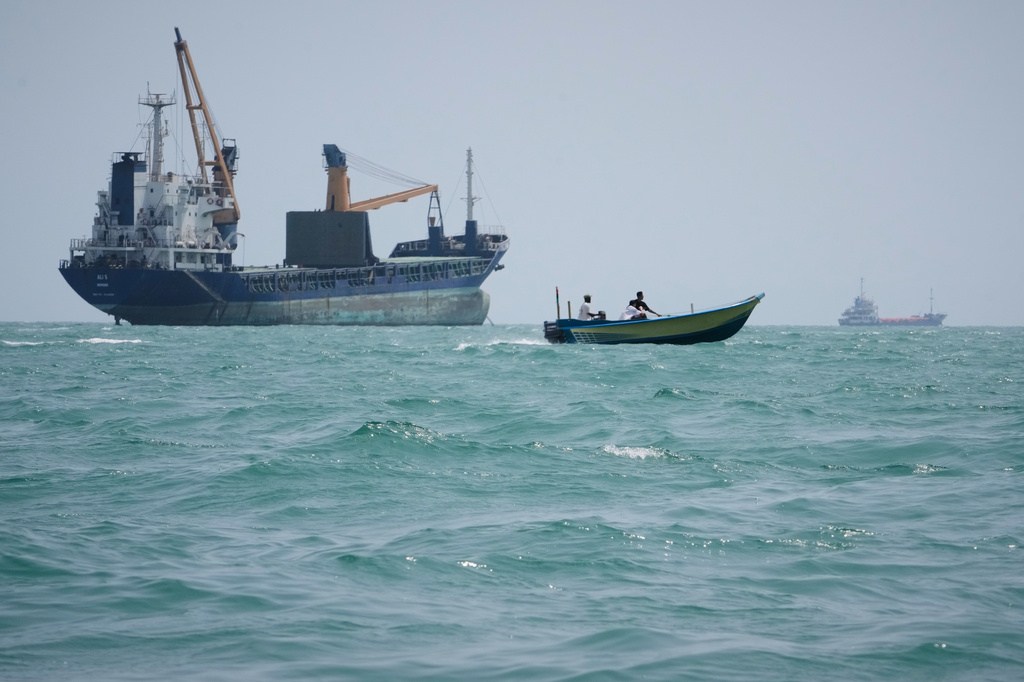
Yet the agreement collapsed after Iranian forces attacked three commercial vessels in the Strait of Hormuz in July, triggering renewed American military action.
Why would powerful elements within Tehran’s establishment jeopardize such an opportunity?
A deal that hard-liners wanted to destroy
A Sept. 13 New York Times investigation, based on interviews with Iranian officials and Revolutionary Guard members, provided an extraordinary account of the agreement’s collapse.
According to the investigation, officials traced the decision to attack the three vessels to Hossein Taeb, an influential former intelligence chief who had opposed the agreement. Taeb was subsequently appointed to lead the Basij, the paramilitary organization central to suppressing domestic dissent.
President Masoud Pezeshkian reportedly reacted furiously to the attacks, while senior officials clashed over responsibility for sabotaging the diplomatic process.
The Iranian government has maintained that American violations justified renewed military action. But the Times investigation described an internal struggle in which hard-liners seeking confrontation prevailed over officials favoring a negotiated settlement.
On Oct. 14, this disagreement erupted into public view when it was aired on Iranian state television.
Gholamhossein Karbaschi, Tehran’s former mayor, challenged claims that Iran could defeat the U.S. He argued that the country had suffered incomparably greater losses and needed to recognize the consequences of continued war.
When the presenter invoked the prospect of swallowing a “poisoned chalice,” Karbaschi did not dismiss the comparison.
The expression recalls Ayatollah Ruhollah Khomeini’s acceptance of a ceasefire with Iraq in 1988. After years of insisting on continuing that war, Khomeini compared the decision to drinking poison.
Yet the same Khomeini had earlier described war as a divine blessing.
That apparent contradiction reveals something essential about the Islamic Republic.
Why war became a blessing for the rulers
For ordinary Iranians, the eight-year war with Iraq brought death, destruction, and economic hardship. For the revolutionary leadership, however, wartime mobilization also provided the conditions to consolidate power, suppress organized opposition, and subordinate society’s demands to national-security priorities.
War was not simply an emergency. It became a political mechanism through which the ruling establishment could preserve itself.
Over the following decades, confrontation with external enemies remained a recurring feature of the Islamic Republic’s political and regional strategy.
The current conflict has once again demonstrated the connection between foreign confrontation and domestic repression.
Amnesty International reported on May 28 that Iranian authorities had used wartime conditions to intensify repression, including more than 6,000 arbitrary arrests, accelerated prosecutions, and politically motivated executions.
On Oct. 13, Amnesty reported five additional executions connected to January’s nationwide protests. At least 34 people had been executed in cases related to that uprising, according to the organization.
These executions do more than punish individuals. They also serve to intimidate a population whose anger has not disappeared since security forces killed thousands during the January crackdown.
Meanwhile, threats to shipping in the Strait of Hormuz force the international community to focus on energy supplies, maritime security, and negotiations.
The regime becomes an indispensable participant in resolving the external crisis, while the unresolved confrontation between the authorities and Iranian society receives less immediate international attention.
For the Revolutionary Guard and Basij, this wartime environment serves a direct political function: it strengthens the security framework through which they seek to prevent another uprising.
The regime faces two dangers — but peace strikes at its survival
The Islamic Republic now confronts a dilemma that cannot be understood through ordinary calculations of military or economic advantage.
Its first option is to continue the war
Confrontation allows the security establishment to preserve emergency conditions, justify repression as national defense, and use executions and mass arrests to discourage organized resistance.
But continuing war also means deepening economic devastation. Military losses, declining revenues, and the blockade steadily consume the resources required to maintain the state and finance its security apparatus.
A government that depends on the Revolutionary Guard and Basij to suppress dissent cannot indefinitely disregard the cost of sustaining those forces.
Its second option is to accept peace
This is potentially the more dangerous choice for the ruling system itself.
The forces that produced January’s uprising remain. Economic collapse, unemployment, the erosion of purchasing power, and the anger of families whose relatives were killed or imprisoned have not disappeared.
Peace would remove the wartime shield behind which the authorities have intensified their control.
The regime would confront a society bearing the wounds of January’s massacres, continuing executions and deepening poverty. The very institutions that used national-security emergencies to contain dissent would face the prospect of another nationwide confrontation.
Unlike military losses, which can sometimes be absorbed or managed, a renewed popular uprising challenges the political existence of the regime itself.
This helps explain why an agreement offering substantial economic concessions could still encounter determined opposition within the security establishment. Peace may relieve the country’s suffering while simultaneously exposing the rulers to a danger that war has helped postpone.
The death of Ali Khamenei has made this dilemma still more difficult. In 1988, Khomeini possessed the authority to force competing factions to accept his poisoned chalice. Today, no comparable unifying authority has been demonstrated.
The leadership faces two threats to its survival: war can exhaust the resources needed for repression, while peace can remove the conditions that have helped sustain it.
The crisis Washington must recognize
Washington has every reason to seek an end to hostilities and restore navigation through the Strait of Hormuz.
But the Islamabad agreement illustrates why economic incentives alone may not produce lasting peace with Tehran.
For parts of the Iranian security establishment, the calculations concern more than sanctions, missiles, or nuclear concessions. They concern preserving a political order facing profound hostility from its own people.
That does not eliminate the importance of military and diplomatic disputes. It means their persistence cannot be fully understood without examining the domestic interests confrontation serves.
WHAT POPE LEO AND THE NOBEL COMMITTEE BOTH FORGOT
The Islamic Republic can threaten international shipping and force governments to negotiate over Hormuz. What it cannot do is resolve its fundamental conflict with Iranian society through another external crisis.
For Iran’s people, peace offers relief from devastation. For the regime’s security apparatus, it risks exposing the struggle for political survival that war has helped conceal. That is why peace can cost Tehran’s rulers far more than war.
Hamid Enayat is an Iranian political analyst based in Paris.
Continue reading...
[ H/T Washington Examiner ]