




While international news cameras and cable networks focus on the explosive headlines of the U.S.-Iran war, a quieter, more calculating operation is unfolding behind closed doors. Legacy media coverage primarily tracks overt hard power. It frames the conflict around immediate kinetic strikes, domestic election impacts, or public posturing surrounding the secretive U.S.-Iran memorandum of understanding.
By focusing almost entirely on the sensational aspects of escalation, the broader press misses the structural architecture of the conflict’s diplomacy. A prime example is the geographic expansion of the war when an Iranian drone struck an LNG vessel at the Egyptian port of Damietta. As noted in local and intelligence alerts compiled via Ambrey Maritime Security Company on Instagram, this marked a significant flashpoint on Egyptian soil. Beneath the surface, Egypt has emerged as Washington’s primary intelligence and back-channel partner. Cairo is working tirelessly to engineer an exit strategy from a war that threatens to swallow the region.
Characterizing Cairo as an objective, altruistic peacemaker misses the mark entirely. Egypt’s behind-the-scenes maneuvering isn’t a detached diplomatic service. It’s a cutthroat, highly calculated act of national risk management. The strategy is driven by economic desperation and a high-stakes energy crisis involving Lebanon, Syria, and U.S. sanctions.
The true depth of the relationship between Cairo and Washington came to light during high-level, closed-door intelligence meetings. Egyptian President Abdel Fattah el Sisi and the head of Egypt’s General Intelligence Service hosted the CIA director in Cairo. Standard media reporting frequently sidelines these meetings or aggregates them into general updates. However, intelligence sources confirm that the dominant priority was the construction of a U.S.-Iran diplomatic bridgehead. Egypt is leveraging its rare posture as a country that maintains a functioning strategic relationship with the West while preserving open communication channels with Iranian President Masoud Pezeshkian.
During these intelligence summits, Egypt acted as a secure courier. It transmits Western red lines directly to Tehran while translating Iranian demands for the White House. For Washington, Cairo offers a secure, deniable baseline to test the waters of a 60-day regional peace test. It allows negotiations without making the United States look like it’s capitulating to regional pressure.
Nowhere is Egypt’s hyper-transactional balancing act clearer than in the complex, highly sensitive Lebanon gas crisis. The legacy media routinely overlook how Lebanon has become a primary economic battleground between Washington and Tehran, leaving Cairo caught directly in the crossfire. Iran-backed Hezbollah attempted to resolve Lebanon’s catastrophic electricity blackouts by importing sanctioned Iranian fuel. Washington responded by backing a counterproposal. The plan involves piping Egyptian natural gas to Lebanon through Jordan and Syria via the Arab Gas Pipeline. For Cairo, this was a massive geopolitical opportunity to anchor itself as an Eastern Mediterranean energy hub. To facilitate the project, Cairo even contracted an Egyptian venture to repair Lebanon’s fractured distribution network.
This energy lifeline relies on a delicate political contradiction. The gas must pass through Syria, which is a state under severe U.S. financial isolation. Consequently, Egypt has had to continually press Washington for ironclad exemptions from the U.S. Caesar Act sanctions. These waivers allow Egypt to receive payments without crippling its own financial system.
This fragile pipeline network faced another complication as Syria aggressively pushed forward on its own segment. According to recent infrastructure briefs published by AzerNews, regional contractors completed a vital 186-kilometer extension of the 36-inch pipeline running toward the Turkish border. Syria’s push to position itself as a regional transit hub forces Egypt into an even tighter dependency on American diplomatic cover. Without explicit U.S. permission, Egypt can’t route its energy assets through Damascus without triggering devastating international penalties. When the U.S. abruptly revoked temporary sanctions waivers on Iranian oil following proxy attacks on Gulf shipping, it threw the region’s energy diplomacy into chaos. Egypt’s cooperation with the U.S. is heavily conditional on these dynamics. Cairo expects Washington to clear its regulatory hurdles in Lebanon and Syria. In exchange, Egypt keeps the diplomatic back-channels to Tehran open.
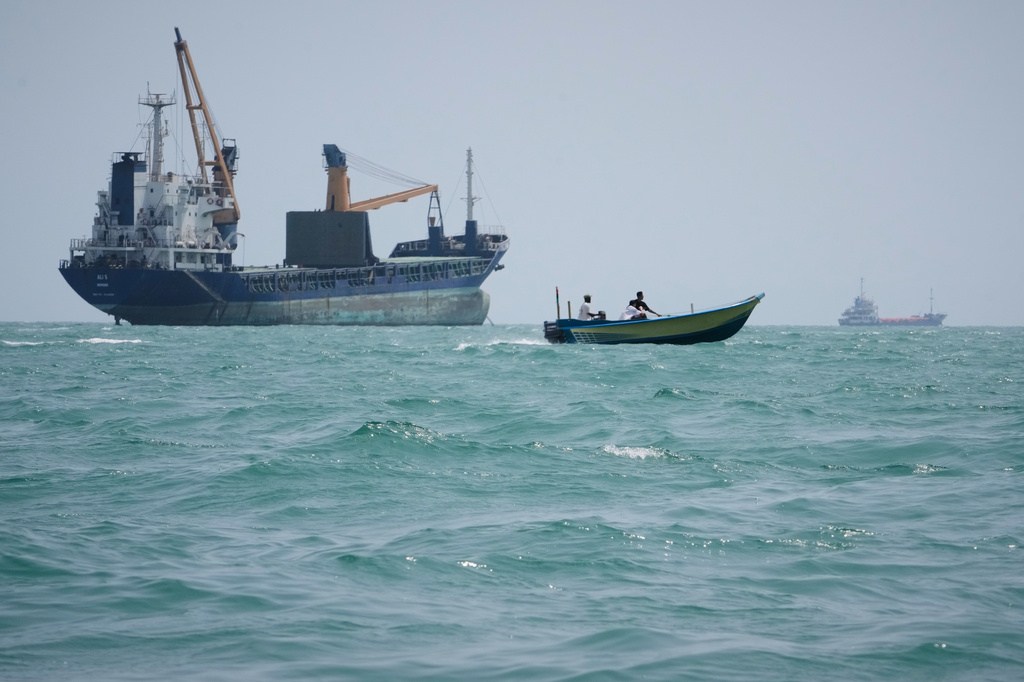
Egypt’s willingness to serve as the primary quiet partner to the U.S. is ultimately driven by intense domestic economic pressure. This structural reality rarely makes the nightly news broadcast. The conflict has triggered a severe financial crisis for Cairo due to continuous Houthi drone and missile strikes in the Red Sea and the Bab el Mandeb Strait.
The consequences are devastating for Cairo. Suez Canal transit fees are traditionally Egypt’s main generator of hard currency. As tracked in regional economic analyses by the Minute Mirror, shipping diversions around Africa have cost the canal roughly $11 billion in lost revenue. While recent quarterly data published by Arab News shows a modest 23% performance rebound as certain vessels return, Egypt remains on a razor’s edge. Deprived of its predictable baseline of foreign reserves, Cairo is navigating high inflation and relying heavily on IMF structural lifelines to prevent total financial collapse.
IRAN WOULD RATHER STARVE THAN ACKNOWLEDGE ISRAEL. MARCO RUBIO MUST CALL ITS BLUFF
Helping the U.S. secure a comprehensive maritime pact and nuclear framework isn’t an ideological choice for Egypt. It’s an economic imperative. Cairo must restore long-term traffic stability to the Suez Canal to keep its own economy from defaulting.
The reality of Egyptian foreign policy is far more complex than the zero-sum lens often applied by political media outlets. Reports focused on the immediate optics of military maneuvers or the public posturing of congressional funding lines often overlook gray-zone diplomacy. This quiet maneuvering is what prevents regional escalation from devolving into a total collapse of international shipping lanes. Egypt’s Foreign Ministry continues to warn that a complete failure of negotiations will result in “total chaos” across the Middle East. Because of this reality, its covert alliance with Washington remains indispensable. While the legacy press look for the next explosion, Egypt’s cold, self-interested calculations behind closed doors are keeping the region from completely fracturing.
Eric Wargotz, M.D., is a practicing physician, geopolitical analyst, and multi-sector policy writer whose commentary has appeared in the Washington Examiner, the Baltimore Sun, and the Jerusalem Post. He currently serves as a judge and the 178th President of MedChi, the Maryland State Medical Society, following a career that includes serving as a U.S. Senate nominee and elected county commission president. A Clinical Professor Emeritus at The George Washington University, his views are his own and do not represent his affiliates.
Continue reading...
[ H/T Washington Examiner ]