






The Kaiser Health Tracking Poll has been a valuable addition to polling on healthcare in recent election cycles. That includes coverage of abortion.
In its latest poll, the KFF team, like other major pollsters, asked voters to choose top issues from a list provided by the pollster. It won’t surprise anyone that the cost of living was the top issue in the poll, cited by 90% as extremely or very important. Healthcare costs followed at 82%. Abortion was in last place with 49% describing it as extremely or very important.
Other organizations provide similar pictures. The cost of living, corruption and fraud, and the war in Iran loom larger for voters.
Kaiser noted that Democrats lead Republicans by a substantial margin, 44% to 22%, as the party they trust to do a better job handling healthcare costs. Going back decades, Democrats almost always have the lead in handling healthcare policy. In the poll, Democrats had a similar lead in trust on handling abortion policy, 42% to 27%.
In addition to Kaiser, other major survey organizations track abortion attitudes regularly. Gallup confirms that the shifts in attitudes the organization recorded right after a draft of the Dobbs v. Jackson Women’s Health Organization ruling was leaked in June 2022 have “held steady.” In Gallup’s latest poll, 48% of Americans would prefer abortion be legal in all (33%) or most (15%) circumstances, while 48% prefer it to be illegal (17%) or legal in only a few circumstances (32%). This split is similar to the close division of views on legality we’ve seen since 2022, but it contrasts, as Gallup says, “with the quarter century before, when majorities of Americans consistently favored having abortion be legal in only a few circumstances or not at all.”
In Gallup’s latest poll, 53% describe themselves as pro-choice, and 42% pro-life.
This fall, the action on the issue is at the state level. Ballotpedia is an invaluable resource that tracks ballot measures. The organization looks at whether they have gained enough signatures to appear on the ballot and so forth. In 2026, the organization reports “164 measures have qualified for the ballot in the 2026 elections.” Voters will decide 145 (88%) of them on Election Day. Using data from 2010 to 2024, Ballotpedia reports the average number of statewide ballot measures in an even-numbered year was 161. The most common topics of 2026 are constitutional rights (13), bond issues (12), and public education governance (11).
This is not a record year for abortion measures. Still, four states — Idaho, Missouri, Nevada and Virginia — will decide abortion questions. Three measures would provide for a state right to an abortion. Two are constitutional amendments. One, in Idaho, is a citizen-initiated statute. Voters in Missouri are being asked to repeal the constitutional right to abortion that voters there approved in 2024.
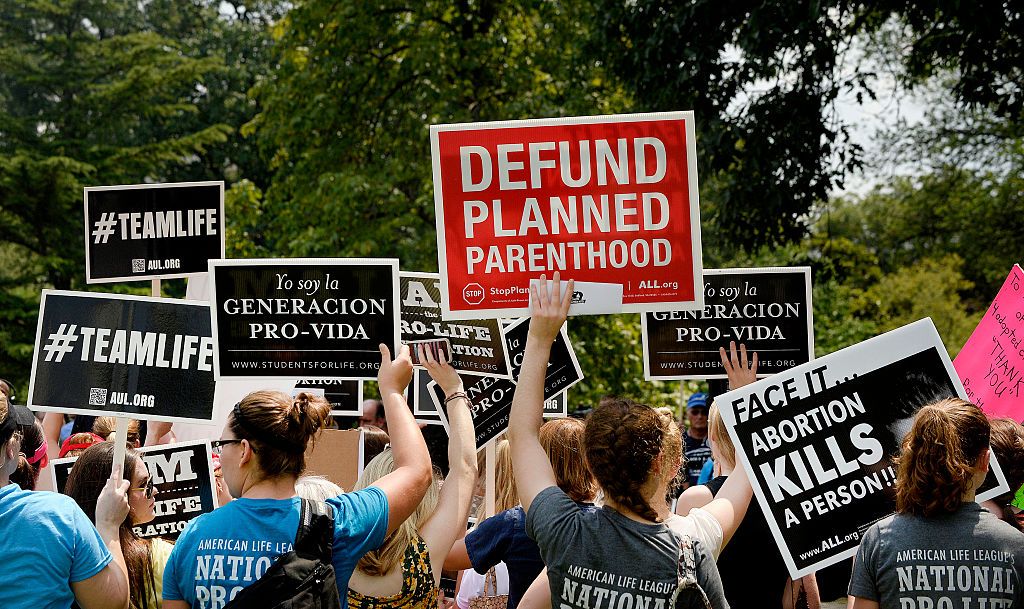
Anti-abortion activists hold a rally opposing federal funding for Planned Parenthood in front of the U.S. Capitol on July 28, 2015 in Washington, DC. Sen. Rand Paul (R-KY) announced a Senate deal to vote on legislation to defund Planned Parenthood before the Senate goes into recess in August. (Photo by Olivier Douliery/Getty Images)
" data-large-file="https://www.washingtonexaminer.com/wp-content/uploads/2026/06/GettyImages-482208094.jpg?w=1024" src="https://www.washingtonexaminer.com/wp-content/uploads/2026/06/GettyImages-482208094.jpg?w=1024" alt="Anti-abortion activists hold a rally opposing federal funding for Planned Parenthood in front of the U.S. Capitol on July 28, 2015 in Washington, DC. Sen. Rand Paul (R-KY) announced a Senate deal to vote on legislation to defund Planned Parenthood before the Senate goes into recess in August. (Photo by Olivier Douliery/Getty Images)" class="wp-image-4630965" srcset="https://www.washingtonexaminer.com/wp-content/uploads/2026/06/GettyImages-482208094.jpg 1024w, https://www.washingtonexaminer.com/...6/06/GettyImages-482208094.jpg?resize=300,178 300w, https://www.washingtonexaminer.com/...6/06/GettyImages-482208094.jpg?resize=768,457 768w" sizes="(max-width: 1024px) 100vw, 1024px">
Anti-abortion activists hold a rally opposing federal funding for Planned Parenthood in front of the U.S. Capitol on July 28, 2015, in Washington, D.C. Sen. Rand Paul (R-KY) announced a Senate deal to vote on legislation to defund Planned Parenthood before the Senate goes into recess in August. (Photo by Olivier Douliery/Getty Images)
There are still court cases pending on many aspects of the abortion debate, with some possibly reaching the Supreme Court in its new term. States have different political personalities on abortion, as data from the Public Religion Research Institute and Pew Research show. Voters in Alabama are more conservative on abortion than voters in Massachusetts and other states in the Northeast.
DEBATE DISPUTES TAKE CENTER STAGE IN HIGH-STAKES TEXAS MIDTERM RACES
Since the Supreme Court returned abortion to the states, the abortion issue has been transformed politically. National spokespeople for pro-choice and pro-life factions will continue to do battle, but the action is now in the states. Neither activist group is happy about this state of affairs. But for better or worse, this is federalism at work. If there are a number of states on Nov. 4 where one party controls the governorship and both houses of the legislature, we could expect more state-level activity.
Could the issue come roaring back at the national level in the presidential contest? The 2028 election is a long way off, and it is possible abortion will get more traction in a national contest. But right now, it’s all about the states.
Continue reading...
[ H/T Washington Examiner ]