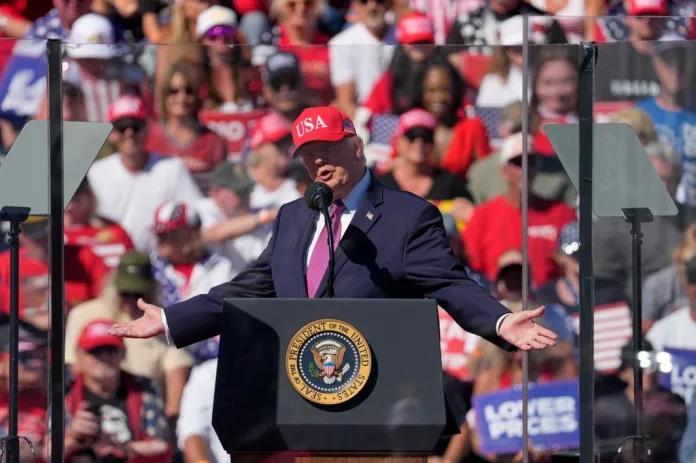



The economy has been the No. 1 concern for voters heading into the midterm elections. After November, economists expect inflation to remain high for the medium term, the jobs market to show continued resilience, stocks to rise, and homebuying to stay expensive.
Inflation, the labor market, Wall Street, and the housing market have all been under a microscope — here is what some forecasts and experts predict the state of the economy will be like over the next year and into the next Congress.
Inflation
The elephant in the room when it comes to the economy is inflation. Years of historically high inflation have buffeted households, destroyed former President Joe Biden’s economic approval ratings, and have now caused President Donald Trump’s to fall into the red.
HERE’S HOW MUCH PRICES FOR GROCERIES, GAS, UTILITIES, AND SHELTER ARE UP UNDER TRUMP
Inflation rose three-tenths of a percentage point to 3.7% for the year ending in September, the Bureau of Labor Statistics reported in an update to the consumer price index this week in the last such report before the 2026 elections.
Much of the recent inflation stems from the war with Iran, which began in late February and caused oil prices to spike. The price of gas rose 9.1% just in September. Overall energy prices were up more than 20% on the year.
But the overall wave of inflation formed in early 2021 under Biden. Since then, the overall price level has risen by over 26%, leaving many households struggling to maintain their standard of living.
The Federal Reserve considers 2% inflation to be healthy, and the bad news is that most economists don’t expect it to come back down to that rate in the next year or so.
The Washington Examiner spoke with Yelena Maleyev, chairwoman of the National Association for Business Economics outlook survey committee and a senior economist at KPMG. Maleyev said there was “a lot of alignment” among the 43 economists and forecasters who were most recently surveyed that inflation would still be above 2% by the end of the year, at about 2.3%.
Richard Stern, an economist at the free-market think tank Advancing American Freedom, said one of the proximate reasons for the most recent surge of inflation this year has been the energy price increases from the war with Iran.
“But then there are tariffs — and it’s not just the tariff burdens, but it’s also the tariff uncertainties,” he told the Washington Examiner. “So both of those are working to raise prices, to hold back investment, the things that would grow us into having more supply, more abundance, and therefore lower prices.”
And, Stern said, there is also the “gorilla in the corner of the room,” the federal deficit, which, at $2 trillion for fiscal 2026, is high for a nation at peace and not in a recession. As the deficit continues to worsen, it might put upward pressure on prices as well as interest rates, which have spiked in recent weeks.
Jobs market
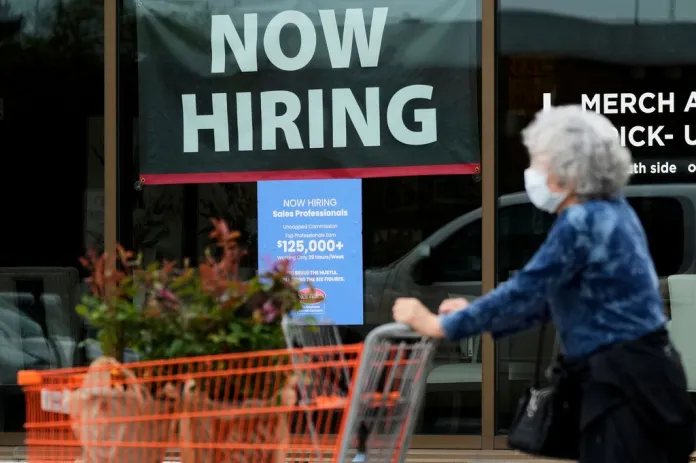
One feather in Trump’s cap throughout his second term is that the labor market never went belly-up and has remained relatively strong by historical standards — although there has been some gradual weakening.
The economy added just 29,000 new payroll jobs in September, BLS recently reported. Forecasters had expected payroll job growth to be 89,000. The employment reports for both July and August were also revised down, and a combined 60,000 lower than previously reported.
The unemployment rate has remained low at 4.2% and is down from a recent high of 4.5% in November of last year.
The majority of NABE panelists expect that average payroll growth this year will be about 71,000, and for 2027, the economists expect growth to be about 57,000, so slightly slower growth, but still positive.
“Expectations for the unemployment rate have actually been revised lower,” Maleyev said.
But notably, workers’ hourly earnings, as measured by BLS, have not kept up with inflation over the past year, adding to economic malaise.
“I think the trend lines right now are still with inflation growing faster than wages, particularly given the fact that we don’t see employment changing that much,” G. William Hoagland, senior vice president at the Bipartisan Policy Center, told the Washington Examiner. “Meaning that, from my perspective … employers are not hiring, they’re not firing, they’re holding steady.”
Stock market
The stock market has, broadly speaking, performed well since the start of the year. Some economists point to investment associated with the artificial intelligence boom as buoying equities.
The benchmark S&P 500 has risen more than 12.5% in 2026 alone and even more over the past calendar year. Meanwhile, the tech-heavy Nasdaq has grown by nearly 15% since the start of the year and has posted 18.5% year-over-year returns for investors.
But the question of whether this wave of stock market growth will continue depends on who you ask.
Stern compared AI to railroads in the 19th century, saying the technology will create a productivity boom that won’t just affect the stock market, but all walks of life. Stern also expects the gains may continue despite negatives like the government’s poor fiscal health. The federal government recently crossed $40 trillion in national debt.
“I think the stock market is looking past the government’s deficit pressures, the tariffs and their uncertainty, and the war,” he said. “I think the stock market is looking at this amazing transformative innovation we’ve just had, and is looking towards decades of higher growth coming out of this.”
Housing market
The housing market is tricky. Affordability has been undermined by price increases and higher mortgage rates.
Shelter costs have risen over 30% since early 2021.
And, as of Wednesday, the average rate on a 30-year fixed-rate mortgage has risen to 7.45%, according to Mortgage News Daily. Rates were below 3% in 2021.
Mike Fratantoni, chief economist at the Mortgage Bankers Association, told the Washington Examiner that the rise in mortgage rates is attributable to a series of factors, including higher inflation stemming from the war with Iran.
That increase in inflation has led the Fed to raise its interest rate target, he noted, which influences interest rates across the economy.
“And then you have the real challenge, which is on the fiscal side, that U.S. deficits and debt are extraordinarily high, and that is true around the world,” Fratantoni added.
And most experts don’t think there will be much relief for homebuyers in the next year or so, absent some big changes, such as the war in Iran ending or oil prices dramatically falling. Still, they might not move too much higher in the coming weeks.
SPIKE IN MORTGAGE RATES COMPOUNDS INFLATION AND DEBT WOES
“The mortgage rates could be very close to top of this cycle,” Lawrence Yun, chief economist at the National Association of Realtors, recently told the Washington Examiner.
Fratantoni said his group’s forecast is that mortgage rates might fall a bit, but that indications are they probably won’t drop much below 7% for the full year of 2027.
Continue reading...
[ H/T Washington Examiner ]