America is synonymous with a peculiar list of cultural exports: Coca-Cola, Bruce Springsteen, peanut butter on everything, monster trucks, prescription drug commercials with terrifying side effects, and, of course, tipping.
I remember the first time I visited the United States, some 16 years ago, shortly after finishing high school. Coming from a country where leaving a few spare coins on the table was considered high praise, the whole business felt like navigating a Vietnamese minefield.
The actual employers are nowhere in sight while customers and workers fight over spare change like gladiators in an arena made of iPad swivel stands.
I was genuinely shocked to discover that tipping wasn’t an optional nod to genuinely exceptional service. No, like breathing and blinking, it was mandatory.
Tapped out
For my first few weeks in your great nation, I harbored a genuine fear that the FBI would burst through my door and drag me away to a federal penitentiary unless I gave a generous 20% to every human who handed me a donut.
Many visitors find this arrangement odd, even tyrannical. Back home, if someone hands you a cup of coffee, they hand you the coffee, you pay the price listed on the board, and everyone moves on with their lives. Nobody looks at you like you just insulted their lineage because you didn't pay an extra three dollars for the act of turning a paper cup around.
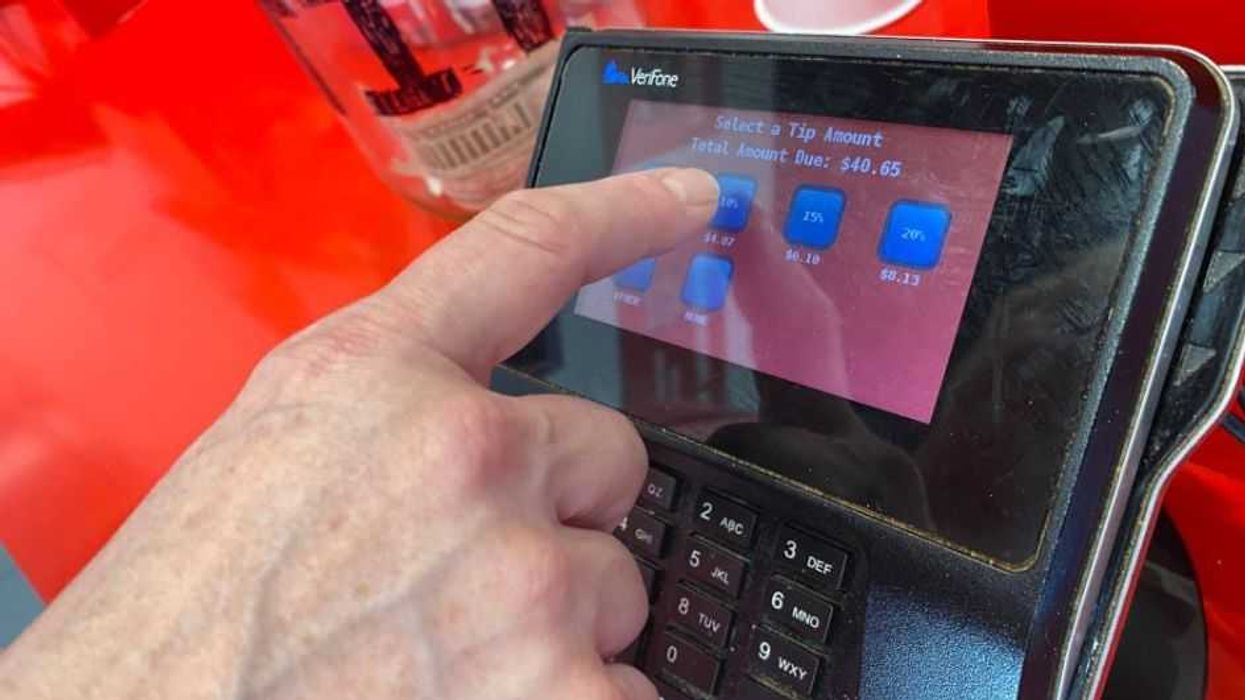
Americans themselves appear to be getting fed up. A 2026 LendingTree survey found that a quarter of consumers are tipping less as they cut restaurant spending amid higher food costs. Other polling points directly at the mechanism driving everyone insane: Two-thirds of Americans say they feel pressured to tip when a digital payment screen displaying suggested amounts is visible to the employee.
Screen-grab
That payment screen is the real villain of this decade. You used to tip a waiter at a booth or a valet who drove your car. In 2026, you face a digital tablet turned toward you at a self-service bakery, a dry cleaner, and a drive-thru window. The cashier presses a button, spins the screen around with a practiced flip of the wrist, and stares directly into both your eyes and your soul.
The screen offers four giant preset buttons: 18%, 20%, 25%, or “Custom.” Finding the “No Tip” option requires a master’s degree in user interface design and the shamelessness of a Scientologist. You stand there panicking, aware that three people in line behind you are also casting judgment. You hit 20% not because it’s necessarily the right thing to do but because it’s the quickest way to escape with some level of dignity.
America has built an economy where basic human transactions increasingly require a tax on awkwardness. The logic of the system vanished long ago. You step up to a counter, a worker reaches two inches to the left, grabs a bag of chips, hands it to you, and suddenly you are expected to subsidize the worker's salary. The actual employers are nowhere in sight while customers and workers fight over spare change like gladiators in an arena made of iPad swivel stands.
Customer servitude
The history behind this custom is darker than you might expect. Tipping migrated to the United States from Europe in the 19th century, adopted in part by wealthy Americans eager to imitate European aristocratic manners. It was not warmly received. Newspapers and labor activists denounced the practice as un-American, servile, and little better than bribery. By 1915, several states had banned it.
Employers, however, discovered an obvious advantage: Tips allowed customers to shoulder part of the payroll. The notorious Pullman Company paid its mostly black porters miserable wages while expecting passengers to make up the difference. Restaurants likewise came to rely heavily on gratuities. The anti-tipping laws didn't last; by the 1920s, they had been repealed or struck down.
A version of that arrangement survives in federal law today. In states that allow the full federal tip credit, an employer can pay a tipped worker as little as $2.13 an hour in direct wages, provided wages and tips together reach at least the federal minimum wage.
And now we have somehow expanded tipping beyond the occupations on which this peculiar system was built. The prompt appears whether anyone carried your bags, waited on your table, parked your car, or did much of anything beyond operating a cash register.
RELATED: America’s young are being recruited into socialism — one dance party at a time
Turning Japanese
Better alternatives exist worldwide, and they manage without subjecting every purchase to a moral referendum. Japan has essentially no everyday tipping culture; the country’s own tourism authority warns that attempting to tip can cause confusion or discomfort. Across much of Europe, gratuities tend to be smaller, less automatic, and less central to how service workers are paid.
You see a price. You pay it. Everyone survives.
Now, I know I‘m not American, so telling you how to run your country can sound offensive. That is not my intention. You have built a remarkable nation that gave us jazz, the moon landing, road trips, sitcoms, backyard barbecues, Clint Eastwood, Britney Spears with hair and without, and avocado toast.
I am simply a genuine fan and frequent visitor who would prefer to buy an espresso without being asked to subsidize the payroll or shell out a small ransom for an already overpriced blueberry muffin.
Continue reading...
[H/T Blaze Media]