

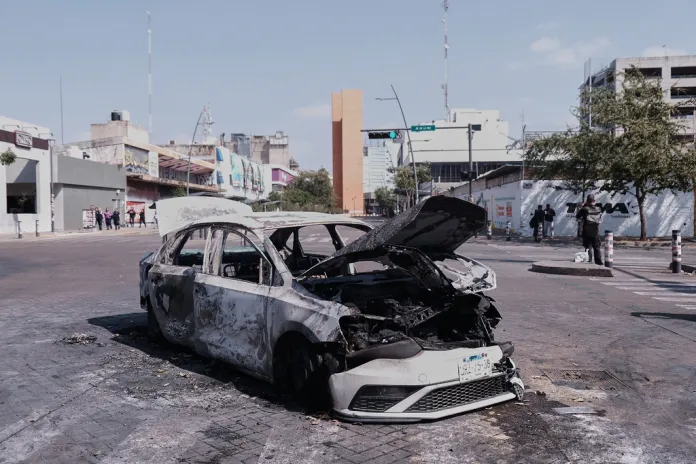
On Sept. 26, a Coast Guard crew patrolling the Rio Grande near Garceño, in Starr County, Texas, came under gunfire from the Mexican side of the river. The crew returned fire. No Americans were hurt, according to the Coast Guard, but the message was unmistakable.
A week later, U.S. Northern Command announced it was sending additional forces and equipment to the Rio Grande Valley.
Some will shrug. Cross-border gunfire in Starr County is not new. Local border reporting notes incidents in 2015, 2021, and 2025. That is exactly the problem.
When armed groups shoot across an international boundary at American personnel to protect their smuggling routes, they are no longer ordinary criminals. They are using violence to hold territory and intimidate governments.
That is the behavior of terrorists, and it is why designating the major cartels as Foreign Terrorist Organizations in February 2025 was the right call. This attack proves it. The Gulf Cartel, one of the designated groups, is reported to operate in the area and to fire toward the U.S. to intimidate federal agents.
The designation gives Washington more tools: freeze cartel assets, prosecute those who provide material support, and bar members and facilitators from entering the country. Policymakers should use every one of those tools and resist any pressure to let the designations go soft.
Cartels must be combated as the national security threat that they are, not treated simply as a law enforcement nuisance. They traffic drugs that poison Americans, smuggle illegal aliens across our borders, and fire on uniformed U.S. personnel.
To its credit, Mexico has done more in the last two years than in the decade before. Mexico has transferred 92 alleged cartel figures to U.S. custody, deployed 10,000 Mexican National Guard troops to the border, and in February, with U.S. coordination, took down Jalisco cartel leader “El Mencho.” It has allowed 139 soldiers from the 101st Airborne to train in Chihuahua and expanded joint anti-drone operations along the Texas border.
That progress is real, and it came because Washington pressed. But the hardest cases remain untouched. After the U.S. indicted Sinaloa Governor Ruben Rocha Moya and nine other officials in April for allegedly aiding the Sinaloa Cartel, Mexico has shielded senior political figures rather than pursuing them.
At a morning press conference, President Claudia Sheinbaum said there is no evidence that cartel gunmen fired on U.S. personnel. She said Mexican soldiers and marines searched the area and found nothing. It is the same defense she offered for the indicted Sinaloa governor. She did order a “mirror operation,” with Mexican forces patrolling their side of the river while U.S. troops secure ours, and that is welcome. But a serious partner would investigate this attack on American personnel rather than dismiss it.
Sheinbaum argues that American drug demand and American guns share the blame. American demand and guns do not excuse Mexico’s failure to control its own territory. A government that will not arrest politicians on the cartel payroll is not yet serious about dismantling the cartels.
Now is the moment to push harder, because the United States has more leverage than it has had in a generation. Mexico sends roughly 80% of its exports to the U.S. On July 1, Washington declined to renew USMCA in its current form, triggering annual reviews. Bilateral talks continue, with U.S. Trade Representative Jamieson Greer aiming for interim agreements by year’s end.
Negotiators are already haggling over autos, steel, and supply chains. Security belongs on that same table.
Any trade deal with Mexico should come with verifiable security commitments: dismantle cartel operations, hand over indicted figures, including politicians, go after cartel money, and help secure our shared border. These commitments need timelines and consequences if Mexico falls short.
This is not about punishing Mexico. Mexicans suffer most from cartel violence, and a Mexico that controls its own territory is a stronger partner and a better neighbor.
COAST GUARD EXPLORING FAST RESPONSE CUTTERS
The shots fired on the Rio Grande did not kill anyone. Next time, we may not be so lucky. Texans who live and work along the river should not have to treat gunfire from across the border as background noise, and the men and women guarding it should not have to accept it as part of the job.
Washington has the terrorist designation, it has the trade leverage, and it has the moment. It should use all three.
Selene Rodriguez is the campaign director for the Secure and Sovereign Nation campaign at the Texas Public Policy Foundation. In this role, she conducts research on public policy issues, assists the foundation in academic publication, educates lawmakers and members of the public on foundation research, and provides formal testimony to local, state, and federal entities. Prior to this position, Rodriguez served in the Marine Corps as an intelligence specialist and completed an internship at the Texas Public Policy Foundation. Born and raised in Del Rio, Texas, Rodriguez graduated from Texas State University with a bachelor’s and master’s in political science.
Continue reading...
[ H/T Washington Examiner ]