






Every September, Washington holds a fire sale on your money. Agencies with cash left rush to sign contracts and cut grant checks before Sept. 30, because they fear leftover funds will invite future budget cuts. Think Black Friday with a federal seal.
That rush costs real money. A study in the American Economic Review found spending in the last week of the fiscal year runs 4.9 times higher than the weekly average for the rest of the year, and year-end information technology projects earned substantially lower quality ratings. A Mercatus Center analysis found 16.9% of executive branch contract spending from 2003 to 2013 landed in September, double the 8.3% an even pace would produce. In my world of family wealth, unspent capital is called dry powder, and nobody apologizes for holding it. In Washington, it’s called a budget cut.
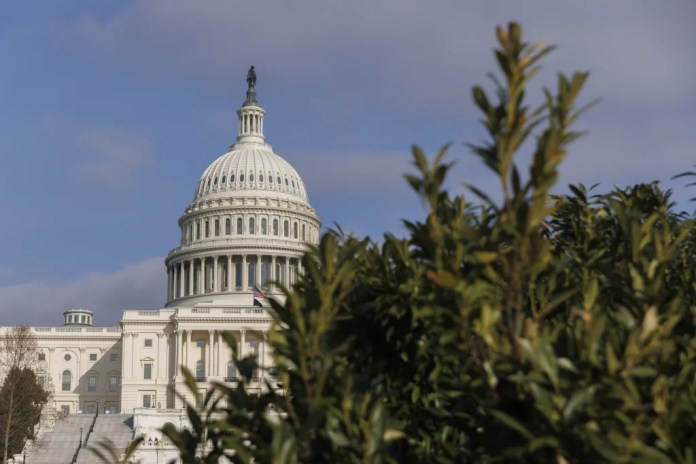
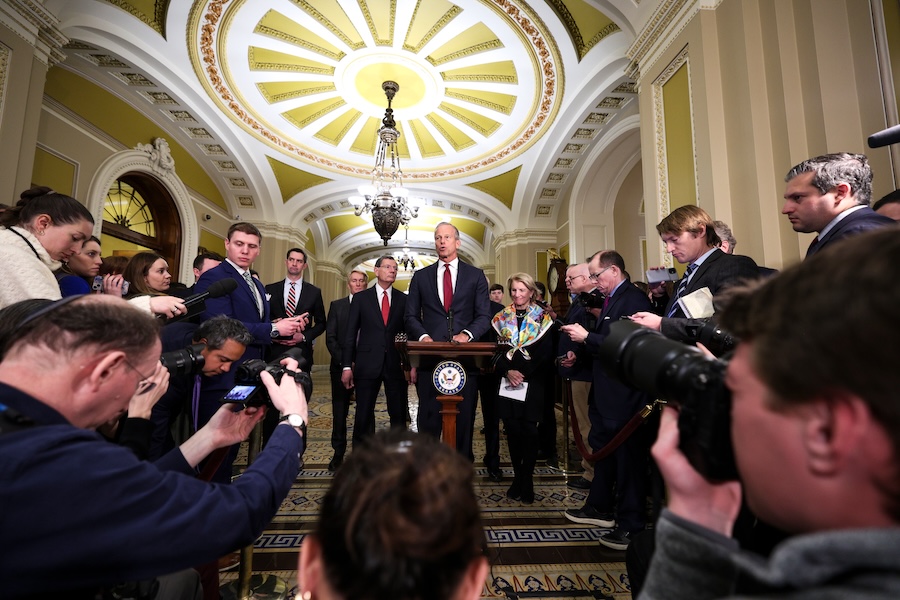
The same calendar cliff now has a second use. On Sept. 25, the White House sent House Speaker Mike Johnson (R-LA) a letter reporting 11 rescissions totaling $810 million, a “pocket rescission” that includes $567 million from the Office of Refugee Resettlement at the Department of Health and Human Services. The budget office’s message was blunt: “Wasteful funding? Rescinded.” The maneuver asks Congress to cancel money it already appropriated, but times the request so the funds expire Sept. 30, before lawmakers can vote. Sen. Susan Collins, the Maine Republican who chairs the appropriations committee, called it a “clear violation of the law.”
I like the goal. As a taxpayer and a father of three sons, two still in college, I’d cheer any administration that shrinks federal spending. My objection is the method. Savings should come from votes on the record, because only those survive the next administration.
The Impoundment Control Act of 1974 lets a president ask Congress to cancel spending and withhold the money for 45 days of continuous session while lawmakers decide. If Congress doesn’t act by then, the money must be released. The Government Accountability Office concluded in 2018 that “the ICA does not permit the withholding of funds through their expiration date.” Office of Budget and Management Director Russ Vought’s textual argument is that Section 1012, which governs rescissions, sets no timing limit, unlike the section on deferrals. Last September, in a 6-3 emergency order, the Supreme Court let a similar effort covering roughly $4 billion in foreign aid proceed, while saying that the order was not “a final determination on the merits.”
Conservatives should care about the gap. The Constitution says that no money leaves the Treasury except through appropriations made by law. In Train v. City of New York, the court told Richard Nixon he couldn’t shrink water-pollution grants below what Congress authorized. Imagine a Democratic White House using the same timing trick on border enforcement or defense funds. Presidents love a precedent until the other party inherits it.
The White House says some of these programs encouraged illegal immigration and wasted money, and that critique deserves a hearing. It shouldn’t get one only after the money expires. Collins says the budget office held these funds for months. A request sent in the spring would have carried its full 45 days and forced every lawmaker to vote on the record, including the ones who fund programs they’d never defend at a town hall.
OPINION: CONGRESS IS ABOUT TO DESTROY DECADES OF BRAIN INJURY RESEARCH IN ONE VOTE
Fix the incentive, and the shortcut loses its appeal. Send rescission requests early so the 45 days can run, and Congress must answer. Let agencies carry over a small share of unspent money; a Mercatus Center proposal would allow up to 5% of contract authority to roll over on a two-year clock. Require midyear budget reviews to be sent to Congress and the GAO so that waste is flagged in March instead of discovered in October. And have Congress appropriate less to begin with, because a lean appropriation leaves less to dump in September.
The Stoics counseled focusing on what lies within your control, and Epictetus built an ethic on that distinction. The power of the purse lies within Congress’s control. Voters are entitled to insist lawmakers use it: cut the waste, on the record, with names attached. Savings built on a timing gimmick last only as long as the president who used it.
Jay Rogers is a financial professional with more than 30 years of experience in private equity, private credit, hedge funds, and wealth management. He has a Bachelor of Science in criminal justice from Northeastern University and has completed postgraduate studies at UCLA, the University of Pennsylvania, and Harvard. He writes about issues in finance, constitutional law, national security, human nature, and public policy.
Continue reading...
[ H/T Washington Examiner ]