

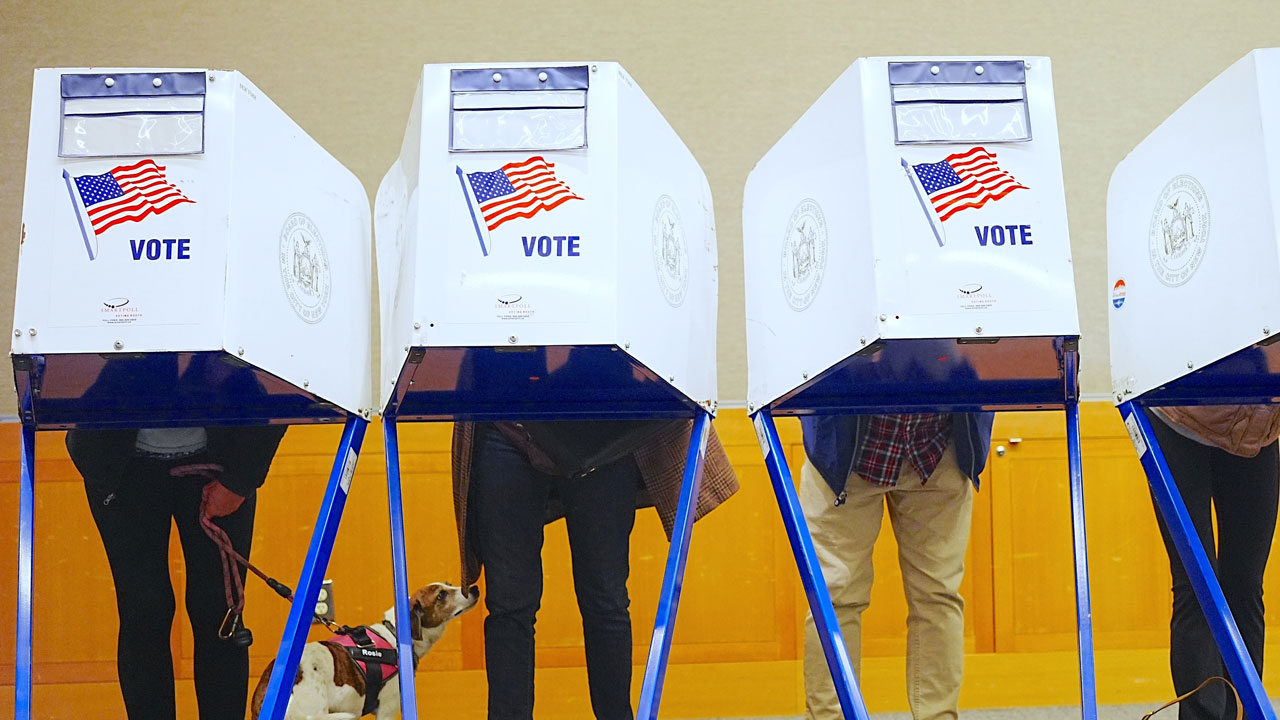
It isn’t just Congress that’s up for grabs during the midterm elections.
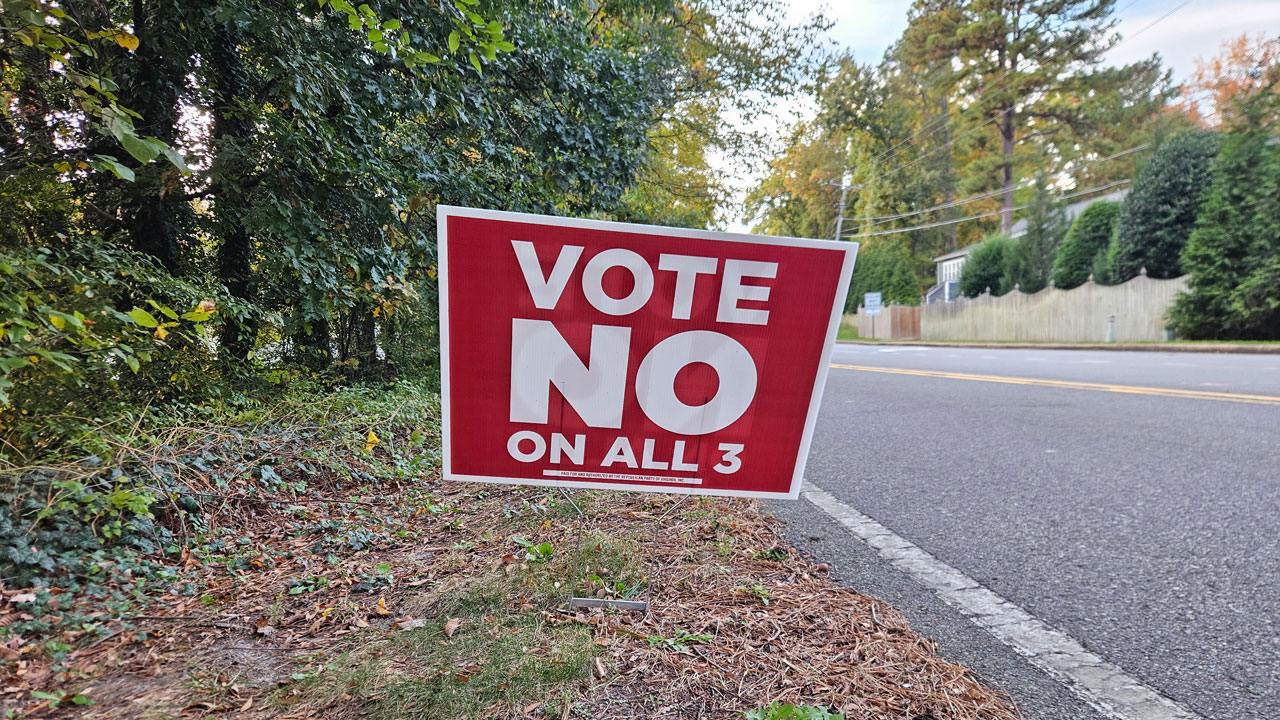
On Tuesday, voters will decide more than 140 proposed measures that could have enormous impact on contested issues such as election security, taxpayer-funded diversity trainings, voting rights for felons, and gender-transitioning procedures for children.
Voter ID and Proof of Citizenship
Election security is one of the biggest questions up for debate this election cycle.
One ballot initiative in Arizona, Proposition 144, would amend the state constitution to ban foreign funding in state elections and expand voter ID and proof of citizenship requirements.
The initiative, if passed, would “prohibit a foreign national from making contributions in an effort to influence an Arizona election, and prohibit others from knowingly accepting such contributions.”
Arizona currently has a voter ID requirement, but this law would extend that mandate to mail-in voting. Voters would have to submit a valid, government issued ID to vote though the mail in process.
California has a similar initiative on the ballot, Proposition 39.
Voting Rights for Felons
Virginia’s Question 3 aims to restore the voting rights of some felons with active sentences. The initiative, which would restore rights “upon release from incarceration,” has bipartisan support, but some have questioned the broad language of the proposed measure.
“It would be a lot more reasonable if it was for felons who served their full sentence, not just for everyone who leaves prison,” said Ken Cuccinelli, chairman of the Election Transparency Initiative at Heritage Action, in an interview with the Daily Signal.
“It has nothing to do with financial penalties or parole,” said Cuccinelli, a former Virginia attorney general.
Taxpayer-Funded DEI
Another Arizona ballot initiative seeks to defund diversity, equity, and inclusion (DEI) initiatives.
Proposition 142, if passed, will block taxpayer money from funding DEI initiatives, such as race-based admissions policies at state universities.
According to The Center Square, this proposition would also “prohibit public institutions from requiring employees to undergo mandatory DEI training, make statements supporting DEI or talk about race relations.”
Arizona already has another law on the books that ended affirmative action, but according to KTAR News it did not “apply to entities that receive federal funds.” This initiative, according to KTAR, would extend to those entities.
Transgender ‘Medicine’
Several states will also decide issues of gender hormones and surgical treatments for minors.
Colorado’s Initiative 110 would prohibit “surgery on minors for the purpose of altering biological sex characteristics as a treatment in response to the minor’s perception of sex or gender.”
“Colorado law already protects children from other, permanent and potentially lifealtering decisions, such as consuming alcohol and smoking. The same protections should apply to irreversible medical interventions related to biological sex,” the proposition states.
Some states will also decide whether biological men should be able to compete in women’s sports.
Colorado’s Proposition 109 would require school-sponsored interscholastic or intramural sports teams to be designated by biological sex, with men’s teams allowed to accept women’s athletes if no women’s team is available.
Establishing English as the Official Language
Idaho voters will consider House Joint Resolution 6, an amendment to the state constitution that would codify English as the official language of the state.
The resolution called for English to be used in “all public proceedings, public documents, public instruction, and any other public acts of any public institution of the state of Idaho.”
‘Billionaire’ Tax
Californians will also decide on Proposition 40, the so-called “billionaire’s tax,” which would, according to Ballotpedia, “levy a one-time 5% tax on the accumulated wealth of taxpayers and trusts with covered assets valued over $1 billion, including shares of capital stock, bonds or other evidences of indebtedness, and any legal or equitable interest, to fund state health care programs, food assistance programs, and public education.”
Opponents of the initiative have warned that this attempt to “tax the rich” could have negative consequences.
“What is being sold by proponents of Prop 40 as ‘the wealthy paying their fair share’ is actually a massive economic distortion that will further incentivize tax shelters, encourage unnecessarily risky investments by chasing higher rates of return, and worsen California’s ability to provide public services in the long run,” Heritage Foundation chief economist EJ Antoni and research assistant Annie Heim wrote for The Washington Times.
‘Jungle’ Primary
The so-called “jungle primary,” which allows the top two vote getters in a primary to compete in the general election regardless of party, already exists in two blue states, California and Washington. However, a third blue state may be added to that list.
Massachusetts voters will decide Question 3, which would establish “a single primary election in which all candidates would be listed on the same ballot for state elections, regardless of their political affiliation,” according to Ballotpedia.
Support for the measure doesn’t merely fall along partisan lines. Establishment Democrats and even some Republicans, like former Gov. Charlie Baker, support the initiative. But anti-establishment figures, like the far-Left Democrat Rep. Ayanna Pressley, oppose the election change.
Two Democrat State Committee members filed to stop the initiative in March, but they were unsuccessful.
Continue reading...
[ H/T The Daily Signal ]