


Summary
- The European Union’s Digital Services Act pressures online platforms to censor political expression.
- This impacts Americans, not just Europeans.
- Americans themselves must decide what they debate as they choose their leaders.
As violent protests erupt into flames across France, leveling centuries-old buildings, the French Foreign Minister Jean-Noël Barrot recently spoke out to attribute “hostile narratives” surrounding the protests to Russia, China, Iran, and the “MAGA community.” More and more, we’re seeing European elites treat American political speech as a threat to be managed.
And European officials are doing far more than just complaining about American political speech. The EU has built a formidable regulatory apparatus—the Digital Services Act—that pressures the world’s largest online platforms to censor political expression, including the speech Americans rely on to debate issues and decide whom to vote for.
That censorship regime is in force right now as Americans prepare to vote in the midterm elections.
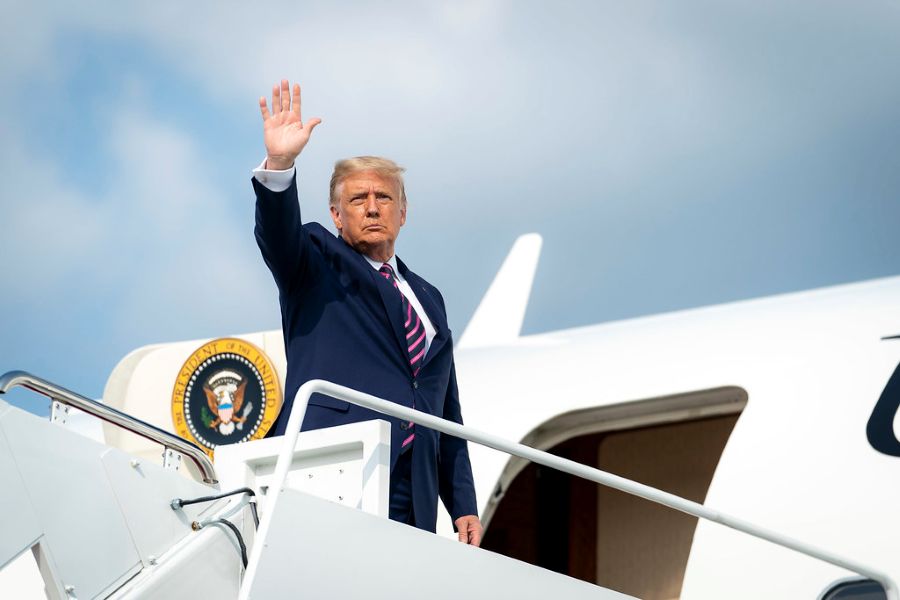
How did we get here? First, consider the political shocks of 2016. A decade ago, Donald Trump’s presidential victory and Brexit both signaled seismic transatlantic political shifts. The people were rising up to vote contrary to elite expectations. The EU censorship apparatus ramped up in response, escalating its campaign against “hate speech,” “misinformation,” and “disinformation” online.
The goal was to tightly control the online information environment to prevent unwanted outcomes. In the years that followed, the act was introduced with the clear aim of forcing the world’s largest online platforms and search engines to censor speech under threat of enormous financial penalties.
The act’s reach into political debate is explicit. Articles 34 and 35 require the world’s largest online platforms and search engines to assess and mitigate so-called “systemic risks” to “civic discourse and electoral processes.”
The European Commission’s election guidelines spell out what that means in practice. Platforms are expected to address election-related “disinformation” and “hate speech,” including by adjusting the algorithms that determine what information users see. The guidelines specifically recommend reducing the prominence of certain election-related content.
Article 37 subjects platforms’ compliance with their Digital Services Act obligations to independent audits. This is not some hypothetical future censorship regime. It is an existing regulatory system that treats political speech as a risk to be managed.
This is how unelected EU officials’ political judgments end up baked into the standards and algorithms that decide what voters see. These bureaucrats’ expansive notions of “disinformation” and “hate speech” leave conservative and religious viewpoints particularly vulnerable to suppression.
Brussels is already putting this system to work in European elections.
In Romania, the Commission opened formal Digital Services Act proceedings against TikTok over alleged failures to mitigate election-related risks. Ahead of Hungary’s 2026 elections, regulators coordinated with major platforms to address disinformation and electoral risks. And in France, regulators urged platforms to strengthen their detection and handling of supposedly problematic election-related content.
Brussels has also demonstrated its willingness to invoke this machinery against American political speech. In 2024, then-Commissioner Thierry Breton invoked the act to threaten Elon Musk and X ahead of Musk’s livestreamed interview with Trump on X. The message was loud and clear: A European bureaucrat was asserting censorship pressure over an American platform carrying an American presidential candidate’s speech to a global audience. It was at this moment that we knew just how far Brussels was willing to go.
Breton’s letter doesn’t stand alone. EU-funded initiatives intended to carry out the censorial effects of the act are already scrutinizing American political discourse, and the tools they build are already being put to work.
The European Observatory of Online Hate analyzed over 40,000 posts mentioning Zohran Mamdani during his 2025 mayoral election and classified approximately 4,600 as “toxic.” Its analysis identified terms such as “Commie” and “leftists” among frequently detected references to Mamdani’s political affiliation, characterizing some as “red-baiting.” The EOOH Dashboard is now part of the monitoring toolkit of LICRA, a French organization with Digital Services Act “trusted flagger” status, which means platforms must give priority to its notices of illegal content.
Then there’s HATEDEMICS, an EU-funded project built to detect and counter online “hate speech” and “disinformation.” Its platform labels a user’s objection to California’s AB 1955, a law governing what schools tell parents about a child’s “gender identity,” “hateful and misleading” and drafts a “counterspeech” reply. Why are California’s policies any business of theirs?
The incentives companies face to import Brussels’ online speech preferences are very real. The act authorizes fines of up to 6% of a company’s worldwide annual revenue for violations. For global technology companies, that is billions of dollars at stake. And because the largest platforms operate globally, they have strong business incentives to standardize their content policies rather than maintain entirely separate systems for European, American, and other users.
Brussels does not need to issue a direct order to suppress every objectionable post. Just the prospect of these crippling fines and the realities of operating a global business incentivize platforms to anticipate censorship demands and err on the side of speech restriction. The result is the exportation of European speech standards into the United States, as documented by the U.S. House Judiciary Committee.
The Trump administration and Congress must use every tool at their disposal to expose European censorship pressure, hold those responsible accountable, and ensure that American technology companies do not enforce Brussels’ speech restrictions on American soil.
The American people—not unelected bureaucrats in Brussels—must decide what they can say, hear, and debate as they choose their leaders. Our elections are ours to decide. Brussels needs to stay away from the American ballot box.
We publish a variety of perspectives. Nothing written here is to be construed as representing the views of the Daily Signal.
Continue reading...
[ H/T The Daily Signal ]