



After adding cases on President Donald Trump’s suspension of asylum for immigrants at the U.S.-Mexico border and the standard for securities-fraud lawsuits to the oral argument docket last Friday, the justices began this week by denying a number of notable petitions, including two DEI-related disputes. Then, on Wednesday, the Trump administration brought a familiar battle back to the Supreme Court’s interim docket, asking the court to address its effort to remove protected status from Venezuelan nationals. The administration withdrew that request on Thursday, however, citing a new lower-court ruling.
Finally, a few housekeeping notes:
- The extended version of SCOTUStoday, available to all subscribers, will be sent on Wednesday next week instead of Friday.
- We will not send SCOTUStoday on Thursday or Friday in recognition of the Thanksgiving holiday.
- Advisory Opinions will be doing live tapings in Houston on Saturday, December 5, and Austin on Sunday, December 6. Tickets are still available for both shows.
At the Court This Week
On Thursday, the Supreme Court denied a request for a stay of execution from Thomas Overton, who was sentenced to death for killing Michael and Susan “Missy” MacIvor and their unborn child in 1991. Hours later, Overton was executed in Florida.
Also on Thursday, the court denied a request for a stay of execution from Reinaldo Dennes, who was sentenced to death for the 1996 murder of Janos Szucs. Hours later, Dennes was executed in Texas.
On Wednesday, the battle over the Temporary Protected Status program – which allows foreign nationals to remain in the United States and work when they cannot return home – returned to the Supreme Court, as the Trump administration asked the justices to block a September 2025 district court ruling that kept the program in place for Venezuelan nationals. As noted above, the government withdrew that request on Thursday.
On Tuesday, the Supreme Court indicated that several notable petitions for review will be considered at the justices’ next private conference on Friday, December 4. The disputes address such issues as the Trump administration’s ban on transgender servicemembers and its approach to appointing acting U.S. attorneys.
The Supreme Court on Monday denied review in dozens of cases, including a clash between the Trump administration and University of California scholars over cuts to research funding; a California ophthalmologist’s challenge to diversity-related requirements for continuing medical education courses; and a dispute over Maryland’s ban on carrying firearms in “sensitive places.” It also invited the United States solicitor general to share the government’s views on a trio of cases brought against the Taliban by victims of terrorist attacks.
The Supreme Court Building will be closed for Thanksgiving on Thursday, November 26, and Friday, November 27.
The December argument session will begin on Monday, November 30. On Wednesday, December 2, the court will hear argument in Viramontes v. Cook County, on the constitutionality of AR-15 bans, at 10:00 a.m. EST. We will be live blogging that morning beginning at 9:30 a.m.
Morning Reads
Trump wants the Supreme Court to let his EPA cancel billions in Biden-era climate grants
Michael Phillis, Associated Press
In a petition for review filed earlier this month, the Trump administration asked the Supreme Court to weigh in on “its push to cut $16 billion in grants for a climate program, the largest grant cancellation case ever,” according to the Associated Press. “Democratic President Joe Biden’s administration awarded the money under a 2022 law to finance clean energy projects and accelerate the transition from fossil fuels,” but after President Donald Trump took office, the Environmental Protection Agency rescinded the grants. Groups that lost the money challenged this decision, and “n August, a divided federal appeals court in Washington sided with the nonprofits and said the administration improperly terminated the grants.” “The administration has been adamant that nothing requires them to make these grants to these groups.”
NYT Must Face Trump $15 Billion Defamation Suit, Judge Rules
Erik Larson, Bloomberg (paywalled)
On Thursday, U.S. District Judge Steven Merryday “allowed President Donald Trump to proceed with portions of his $15 billion defamation lawsuit against the New York Times and Penguin Random House LLC,” in which the president accuses the news outlet and publisher “of tarnishing his reputation with false stories about his business acumen before the 2024 presidential election,” according to Bloomberg. Merryday concluded that “Trump had sufficiently alleged ‘actual malice’ in connection with” seven “disputed statements, which requires showing that the authors and publishers knew the statements were false or recklessly disregarded whether they were false. It’s a high bar that must be met by public figures who sue for defamation, established by the Supreme Court decades ago to protect press freedoms.”
Trump ‘Disappeared’ Them in 2025. I Found Them, Locked Up and Famished.
Nicholas Kristof, The New York Times (paywalled)
In a column for The New York Times, Nicholas Kristof described meeting with five men who were deported from the United States to South Sudan through a process known as “third-country removals” that has been embraced by the Trump administration and will soon be considered by the Supreme Court. The men, according to Kristof, “were nearly starving, can’t regularly communicate with their families or anyone else and don’t have any path to get to their home countries or, in the case of some of them, to ever see their American citizen children again.” “I hope the justices will take note of what has happened to those sent to South Sudan,” he wrote.
‘Probably the Most Exceptional Woman Judge in the Country’
Ed Whelan, Confirmation Tales
In a post for his Substack, Ed Whelan reflected on the potential reasons why Judge Cornelia Kennedy of the U.S. Court of Appeals for the 6th Circuit, who was once described by a senator as “probably the most exceptional woman judge in the country,” was passed over for a Supreme Court nomination in favor of “a virtual unknown, Sandra Day O’Connor,” amid President Ronald Reagans quest “to nominate the first female justice.” O’Connor likely benefitted from, among other things, having “a powerful advocate” in Chief Justice Warren Burger, who “energetically lobb[ied] for O’Connor with White House officials and evidently with Reagan himself.” A comparison between O’Connor and Kennedy “offers lessons about the pressures and incentives that shape a president’s selection of a Supreme Court nominee,” Whelan wrote.
America’s most respected jurist was never on the Supreme Court
The Economist (paywalled)
In a piece on the legacy of Judge Richard Posner, who died on November 10, The Economist celebrated his remarkable career, describing him as “a giant of American law.” Scholars told the publication that “Posner may prove more influential than many Supreme Court justices,” in large part because he wrote “more than 500 articles, 50 books and 3,300 judicial opinions on everything from the law and sex to how judges think” during his career. “We pay attention to the justices because their opinions matter, but very few of them have anything interesting or original to offer,” said Larry Kramer of the London School of Economics. “Dick Posner did.”
On Site This Week
Court News
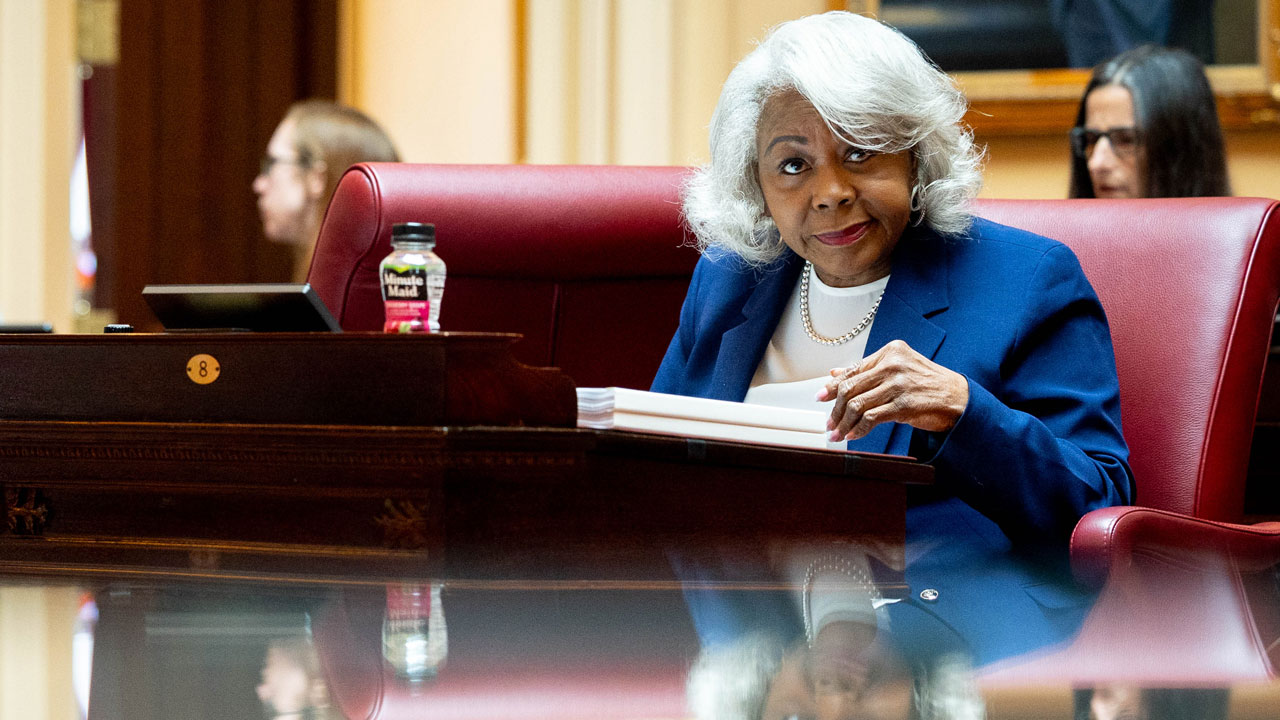
Trump administration withdraws application to Supreme Court to block lower court ruling on protected status for Venezuelan nationals
On Thursday, the Trump administration withdrew its request for the Supreme Court to block a lower court ruling that would allow Venezuelan nationals to participate in the Temporary Protected Status program, noting that the U.S. Court of Appeals for the 9th Circuit has ensured the ruling will remain on hold. “Should the Ninth Circuit enter an adverse judgment,” wrote U.S. Solicitor General D. John Sauer, “we intend to immediately return to this Court for additional relief.”
From the SCOTUSblog Team
Five major issues that may still make it onto this term’s oral argument docket
Time is running out for the justices to add cases to this term’s oral argument docket. Despite being short on time, however, the justices are not short on major petitions for review. Over the next two months, they will likely consider petitions addressing such high-profile issues as the Trump administration’s ban on transgender servicemembers and state laws requiring Ten Commandments displays in public school classrooms.
SCOTUS Outside Opinions
Calls for court packing fail the test of history
In a column for SCOTUSblog, Jordan J. Ballor and Logan Tantibanchachai reflected on Democrats’ recent embrace of court packing, which they “define as changing the court’s size for partisan reasons.” Such an approach to court reform “risks escalating partisan retribution and destruction of the judiciary’s ability to act independently,” they wrote.
Contributor Corner
An election impact on the Supreme Court’s immigration docket
In his Immigration Matters column on Wednesday, César Cuauhtémoc García Hernández explored what Democrats’ success in the midterm elections could mean for a challenge to an Iowa law criminalizing certain immigration-related conduct, Bird v. Iowa Migrant Movement for Justice. Because Iowa’s Republican attorney general lost her reelection bid to a Democrat, it’s now unclear if the state will move forward with its defense of the law, “providing yet another reason why elections matter.”
Contributor Corner
Treating the free exercise of religion and equal protection differently
In his Courtly Observations column on Tuesday, Erwin Chemerinsky revisited the oral argument in St. Mary Catholic Parish v. Roy, during which several conservative justices appeared to suggest “that a law’s discriminatory effect against a religion should be a basis for striking it down.” Such an approach to free exercise would be at odds “with a half century of law under equal protection holding that disparate impact ... is not enough to prove discrimination,” Chemerinsky contended.
Contributor Corner
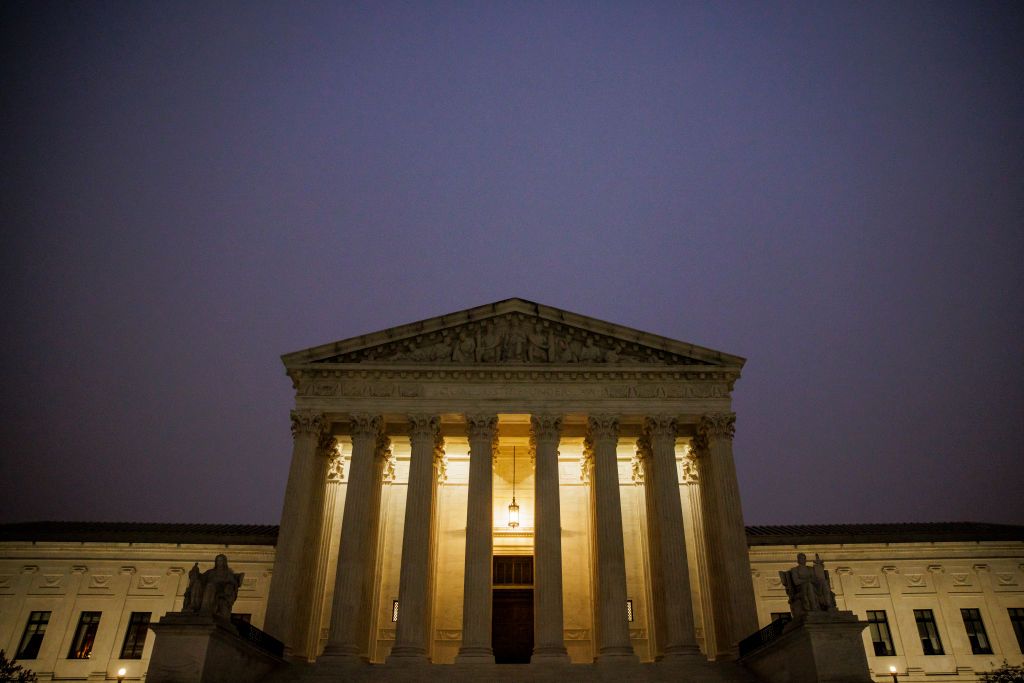
“I’m afraid this is going to continue”: Justice Alito, the executive, and the emergency docket
In her In the Interim column on Monday, Taraleigh Davis revisited comments made by Justice Samuel Alito this fall about the court’s emergency docket, including why it’s so busy these days. The data, according to Davis, “support part of what Alito said but complicate the rest.”
Podcasts
Advisory Opinions
Should Lame Ducks Hibernate?
Sarah Isgur and David French discuss the nature of lame-duck confirmations after the showdown between Texas Sens. John Cornyn and Ted Cruz, journalists’ records, and weakening the presidential veto.
Amarica's Constitution
The Power of Peaceful Witness
Akhil Amar and Andy Lipka continue their discussion on the significance of and fallout from this month’s midterm elections.
A Closer Look
Justice Levi Woodbury
The Closer Look in Friday editions is typically a judicial biography. This week, we cover Justice Levi Woodbury, who served on the court from 1845 to 1851.
Being the first justice to attend law school and the first of two New Hampshire justices (the second being Justice David Souter) has not saved Justice Levi Woodbury’s reputation from “declin[ing] dramatically over the years,” as a “reputational study” of the justice published in the Journal of Supreme Court History put it.
Woodbury was born in December 1789 in Francestown, New Hampshire. As the eldest son, he faced immense pressure to succeed and was “near obsessive” about his education, according to Oyez. He attended Atkinson Academy before enrolling at Dartmouth at 16, earning money teaching in the towns around Hanover to afford school.
Woodbury then attended law school (the other justices had “read law” through apprenticeships or were self-taught), studying at Litchfield Law school in Connecticut. Per Oyez, however, his time there was brief: He quickly came to the conclusion that he “did not enjoy [law school]” and apprenticed instead before being admitted to the bar in 1812.
During the War of 1812, Woodbury drafted the Hillsborough Resolves, statements backing President James Madison’s decision to fight Britain (and arguing against Daniel Webster’s condemnation of the war). With this, Woodbury became “one of the few” New Englanders to support the War of 1812. While then clerking for the state Senate, Woodbury connected with Gov. William Plumer, who in 1816 appointed Woodbury, then 27, to the New Hampshire Superior Court (the state’s top court).
In 1823, the New Hampshire Democratic-Republicans faced “bitter factionalism within,” and a group of them (displeased with their caucus’ choice for governor) chose Woodbury as their nominee instead, helping him to become New Hampshire’s 15th governor by a significant margin. Woodbury’s attempt to reunite the party met with little success, however, and he was not reelected. Still, by 1825 Woodbury had become speaker of the state House and a U.S. senator and later chaired the Senate Committee on Commerce. During that time, Woodbury, who was sympathetic to President Andrew Jackson, supported the Indian Removal Act of 1830. He was subsequently appointed by Jackson in March 1831 as secretary of the Navy.
In 1834, Jackson shifted Woodbury to the Treasury, where he denied entrusting federal money to the Second Bank of the United States (like his predecessor, Roger B. Taney), instead giving it to commercial banks. In that position, he also issued the Specie Circular, which directed federal land offices to accept “nothing except what is directed by the existing laws, viz, gold and silver, and in the proper cases Virginia land scrip,” but not paper money, for land purchases. The Circular is often cited as a “primary cause” of the Panic of 1837.
In 1841, Woodbury returned to the Senate rather than serve as chief justice of New Hampshire’s Superior Court. After Justice Joseph Story died in September 1845, President James Polk nominated Woodbury as a recess appointment to the Supreme Court, and he was confirmed by the Senate that January.
In 1847, Woodbury authored the court’s unanimous opinion in Jones v. Van Zandt, which upheld the Fugitive Slave Act of 1793 as constitutional. Oyez writes that although “[m]any thought this indicated a pro-slavery stance … really his vote was motivated by an appreciation for states’ rights and a fear that the constitution was being interpreted too liberally.” Yet whereas Justice John McLean wrote that “the Constitution treats slaves as persons,” Woodbury “repeatedly referr[ed] to enslaved people as ‘property.’” One anti-slavery paper wrote that “if there be a man in the United States utterly heartless on the subject of slavery, it is Levi Woodbury” and that “[w]e know of no opinion on record of any slaveholding court, so inhumane in tone and language, as the opinion of Judge Woodbury, declared in the Van Zandt case.”
In 1849’s Luther v. Borden, Woodbury was the only justice to dissent, concluding that Rhode Island’s statute establishing martial law was unconstitutional. Under such a law, he wrote, the “whole population” was “exposed … to be seized, without warrant or oath” and that “y it, every citizen … exists with, a rope around his neck.” Woodbury likewise dissented in 1849’s Passenger Cases, which asked whether a tax could be imposed “upon alien passengers” arriving in the ports of New York and Massachusetts. Woodbury wrote that the commerce clause did not give the federal government exclusive immigration powers, and that states could tax immigrants after they arrived in the state ports.
Woodbury also pursued his political ambitions while on the court. In 1848, John C. Calhoun said – reportedly influenced by Woodbury’s decision in Van Zandt – that he “would run best in the South.” Woodbury campaigned for president, but his apparent efforts to appeal to both slavery and anti-slavery advocates hurt his candidacy, and Lewis Cass ultimately received the Democratic nomination.
Although Woodbury “looked like a front-runner again for an 1852 nomination,” he died in 1851 in Portsmouth, New Hampshire, at age 61, and the nomination went to his former clerk, Franklin Pierce.
SCOTUS Quote
Continue reading...
[ H/T SCOTUSblog ]