


A federal judge has ruled that one of President Trump’s most prominent prosecutors in California was unlawfully serving as a de facto U.S. attorney, disqualifying him from participating in or supervising two criminal prosecutions.
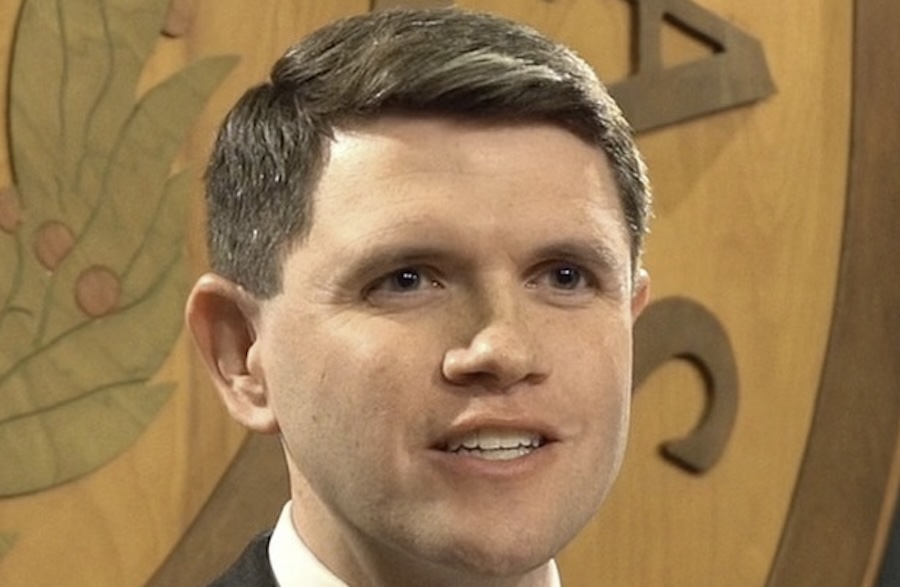
The prosecutor is Bill Essayli, a former Republican state lawmaker who has become one of the Justice Department’s most visible figures in its battles with California.
Senior federal judge J. Michael Seabright declined to dismiss the two indictments.
He also delayed the disqualification so the federal government could seek a stay pending appeal, meaning the order has no immediate effect.
The first reports made the split decision clear: Essayli took a serious courtroom loss, but he was not immediately removed from the office.
Essayli quickly pushed back, saying he remains First Assistant U.S. Attorney and continues running the Central District of California while the legal fight proceeds.
The dispute centers on how the Trump administration kept Essayli in charge after the statutory period for an interim U.S. attorney expired. Seabright concluded that the Justice Department could not continue giving him the authority of the vacant office through his first-assistant and special-attorney roles.
The ruling was narrower than some of the early headlines suggested. Seabright disqualified Essayli from the two prosecutions before him, involving defendants Jaime Hector Ramirez and Tu Anh Tran, but he did not throw out either indictment.
The Associated Press reports that the judge viewed Essayli’s arrangement as materially identical to the one the Ninth Circuit rejected for Nevada federal prosecutor Sigal Chattah. Attorney General Todd Blanche had narrowed some of Essayli’s duties in a revised designation, but Seabright concluded the changes still left him functioning as the de facto U.S. attorney.
The AP also notes that the administration never installed another acting U.S. attorney after Essayli’s interim term ended. That left Essayli running the nation’s largest federal judicial district while serving under a different formal title.
The administration rejects the judge’s reading of the law. Essayli argues that the President and the attorney general retain the authority to select the Justice Department supervisors who lead federal prosecutors.
His full response also made clear that the government intends to keep fighting and expects the larger appointments question to reach the nation’s highest court.
Essayli’s reference to the Supreme Court describes where he believes the legal battle is headed. It does not mean the justices have already agreed to hear this exact dispute.
CBS Los Angeles reports that Seabright barred Essayli from participating in or supervising the Ramirez and Tran prosecutions while refusing the defendants’ request to dismiss their indictments. The court gave the federal government five business days to seek a stay pending appeal before the disqualification could take effect.
That distinction keeps the prosecutions alive and gives the Justice Department time to ask a higher court to preserve the status quo. The immediate effect is a legal warning shot, not a completed transfer of power inside the Los Angeles federal prosecutor’s office.
The fight follows the Ninth Circuit’s August ruling against a similar arrangement involving Chattah. Federal courts have also scrutinized other Trump administration prosecutor appointments, turning a collection of local criminal cases into a broader test of executive authority and Senate confirmation rules.
Essayli’s role makes this clash especially consequential. He served in the California State Assembly as a Republican before joining the Justice Department and has built a national profile through aggressive work on crime, immigration enforcement and election integrity.
Fox News reports that the Justice Department is appealing the ruling and that Essayli directly challenged the court’s interpretation of the administration’s appointment powers. He said the President and attorney general have every right to choose supervisors within the department and promised to continue serving while the appeal moves forward.
After reports began circulating that he had effectively been pushed out, Essayli posted his own unmistakable clarification.
That is the cleanest way to understand where the case stands. Essayli suffered a significant courtroom defeat, but he has not been immediately removed, and the two challenged indictments remain intact.
The Justice Department now has the opportunity to secure a stay while appellate judges examine whether the administration’s leadership arrangement complies with federal vacancies law.
The stakes reach beyond one prosecutor. This is a live separation-of-powers and appointments fight over who controls the executive branch, how long temporary officials may serve and where the Senate’s confirmation authority begins.
For the moment, Essayli is still at work. He remains First Assistant U.S. Attorney, says he is continuing to run the office and is preparing for the next round in a legal battle that could eventually land before the Supreme Court.
Continue reading...
[ H/T WLT Report ]


