





While the American military action in Iran has been a source of many benefits to the U.S., a collateral negative effect has been the increase in world oil prices and the associated increase in gas prices at the pump for U.S. consumers. However, things may not be as dire as many would lead you to believe.
To understand the real state of things, examining U.S. gas prices over the past two decades provides invaluable insight—and it allows for a more informed and rational discussion of the pros and cons of this Iran conflict.
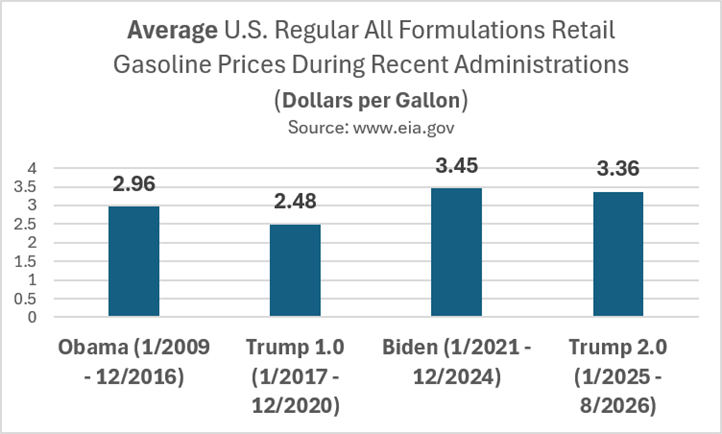
The table below documents the average gasoline prices during recent U.S. administrations before factoring in inflation. The average price of gas during Trump 1.0 was about 48 cents per gallon less than under Obama. Average gas prices during Trump 2.0 have been about 9 cents per gallon less than during the Biden administration.
Sanjai Bhagat
The above are the prices paid at the pump, and, as I noted above, they do not take inflation into account. Due to inflation, a dollar in 2010 was worth more (in terms of goods and services that dollar could purchase) than a dollar was worth in 2020, which was worth more than a dollar today.
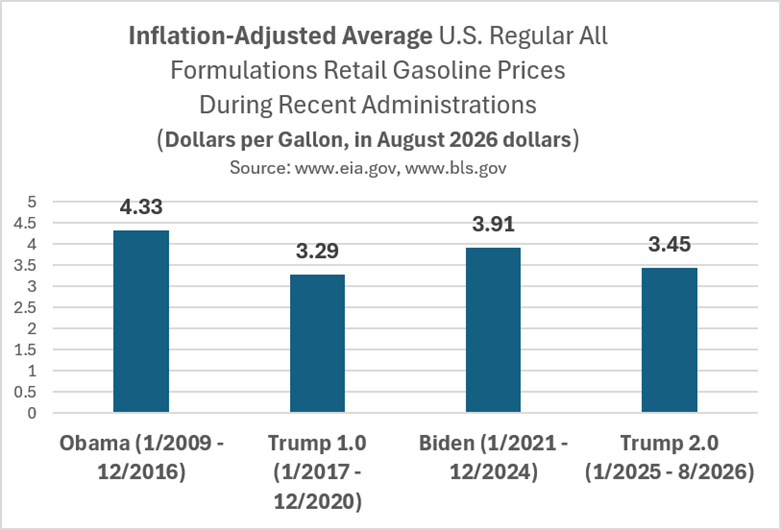
The table below documents the inflation-adjusted average gasoline prices during recent U.S. administrations. Inflation-adjusted average gas prices during Trump 1.0 were about $1.04 per gallon less than under Obama. Inflation-adjusted average gas prices during Trump 2.0 have been about 46 cents per gallon less than during the Biden administration.
Sanjai Bhagat
Throughout recorded human history, military power has been a universal value regardless of civilization, culture, or epoch. All successful empires in the human history (the ancient Roman Empire, Genghis Khan’s empire, the British Empire, etc.) shared a common denominator: They were formidable military powers, and in their prime were the pre-eminent military power on the planet. Sadly, individual freedom and democracy have never been (and still are not) recognized as universal values.
The ongoing U.S. military successes in Iran have benefited the U.S. in multiple significant ways.
First, the almost complete destruction of Iran’s nuclear program has ended a substantial military threat to the U.S. and its allies. Iran’s nuclear threat had to be taken seriously given that Iran’s theocratic leadership has repeatedly, vehemently, and publicly called for the destruction of the U.S.
Second, the complete destruction of Iran’s air defenses (supplied by powers hostile to the U.S.), air force, and navy sends a very tough and credible message to U.S. adversaries and allies about the strength, lethality, and effectiveness of the U.S. military.
Third, the destruction of Iran’s terrorist proxies and military—and the realignment of alliances in the region—has provided an opportunity for peace in the region after centuries of bloodshed and strife.
Finally, this was a much needed and long overdue retribution for the U.S. soldiers injured or killed by Iran in the past 47 years. The global importance of military power as the only universal value necessitates this retribution, and it serves as credible deterrence to other military powers hostile to us.
But this might all feel somewhat abstract to working families trying to put gas in their cars. How are they faring?
While retail gas prices have increased during the past eight months, there are three important indicators that the economic lives of working class Americans have been improving during the second Trump administration.
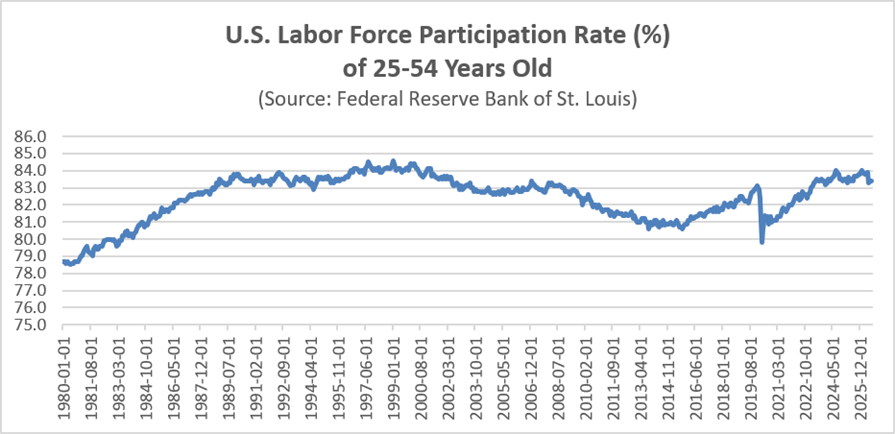
First, a greater percentage of working-age Americans are currently working than at almost any other time during the past half-century. This change has occurred largely because (a) more jobs are available, and (b) these jobs are offering higher wages—making it more attractive for people to join the workforce. The graph below details the U.S. labor force participation rate of working-age (25-54 years old) Americans.
Sanjai Bhagat
Besides the obvious wage benefits of working, there are other important benefits to society of people working, particularly related to when people transition from being welfare recipients to actively participating in the labor force.
Welfare payment systems have fueled a plethora of social problems. Unearned payments do not deliver the self-respect and purpose that productive labor provides. Immediate costs include the significant negative impact on the physical and mental health of unemployed workers. Long term, the absence of working role models for children growing up in households where no one is sufficiently employed threatens to embed a permanent class division in the U.S.
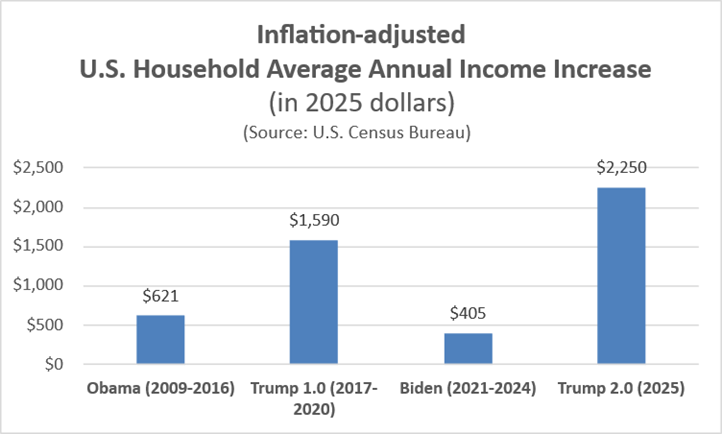
Second, the inflation-adjusted U.S. household annual income during the second Trump administration increased by more than five times the average annual increase during the Biden administration.
The table below documents the real (inflation-adjusted) U.S. household average annual income increase during the recent administrations; this table is based on data from a recent survey published by the U.S. Census Bureau. Economic policies (such as the overregulation of businesses and the discouragement of fossil fuels) and fiscal policies (such as excessive government spending) of an administration can have a significant impact on U.S. household income.
Sanjai Bhagat
Third, a recent survey from the U.S. Census Bureau documents that the current poverty rate of 10.2% is the lowest it has ever been for as long as the Bureau has compiled such data (more than half-century). The benefits of a growing and prosperous economy in the second Trump administration are accruing to those on the lowest rungs of the income ladder.
The recent increase in gas prices is straining U.S. household budgets, especially for blue-collar workers. However, this gas price increase should be viewed in the context of the inflation-adjusted gas prices during recent administrations, the related significant improvement in our national security, and the significant increase in real (inflation-adjusted) incomes of U.S. households during the past year.
We publish a variety of perspectives. Nothing written here is to be construed as representing the views of The Daily Signal.
Continue reading...
[ H/T The Daily Signal ]