





[Newsletter ad — view on SCOTUSblog]
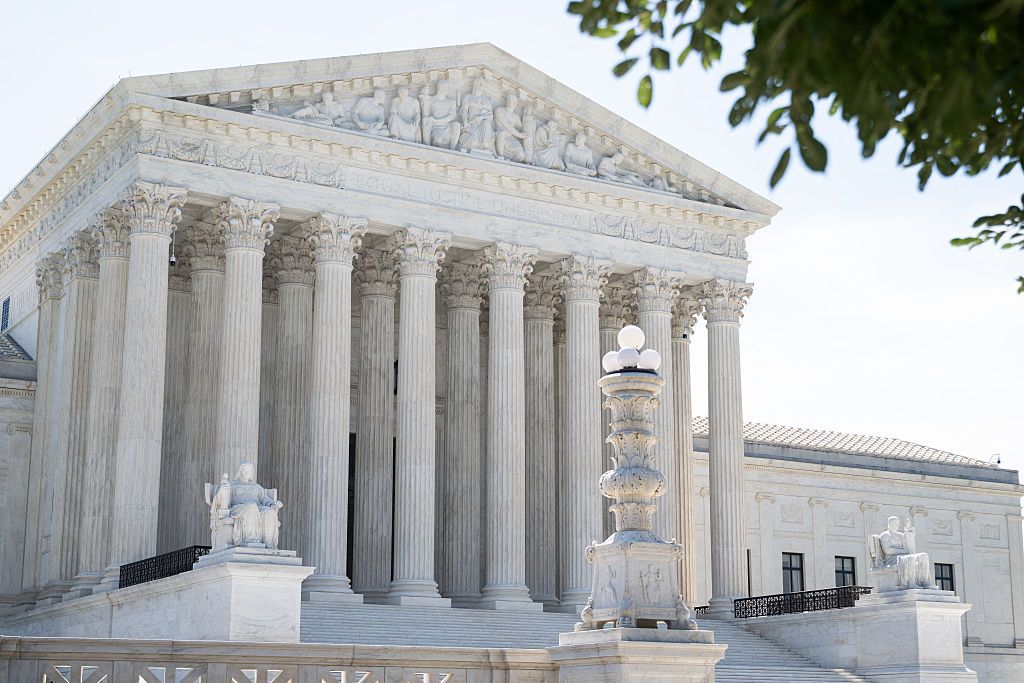
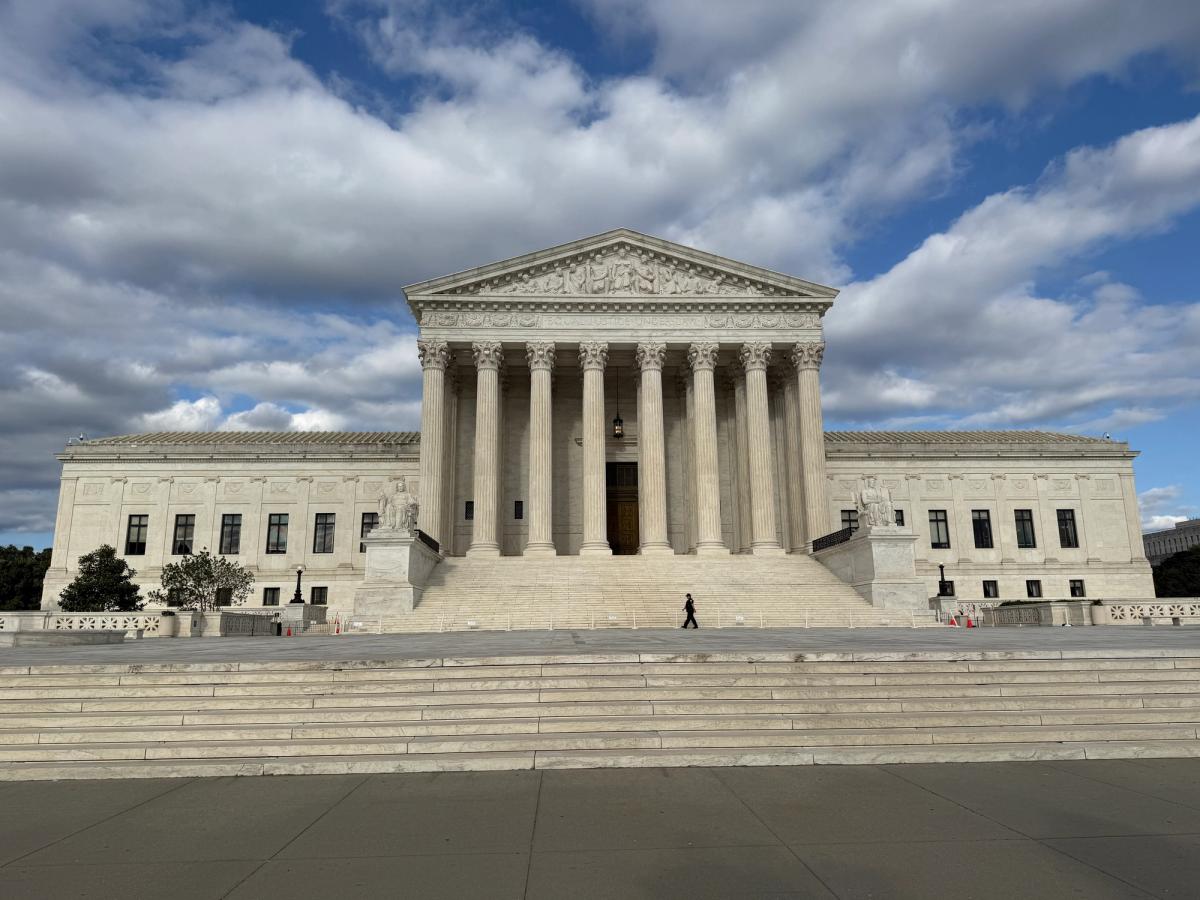
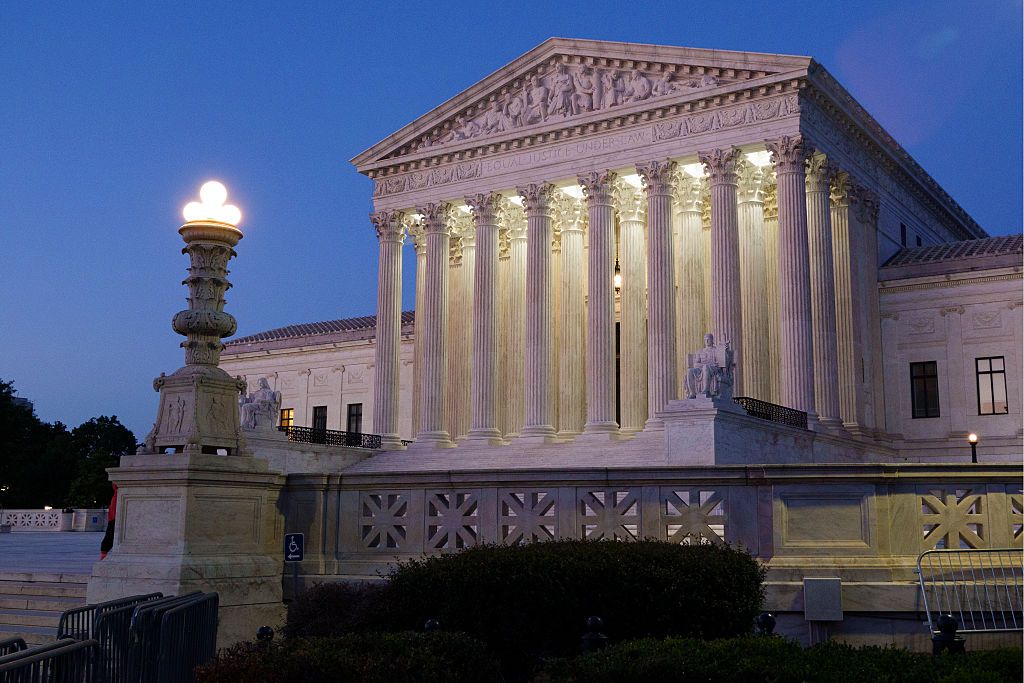
The 2026-27 term doesn’t officially start until Monday, but the Supreme Court was busy this week adding cases to the oral argument docket, addressing emergency applications, and announcing a significant last-minute recusal. Keep reading to catch up on all the latest SCOTUS news.
At the Court This Week
On Thursday, the Supreme Court added three new cases to its oral argument docket for the 2026-27 term, including a case on the Trump administration’s policy of detaining noncitizens apprehended within the United States (as opposed to at the border) without the opportunity for a bond hearing and a dispute over the enforcement of zoning ordinances against religious institutions. For more on the new cases, see the On Site section below.
On Wednesday, the court cleared the way for Tennessee to execute Christa Pike, who was sentenced to death for the 1995 murder of Colleen Slemmer, over a dissent from Justice Sonia Sotomayor, joined by Justices Elena Kagan and Ketanji Brown Jackson. Tennessee attempted to carry out the execution, but Pike survived and the execution was stopped. Gov. Bill Lee has halted the remaining execution scheduled to take place in Tennessee this year.
On Tuesday, the Supreme Court granted the Trump administration’s request to allow, for now, rapid deportations to third-party countries – that is, countries not identified in a removal order. Justices Sonia Sotomayor, Elena Kagan, and Ketanji Brown Jackson indicated that they would deny the request. The court also announced that it will hear argument on Dec. 9 on, among other things, the legality of third-country removals and whether the district court had the authority to put the removals on hold.
On Monday, the Supreme Court announced that Justice Samuel Alito will not continue to participate in Suncor Energy Inc. v. County Commissioners of Boulder County, a significant climate change case that will be argued on Monday.
Also on Monday, the Trump administration brought a dispute over the Federal Bureau of Prison’s policy on healthcare and accommodations for transgender inmates to the interim docket. The court has asked the challengers to respond to this request by 4 p.m. EDT on Thursday, Oct. 8.
Looking ahead, the Supreme Court’s 2026-27 term will officially kick off on Monday. The justices will hear argument that morning in two cases: Suncor Energy Inc. v. County Commissioners of Boulder County, on whether a lawsuit filed in Colorado state court seeking to hold energy companies responsible for their alleged role in climate change can go forward, or whether federal law instead bars such claims; and Johnson v. United States Congress, on whether a federal district court may hear a constitutional challenge to a law limiting disability benefits for certain incarcerated veterans.
Morning Reads
What Trump Has Built
Eric Cortellessa, Time
In an interview with Time magazine about his presidency, President Donald Trump repeated his past criticism of the three justices he appointed to the Supreme Court – Neil Gorsuch, Brett Kavanaugh, and Amy Coney Barrett – saying he regretted nominating them. “I gave them the position of a lifetime,” Trump said, “and they voted against me often.” The justices appointed by Democrats, he continued, “stick like glue—those three, they virtually never vary. You can come up with the worst thing in the world and they’ll vote as a group.” But Gorsuch, Kavanaugh, and Barrett had “the chance of a lifetime, and it’s unfortunate what they did.”
‘I am haunted’: Tennessee grapples with questions after another botched execution
Mark Berman, Brady Dennis, and Katie Mettler, The Washington Post
On Wednesday, the Supreme Court cleared the way for Christa Pike to be executed in Tennessee, but the execution was halted when she remained alive after “officials tried to inject two doses of lethal drugs.” Her attorneys said on Thursday afternoon that she was “in critical condition and was ‘receiving lifesaving medical care,’” according to The Washington Post. “Tennessee Gov. Bill Lee (R) [has] halted executions in the state and ordered an investigation into the incident, saying he was ‘highly disappointed’ by what happened.” “Pike’s attorneys said they have not been able to see her or speak with her since she was hospitalized, and they were hesitant to speculate on what exactly happened during the lethal injection.”
Election officials expect little impact from database Supreme Court revived
Bart Jansen, USA Today
On Sept. 25, the Supreme Court cleared the way for the Trump administration to move forward with its plan to use a modified centralized database to verify voters’ citizenship. However, “[e]lection officials in some of the largest counties nationwide” told USA Today that they don’t expect the decision to “have a big impact on the Nov. 3 midterm elections,” because “it came too close to Election Day.” They also noted that, in their limited experiences using the database, they’ve realized that the information it provides is sometimes outdated. “I think that the SAVE database can be used as a tool for the states but it must be used responsibly,” said Eric Fey, elections director in St. Louis County, Missouri.
Justices Give US Latitude to Frame Issues in Deportation Case
Jordan Fischer, Bloomberg Law
In the Supreme Court’s Tuesday order announcing that it will hear argument on third-country removals, there was an unusual entry in the list of questions to be briefed: “Such other questions that the Government determines are appropriate for the proper disposition of the case.” Two Supreme Court experts commented on this development during a Federalist Society event on Wednesday, according to Bloomberg Law. Georgetown Law Professor Stephanie Barclay said it “was a recognition by the court that the case was heading to arguments on an expedited posture and the justices might not yet have identified all of the relevant issues.” West Virginia Solicitor General Michael Williams added that the justices likely want to identify all those issues because “they want to be done with this” after considering the issue multiple time on the interim docket.
John Roberts and His Island
Jodi Kantor, The New York Times (paywalled)
Chief Justice John Roberts “has spent over 20 summers on Hupper Island” in Maine, “a refuge about 90 miles northeast of Portland with no cars and barely two dozen homes,” according to The New York Times. Most of these visits were “a story of potluck dinners and easy friendships,” but the backlash to recent, controversial Supreme Court rulings has transformed these getaways. “Neighbors have taken to the water to protest him. ... Even some longtime friends who would not dream of joining the kayakers said they have been drawing back socially because of their distress over his decisions.”
On Site This Week
Case Preview
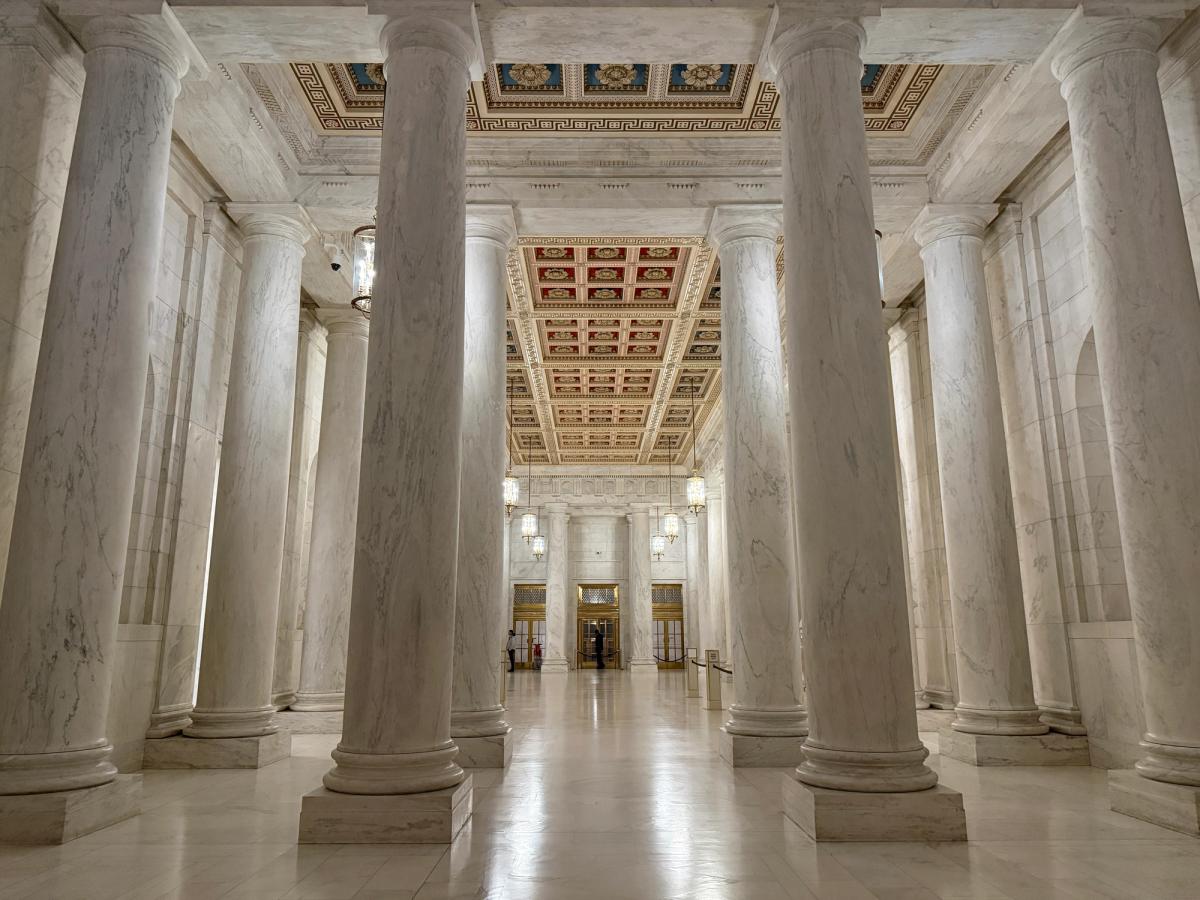
Supreme Court to consider whether suit may go forward seeking to hold energy companies liable for climate change
The justices will hear arguments on Monday in one of the biggest cases currently on the Supreme Court’s docket – and certainly one of the most significant business cases of the 2026-27 term. In Suncor Energy Inc. v. County Commissioners of Boulder County, the court will consider whether a lawsuit filed in a Colorado state court, seeking to hold energy companies responsible for their alleged role in climate change and its impact, can go forward, or whether federal law instead bars such claims.
Court News
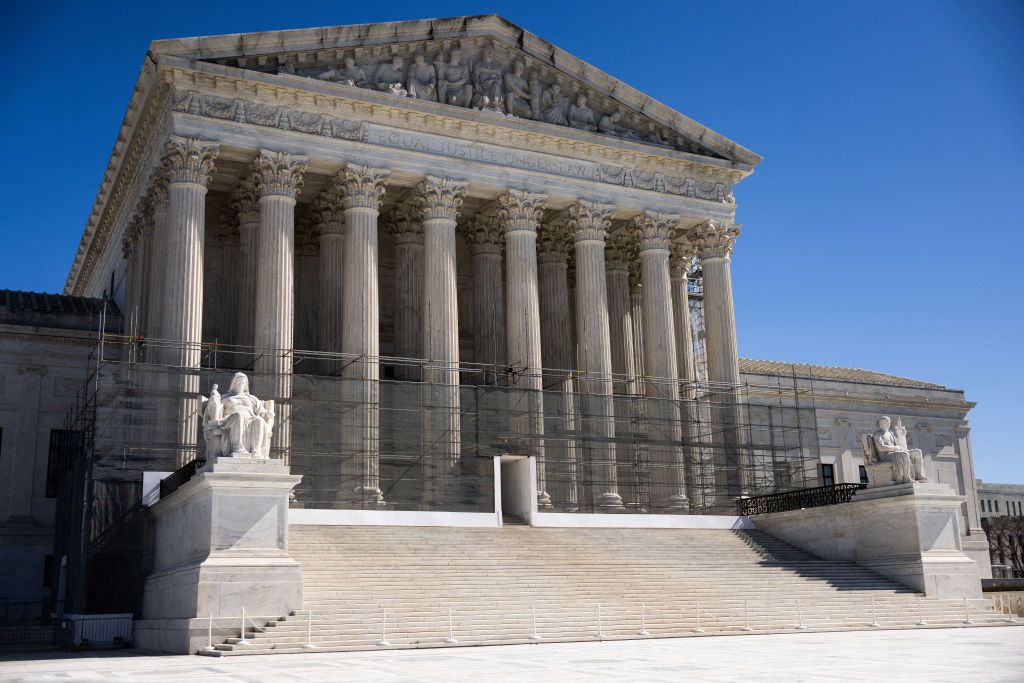
Court agrees to hear arguments in important immigration case, religious zoning dispute
The court will hear oral arguments early next year in cases involving the enforcement of zoning ordinances against religious institutions, the Trump administration’s policy of detaining undocumented immigrants apprehended within the United States without a hearing, and the effect of a federal law intended to protect the former spouses of U.S. servicemembers.
Contributor Corner
Planes, beer, and forfeiture
In her Common Law column on Wednesday, Julia D. Mahoney explored Jouppi v. Alaska, a case on the Eighth Amendment’s excessive fines clause, describing it as “a golden opportunity to make clear that rights to acquire and retain property are essential not just for the rich but also for middle- and working-class individuals.”
SCOTUS Outside Opinions
The Supreme Court is building power no one gave it
In a column for SCOTUSblog on Tuesday, Maria Glover explored her belief that “the Supreme Court is accumulating and manufacturing power for itself far beyond that which the Constitution confers.”
Contributor Corner
The “born free and equal” clauses and the right to pursue a profession of one’s choice
In his Born Free and Equal column this Monday, Steven Calabresi applied the “born free and equal” clauses within the context of the economic right to pursue the line of work of one’s choosing.
Podcasts
Advisory Opinions
Not a MAGA Court
Elie Honig, CNN’s senior legal analyst, joins David French to discuss the Supreme Court’s decision on third-country removals, how worried we should be about election challenges ahead of the midterms, and a Star Wars SCOTUS draft.
Amarica's Constitution
Get Off My Plane - Guests Eugene Volokh and Vikram Amar
Amid a dispute over White House press access, Akhil Amar and Andy Lipka welcome a leading First Amendment expert, Eugene Volokh, to the podcast to discuss the legal questions involved. They also speak again with Vikram Amar about the Supreme Court’s third decision on Missouri redistricting.
A Closer Look
Justice Henry Baldwin
Friday’s A Closer Look is typically a judicial biography. This week we cover Justice Henry Baldwin, who served on the court from 1830 until 1844.
Justice Henry Baldwin caused trouble both early and late in his life. At Yale, he “found the lectures droll and misbehaved frequently,” while on the Supreme Court he grew so erratic that his colleague Justice Joseph Story deemed him “partially deranged at all times.” (This is not to mention his near-death duel or unprecedented number of dissents while on the often-unanimous Marshall court.)
Baldwin was born in New Haven, Connecticut, in January 1780. One of his half-brothers signed the Constitution and later represented Georgia in the House for the first through fifth Congresses and in the Senate during the sixth through ninth. Baldwin graduated from Yale in 1797, although one of his classmates described him as a “lightheaded boy, who neither aimed at, nor attained to, much distinction as a scholar,” before attending Litchfield Law School. He then clerked for Alexander Dallas, the Supreme Court’s first unofficial reporter of decisions. (The court was then located in Philadelphia.)
In 1799, Baldwin went to Pittsburgh (originally on his way to visit his brother), and there founded a law practice and came to co-own a newspaper. Reportedly spurred by politics, Baldwin fought a duel and almost died – according to Oyez, he was saved by a “silver dollar in his jacket pocket” that deflected the bullet. During the War of 1812, Baldwin sat on Pittsburgh’s Public Safety Council and by 1816, he had been dubbed “the Pride of Pittsburgh.” He then won a House seat for Pennsylvania, where he chaired the Committee on Manufactures and was a proponent of high tariffs (these protectionist views won him another nickname, “Father of the American System”). But Baldwin’s career was most aided by his defense of then-Gen. Andrew Jackson’s conduct in the Seminole War; Baldwin argued that the men Jackson had killed “were not our citizens, not bound by our laws, [and] not entitled to our protection.”
Baldwin then campaigned for Jackson in 1828 and expected to be made Secretary of the Treasury in return but did not receive the position. He refused the three foreign missions Jackson offered instead and wrote to an editor that he was valued about as much as “a candle-snuffer at a court-house,” or “a mere passing post, against which every puppy of the party raises his leg.” After Justice Bushrod Washington died in 1829, Jackson nominated Baldwin to the court. The Senate confirmed him 41-2 two days later, with both “no” votes cast by South Carolinians. (South Carolina was generally against Baldwin’s pro-tariff position.)
Baldwin fell out of love with the court in his very first year, telling Jackson he wanted to resign, but Jackson convinced him to stay. In 1831 alone, he dissented seven times, more than any other justice on the Marshall court. One of the seven was his “spirited dissent” in Ex parte Crane, where he argued that the Supreme Court did not have the power to issue writs ordering lower federal courts to take a specific action.
In Cherokee Nation v. Georgia, which held that the court did not have jurisdiction to hear the case since the Cherokee Nation was a “domestic dependent nation[]” and as such could not sue Georgia, Baldwin also wrote separately, stating that “the judicial power cannot divest the States of rights of sovereignty,” a position that sided with Georgia and Jackson’s push for Indian removal. (That said, Baldwin wasn’t entirely in Jackson’s pocket; he repeatedly urged Attorney General Roger Taney to advise the president against vetoing the national bank’s rechartering bill.)
On slavery, Baldwin was the lone dissenter in United States v. The Amistad (where the court held that because a group of Africans had been illegally abducted, they were free and entitled to their liberty), and in 1841’s Groves v. Slaughter, he argued that the Constitution regarded slaves as property rather than persons.
In 1833, Baldwin was hospitalized for “incurable lunacy” and absent for that term. In May 1833, his colleague Story wrote to a circuit judge that “I am sure he cannot be sane.” Despite this, Baldwin returned the following year and served 11 more years on the court until his death in 1844. Upon returning, Baldwin apparently wrote a series of incoherent legal opinions, deliberately ignored grammar in his writing, and had violent outbursts. A court reporter also noted that five different people had called the justice “crazy” on the same day. Friends further reported financial issues (Baldwin had filed for bankruptcy early in his tenure) and that he appeared overworked.
Baldwin died in Philadelphia in April 1844, a week after suffering a stroke. He was reportedly so in debt that his friends had to collect money to bury him. According to Justia, he left “scant impact on the law,” although he has been credited with establishing written dissents as a court practice.
SCOTUS Quote
Continue reading...
[ H/T SCOTUSblog ]