




A perennial debate has long persisted in the performing arts over who deserves the spotlight: Creator or performer. In classical music, conductors clash with their soloists; in ballet, choreographers with their prima ballerinas; and in film, directors and movie stars vie for the audience’s affection. When you watch Some Like It Hot, are you enjoying Jack Lemmon’s talents or Billy Wilder’s?
Both, of course. Yet popular memory sometimes immortalizes the face onscreen while obscuring the hand behind it. How many people can name the director of Casablanca? Michael Curtiz has somehow been relegated to a footnote, while Humphrey Bogart remains inseparable from the film.
For America’s 250th birthday, I found it fitting to compile its ten greatest cinematic leading men, whose screen personas helped define the American character. Which brings us, appropriately enough, to Bogart himself.
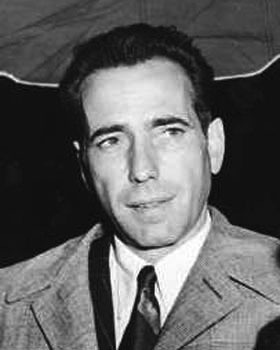
1. Humphrey Bogart
There was nothing conventionally heroic about Humphrey Bogart. He was short by leading-man standards, spoke with a slight lisp, and possessed a remarkably un-Hollywood name. Yet across The Maltese Falcon, The Big Sleep, and Casablanca, those apparent limitations forged a legendary American screen persona. His characters consistently masked their virtues behind an artifice of cigarette smoke and trench coats, claiming they would “stick their neck out for nobody” until forced to choose a side. Ultimately, Bogart became the quintessential American individualist — cynical, anti-authoritarian, but entirely incapable of leaving the persecuted to tyranny.
2. James Stewart
If Bogart was the cynical American, James Stewart was the earnest one. His gangly frame, hesitant speech, and awkward sincerity made him unusually convincing as an ordinary citizen confronting extraordinary circumstances. In Mr. Smith Goes to Washington and It’s a Wonderful Life, he embodied an almost stubborn belief in human decency. Yet Hitchcock understood the anxieties lurking beneath that optimism. In Vertigo, Stewart transformed that familiar vulnerability into something obsessive and deeply unsettling. Few actors could move between innocence and psychological torment while remaining so unmistakably themselves.
3. John Wayne
No actor is more inseparable from America’s mythology about itself than John Wayne. Through Stagecoach, Red River, The Searchers, and Rio Bravo, he became the face of the frontier, self-reliant, stoic, suspicious of authority, and prepared to impose order where none existed. His towering presence and laconic manner suggested a man who could establish civilization (and appear faintly inconvenienced by the effort). The Searchers complicated this mythology. Wayne’s Ethan Edwards is consumed by hatred and estranged from the civilization he helps preserve. Wayne embodied both the heroic promise and the darker impulses of the American frontier.
4. Paul Newman
With his piercing blue eyes and macho magnetism, Paul Newman seemed born to be the archetypal Hollywood leading man. But he was more than a mere pretty boy. From The Hustler and The Sting to Cool Hand Luke, Newman specialized in hustlers, con artists, and steadfast nonconformists whose charm concealed insecurity and moral ambiguity. His characters bluff, fail, and persevere (occasionally beyond the point of good sense). Luke’s refusal to be broken becomes existential, even when surrender might spare him suffering. Newman captured the romance, and occasional self-destructiveness, of the American underdog.
5. Marlon Brando
There’s a reason that when most of us imagine meeting a mob boss, we picture Don Vito Corleone’s raspy voice, in reproach, “You come into my house on the day my daughter is to be married…” Brando altered the way American actors performed. The theatrical polish of an earlier Hollywood suddenly seemed artificial beside the muttering, restless physicality of A Streetcar Named Desire and On the Waterfront. Brando found emotional turmoil in unfinished sentences, awkward movements, subtle expressions, and sudden outbursts. Then came The Godfather, in which he traded Stanley Kowalski’s explosive physicality for Don Vito Corleone’s quiet and fatherly authority. His psychological realism created organic, believable characters and reshaped screen acting for generations.
Humphrey Bogart
" data-large-file="https://www.washingtonexaminer.com/...11/01a700800918db7027249635da457fba.jpg?w=280" src="https://www.washingtonexaminer.com/...11/01a700800918db7027249635da457fba.jpg?w=280" alt="Humphrey Bogart" class="wp-image-593476" srcset="https://www.washingtonexaminer.com/wp-content/uploads/2023/11/01a700800918db7027249635da457fba.jpg 280w, https://www.washingtonexaminer.com/...800918db7027249635da457fba.jpg?resize=240,300 240w" sizes="(max-width: 280px) 100vw, 280px">
Humphrey Bogart
6. Clint Eastwood
Eastwood took America’s solitary frontiersman from the Westerns of Sergio Leone into the modern city and, eventually, old age. In The Good, the Bad and the Ugly, The Outlaw Josey Wales, and Dirty Harry, he played men skeptical of institutions and confident in their own judgment. A narrowed gaze or a few clipped words (“Do I feel lucky? Well, do ya, punk?”) could convey more menace than pages of dialogue. In Unforgiven, Eastwood returned to the frontier as an aging gunslinger whose violent past casts a grim shadow over the mythology of the Wild West. Few stars have so convincingly dismantled their own legend.
7. Robert De Niro
Emerging from 1970s Hollywood, Robert De Niro specialized in men driven by restless ambition, bruised egos, and festering violence. From the alienated cabbie of Taxi Driver and the degenerate gambler of Mean Streets to the self-destructive boxer of Raging Bull and the mobsters of Goodfellas and Casino, De Niro made deeply flawed men impossible to look away from. His genius lay in the smallest gestures — a sideways glance, a crooked smile, an unnervingly prolonged silence. So recognizable was his menace that he could turn it into comedy in Meet the Parents (much to Ben Stiller’s dismay).
8. Tom Cruise
Tom Cruise represents another American ideal, that of relentless competence. From Top Gun and A Few Good Men to Jerry Maguire and Mission: Impossible, he has spent four decades playing men who respond to impossible circumstances by working harder, running faster, and occasionally hanging from aircraft (usually to the horror of his insurers). Even his dramatic characters refuse to accept defeat, learning humility only after their certainties collapse. Few stars have made sheer determination so entertaining. In franchise-dominated Hollywood, Cruise remains a cinematic institution unto himself.
9. Denzel Washington
It is a testament to Denzel Washington’s charm and charisma that every time I rewatch Training Day, I find myself hoping the corrupt detective he plays somehow triumphs (alas, Alonzo never does). A veteran of the stage, Washington can command an audience through his mere presence. Whether playing Malcolm X, a defiant soldier in Glory, the alcoholic pilot of Flight, or Shakespeare’s Macbeth, Washington brings formidable gravitas to characters grappling with ambition, race, faith, and responsibility. Offscreen, he has championed fatherhood, discipline, and personal responsibility. “Take responsibility,” he urged black Americans in a GQ interview, asking them to look in the mirror and consider, “What can I do better?” His faith in individual agency and self-improvement has an unmistakably American ring (and a refreshingly unfashionable one in Hollywood).
10. Tom Hanks
Tom Hanks is perhaps the closest modern Hollywood has come to another Jimmy Stewart. In Apollo 13, Saving Private Ryan, Cast Away, and Captain Phillips, heroism rarely involves bombast or boastfulness. It means remaining decent, competent, and useful when circumstances deteriorate. Hanks excels as the ordinary American thrust into extraordinary predicaments, whether the astronaut keeping his head, the soldier doing his duty, or the castaway refusing to surrender to despair (even when his closest confidant is a volleyball). He turned reliability — hardly the most glamorous virtue — into movie-star charisma.
Honorable mentions: Cary Grant (British-born but naturalized American), Clark Gable, Robert Redford, Henry Fonda, and Sidney Poitier — all strong contenders for the top ten.
Together, these actors embody America’s favorite stories about itself—its independence, decency, appetite for reinvention, and occasional descent into magnificent folly. Directors gave those stories shape, but the stars gave them faces the world has never forgotten.
Harry Khachatrian (@Harry1T6) is a film critic for the Washington Examiner. He is a software engineer, holds a master’s degree from the University of Toronto, and writes about wine at BetweenBottles.com.
Continue reading...
[ H/T Washington Examiner ]