


A few months ago many straw polls had former Vice President Kamala Harris and California Governor Gavin Newsom as the favorites to win the 2028 Democrat Presidential nomination.
That has now changed.
A new poll, has revealed both Harris and Newsom are no longer the favorites with Harris garnering only 0.6% from voters and Newsom wth only 2.5%.
Senator Jon Ossoff of Georgia led the poll with 38%.
The New York Post provided the full results of the straw poll:
Former Vice President Kamala Harris’ 2028 appeal seems to be falling Ossoff.
Sen. Jon Ossoff (D-Ga.) emerged as the new Democratic golden boy, winning a 2028 straw poll at the Crooked Con progressive convention this weekend by a wide margin.
The Peach State Democrat topped the list of Democrats to win the 2028 nomination with 38% support, followed by “Squad” Rep. Alexandria Ocasio-Cortez (D-NY) at 17%, and former Transportation Secretary Pete Buttigieg at 14%.
All others were in the single digits: Illinois Gov. JB Pritzker at 4%, Kentucky Gov. Andy Beshear at 4%, Pennsylvania Gov. Josh Shapiro at 4%, Sen. Mark Kelly (D-Ariz.) at 3%, Maryland Gov. Wes Moore at 3%, and California Gov. Gavin Newsom at 2.3%.
Harris was barely on the list, nabbing a measly 0.6% support. There were about 1,000 votes in the Crooked Con straw poll.
The 2024 Dem candidate came in 16th — tied with first-term Michigan Sen. Elissa Slotkin.
Harris led by double digits in nearly every 2028 Democratic primary poll before the election.
Crooked Con, which is a lefty convention put together by Crooked Media — a group set up by Obama administration alumni — featured discussions from prominent liberal figures about the future of the Democratic Party.
The straw poll shows the 2028 mindset of some of the Democratic party’s most plugged-in voters — even though it’s not a scientific survey.
Take a look:

The Washington Examiner reported what the race looks like for Republicans:
Midterm elections are traditionally seen as the start of the next presidential contest. But this year, the Democratic wave might be seen as the end of one 2028 race and the beginning of another.
The sheer size of the Republican defeat left party supporters going through a heavily publicized and highly compressed version of the stages of grief. There was the usual finger-pointing, blame-shifting, and garment-rending that follows a major political loss.
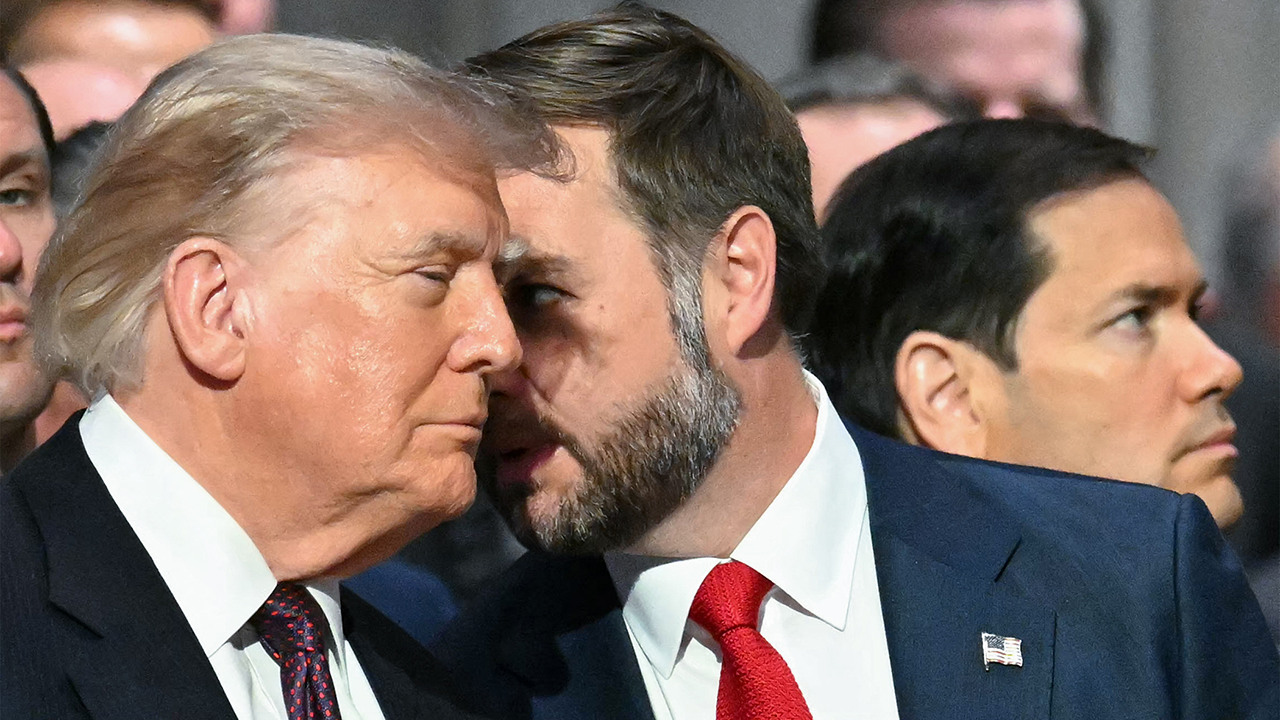
But at the same time, there was the beginning of a realization: If the blue wave was a broad-based voter repudiation of the Trump administration, should the next Republican presidential nominee be a member of the Trump administration? In other words, is the question that has animated the Republican race so far — JD Vance or Marco Rubio? — no longer the key question of 2028?
For more than a year, there has been an assumption in Republican circles that Vice President JD Vance was the front-runner for 2028 and that Secretary of State Marco Rubio was the secondary front-runner in case something did not work out with Vance. Even while maintaining that he would not run, Rubio became a favorite of some, especially in the GOP donor class.
President Donald Trump has made clear he does not want to be forced to choose between his vice president and secretary of state. In a conversation on board Air Force One traveling to a midterm campaign appearance in Iowa — this was two weeks before the blue wave — I asked Trump his thoughts on who will succeed him as a presidential candidate and leader of the Republican Party.
“How do you think Marco would do?” he asked. “What do you think of JD?” Beyond assessing the merits of each as a stand-alone candidate, it soon became clear that the president would really, really like to see a Vance-Rubio ticket in 2028. “Two smart guys, two good guys — how do you like JD and Marco” he asked. “Wouldn’t that be formidable?”
Now, with Tuesday’s midterm rout, both might face a more difficult path. At the moment, speculation about the damage is focused on Vance, which is obvious, given that he is the vice president to a president whose low job approval rating was an important factor in voters’ decisions. Vance also famously opposed starting the war in Iran — the 2026 electorate would say he was right about that — but then took a leading role in war policy and ended up bungling the peace talks.
But Rubio is in the Trump administration up to his ears, too — he has been an extremely effective advocate for Trump’s foreign policy. When it comes to the war in Iran, Rubio took an early role in explaining the administration’s sometimes shifting positions. If the 2028 electorate wants to move beyond not just Trump but anyone closely associated with him, that would certainly include Rubio.
One Republican operative involved in the midterm elections offered this assessment: “I think JD is dead. It was trending that way before the election. I think he’s done, and he may not run. Rubio is hard to figure out. He’s done nothing, even behind the scenes with close friends and longtime staffers, to show any signs that he might run. He would beat JD easily. But I’m not sure he runs. Some think he’s also wounded by this election. This race is suddenly wide open, and Trump’s power to choose the nominee is significantly diminished.”
Given all that, it was no accident that the most serious non-Vance and non-Rubio potential candidate, outgoing Gov. Ron DeSantis (R-FL), suddenly became highly visible in the 48 hours after the voting. DeSantis was sharp in a post-election news conference in which he touted Florida Republicans’ performance. Unlike Texas, where Republican candidates for federal and statewide office suffered huge losses, Florida GOP candidates did relatively well.
DeSantis took some credit for that, explaining that Florida was not immune to the blue wave, but that GOP candidates, acting on his advice, were better prepared for it. DeSantis followed up a morning-after press conference with another in the afternoon, and then two television appearances, on Fox News and CNN, where he offered a cogent critique of Republican midterm campaigning.
Continue reading...
[ H/T WLT Report ]


