


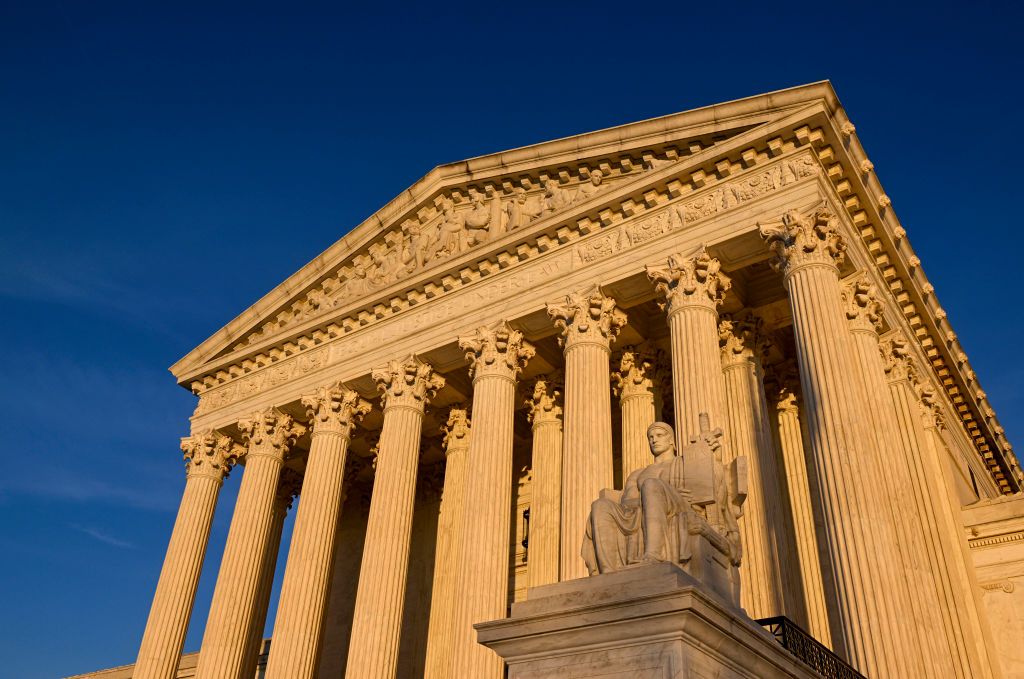
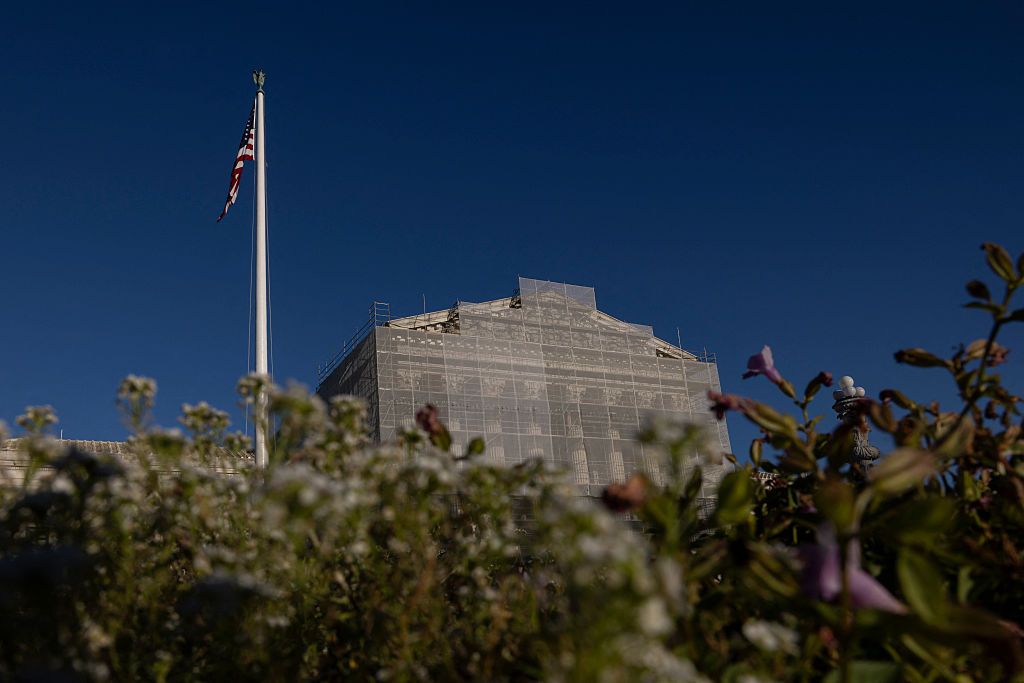
In its latest request to the Supreme Court over President Donald Trump’s approach to immigration, the Justice Department turned to the court’s emergency docket to ask for fast-track permission to construct a border barrier system along a 517-mile stretch in remote west Texas. Stymied by a federal district court’s preliminary injunction issued in October, the Justice Department argues that Supreme Court intervention is needed to prevent irreparable harm to the country. But details of the government’s legal argument reveal that the Trump administration hopes to use the emergency docket as a fast track to victory regardless of the actual urgency of the legal dispute.
Early this year, the Department of Homeland Security began taking important preliminary steps to build physical barriers through Big Bend National Park, Big Bend Ranch State Park, and nearby property along the U.S.-Mexico border. Part of the Border Patrol’s Big Bend Sector, covering approximately one-quarter of the entire border, no artificial barriers exist there. Despite its massive geographic reach, the region is sparsely populated and at immense distance from large urban centers. Unlike other parts of the U.S.-Mexico border, few people or goods cross from one country to the other in the Big Bend Sector. Indeed, according to U.S. District Judge Kathleen Cardone, who issued a preliminary injunction blocking DHS from carrying out its plans to erect a border barrier in the area, this is the border region with “the lowest aggregate number of apprehensions [of migrants] and the lowest number of apprehensions per mile of border.”
In Mullin v. Friends of the Ruidosa Church, a group of individuals with personal or business ties to the region, along with two advocacy groups, argued that DHS had failed to comply with required environmental reviews. Pointing to a 1996 law signed by President Bill Clinton, the Justice Department responded that Secretary of Homeland Security Markwayne Mullin and his predecessor, Kristi Noem, waived application of those environmental laws. The government also argued that the district court lacked the power to decide the lawsuit in the first place.
Cardone disagreed with the government on both counts. Congress narrowed courts’ jurisdiction in border-barrier disputes, but left room for courts to consider constitutional challenges to DHS’s conduct, she concluded. The challenge to Mullin’s waiver of environmental laws raises a constitutional question, Cardone added.
Having concluded that she could consider the challengers’ lawsuit, Cardone then turned to the criteria that Congress imposed on the secretary of Homeland Security to waive environmental review. The 1996 law directs the immigration agency “to waive all legal requirements” that could slow or impede construction of border barriers and roads. But the same law also instructs DHS to build barriers and roads “in areas of high illegal entry into the United States.” Considering the government’s data about apprehensions of people and seizures of drugs in the Big Bend Sector, as compared to other parts of the U.S.-Mexico border, Cardone concluded that the region cannot be considered to have high levels of illegal entry. “f the Big Bend Sector is an area of high illegal entry, so is every other sector,” Cardone announced.
Seven days after Cardone released her opinion, the U.S. solicitor general asked the Supreme Court to intervene. Much of the government’s argument turns on its disagreement with Cardone about what constitutes an area of “high illegal entry.” Mullin determined that the Big Bend Sector constitutes an area of high illegal entry because Customs and Border Protection, the DHS agency that enforces immigration laws at and near the border, apprehended 89,000 people and “seized enormous amounts” of illicit drugs from fiscal years 2021 to 2025, the government explains. In addition, failure to build a border barrier in this region “would act as a dangerous magnet” for additional illegal entries, the solicitor general claims. Despite Mullin’s assessment that the facts on the ground met the “high illegal entry” threshold required by Congress, “the district court nonetheless issued an unprecedented injunction blocking those waivers and halting associated border-wall construction,” the solicitor general wrote to the court.
Unsurprisingly, the challengers disagree. Opposing the government’s request for relief from the justices, they describe Mullin and Noem’s waivers as “unprecedented” and claim they “carry undisputed and extraordinary political and economic significance.”
The solicitor general’s claim is fundamentally a dispute about the proper interpretation of the text of the 1996 law. The government argues that courts cannot second-guess Mullin’s decision to waive environmental laws, and that Mullin’s view of what constitutes “high illegal entry” is all that matters. Cardone disagrees and contends that courts have a role to play here.
By turning to the emergency docket, the Justice Department has dispensed with the ordinary appellate process in favor of a fast-track path to, it hopes, final victory. Wanting an answer sooner rather than later is understandable, but a party’s interest in “line-jumping,” as Justice Ketanji Brown Jackson has described the emergency docket, isn’t reason enough to circumvent the slower course of the ordinary appellate process. Jackson would prefer to limit the emergency docket to situations in which an actual emergency exists. It’s hard to see what exigency exists in west Texas, however. The solicitor general argues that drugs and people will continue to enter through the Big Bend Sector. That is undoubtedly true, but, as that stretch of land has been unfortified since it became a border on March 18, 1848, nothing is likely to occur in the near future that is markedly different from past decades.
The government’s request for fast-track intervention by the Supreme Court also does not meet the standards set by Jackson’s ideological opposites. Explaining his view of the court’s emergency docket in Trump v. CASA, the court’s fast-track decision announcing that district courts are not authorized to issue universal injunctions, Justice Brett Kavanaugh wrote that its alternative pathway is appropriate when “Congress passes a major new statute, or the Executive Branch issues a major new rule or executive order.” Neither applies to the border-wall dispute. Congress enacted the contested statute 30 years ago and the waivers issued by Mullin and Noem are neither an agency rule nor an executive order.
Nor is the border-wall legal battle the type of dispute that only the Supreme Court can resolve. In a 2021 speech, Justice Samuel Alito compared the court’s emergency docket to a hospital’s emergency room, suggesting that, in his view at least, the fast-track process is proper only when no suitable alternative exists. But an alternative does exist to decide if Cardone overstepped. The government could have appealed Cardone’s decision to the U.S. Court of Appeals for the 5th Circuit. Like other circuit courts, the 5th Circuit regularly reviews preliminary injunctions granted by district courts. As Kavanaugh explained in CASA, “The courts of appeals and this Court can (and regularly do) expeditiously review district court decisions awarding or denying preliminary injunctive relief.” Instead of asking the 5th Circuit to correct the mistake it claims Cardone committed, the solicitor general skipped the 5th Circuit and went directly to the Supreme Court.
The reason it did this is not difficult to figure out: The administration is hopeful that it will receive a friendly audience at the Supreme Court. But this is a fast-track procedure meant for exceptional circumstances. And there is nothing exceptional about the legal fight over the administration’s attempt to build new segments of border barrier in rural west Texas. If the court grants the government’s request to pause Cardone’s preliminary injunction, allowing construction to move forward where no barrier currently exists, it should, at the very least, explain how this case meets the criteria that the justices have previously provided and if the term “emergency docket” is a misnomer.
Continue reading...
[ H/T SCOTUSblog ]