


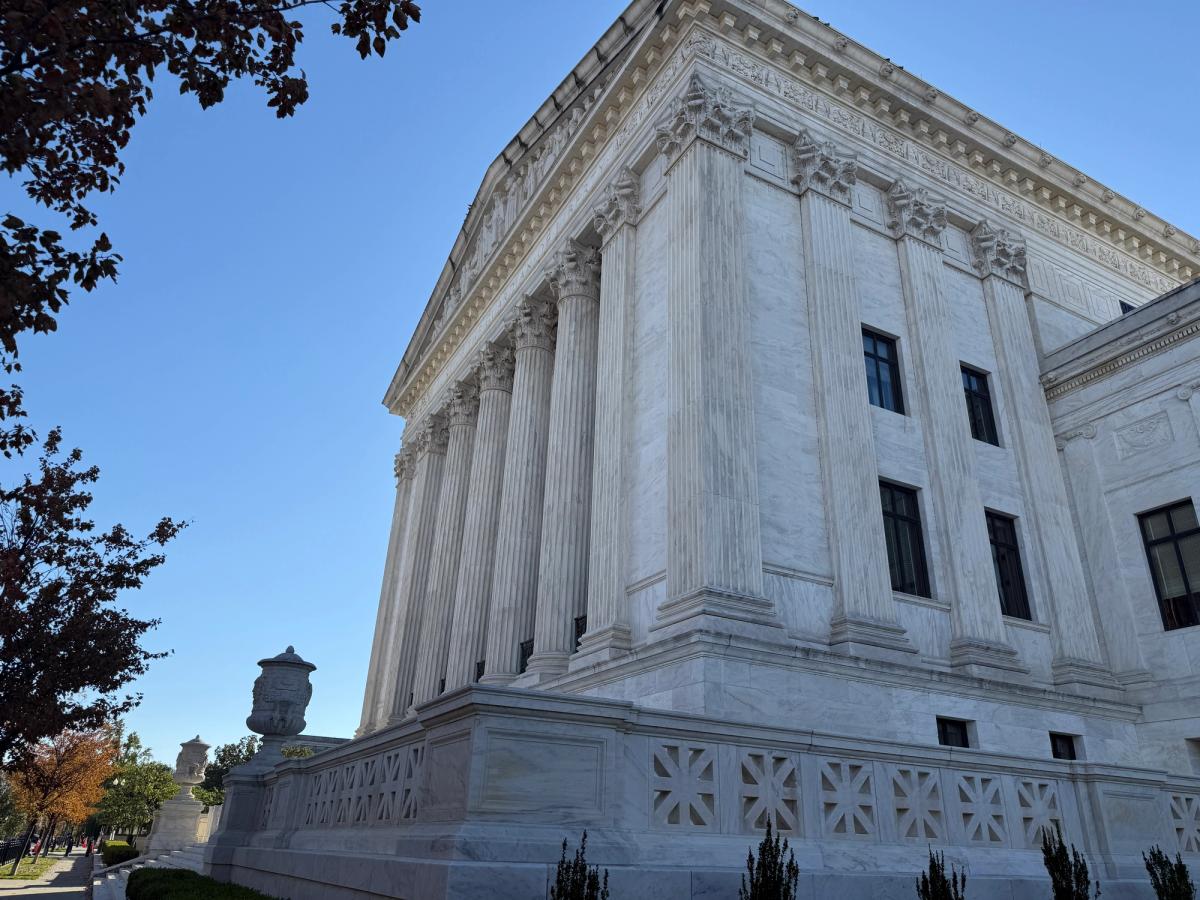
The Supreme Court will hear oral arguments on Jan. 13 in a Florida man’s challenge to the state’s use of six-person juries; one week later, it will hear a religious zoning dispute between a Catholic church in northern Kentucky and a couple who live across the street and oppose the church’s plans to build a shrine to the Virgin Mary. Those cases, Kian v. Florida and Missionaries of Saint John the Baptist v. Frederic, are among the highlights of the court’s January argument calendar, which was released on Monday afternoon. The justices will hear six arguments over five days, from Jan. 11-13 and again from Jan. 19-20.
The January argument schedule
- Montoya Palacios v. Liggins (Jan. 11) – Whether a petition for habeas corpus that challenges civil immigration detention is a “civil action” under the Equal Access to Justice Act, so that a detainee who prevails in such a case could be eligible for attorney’s fees if the government’s position was not “substantially justified.”
- Apple Inc. v. Epic Games (Jan. 11) – Whether a litigant can be held in contempt of court for violating the “spirit” of an injunction that is silent about the conduct at issue, or whether contempt requires a finding that the litigant has violated an order that clearly and unambiguously forbids it.
- RiseandShine Corp. v. Pepsico, Inc. (Jan. 12) – Whether a trademark’s “inherent strength” is a question of law, which a judge decides, or instead a question of fact, which is normally decided by a jury.
- Kian v. Florida (Jan. 13) – Whether, under the Constitution, a defendant who is charged with a serious felony has a right to a 12-person jury.
- Marschner v. Marschner (Jan. 19) – Whether the Uniformed Services Former Spouses’ Protection Act, which provides that disability-based retirement pay and retirement pay that a servicemember waives to receive disability pay cannot be divided, requires state courts to refuse to enforce a provision in a divorce settlement obligating a veteran to compensate his ex-wife if he began receiving disability payments (and, as a result, less retirement pay) after their divorce.
- Missionaries of Saint John the Baptist v. Frederic (Jan. 20) – Whether a land-use regulation that bars a religious institution from building a religious structure on its own property constitutes a “substantial burden” on religious exercise under the Religious Land Use and Institutionalized Persons Act, a law that Congress enacted in 2000 to expand religious freedom protections for prisoners and for religious organizations or individuals seeking to challenge zoning laws.
Continue reading...
[ H/T SCOTUSblog ]