



In the 1983 movie A Christmas Story, Ralphie’s teacher, Miss Shields, assigns her students the task of writing “a theme.” The fourth-grade class at Warren G. Harding Elementary school erupts in groans; after all, writing is hard work.
But Ralphie sees it as an opportunity to make his case for a Red Ryder BB gun, “the Holy Grail of Christmas gifts.” And as the words “pour[] forth from [his] penny pencil with feverish fluidity,” he gets right to the point: “What I want for Christmas is a Red Ryder BB gun with a compass in the stock and this thing that tells time.”
Doubtless, Miss Shields had admonished her students – like our teachers admonished us – that each paragraph of a theme must begin with a thesis (or topic) sentence. But is that always right? Pay attention to skilled writers, and you’ll discover that – like many things – it depends.
Skilled writers do locate a paragraph’s issue (topic) and its point (thesis) where readers expect to encounter them. But readers have different expectations about where that should be. Sometimes readers expect the issue and the point in the first sentence, but sometimes they expect them to be separated. Readers change their expectations depending on what type of paragraph they are reading. And sometimes a paragraph has no point at all.
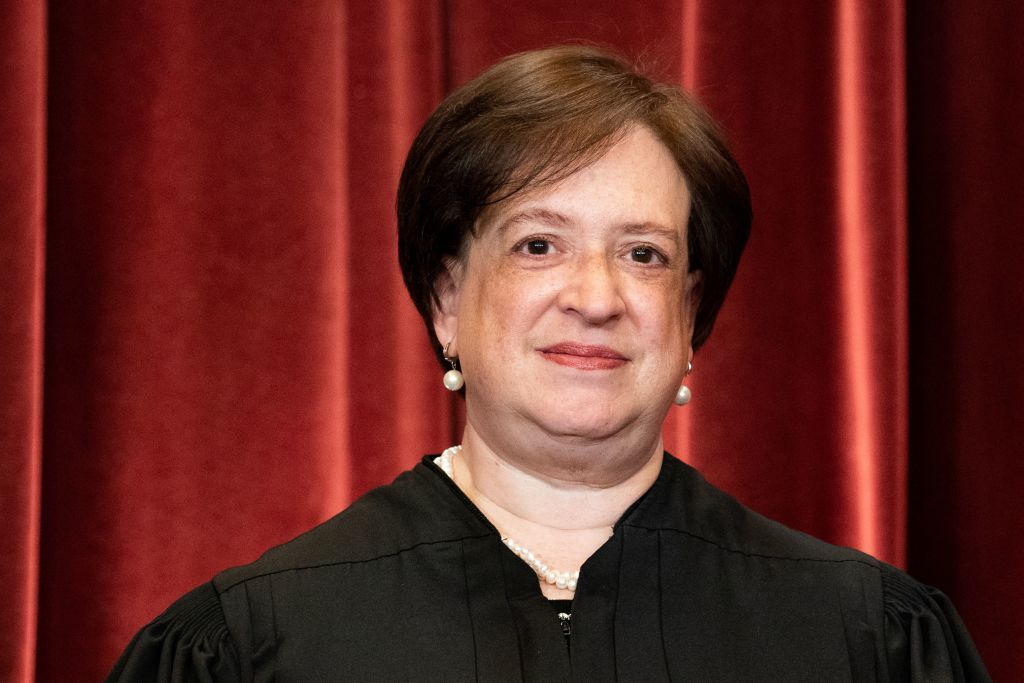
Justice Elena Kagan shows how this works. She never makes a reader hunt for her point, even though she might locate that point in different places for different types of paragraphs.
Take Smith & Wesson v. Estados Unidos de Mexico as one of many potential examples. In Smith & Wesson, the court held that Mexico had failed to plead its way around a federal statute barring claims against gun manufacturers. Starting with meat-and-potatoes paragraphs, Kagan does exactly what Miss Shields might insist upon. She locates both the issue and the point of the paragraph right at the beginning, then uses the rest of the paragraph to prove her point.
In Section I.A. of the opinion, for example, Kagan sets out the requirements of the statute being interpreted, the Protection of Lawful Commerce in Arms Act. Taking only the first sentence of each paragraph, readers learn exactly how the statute works with zero effort. We read:
“[The PLCAA] bars certain lawsuits against manufacturers and sellers of firearms.”
[Next Paragraph]
“But PLCAA’s general bar on those suits has an exception, usually called the predicate exception, relevant here.”
[Next Paragraph]
“Notably here, the predicate violation PLCAA demands may come from aiding and abetting someone else’s firearms offense.”
After each thesis, Kagan deploys the PLCAA’s language to prove that she’s right. For example, to prove that the PLCAA “bars certain lawsuits,” she quotes language providing that a “qualified civil liability action . . . may not be brought in any Federal or State court.” But again, before she shoves the reader’s nose into the language, she first tells us the point of it all.
In adopting this structure, Kagan is giving English readers what they expect. In his book “The Sense of Structure,” George Gopen calls these meat-and-potatoes paragraphs “medial paragraphs.” Here, in the middle of an exposition, “readers tend to appreciate being given the point up front.” Fail to put the point up front and one risks “having the reader disappear before the point actually arrives.” You run an especially grave risk if you are writing for busy legal readers – an audience that’s typically looking for a reason to stop reading.
But in other types of paragraphs, Kagan does not front-load a traditional thesis sentence, and she’s right there too. Consider the way Kagan writes introductions and narrative paragraphs.
In her Smith & Wesson introduction, Kagan reveals the issue or the topic in the first sentence, but she only gives the point or thesis in the last sentence. In the first sentence, we read that Mexico has sued American gun manufacturers – what the case is about. But before we can understand the court’s holding – the point – we need to learn some context. We need a sketch of what the law requires. So Kagan next sets out the statutory requirement: Mexico must plead that the gun manufacturers aided and abetted unlawful sales to the cartels. Only now, at the end of the paragraph, do we know enough to understand the point: Mexico did not plausibly plead aiding and abetting.
Again, according to Gopen, Kagan is satisfying her readers’ “remarkably fixed expectation that the point of an opening paragraph will arrive at the end.” We readers don’t want to be punched in the face with an answer before we know enough to understand it. Writers should make us “comfortable with the surroundings before we have to go to work.”
Narrative paragraphs involve yet another difference: readers don’t expect a traditional thesis in a passage that feels like “once upon a time.” Gopen notes, “Not all paragraphs were born to make a point.” Sometimes writers write “just to tell a story, to put some facts on the table.”
In her narrative paragraphs, Kagan sometimes just tells the story, and sometimes she fires a thesis point blank:
- In the first paragraph of her fact section (Section I.B), she states an explicit point: “Mexico has a severe gun violence problem, which its government views as coming from north of the border.”
- But in the second paragraph, she only writes what happened next: Mexico sued.
- Then in a series of paragraphs, she uses the text to make explicit points. She sets out Mexico’s chosen theory – aiding and abetting – along with its “primary,” “second,” and “third” arguments.
- In the final two paragraphs, Kagan again pivots back to only describing what happened next, the procedural history.
In the end, your old English teacher was mostly right. Ordinary, meat-and-potatoes paragraphs ought to have a sentence in which the issue and the point are together at the beginning of the paragraph. But specialized paragraphs might be different. So, before you start line-editing the sentences of a draft, employ a process to evaluate the strength of your paragraphs.
For your meat-and-potatoes paragraphs, prefer paragraphs that state the point and then prove it. Be on the lookout for paragraphs that write to a conclusion rather than stating it up front. To diagnose these paragraphs, try to create a reverse outline by copying the first sentence (sometimes two) into a different document. Ask yourself whether the argument makes sense with only those sentences. It will if the issue and point are stated up front.
In your statement of facts, mark which paragraphs have a thesis and which don’t. Know that you have a choice about when to include one, and make that choice.
Finally, give special attention to paragraphs that begin a text or a new section. Take the reader from the issue, through the necessary context, and then conclude with the point.
Why so much care? Because hitting the wrong target can be dangerous; you’ll shoot your eye out. A legal reader won’t just stand by trying to guess where the next round is being aimed.
Continue reading...
[ H/T SCOTUSblog ]