



Tech, AI, & Semis Aren't The Only Problem...
Submitted by QTR's Fringe Finance
While the Nasdaq is getting its teeth kicked in Friday morning on disappointing earnings from Amazon and Intel, I’m keeping a close eye on another corner of the market that I believe could play an outsized role in the next major selloff: cryptocurrency.
I’ve argued before that crypto could either catalyze or exacerbate the next market crash. In my opinion, it remains the most liquid tip of the speculative risk spear, and three developments over the last several days have only reinforced my concerns.
And in my piece, Is Bitcoin Too Deep in the Fabric of the U.S. Financial System?, I laid out that I think bitcoin is inside the walls of the financial system. And once you start weaving something this volatile into pensions, ETFs, corporate treasuries, and now retirement plans, unwinding it without collateral damage becomes nearly impossible.
So today, let’s just put aside Intel, Google and Amazon. I think at this point everyone knows how the AI trade could wind up coming undone. Let’s look at three developments in crypto…all occurring yesterday…that have my focus on that sector specifically today.
First, the obvious: the staggering $6.3 billion Binance hack.
According to CNBC, the world’s largest cryptocurrency exchange estimates that $6.3 billion in digital assets were affected by a security breach that could rank as the largest crypto hack in history, more than four times the approximately $1.5 billion stolen from Bybit in 2025.

Binance’s preliminary investigation suggests attackers may have compromised an employee’s laptop, gained access to internal systems and initiated unauthorized withdrawals. The company has since clarified that the intrusion was more complex than the misuse of a single employee’s permissions and that there is no evidence of compromised wallet private keys.
Approximately $3 billion in affected assets have reportedly been frozen, with Circle, Tether and Ripple helping prevent stolen funds from moving. Binance has pledged to reimburse customers using its Secure Asset Fund for Users and company resources, while temporarily suspending withdrawals and overhauling security protocols.
Bitcoin, meanwhile, dropped more than 4% Friday morning, briefly falling below $78,000.
It’s reassuring that Binance says customers will be made whole. But a multibillion-dollar security breach at one of the industry’s most important institutions hardly inspires confidence in the infrastructure underpinning the entire speculative ecosystem.
Second, a less obvious development in crypto but one worth noting nonetheless. Strategy (MSTR) just disclosed the abrupt departure of its CFO.
Andrew Kang will step down November 5, although he’ll remain in an advisory capacity through December, it was disclosed yesterday. The company says his departure is for personal reasons and was not the result of any disagreement concerning its operations or financial practices.
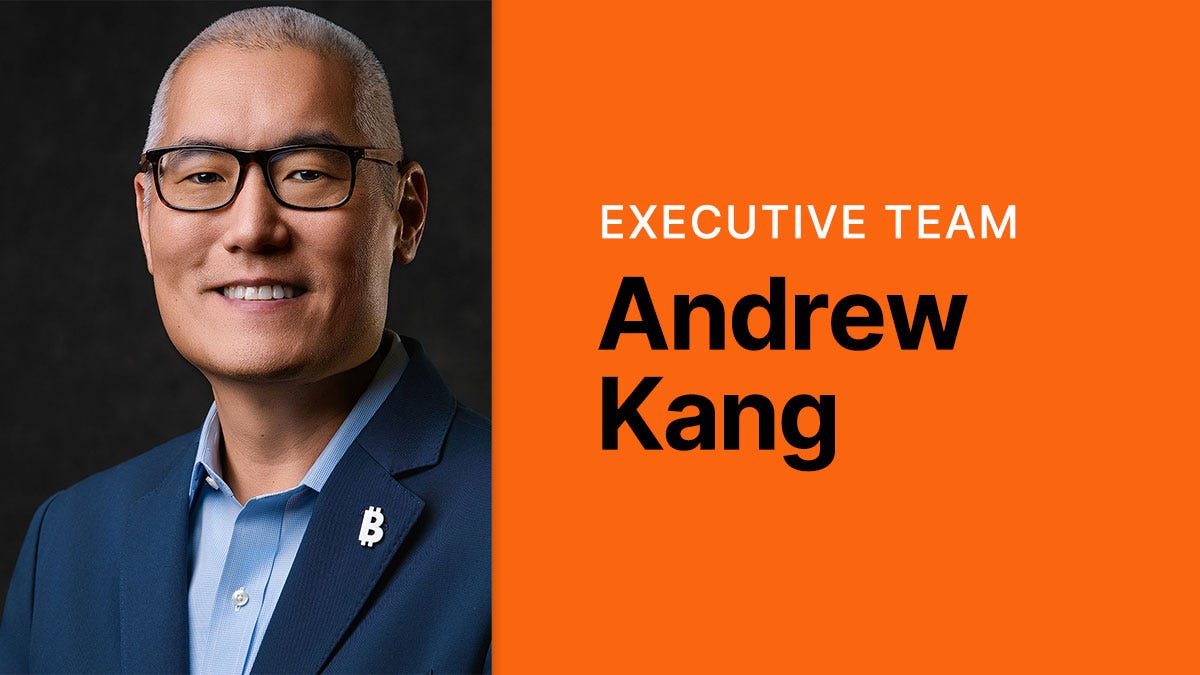
There’s no evidence suggesting otherwise. But the succession arrangement is worth noting. Reza Virasteh, currently Strategy’s EVP of Operations, will assume the CFO role, while CEO Phong Le is expected to become principal financial officer in January. Le will retain responsibility for managing the company’s Bitcoin financial strategy, with the two serving as co-principal financial officers.
I’m not suggesting Kang’s departure indicates wrongdoing or financial distress. But when the CFO of a company built around some type of financial engineering abruptly leaves during a period of market turbulence, I think it’s worth paying attention.
Third, Coinbase CEO Brian Armstrong has established a plan to potentially sell more than $1 billion in company stock.
According to an October 29 SEC disclosure, Armstrong adopted a Rule 10b5-1 trading plan allowing him to sell up to 8.17 million shares through October 2027, worth approximately $1.31 billion at Thursday’s closing price.
He’s not alone. Coinbase co-founder Fred Ehrsam has adopted a plan covering approximately 3.87 million shares, worth $621 million, while President and COO Emilie Choi has established one covering approximately 1.56 million shares, potentially worth another $251 million.

That’s nearly $2.2 billion in potential stock sales across three of Coinbase’s most prominent insiders. To be clear, these aren’t completed transactions. The plans were adopted in August and September, are subject to predetermined price thresholds and may not result in the sale of every share. Armstrong’s plan also involves exercising vested options, so the headline value doesn’t represent his eventual net proceeds.
There’s no evidence these executives possess some secret knowledge about an impending collapse. Executives diversify their wealth all the time. Still, I find the magnitude noteworthy, especially with crypto markets already showing signs of stress.
It’s not any kind of smoking gun. It’s just another development worth filing away.
85% OFF FOREVER IF YOU SUBSCRIBE TODAY: I am again offering an 85% discount to anyone that wants to become a Fringe Finance annual subscriber today. It’s a discount you can keep and stays applied for as long as you wish to remain a subscriber: Get 85% off forever
Here’s why I think all three matter.
I’ve repeatedly argued that crypto could play a meaningful role in the next major market crash, not necessarily because Bitcoin itself must implode, but because of how speculative leverage and liquidity interact when investors begin scrambling for cash.
Crypto trades around the clock, attracts enormous speculative activity and is increasingly connected to traditional financial markets through ETFs, public companies, institutional ownership and financing arrangements.
When investors need liquidity, crypto is among the first assets they can sell. And when leveraged positions begin getting liquidated, selling can feed on itself regardless of what anybody thinks the underlying assets are worth.

Losses in one market can force selling in another. Falling collateral values produce margin calls, which produce more selling. Eventually, seemingly unrelated markets can begin moving together as investors scramble to reduce risk.
We saw how quickly that dynamic could unfold during the 2022 crypto collapse, when Terra, Three Arrows Capital, Celsius and FTX exposed the industry’s interconnected leverage and counterparty risks.
Crypto didn’t cause the broader equity bear market that year, but it demonstrated how quickly liquidity and confidence can evaporate. Today, crypto’s connections to conventional financial markets are arguably even more extensive.
And I’ve also pointed out one big crypto risk that could come to fruition in the next week specifically as we head into midterms:b The Crypto Risk No One Is Discussing
Now, back up and again consider the bigger picture.
Over just the last month or two, we’ve witnessed an increasingly concerning collection of developments:
And next week, earnings from Apple, AMD, Arm and others will give investors even more to digest.
The AI trade is beginning to confront questions about cash flow and financing. Housing is struggling. Inflation remains a problem. And now crypto, one of the most speculative and liquid corners of the financial system, is showing its own signs of strain.
My concern is that crypto could help turn an ordinary correction into something considerably uglier if falling prices, forced liquidations and deteriorating confidence begin feeding on one another.
While everybody is staring at the Nasdaq and semis, I still wouldn’t take my eyes off crypto. Sometimes the first domino isn’t the one everybody is watching.
--
QTR’s Disclaimer: Please read my full legal disclaimer on my About page here.
Tyler Durden Fri, 10/30/2026 - 09:35
Continue reading...
[ H/T ZeroHedge ]
Submitted by QTR's Fringe Finance
While the Nasdaq is getting its teeth kicked in Friday morning on disappointing earnings from Amazon and Intel, I’m keeping a close eye on another corner of the market that I believe could play an outsized role in the next major selloff: cryptocurrency.
I’ve argued before that crypto could either catalyze or exacerbate the next market crash. In my opinion, it remains the most liquid tip of the speculative risk spear, and three developments over the last several days have only reinforced my concerns.
And in my piece, Is Bitcoin Too Deep in the Fabric of the U.S. Financial System?, I laid out that I think bitcoin is inside the walls of the financial system. And once you start weaving something this volatile into pensions, ETFs, corporate treasuries, and now retirement plans, unwinding it without collateral damage becomes nearly impossible.
So today, let’s just put aside Intel, Google and Amazon. I think at this point everyone knows how the AI trade could wind up coming undone. Let’s look at three developments in crypto…all occurring yesterday…that have my focus on that sector specifically today.
First, the obvious: the staggering $6.3 billion Binance hack.
According to CNBC, the world’s largest cryptocurrency exchange estimates that $6.3 billion in digital assets were affected by a security breach that could rank as the largest crypto hack in history, more than four times the approximately $1.5 billion stolen from Bybit in 2025.

Binance’s preliminary investigation suggests attackers may have compromised an employee’s laptop, gained access to internal systems and initiated unauthorized withdrawals. The company has since clarified that the intrusion was more complex than the misuse of a single employee’s permissions and that there is no evidence of compromised wallet private keys.
Approximately $3 billion in affected assets have reportedly been frozen, with Circle, Tether and Ripple helping prevent stolen funds from moving. Binance has pledged to reimburse customers using its Secure Asset Fund for Users and company resources, while temporarily suspending withdrawals and overhauling security protocols.
Bitcoin, meanwhile, dropped more than 4% Friday morning, briefly falling below $78,000.
It’s reassuring that Binance says customers will be made whole. But a multibillion-dollar security breach at one of the industry’s most important institutions hardly inspires confidence in the infrastructure underpinning the entire speculative ecosystem.
Second, a less obvious development in crypto but one worth noting nonetheless. Strategy (MSTR) just disclosed the abrupt departure of its CFO.
Andrew Kang will step down November 5, although he’ll remain in an advisory capacity through December, it was disclosed yesterday. The company says his departure is for personal reasons and was not the result of any disagreement concerning its operations or financial practices.
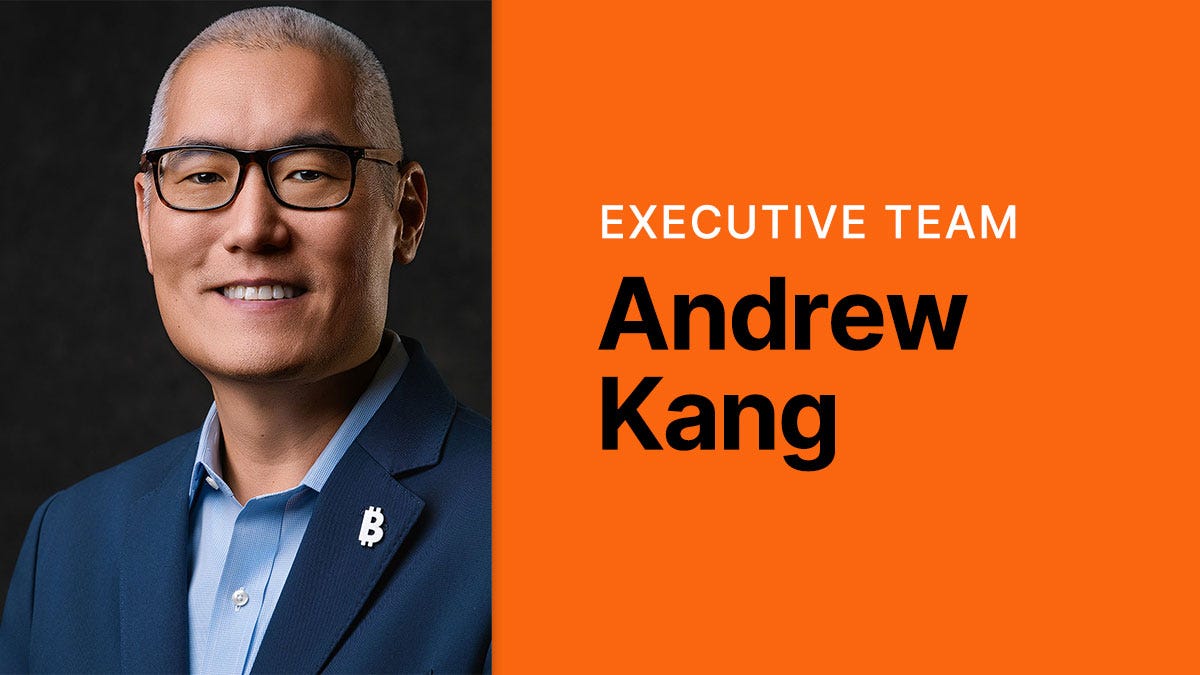
There’s no evidence suggesting otherwise. But the succession arrangement is worth noting. Reza Virasteh, currently Strategy’s EVP of Operations, will assume the CFO role, while CEO Phong Le is expected to become principal financial officer in January. Le will retain responsibility for managing the company’s Bitcoin financial strategy, with the two serving as co-principal financial officers.
I’m not suggesting Kang’s departure indicates wrongdoing or financial distress. But when the CFO of a company built around some type of financial engineering abruptly leaves during a period of market turbulence, I think it’s worth paying attention.
Third, Coinbase CEO Brian Armstrong has established a plan to potentially sell more than $1 billion in company stock.
According to an October 29 SEC disclosure, Armstrong adopted a Rule 10b5-1 trading plan allowing him to sell up to 8.17 million shares through October 2027, worth approximately $1.31 billion at Thursday’s closing price.
He’s not alone. Coinbase co-founder Fred Ehrsam has adopted a plan covering approximately 3.87 million shares, worth $621 million, while President and COO Emilie Choi has established one covering approximately 1.56 million shares, potentially worth another $251 million.

That’s nearly $2.2 billion in potential stock sales across three of Coinbase’s most prominent insiders. To be clear, these aren’t completed transactions. The plans were adopted in August and September, are subject to predetermined price thresholds and may not result in the sale of every share. Armstrong’s plan also involves exercising vested options, so the headline value doesn’t represent his eventual net proceeds.
There’s no evidence these executives possess some secret knowledge about an impending collapse. Executives diversify their wealth all the time. Still, I find the magnitude noteworthy, especially with crypto markets already showing signs of stress.
It’s not any kind of smoking gun. It’s just another development worth filing away.
85% OFF FOREVER IF YOU SUBSCRIBE TODAY: I am again offering an 85% discount to anyone that wants to become a Fringe Finance annual subscriber today. It’s a discount you can keep and stays applied for as long as you wish to remain a subscriber: Get 85% off forever
Here’s why I think all three matter.
I’ve repeatedly argued that crypto could play a meaningful role in the next major market crash, not necessarily because Bitcoin itself must implode, but because of how speculative leverage and liquidity interact when investors begin scrambling for cash.
Crypto trades around the clock, attracts enormous speculative activity and is increasingly connected to traditional financial markets through ETFs, public companies, institutional ownership and financing arrangements.
When investors need liquidity, crypto is among the first assets they can sell. And when leveraged positions begin getting liquidated, selling can feed on itself regardless of what anybody thinks the underlying assets are worth.

Losses in one market can force selling in another. Falling collateral values produce margin calls, which produce more selling. Eventually, seemingly unrelated markets can begin moving together as investors scramble to reduce risk.
We saw how quickly that dynamic could unfold during the 2022 crypto collapse, when Terra, Three Arrows Capital, Celsius and FTX exposed the industry’s interconnected leverage and counterparty risks.
Crypto didn’t cause the broader equity bear market that year, but it demonstrated how quickly liquidity and confidence can evaporate. Today, crypto’s connections to conventional financial markets are arguably even more extensive.
And I’ve also pointed out one big crypto risk that could come to fruition in the next week specifically as we head into midterms:b The Crypto Risk No One Is Discussing
Now, back up and again consider the bigger picture.
Over just the last month or two, we’ve witnessed an increasingly concerning collection of developments:
- Oracle invoking force majeure over power-supply delays at a major data center project, highlighting infrastructure constraints.
- A deteriorating housing market, with affordability stretched and transactions under pressure.
- Scorching-hot PPI, complicating the prospect of additional Federal Reserve easing.
- CoreWeave shares collapsing, as investors question the economics and financing of AI infrastructure.
- Investors questioning potential selective disclosure in Anthropic’s IPO, particularly the absence of more recent financial results.
- Google disappointing investors, with enormous AI spending raising questions about future returns.
- Intel disappointing investors, adding pressure to semiconductor sentiment.
- Amazon disappointing investors, with massive capital expenditures and weak free cash flow unsettling Wall Street.
And next week, earnings from Apple, AMD, Arm and others will give investors even more to digest.
The AI trade is beginning to confront questions about cash flow and financing. Housing is struggling. Inflation remains a problem. And now crypto, one of the most speculative and liquid corners of the financial system, is showing its own signs of strain.
My concern is that crypto could help turn an ordinary correction into something considerably uglier if falling prices, forced liquidations and deteriorating confidence begin feeding on one another.
While everybody is staring at the Nasdaq and semis, I still wouldn’t take my eyes off crypto. Sometimes the first domino isn’t the one everybody is watching.
--
QTR’s Disclaimer: Please read my full legal disclaimer on my About page here.
Tyler Durden Fri, 10/30/2026 - 09:35
Continue reading...
[ H/T ZeroHedge ]