




An emerging advocacy group is lobbying Congress for softer relations with Cuba after its founder toured the island with a now-sanctioned state agency.
Cuban Americans for Cuba visited members of Congress in multiple Capitol Hill trips since April to urge against U.S. economic blockades, according to the group’s online posts.
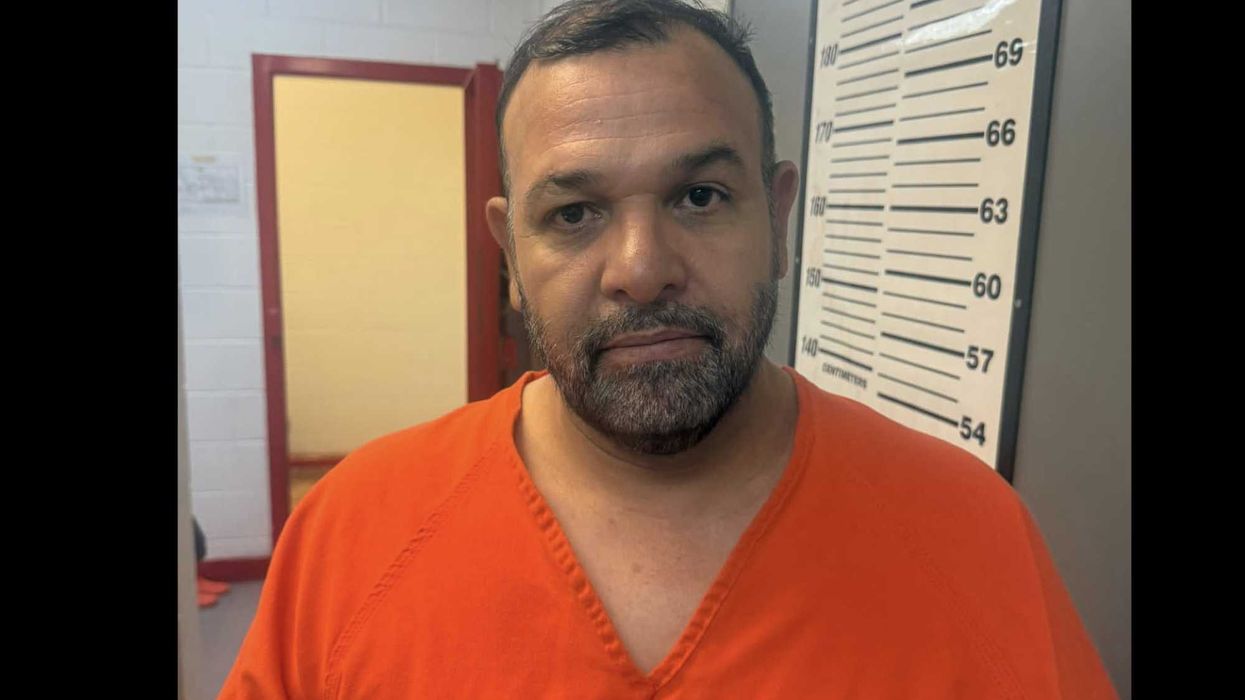
Florida native Danny Valdes, the group’s founder, wrote a 2023 blog explaining how he took inspiration from an excursion to Cuba that introduced him to its president, a convicted regime spy, the late dictator Fidel Castro’s niece, and other elite figures, an archived webpage shows. Cuban Americans for Cuba debuted on social media the following year and, in August, secured tax-exempt nonprofit status from the IRS with a New York address.
The activist traveled to Cuba as part of a Democratic Socialists of America “delegation” and followed tours arranged by the Cuban Institute for Friendship with the Peoples, his blog says. ICAP has become a go-to travel resource for U.S.-based leftists since Castro created it to spread propaganda about life under Cuban communism. The State Department sanctioned ICAP and its leader, another convicted spy, over the summer for its intelligence ties.
Valdes’s blog said his Cuban family fled the country decades ago and saw his grandfather detained for “counter revolutionary activity.” But unlike other Floridians of Cuban descent — including Secretary of State Marco Rubio — Valdes ended up defending Cuba’s socialist revolutionaries and officials who have killed, jailed, tortured, and censored numerous political enemies. As President Donald Trump increases sanctions and flirts with the idea of an invasion, Cuban Americans for Cuba’s presence in Washington represents a success story for the regime’s political influence.
“I have long since fallen out of step with my family’s views of Cuba,” said Valdes’s blog. “That I come from a people who were able to throw off the yolk of the most powerful military and economic entity the planet has ever known, in the name of building a new kind of just and equitable society, is a source of pride for me. But many in the place I grew up would recoil at a statement like that. The victory of the Cuban Revolution came with its price — as do all major political upheavals and revolutions.”
The meeting with President Miguel Diaz-Canel was “a sign that the Cuban government took our organization seriously and saw us as potential partners in the work of ending the US blockade,” Valdes wrote.
When asked if sanctioning ICAP was a bad move, Valdes told the Washington Examiner his organization “opposes U.S. sanctions on Cuba, full stop.”
“We don’t evaluate them entity by entity, because the problem isn’t any single designation,” Valdes said. “Sanctions have not achieved their stated goals in more than sixty years. What they have done is make daily life harder for the Cuban people and make it harder for Cuban Americans to stay connected to our relatives and our homeland. That humanitarian impact is what we care about, and it’s what we bring to Washington.”
Democrats at the Capitol were friendlier than Florida’s mostly Republican congressional offices over the past week, Valdes said. The latest meetings included an anti-sanctions briefing hosted by Rep. Delia Ramirez (D-IL). Her office did not respond to the Washington Examiner’s request for comment.
“On our most recent visit to Capitol Hill, we met with members of the Congressional Progressive Caucus who share our concern about the humanitarian toll of current policy,” Valdes told the Washington Examiner. “We also sought meetings with members of the South Florida delegation, who represent more Cuban Americans than anyone in Congress, but they declined to meet with us. We think those offices should hear from all of their Cuban American constituents, including the growing number of us who want a different approach, and our door remains open.”
Cuban-Americans debate the island’s destiny
Rubio’s State Department argues that communists have made Cuba a persistent threat to America through espionage, aiding terrorism, and other subversive activities. Trump said he seeks “a fundamental change” in Cuba during a September United Nations speech, adding that the ruling government “will fall.”
“President Trump is clear: the United States will never be a communist country,” department spokesperson Tommy Pigott told the Washington Examiner. “We will not turn a blind eye to the surge in far-left terror in the United States and around the world — which many in the media attempt to outrageously excuse. We will also not ignore the threat posed by a regime 90 miles off our coast intent on undermining the national security of the American people through espionage and the spread of its failed, insidious ideology. We will work with our partners to protect our nation.”
Cuba’s living conditions worsened in recent months with a power grid collapse and food shortages. Valdes’s 2023 blog blamed the country’s long history of economic woes on U.S. sanctions and claimed that “for every flaw I could find in Cuba’s democracy, I could just as easily find a parallel in the United States.”
“Ideally, could Cuba’s democracy offer more political organization outside of the Communist Party?” he wrote. “Yes, but this was certainly not a government run by a dictator.”
The activist said officials promoted several causes important to American activists during their talks: LGBT rights, women’s equality, loosening U.S. immigration, and fighting climate change.
Valdes admitted it was hard to “shake off” emotions caused by his grandfather’s six-year detention, despite his belief that it was reasonable for the regime to see him as a harmful obstacle to the Cuban Revolution.
Cuban leaders are now increasingly giving shout-outs to sympathetic activists in the U.S. The Cuban Embassy in Washington shared a Cuban Americans for Cuba video on X in July, and the Castro-linked Network in Defense of Humanity later that month promoted more of the group’s content. The country’s foreign affairs minister also got a warm welcome onstage at a September event in New York, where Cuban Americans for Cuba spoke, according to organizers’ online posts.
“I want to say directly to Rubio and his enablers … you do not own what it means to be Cuban,” the organization’s speaker, Dailyn Brinas, told her audience on video. The event also featured the People’s Forum, which received a congressional subpoena in July over suspected foreign influence.
FLORIDA PROFESSOR VISITED CUBA SEVERAL TIMES BEFORE DESANTIS APPOINTEE’S SECURITY WARNINGS
Dr. Emilio Gonzalez, a Cuban-born American who fled from the communist government, told the Washington Examiner that groups like Cuban Americans for Cuba do not speak for his demographic.
“The Cuban regime wastes no effort to influence U.S. policy, even encouraging confused Cuban-Americans to lobby on its behalf,” said Gonzalez, a retired U.S. intelligence officer and Military Academy instructor. “It has penetrated the U.S. government, so it’s no wonder that it’s also penetrated the Cuban exile community.”
Continue reading...
[ H/T Washington Examiner ]
