



Guest Post by Martin Armstrong
A massive banking crisis is unfolding in Paraguay that should serve as a warning to every nation. Ueno Bank, one of the country’s largest financial institutions, was abruptly shut down by the Central Bank of Paraguay after regulators discovered that its capital had fallen below half the legally required minimum. The bank claims approximately 3 million customers, equivalent to 60% of Paraguay’s adult population, who have now completely lost access to their accounts. Imagine waking up to discover that the institution holding your savings has been closed, your debit card no longer works, and you cannot transfer or withdraw your own money.
The Central Bank of Paraguay voted unanimously on November 2 to place Ueno into resolution, announcing the intervention during the early hours of November 3. Regulators discovered that the bank’s solvency ratio had deteriorated to less than half the required minimum of 12%. In other words, after adjustments to its financial statements, the bank’s qualifying capital was insufficient to support the risks on its balance sheet. Ueno had previously reported a capital ratio of 15.01% in March, comfortably above the legal requirement. Within months, regulators concluded that its true financial position was dramatically weaker. That raises the obvious question of how a bank could appear adequately capitalized and then suddenly be declared insolvent.
Regulators had already raised concerns about excessive lending to companies connected to Ueno’s owners. Depositors place their savings in a financial institution believing that the money will be managed properly, while those controlling the institution may have incentives to direct credit toward businesses in which they have a financial interest. Related-party lending is not automatically illegal, but excessive exposure can create enormous conflicts of interest. When those loans deteriorate, the losses threaten the capital protecting depositors.
Ueno’s rapid expansion made the consequences particularly severe. The bank became a major digital lender, attracting millions of customers through mobile banking and an expanding range of financial services. Around 60% of the population was using Ueno; the scope was massive. Ordinary people suddenly found themselves unable to access their accounts, while businesses lost access to payment services necessary for daily operations.
Once people discover that a major bank has failed, they naturally begin questioning the safety of their deposits elsewhere. Customers rushed to open accounts at competing institutions, placing enormous pressure on digital banking platforms. Authorities reported that millions of account-opening requests were overwhelming parts of the system. A banking panic does not require every institution to be insolvent. It requires depositors to become sufficiently frightened that they demand access to their money simultaneously. Banks operate by transforming deposits into loans and investments. They do not keep every depositor’s balance sitting in cash waiting to be withdrawn.
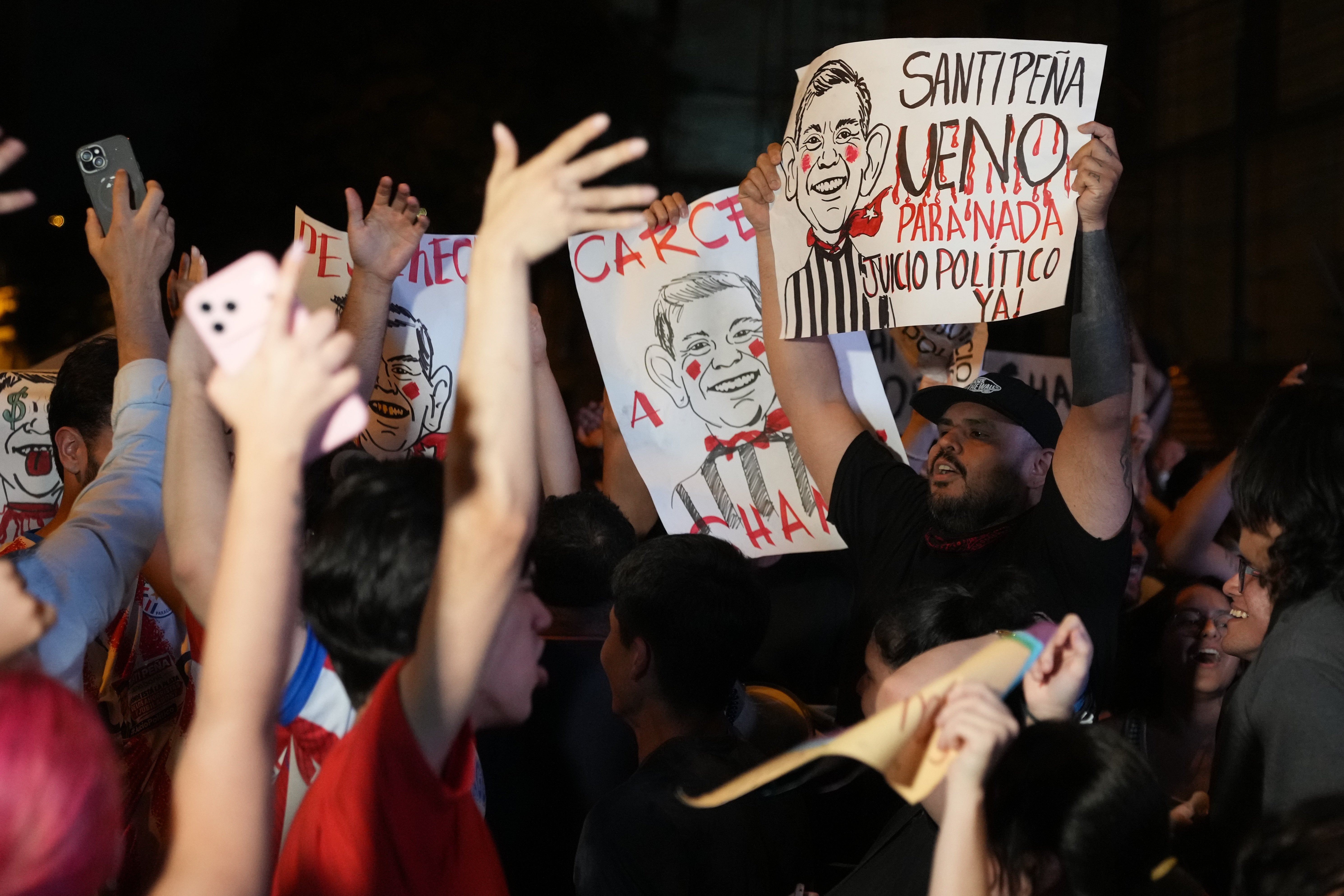
The banking collapse in Paraguay has now brought down the government itself. President Santiago Peña resigned on November 5 after thousands of citizens took to the streets demanding access to their savings, following the resignation of Central Bank President Carlos Carvallo two days earlier. Peña had previously held an ownership interest in the bank’s parent company, while Carvallo had served as president of Ueno’s predecessor before being appointed to supervise the nation’s banking system. The public began questioning whether the very people responsible for protecting their savings had been protecting politically connected financial interests instead.
Protesters clashed with police, confidence evaporated, and Peña lost the support of his own political party. The lower house voted 78-0 to impeach him even after he announced his resignation. This is precisely how a financial crisis becomes a political crisis. Governments survive economic downturns, but when people discover that their life savings are inaccessible while those responsible for overseeing the system appear entangled with the institutions that failed, confidence in government itself can collapse. Within 48 hours of the bank’s seizure, the central bank governor and the president were both gone. The banking system may eventually recover, but restoring confidence in the institutions that permitted this disaster will be far more difficult.
What makes this crisis even more disturbing is the involvement of public money. Ueno reportedly managed between $800 million and $850 million in government-related funds, including approximately $380 million associated with Paraguay’s Social Security Institute, known as IPS. The institute provides pensions and healthcare services, meaning the consequences extend beyond ordinary bank customers. Approximately $355 million of IPS investments were reportedly held at Ueno, representing around 9% of its investment portfolio. The institute has said that regular pension payments will continue because funds needed for immediate payments are held elsewhere. Nevertheless, it is preparing legal action to recover its investments, while approximately 32,000 pensioners who received payments through Ueno must be moved to another institution.
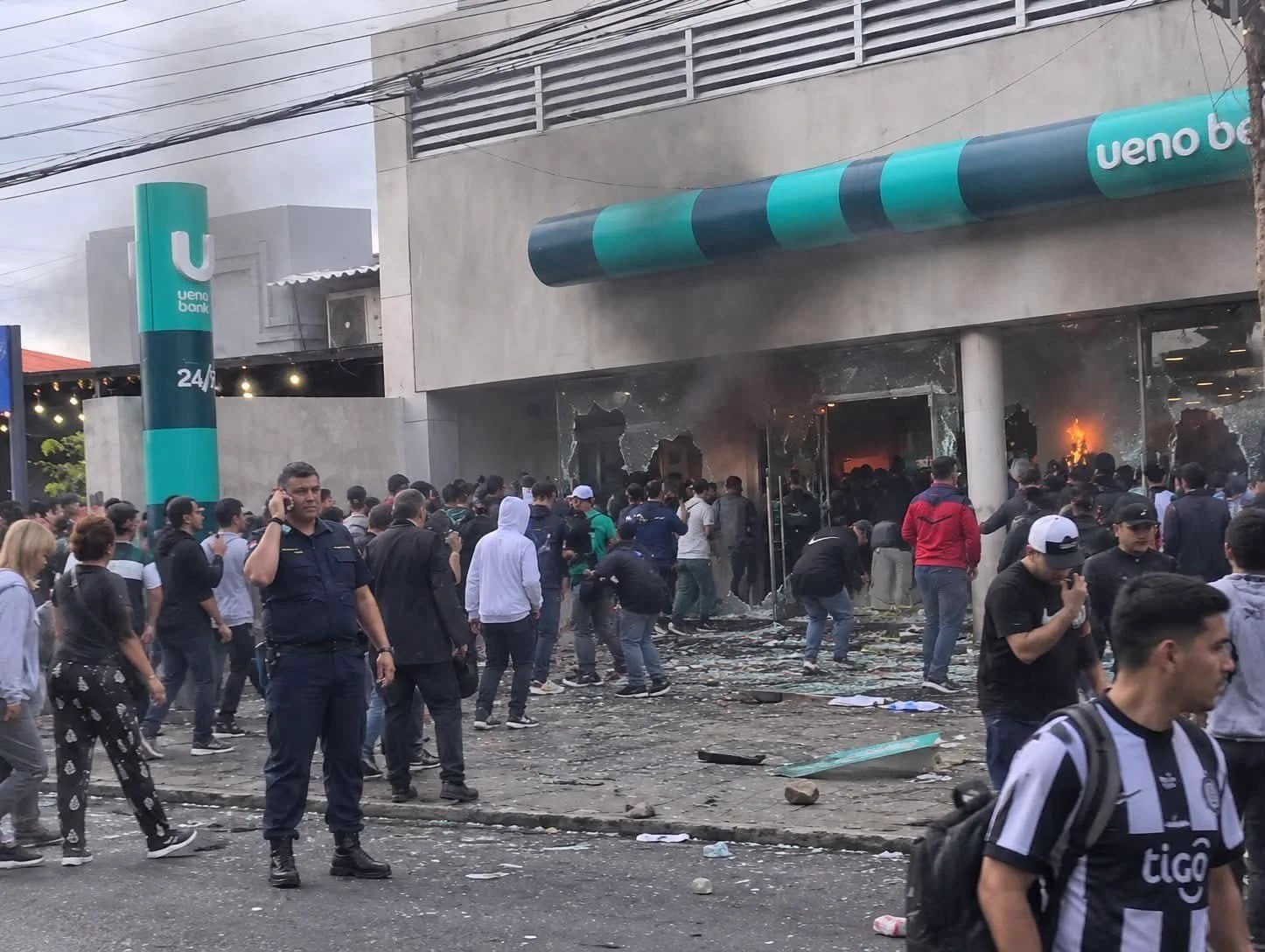
The authorities are now attempting to reassure depositors through Paraguay’s Deposit Guarantee Fund. Eligible deposits are protected up to approximately 228.3 million guaraníes, equivalent to about $38,000 per depositor per institution. Preliminary estimates suggest this limit could fully cover approximately 97% of Ueno depositors. However, there is an enormous difference between being legally entitled to compensation and having immediate access to the money needed to survive. The central bank initially announced payments of up to 10 million guaraníes, approximately $1,700, while lawmakers moved to accelerate larger payments. Those with deposits exceeding the guaranteed amount face greater uncertainty because their recovery depends upon the value of the bank’s remaining assets and the resolution process.
This is precisely why I have warned about the danger of assuming that money deposited in a bank remains immediately available under every circumstance. A bank deposit is a liability of the institution. The bank owes you that money, but it uses deposits and other funding to support loans and investments. If the institution suffers sufficient losses, regulators can intervene, restrict withdrawals, and attempt to transfer accounts to healthier banks. Deposit insurance may protect eligible balances, but it cannot guarantee uninterrupted access during a crisis. The government can promise repayment while families are left wondering how they will purchase food, pay rent, or meet their immediate obligations.
Public funds and private banking can also become dangerously intertwined. Government institutions are supposed to protect pension contributions and public resources through prudent investment and independent oversight. If political relationships influence where those funds are deposited or invested, the public may ultimately bear the consequences of decisions made by a relatively small group of officials and financial executives. The allegations surrounding Ueno have not all been established, but the bank’s collapse demonstrates why transparency and independent supervision are essential.
The consequences could extend into Paraguay’s broader economy. A sudden interruption to millions of bank accounts can disrupt commerce, delay payments, and undermine confidence among domestic and foreign investors. Paraguay has worked to establish a reputation for relative macroeconomic stability and investment opportunities in agriculture, energy, manufacturing, and regional trade. A major banking scandal threatens that reputation because investors must evaluate not merely interest rates and potential returns, but also the integrity of financial institutions and the reliability of government supervision. Capital is extremely sensitive to uncertainty over the safety of deposits and the rule of law.

Regulators maintain that Ueno’s failure is an isolated case, and the country’s banking association says other institutions remain operational and are absorbing displaced customers. The danger is that public confidence can deteriorate much faster than officials can repair the damage, particularly when the failed institution served such a large proportion of the population.
Paraguay now faces two crises simultaneously. The first is financial, involving the recovery of deposits, protection of pension funds, and restoration of ordinary banking services. The second is political, involving the credibility of regulators, the conduct of bank executives, and the relationships between financial institutions and government officials. Resolving the first without addressing the second will do little to restore long-term confidence.
The lesson is that a banking crisis can develop beneath the surface while the public is repeatedly assured that the financial system is sound. Ueno reported adequate capital earlier this year, yet regulators ultimately discovered a severe shortfall. Millions of customers trusted the institution, and public agencies placed hundreds of millions of dollars under its management. Now the government must determine how much can be recovered and who is responsible for the deterioration.
This is how confidence collapses. It does not begin when every depositor loses money. It begins when people discover that the institution they trusted cannot honor its obligations on demand. Paraguay’s authorities may succeed in protecting the overwhelming majority of depositors through guarantees and transfers, but the damage to public trust has already occurred. When an institution serving approximately 60% of a nation’s adult population fails, the consequences cannot be dismissed as an isolated accounting problem. The entire country is forced to confront the question of whether its financial institutions and political leaders can be trusted with the people’s savings.
Tweet
Continue reading...
[ H/T The Burning Platform ]
A massive banking crisis is unfolding in Paraguay that should serve as a warning to every nation. Ueno Bank, one of the country’s largest financial institutions, was abruptly shut down by the Central Bank of Paraguay after regulators discovered that its capital had fallen below half the legally required minimum. The bank claims approximately 3 million customers, equivalent to 60% of Paraguay’s adult population, who have now completely lost access to their accounts. Imagine waking up to discover that the institution holding your savings has been closed, your debit card no longer works, and you cannot transfer or withdraw your own money.
The Central Bank of Paraguay voted unanimously on November 2 to place Ueno into resolution, announcing the intervention during the early hours of November 3. Regulators discovered that the bank’s solvency ratio had deteriorated to less than half the required minimum of 12%. In other words, after adjustments to its financial statements, the bank’s qualifying capital was insufficient to support the risks on its balance sheet. Ueno had previously reported a capital ratio of 15.01% in March, comfortably above the legal requirement. Within months, regulators concluded that its true financial position was dramatically weaker. That raises the obvious question of how a bank could appear adequately capitalized and then suddenly be declared insolvent.
Regulators had already raised concerns about excessive lending to companies connected to Ueno’s owners. Depositors place their savings in a financial institution believing that the money will be managed properly, while those controlling the institution may have incentives to direct credit toward businesses in which they have a financial interest. Related-party lending is not automatically illegal, but excessive exposure can create enormous conflicts of interest. When those loans deteriorate, the losses threaten the capital protecting depositors.
Ueno’s rapid expansion made the consequences particularly severe. The bank became a major digital lender, attracting millions of customers through mobile banking and an expanding range of financial services. Around 60% of the population was using Ueno; the scope was massive. Ordinary people suddenly found themselves unable to access their accounts, while businesses lost access to payment services necessary for daily operations.
Once people discover that a major bank has failed, they naturally begin questioning the safety of their deposits elsewhere. Customers rushed to open accounts at competing institutions, placing enormous pressure on digital banking platforms. Authorities reported that millions of account-opening requests were overwhelming parts of the system. A banking panic does not require every institution to be insolvent. It requires depositors to become sufficiently frightened that they demand access to their money simultaneously. Banks operate by transforming deposits into loans and investments. They do not keep every depositor’s balance sitting in cash waiting to be withdrawn.
The banking collapse in Paraguay has now brought down the government itself. President Santiago Peña resigned on November 5 after thousands of citizens took to the streets demanding access to their savings, following the resignation of Central Bank President Carlos Carvallo two days earlier. Peña had previously held an ownership interest in the bank’s parent company, while Carvallo had served as president of Ueno’s predecessor before being appointed to supervise the nation’s banking system. The public began questioning whether the very people responsible for protecting their savings had been protecting politically connected financial interests instead.
Protesters clashed with police, confidence evaporated, and Peña lost the support of his own political party. The lower house voted 78-0 to impeach him even after he announced his resignation. This is precisely how a financial crisis becomes a political crisis. Governments survive economic downturns, but when people discover that their life savings are inaccessible while those responsible for overseeing the system appear entangled with the institutions that failed, confidence in government itself can collapse. Within 48 hours of the bank’s seizure, the central bank governor and the president were both gone. The banking system may eventually recover, but restoring confidence in the institutions that permitted this disaster will be far more difficult.
What makes this crisis even more disturbing is the involvement of public money. Ueno reportedly managed between $800 million and $850 million in government-related funds, including approximately $380 million associated with Paraguay’s Social Security Institute, known as IPS. The institute provides pensions and healthcare services, meaning the consequences extend beyond ordinary bank customers. Approximately $355 million of IPS investments were reportedly held at Ueno, representing around 9% of its investment portfolio. The institute has said that regular pension payments will continue because funds needed for immediate payments are held elsewhere. Nevertheless, it is preparing legal action to recover its investments, while approximately 32,000 pensioners who received payments through Ueno must be moved to another institution.
The authorities are now attempting to reassure depositors through Paraguay’s Deposit Guarantee Fund. Eligible deposits are protected up to approximately 228.3 million guaraníes, equivalent to about $38,000 per depositor per institution. Preliminary estimates suggest this limit could fully cover approximately 97% of Ueno depositors. However, there is an enormous difference between being legally entitled to compensation and having immediate access to the money needed to survive. The central bank initially announced payments of up to 10 million guaraníes, approximately $1,700, while lawmakers moved to accelerate larger payments. Those with deposits exceeding the guaranteed amount face greater uncertainty because their recovery depends upon the value of the bank’s remaining assets and the resolution process.
This is precisely why I have warned about the danger of assuming that money deposited in a bank remains immediately available under every circumstance. A bank deposit is a liability of the institution. The bank owes you that money, but it uses deposits and other funding to support loans and investments. If the institution suffers sufficient losses, regulators can intervene, restrict withdrawals, and attempt to transfer accounts to healthier banks. Deposit insurance may protect eligible balances, but it cannot guarantee uninterrupted access during a crisis. The government can promise repayment while families are left wondering how they will purchase food, pay rent, or meet their immediate obligations.
Public funds and private banking can also become dangerously intertwined. Government institutions are supposed to protect pension contributions and public resources through prudent investment and independent oversight. If political relationships influence where those funds are deposited or invested, the public may ultimately bear the consequences of decisions made by a relatively small group of officials and financial executives. The allegations surrounding Ueno have not all been established, but the bank’s collapse demonstrates why transparency and independent supervision are essential.
The consequences could extend into Paraguay’s broader economy. A sudden interruption to millions of bank accounts can disrupt commerce, delay payments, and undermine confidence among domestic and foreign investors. Paraguay has worked to establish a reputation for relative macroeconomic stability and investment opportunities in agriculture, energy, manufacturing, and regional trade. A major banking scandal threatens that reputation because investors must evaluate not merely interest rates and potential returns, but also the integrity of financial institutions and the reliability of government supervision. Capital is extremely sensitive to uncertainty over the safety of deposits and the rule of law.
Regulators maintain that Ueno’s failure is an isolated case, and the country’s banking association says other institutions remain operational and are absorbing displaced customers. The danger is that public confidence can deteriorate much faster than officials can repair the damage, particularly when the failed institution served such a large proportion of the population.
Paraguay now faces two crises simultaneously. The first is financial, involving the recovery of deposits, protection of pension funds, and restoration of ordinary banking services. The second is political, involving the credibility of regulators, the conduct of bank executives, and the relationships between financial institutions and government officials. Resolving the first without addressing the second will do little to restore long-term confidence.
The lesson is that a banking crisis can develop beneath the surface while the public is repeatedly assured that the financial system is sound. Ueno reported adequate capital earlier this year, yet regulators ultimately discovered a severe shortfall. Millions of customers trusted the institution, and public agencies placed hundreds of millions of dollars under its management. Now the government must determine how much can be recovered and who is responsible for the deterioration.
This is how confidence collapses. It does not begin when every depositor loses money. It begins when people discover that the institution they trusted cannot honor its obligations on demand. Paraguay’s authorities may succeed in protecting the overwhelming majority of depositors through guarantees and transfers, but the damage to public trust has already occurred. When an institution serving approximately 60% of a nation’s adult population fails, the consequences cannot be dismissed as an isolated accounting problem. The entire country is forced to confront the question of whether its financial institutions and political leaders can be trusted with the people’s savings.
Tweet
Continue reading...
[ H/T The Burning Platform ]